


























Views
Downloads
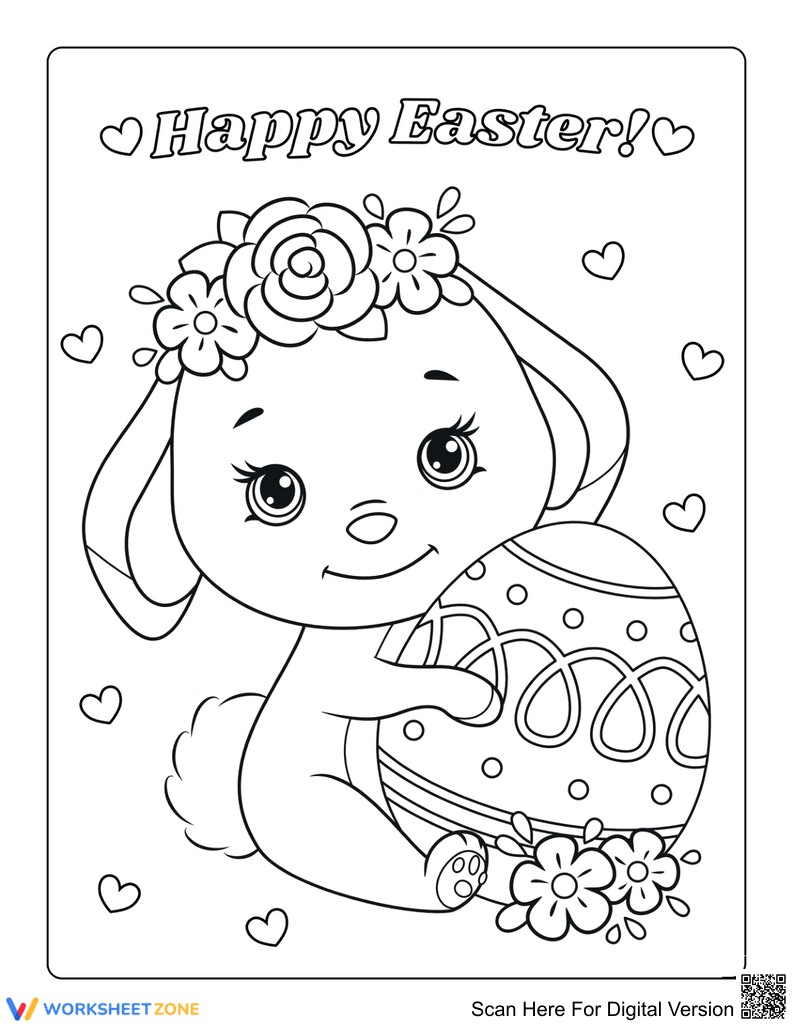

Easter Bunny Coloring Page | Essential Holiday Printable
Paste this activity's link or code into your existing LMS (Google Classroom, Canvas, Teams, Schoology, Moodle, etc.).
Students can open and work on the activity right away, with no student login required.
You'll still be able to track student progress and results from your teacher account.
This Easter bunny coloring page provides a high-interest creative outlet for young learners to develop essential fine motor control. By engaging with the detailed line art of a bunny holding a decorated egg, students practice grip stability and spatial awareness. This activity serves as a perfect seasonal bridge between artistic expression and foundational writing readiness.
At a Glance
- Grade: Kindergarten · Subject: Arts & Crafts
- Standard:
VA:Cr1.1.Ka— Engage in exploration and imaginative play with materials- Skill Focus: Fine motor coordination
- Format: 1 page · 1 task · No answer key needed · PDF
- Best For: Seasonal morning work or quiet time
- Time: 15–20 minutes
Inside this resource, you will find a single-page, high-resolution PDF featuring a charming bunny character adorned with a floral crown and holding a large, patterned Easter egg. The bold outlines are specifically designed to support early learners who are still mastering the ability to stay within the lines, while the intricate patterns on the egg provide a gentle challenge for those with more advanced control.
The zero-prep workflow for this worksheet is designed for maximum efficiency in a busy classroom. First, print the single-page PDF in under 30 seconds. Second, distribute the sheets along with crayons, markers, or colored pencils. Third, review the completed work by displaying it on a seasonal bulletin board to build classroom community. Total teacher preparation time is under 2 minutes, making it an ideal sub plan or transition activity.
This activity aligns with VA:Cr1.1.Ka, which focuses on engaging in exploration and imaginative play with art materials. By choosing colors and applying them to the specific shapes of the bunny and egg, students demonstrate creative decision-making. Both standard codes can be copied directly into lesson plans, IEP goals, or district curriculum mapping tools to document artistic engagement and motor development.
Use this worksheet as a calm-down activity following a high-energy holiday lesson or as a focused morning work task during the week leading up to Easter. Teachers can use this as a formative assessment moment by observing a student's pencil grip and their ability to follow the boundaries of the illustration. Expect students to spend 15 to 20 minutes completing the page depending on their level of detail.
This resource is primarily designed for Kindergarten and First Grade students, though it remains a popular choice for older students seeking a relaxing holiday activity. It pairs naturally with a read-aloud about spring or a science lesson on life cycles. For students needing extra support, provide thicker markers to make the task more accessible and successful.
Research from Fisher & Frey (2014) emphasizes that purposeful creative tasks support the gradual release of responsibility by allowing students to apply fine motor skills independently in a low-stakes environment. This worksheet addresses the VA:Cr1.1.Ka standard by facilitating imaginative play with artistic media. Studies in early childhood development suggest that activities requiring precise hand-eye coordination, like coloring the 12 distinct floral elements on this bunny's crown, directly contribute to the muscular development necessary for legible handwriting. By integrating seasonal themes with skill-based practice, educators can maintain high student engagement while meeting developmental milestones. This resource provides a structured yet flexible framework for artistic exploration, ensuring that students remain focused on the task while expressing individual creativity. The simplicity of the single-page format ensures that the cognitive load remains on the motor task rather than complex instructions.


