


























Views
Downloads

Letter K Beginning Sounds Worksheet | Grade 1 Essential
Paste this activity's link or code into your existing LMS (Google Classroom, Canvas, Teams, Schoology, Moodle, etc.).
Students can open and work on the activity right away, with no student login required.
You'll still be able to track student progress and results from your teacher account.
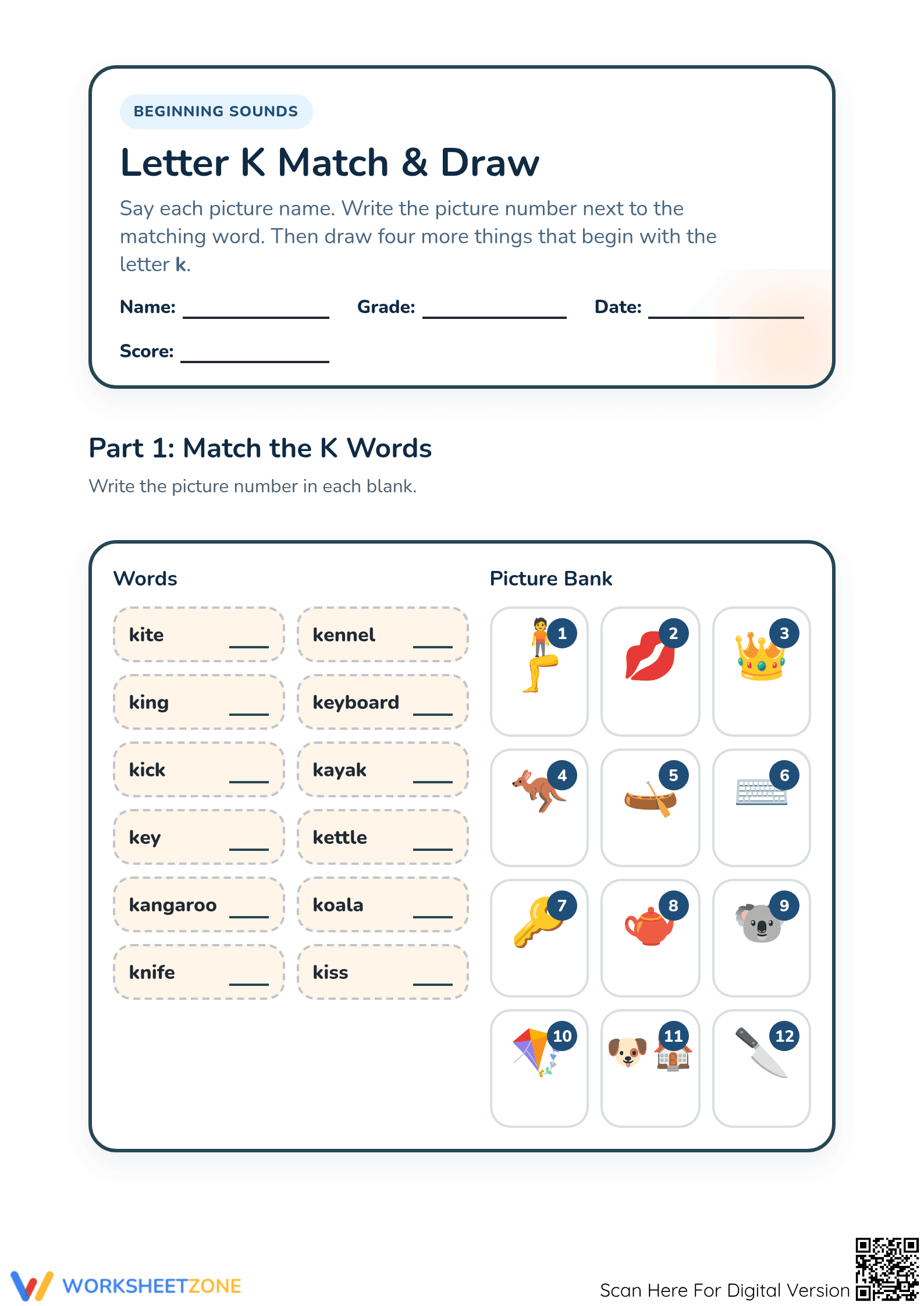
This Grade 1 phonics worksheet helps students master the beginning sound of the letter K through visual matching and creative drawing. By connecting words like "kite" and "koala" to their corresponding images, learners build strong phonemic awareness and letter-sound correspondence. It provides a structured path from recognition to independent production of the /k/ sound.
At a Glance
- Grade: Grade 1 · Subject: ELA
- Standard:
CCSS.ELA-LITERACY.RF.K.3.A— Produce the primary sound for each consonant, specifically the letter K- Skill Focus: Beginning sound /k/ recognition
- Format: 2 pages · 16 tasks · Answer key included · PDF
- Best For: Independent phonics practice and morning work
- Time: 15–20 minutes
What's Inside
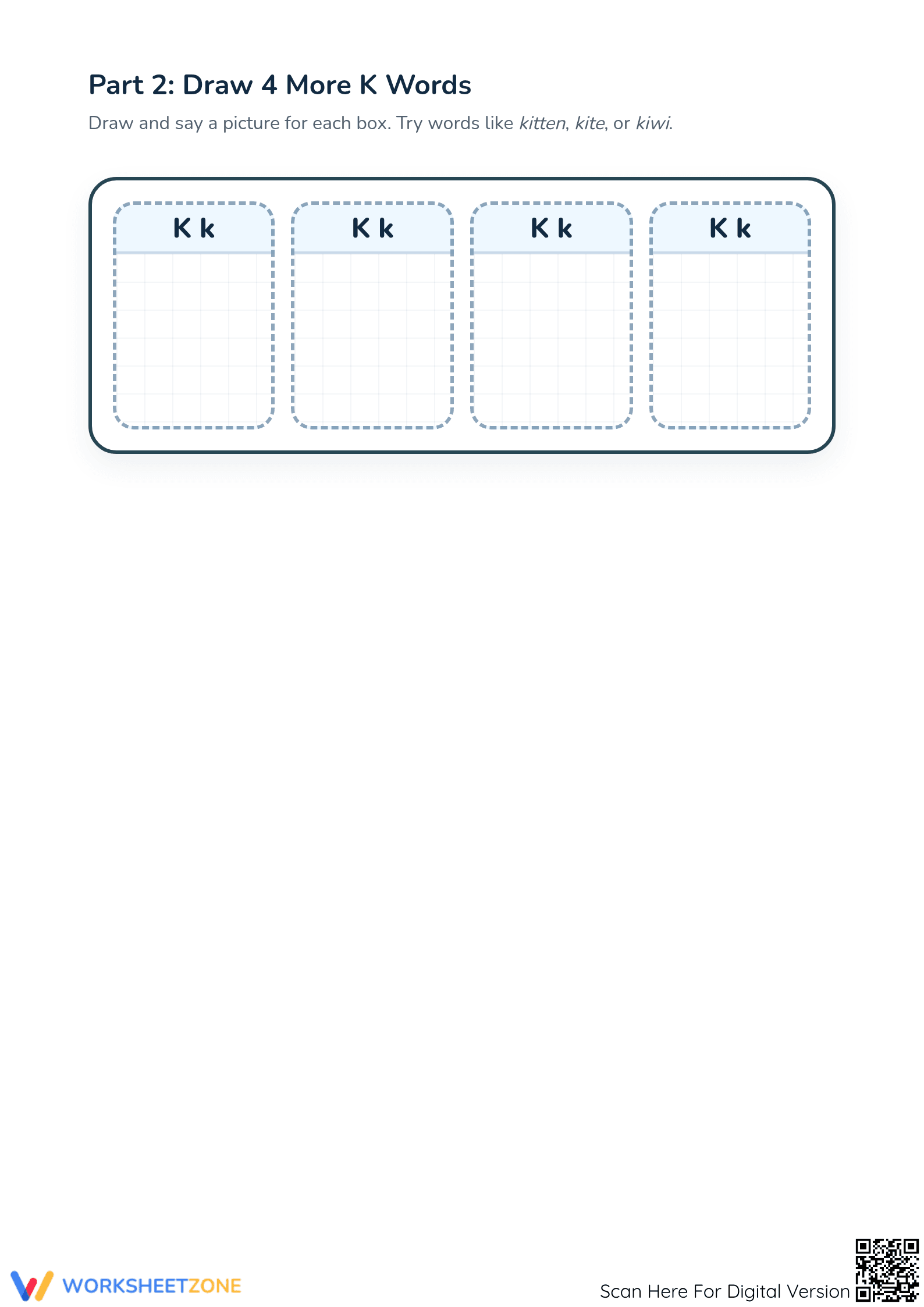
Inside this 2-page resource, you will find a comprehensive "Letter K Match & Draw" activity. The first page features a picture bank with 12 numbered illustrations and a corresponding list of words, including "kayak," "kettle," and "keyboard." The second page provides a grid for students to brainstorm and draw four original items starting with the letter K, encouraging higher-order thinking and creative application of phonics rules.
Zero-Prep Workflow
- Print: Download and print the 2-page PDF for your entire class in under 30 seconds.
- Distribute: Hand out the sheets and briefly explain the matching and drawing tasks, which takes about 1 minute.
- Review: Use the included answer key to review the 12 matching items as a whole group or during individual check-ins in about 1 minute.
Total teacher preparation time is under 3 minutes, making this an ideal solution for sub plans or busy mornings.
Standards Alignment
This resource is aligned with CCSS.ELA-LITERACY.RF.K.3.A, which requires students to demonstrate basic knowledge of one-to-one letter-sound correspondences by producing the primary sound for consonants. It also supports vocabulary development and fine motor skills through drawing. Both standard codes can be copied directly into lesson plans, IEP goals, or district curriculum mapping tools.
How to Use It
Use this worksheet during the "You Do" phase of a phonics lesson after introducing the letter K. It serves as an excellent formative assessment to see if students can distinguish the /k/ sound in various contexts. Expect students to complete the matching and drawing sections within 15 to 20 minutes, depending on their drawing speed and familiarity with the vocabulary.
Who It's For
This activity is ideal for first-grade students, though it works well for Kindergarteners needing a challenge or second graders requiring phonics intervention. It pairs naturally with a letter K anchor chart or a read-aloud book featuring words like "The King's Kite" to reinforce the target sound through multiple modalities.
Phonemic awareness is a foundational pillar of early literacy, and this worksheet directly addresses the need for explicit letter-sound correspondence practice. According to the RAND AIRS 2024 report, structured phonics activities that combine visual recognition with active production—such as the drawing tasks included here—significantly improve long-term retention of consonant sounds. By focusing on the CCSS.ELA-LITERACY.RF.K.3.A standard, this resource ensures that students are not just memorizing words but are actively decoding the /k/ sound in multiple formats. The inclusion of 12 distinct vocabulary words provides the necessary repetition for mastery, while the creative drawing component aligns with Fisher & Frey’s (2014) gradual release of responsibility model. This dual-page approach allows educators to transition from guided matching to independent brainstorming, providing a clear window into student comprehension. This worksheet is a reliable tool for building the phonetic decoding skills essential for reading fluency.


