




























Views
Downloads

Cursive Letters Worksheet | Essential Grade 2 Practice

Paste this activity's link or code into your existing LMS (Google Classroom, Canvas, Teams, Schoology, Moodle, etc.).
Students can open and work on the activity right away, with no student login required.
You'll still be able to track student progress and results from your teacher account.
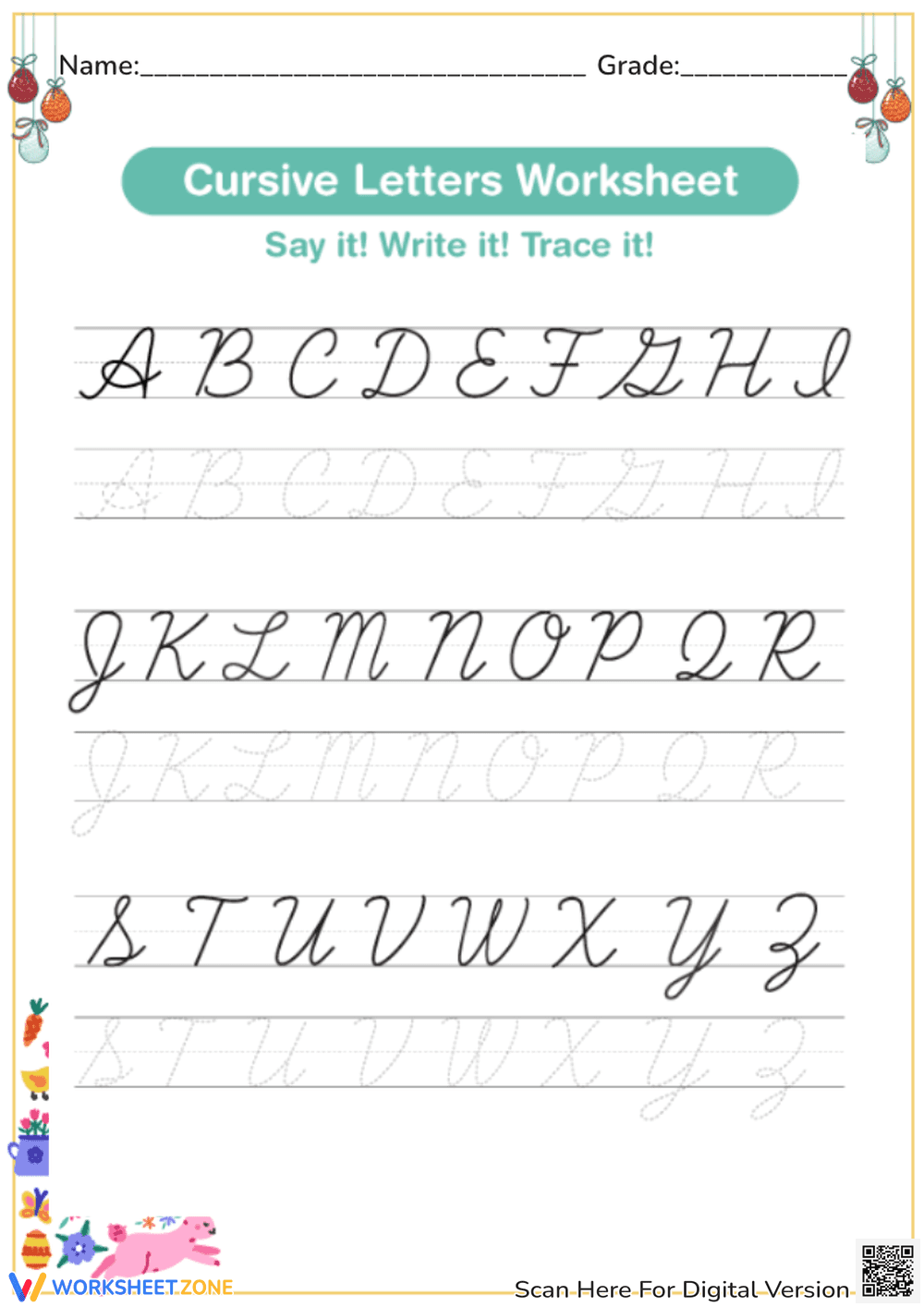
This Grade 2 cursive letters worksheet provides a structured environment for students to master the art of uppercase penmanship. By focusing on the "Say it! Write it! Trace it!" method, learners develop the muscle memory required for fluid handwriting. This resource ensures students transition from simple printing to sophisticated cursive strokes with confidence and precision.
At a Glance
- Grade: Grade 2 · Subject: Handwriting
- Standard:
CCSS.ELA-LITERACY.L.2.1— Demonstrate command of the conventions of standard English grammar and usage when writing- Skill Focus: Uppercase Cursive Tracing
- Format: 1 page · 26 tasks · Answer key included · PDF
- Best For: Daily morning work and handwriting centers
- Time: 15–20 minutes
What's Inside: This single-page PDF features the complete alphabet from A to Z in uppercase cursive. Each letter is presented in a clear, professional font with a corresponding dotted-line version directly beneath it for tracing. The layout organizes the 26 tasks into manageable segments. The "Say it! Write it! Trace it!" prompt at the top encourages multisensory engagement, helping students connect the visual shape of the letter with its phonetic sound and physical movement.
Zero-Prep Workflow
This resource is designed for immediate classroom implementation. First, print the required number of copies for your cohort. Second, distribute the sheets during your handwriting block or as a transition activity. Third, conduct a quick visual review of student stroke direction as they work, providing immediate feedback. Its self-explanatory nature makes it an ideal candidate for emergency sub plans or independent desk work.
Standards Alignment
The primary standard addressed is `CCSS.ELA-LITERACY.L.2.1`, which requires students to demonstrate command of the conventions of standard English grammar and usage when writing. While cursive is often a state-level requirement, this worksheet supports the broader goal of legible and fluent written communication. Both standard codes can be copied directly into lesson plans, IEP goals, or district curriculum mapping tools.
How to Use It
Use this worksheet during the "during" phase of direct instruction after modeling the correct stroke order for a specific set of letters. It serves as an excellent formative assessment tool; observe students to see if they are starting their strokes from the baseline or midline correctly. Expected completion time ranges from 15 to 20 minutes, depending on the student's fine motor development and familiarity with cursive forms.
Who It's For
This practice page is tailored for Grade 2 students but remains effective for Grade 1 enrichment or Kindergarteners showing advanced motor skills. It is particularly useful for students requiring Tier 2 handwriting intervention or those who finish primary assignments early. Pair this worksheet with a cursive anchor chart or a tactile tracing tray to provide a comprehensive multisensory learning experience.
According to research, the gradual release of responsibility is vital in skill-based tasks like handwriting. This worksheet facilitates that transition by providing a clear model followed by a tracing task, allowing students to internalize the complex loops of uppercase cursive. Mastering the CCSS.ELA-LITERACY.L.2.1 standard through consistent tracing practice improves overall writing speed and cognitive load management. By focusing on the 26 uppercase letters, students build the foundational fluency necessary for later sentence-level cursive writing. Data suggests that students with legible handwriting often perform better on assessments because they focus on content rather than letter formation. This printable resource offers a high-utility method for ensuring every student achieves penmanship mastery without the need for extensive teacher preparation or specialized materials.


