


























Views
Downloads
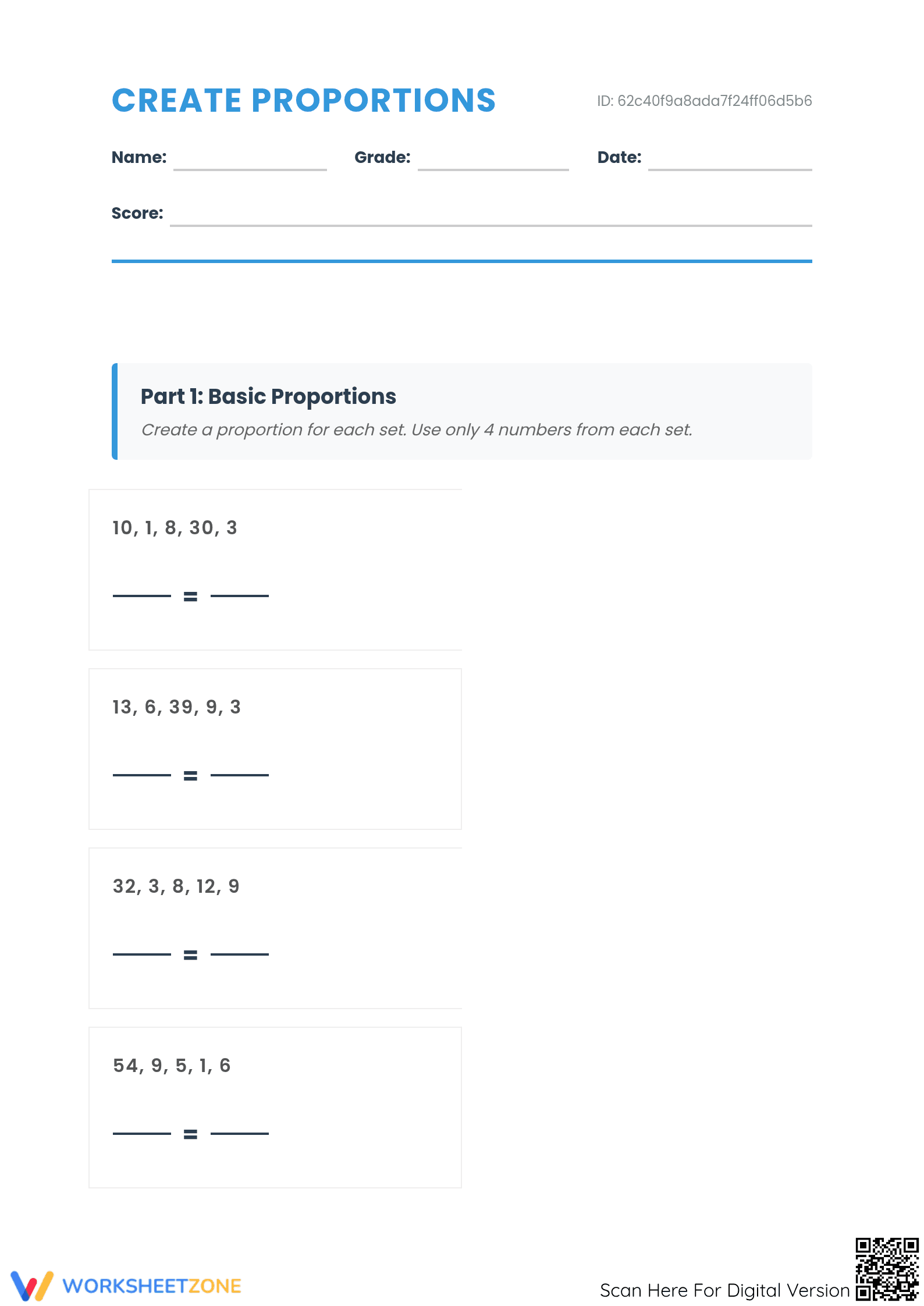
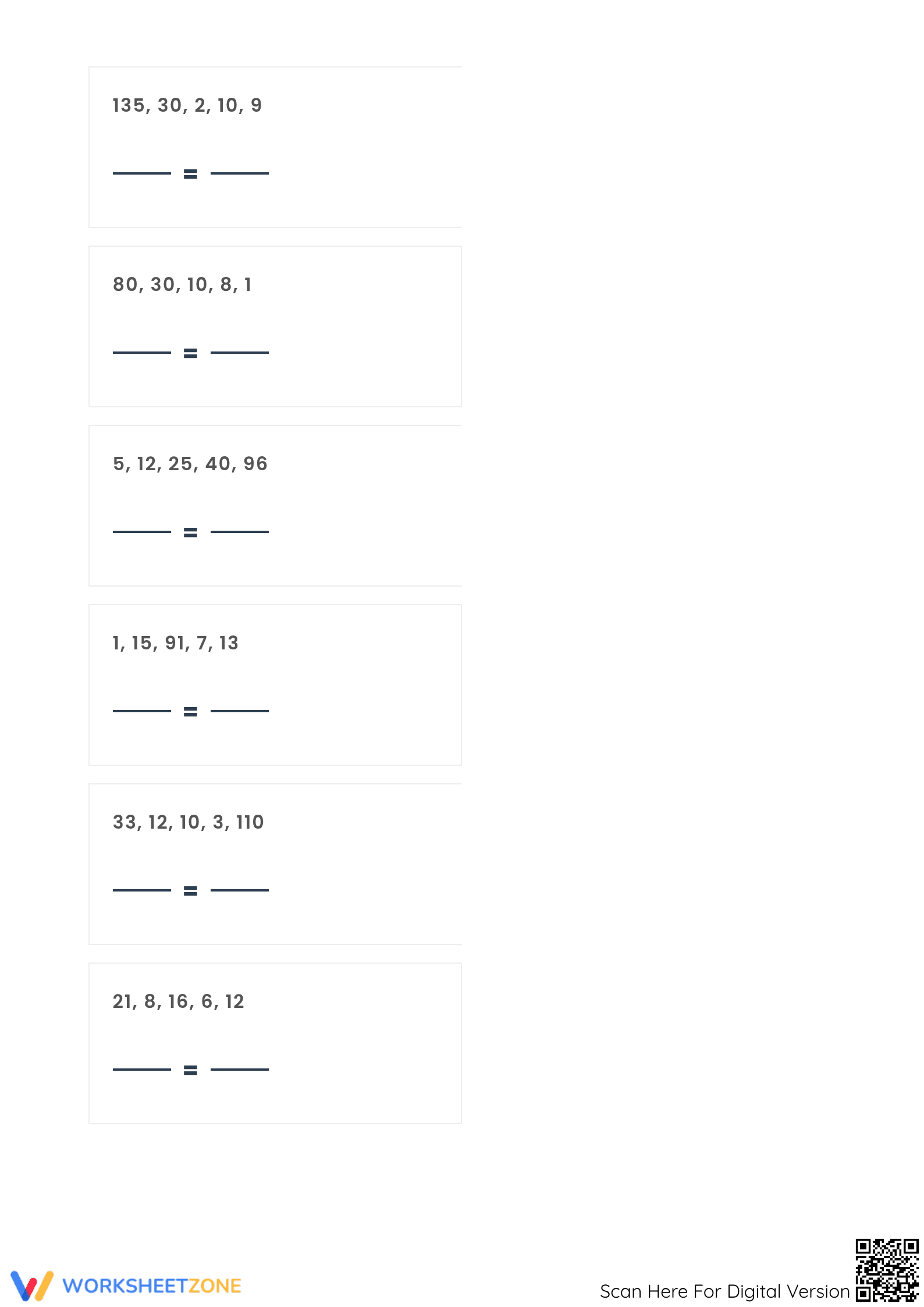
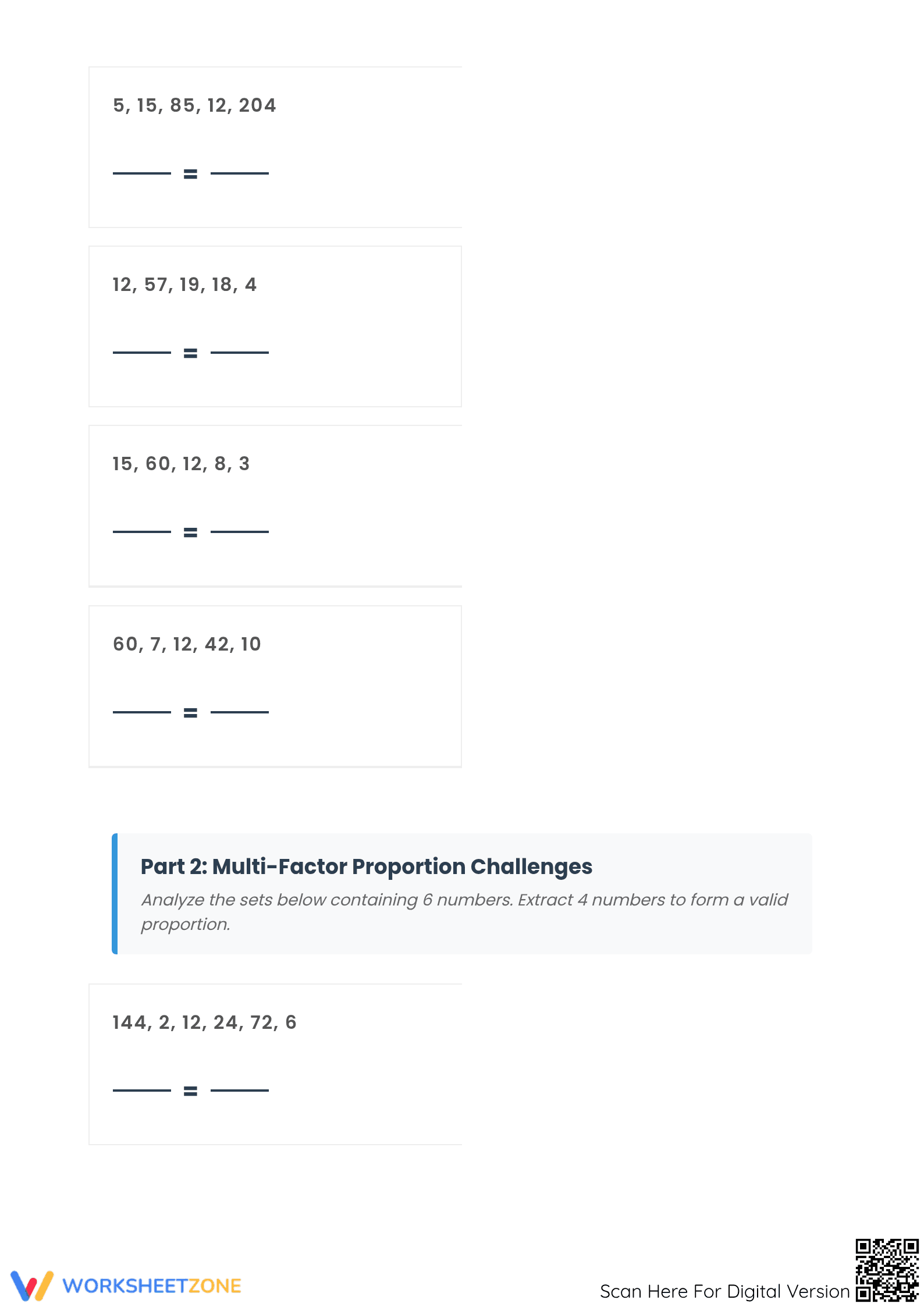
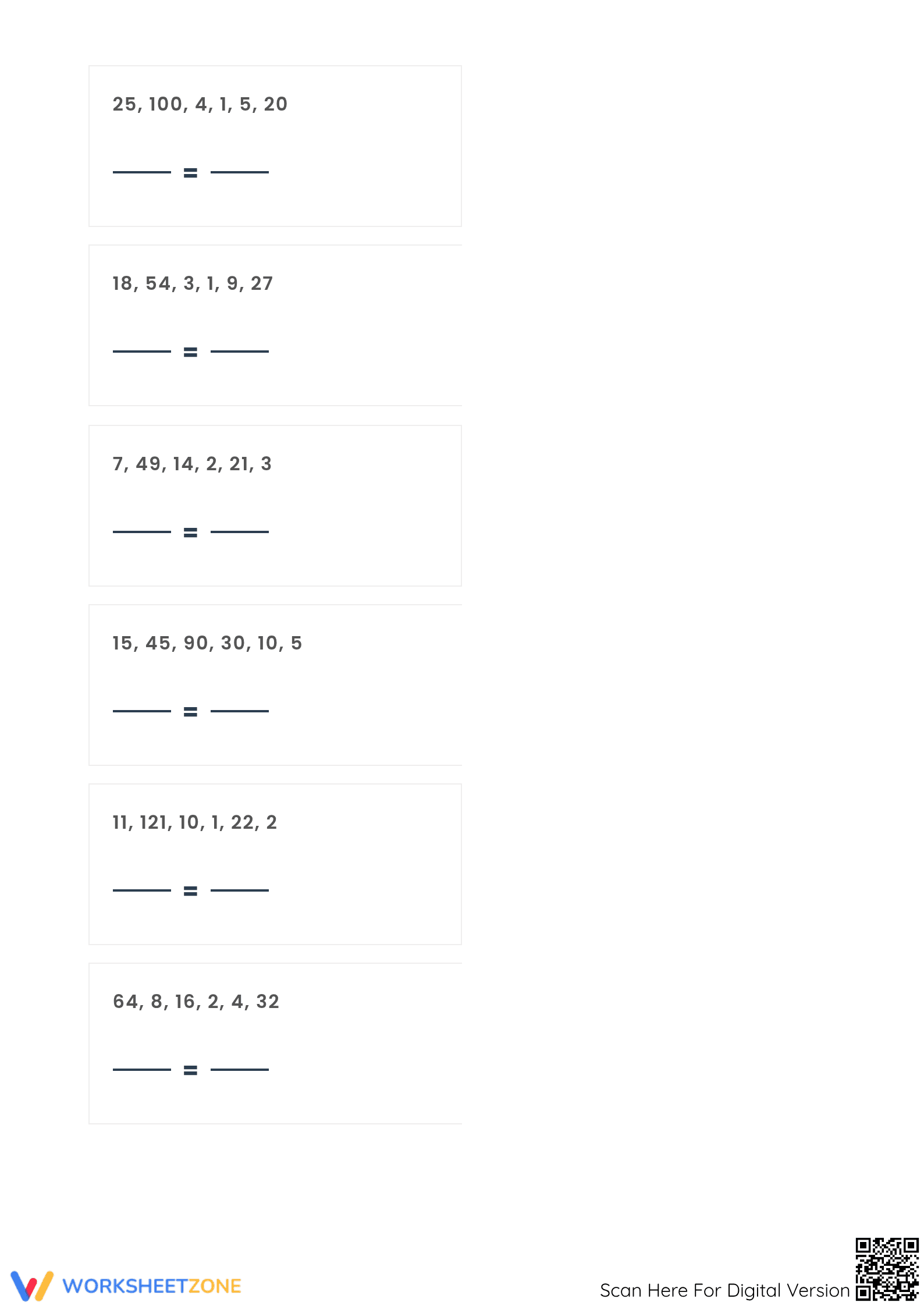

Essential Proportion Practice Worksheet | Grade 7 Math
Paste this activity's link or code into your existing LMS (Google Classroom, Canvas, Teams, Schoology, Moodle, etc.).
Students can open and work on the activity right away, with no student login required.
You'll still be able to track student progress and results from your teacher account.
This comprehensive 5-page proportions worksheet provides middle school students with rigorous practice in constructing valid mathematical proportions. By selecting the correct values from numerical sets and extracting data from real-world scenarios, learners solidify their understanding of equivalent ratios. This essential resource ensures students can represent proportional relationships accurately across varied mathematical contexts and difficulty levels.
At a Glance
- Grade: 7 · Subject: Math
- Standard:
7.RP.A.2— Recognize and represent proportional relationships between quantities through equation construction and analysis- Skill Focus: Creating equivalent proportions
- Format: 5 pages · 26 problems · Answer key included · PDF
- Best For: Independent practice and formative assessment
- Time: 25–35 minutes
What's Inside
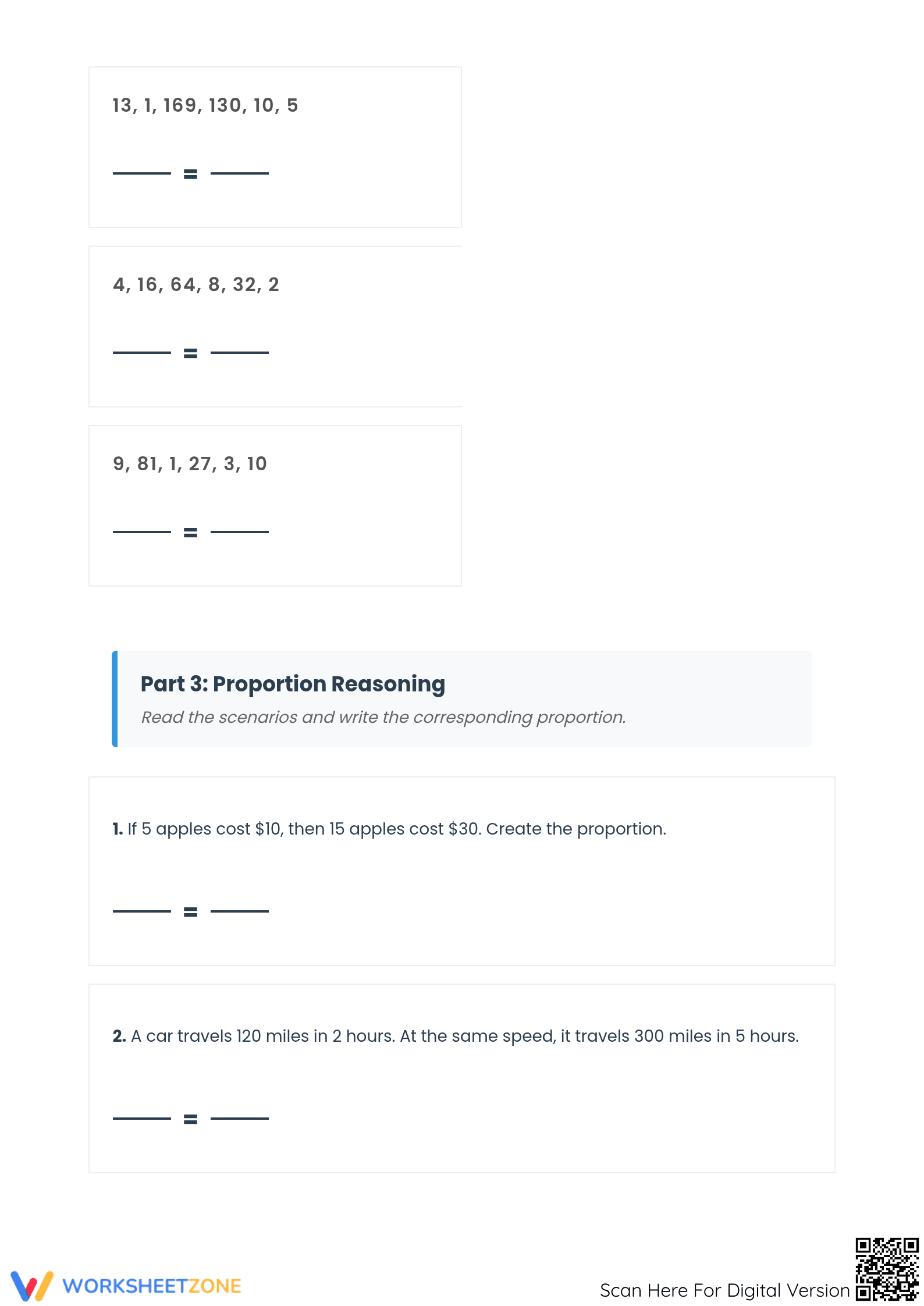
This packet includes five pages featuring 26 tasks to build ratio fluency. The worksheet is organized into three progressive parts: Basic Proportions, Multi-Factor Challenges, and Proportion Reasoning. Students identify the specific four numbers required to create a balanced equation from larger sets. The final section transitions to word-based scenarios, requiring students to translate text into mathematical statements. A full answer key is provided for immediate checking.
Skill Progression
- Guided Practice: The first page features sets of five numbers, allowing students to establish the logic of cross-multiplication to find equivalent ratios with simple integers.
- Supported Practice: Parts 1 and 2 introduce larger values and sets of six numbers, increasing the cognitive load as students evaluate multiple potential combinations.
- Independent Practice: The concluding section presents reasoning challenges where students extract ratios from situational text, demonstrating full mastery of proportions.
This structured approach moves from scaffolded numerical identification to independent conceptual application, following the gradual-release model.
Standards Alignment
The primary focus is standard `7.RP.A.2`, requiring students to recognize and represent proportional relationships. Students demonstrate they can create equations reflecting equivalence between ratios. The multi-factor sets also support `6.RP.A.3` for ratio reasoning. Both standard codes can be copied directly into lesson plans, IEP goals, or district curriculum mapping tools.
How to Use It
Use this as targeted practice during a unit on ratios. After demonstrating cross-products, assign the first pages to verify understanding. The reasoning problems on page 5 serve as an excellent exit ticket or bell-ringer activity. Observe students during the Multi-Factor section to identify if they use estimation or formal calculation to pair numbers.
Who It's For
This resource is designed for Grade 7 but works for Grade 6 acceleration or Grade 8 review. The clear layout makes it an effective tool for students requiring focused practice. It pairs perfectly with an anchor chart detailing the steps for checking proportional equality and is suitable for individual or small-group instruction.
The construction of this worksheet aligns with the instructional principles of "scaffolded independence," a concept explored in depth by Fisher & Frey (2014). By beginning with explicit numerical sets and progressing to word-based reasoning, the material supports students as they transition from simple recognition to higher-order representation. Mastery of proportional reasoning, specifically through the lens of `7.RP.A.2`, is a critical gateway skill for success in eighth-grade linear functions and high school algebra. Research indicates that students who engage in diverse task types—such as the 26 problems included here—develop more flexible mathematical thinking than those who only solve standard variable-based equations. This worksheet facilitates that flexibility by requiring students to find the relationship within a larger pool of data, reinforcing the internal logic of equivalent ratios. The inclusion of a citation-ready standard and plain-English outcomes ensures alignment with contemporary evidence-based curriculum standards.


