




























Views
Downloads
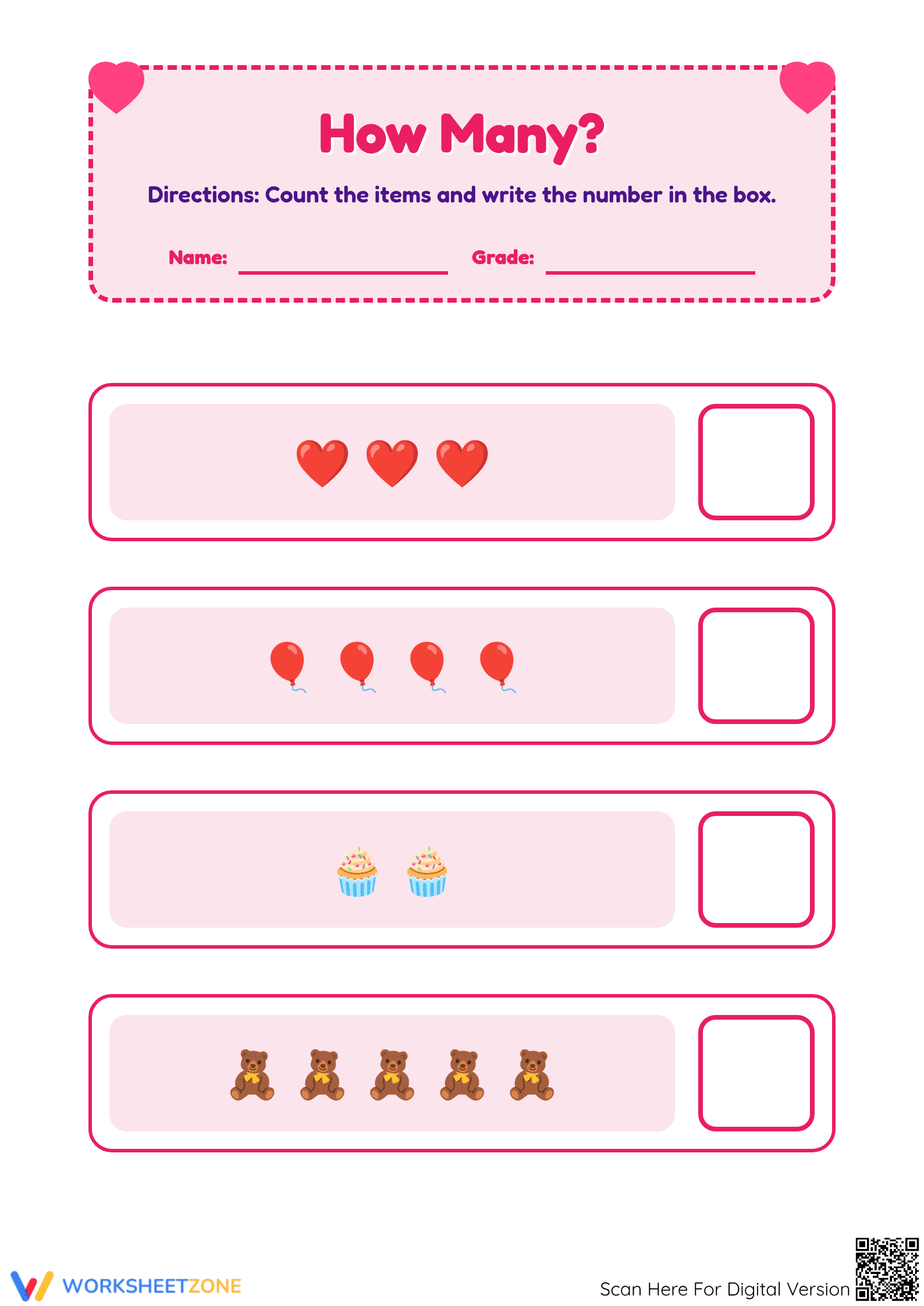
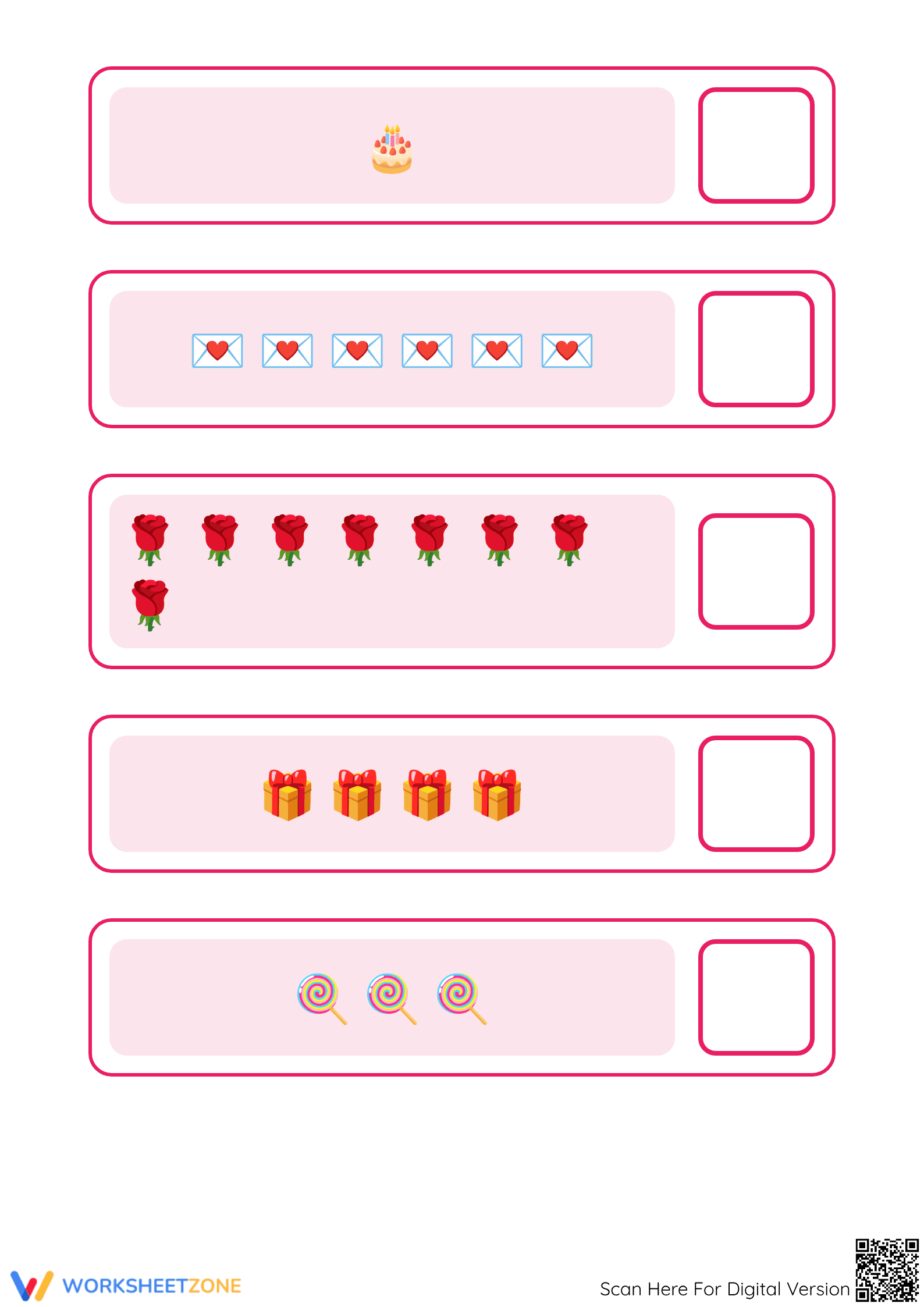
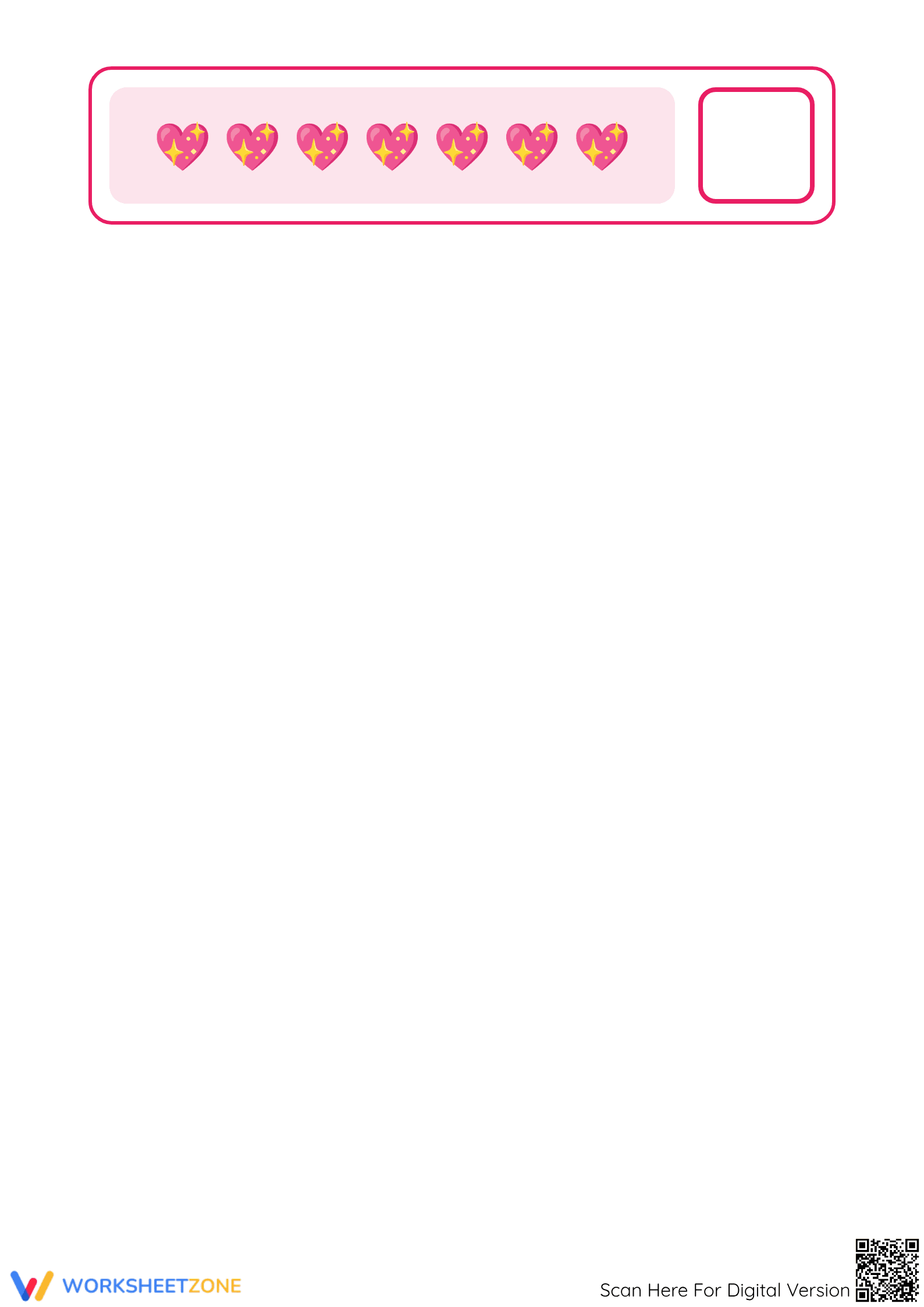

Grade K Valentine Counting — Printable No-Prep Worksheet

Paste this activity's link or code into your existing LMS (Google Classroom, Canvas, Teams, Schoology, Moodle, etc.).
Students can open and work on the activity right away, with no student login required.
You'll still be able to track student progress and results from your teacher account.
Developing Cardinality Skills
This Grade K Valentine counting worksheet helps students develop essential one-to-one correspondence skills through 10 themed counting tasks. Students count festive items like hearts and balloons, then record the corresponding numeral in the provided box. This activity ensures learners bridge the gap between physical quantities and symbolic number representation.
At a Glance
- Grade: Kindergarten · Subject: Mathematics
- Standard:
CCSS.MATH.CONTENT.K.CC.B.4— Connect counting to cardinality by understanding the relationship between numbers and quantities- Skill Focus: One-to-one correspondence and number writing
- Format: 3 pages · 10 problems · Answer key included · PDF
- Best For: Individual practice or math center activities
- Time: 10–15 minutes
Comprehensive Resource Overview
Inside this resource, you will find three pages of clear, visually engaging counting exercises. The worksheet features 10 distinct task boxes, each containing a group of Valentine-themed objects ranging from cupcakes to teddy bears. Each page includes a clear space for student names, while the final PDF package includes a comprehensive answer key for rapid assessment.
Zero-Prep Teacher Workflow
This resource is designed for immediate classroom implementation with zero preparation. Following a simple three-step workflow, you can integrate this into your lesson in minutes. First, print the three-page PDF. Second, distribute the sheets to your students for independent or guided work. Finally, use the included answer key for a quick review. This design makes it ideal for substitute plans or transitions.
Standards and Alignment
This activity is primarily aligned to `CCSS.MATH.CONTENT.K.CC.B.4`, which requires students to understand the relationship between numbers and quantities. By counting objects and writing the matching number, students demonstrate that the last number name said tells the quantity of objects counted. This standard code can be copied directly into lesson plans, IEP goals, or curriculum mapping tools.
Classroom Implementation Strategies
Deploy this worksheet during your morning work block or as a quiet activity during a Valentine's Day classroom celebration. For a formative assessment tip, observe students as they count to see if they are touching each object once; this identifies those who may need additional support with one-to-one correspondence. Most students complete these 10 tasks within 12 minutes.
Intended Student Audience
This resource is tailored for Kindergarten students, though it also serves as remediation for first graders who need extra support. The repetitive structure provides a safe environment for English Language Learners to practice number vocabulary. Pair this worksheet with physical heart-shaped erasers for a multi-sensory math experience that reinforces the counting sequence effectively.
Research from RAND AIRS 2024 highlights that consistent practice with one-to-one correspondence in early childhood is a strong predictor of future mathematical fluency. By engaging with themed, high-interest visuals, students are more likely to sustain attention during counting tasks. This worksheet addresses the core requirements of the CCSS.MATH.CONTENT.K.CC.B.4 standard by requiring students to count objects and produce a written numeral, a dual-task challenge that reinforces the conceptual link between sets and symbols. Data from the NAEP suggests that early mastery of these cardinality principles prevents counting errors in later operations. Teachers can confidently utilize this resource to build the cognitive scaffolds necessary for more complex addition and subtraction. The 10 structured problems provided here offer the exact volume of practice recommended for establishing a permanent mental map of small-set quantities in a classroom setting.


