


























Views
Downloads

Essential Fraction, Decimal, Percent, and Ratio Worksheet
Paste this activity's link or code into your existing LMS (Google Classroom, Canvas, Teams, Schoology, Moodle, etc.).
Students can open and work on the activity right away, with no student login required.
You'll still be able to track student progress and results from your teacher account.
This comprehensive math worksheet provides targeted practice for students mastering the conversion between fractions, decimals, percents, and ratios. By working through structured grids and real-world scenarios, learners develop the numerical fluency required for advanced middle school mathematics. This resource ensures students can transition between different number representations with confidence.
At a Glance
- Grade: 6–7 · Subject: Math
- Standard:
CCSS.MATH.CONTENT.6.RP.A.3— Find a percent as a rate per 100 and solve conversion problems- Skill Focus: Multi-way Number Equivalency
- Format: 4 pages · 31 problems · Answer key included · PDF
- Best For: Middle school math centers and test prep
- Time: 45–60 minutes
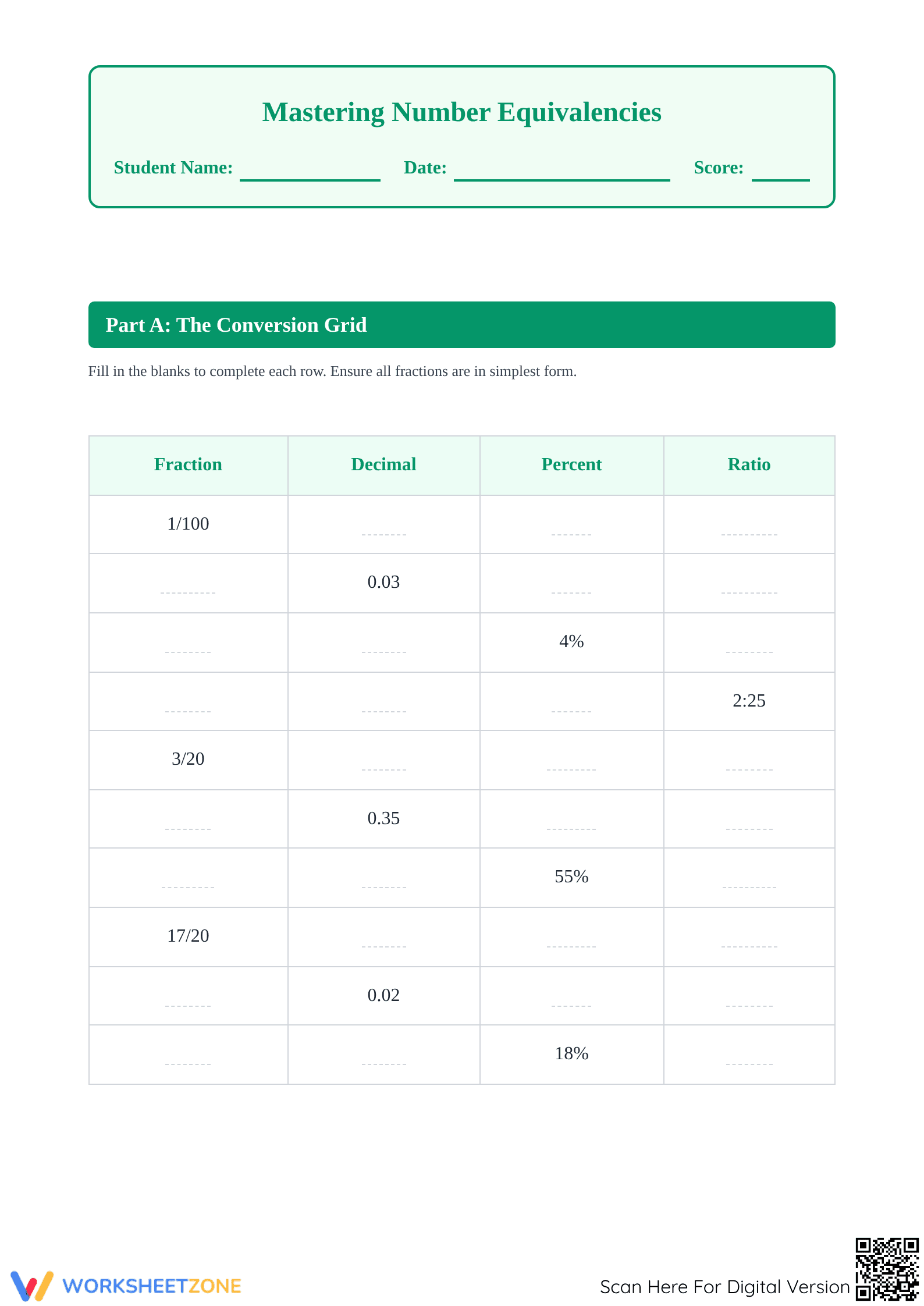
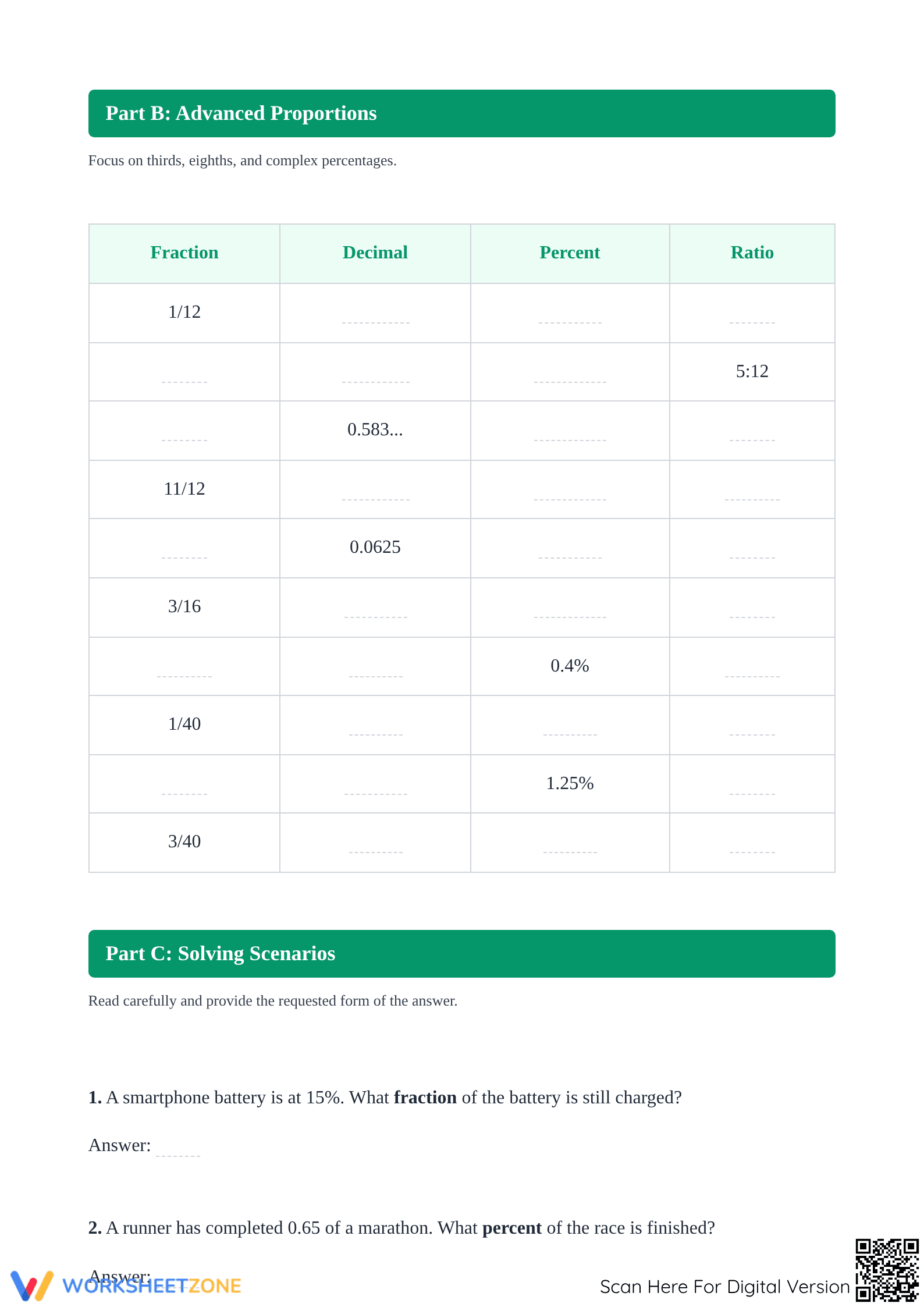
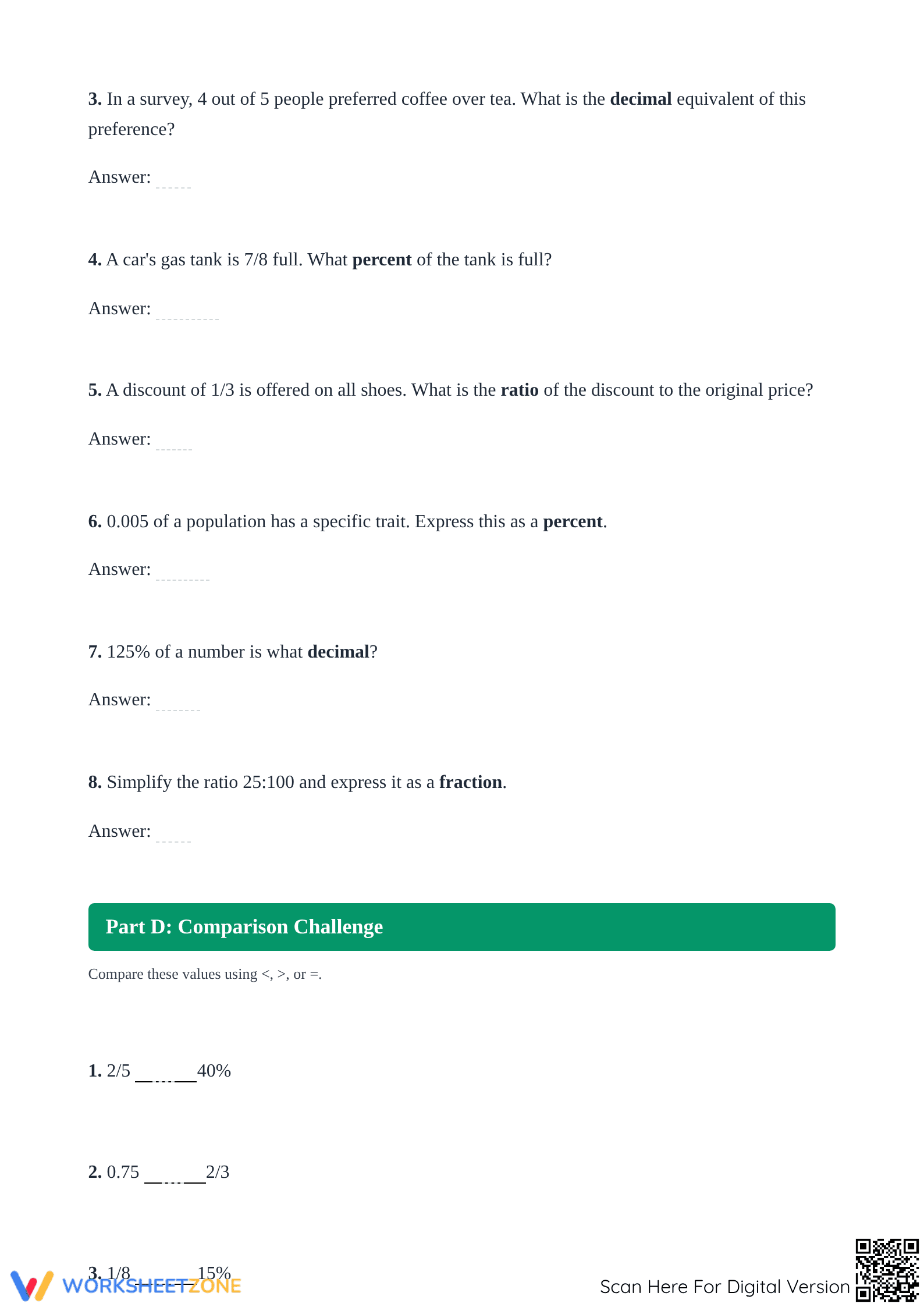
The download features a robust four-page packet organized into four distinct sections. Part A uses a conversion grid for foundational values, while Part B introduces complex percentages and repeating decimals. Part C provides eight word problems applying these skills to scenarios like battery life and survey data. Finally, Part D offers comparison challenges. A full answer key and strategy box are included.
Skill Progression
- Guided Practice: The initial conversion grid provides 10 scaffolded rows where one value is given, allowing students to anchor their understanding of basic equivalencies like 1/100 and 0.03.
- Supported Practice: Part B increases the cognitive load by requiring conversions for complex fractions such as 3/16 and 1/40, alongside complex percentages like 1.25% and repeating decimals.
- Independent Practice: The solving scenarios and comparison challenges require students to apply their knowledge without structural hints, testing their ability to translate between formats in unformatted contexts.
This gradual-release approach follows the "I Do, We Do, You Do" instructional model to move students from basic recognition to procedural mastery.
Standards Alignment
This resource is primarily aligned with CCSS.MATH.CONTENT.6.RP.A.3, which requires students to find a percent of a quantity as a rate per 100 and solve problems involving finding the whole, given a part and the percent. Additionally, it supports CCSS.MATH.CONTENT.7.NS.A.2.D by emphasizing the conversion of rational numbers to terminating or repeating decimals. Both standard codes can be copied directly into lesson plans, IEP goals, or district curriculum mapping tools.
How to Use It
Incorporate this worksheet during the independent practice phase of a unit on ratios and proportional relationships. It serves as an excellent formative assessment tool; teachers should observe if students are consistently struggling with the transition from fractions to repeating decimals in Part B. Expected completion time is 45 to 60 minutes, making it suitable for a full class period or a multi-day homework assignment.
Who It's For
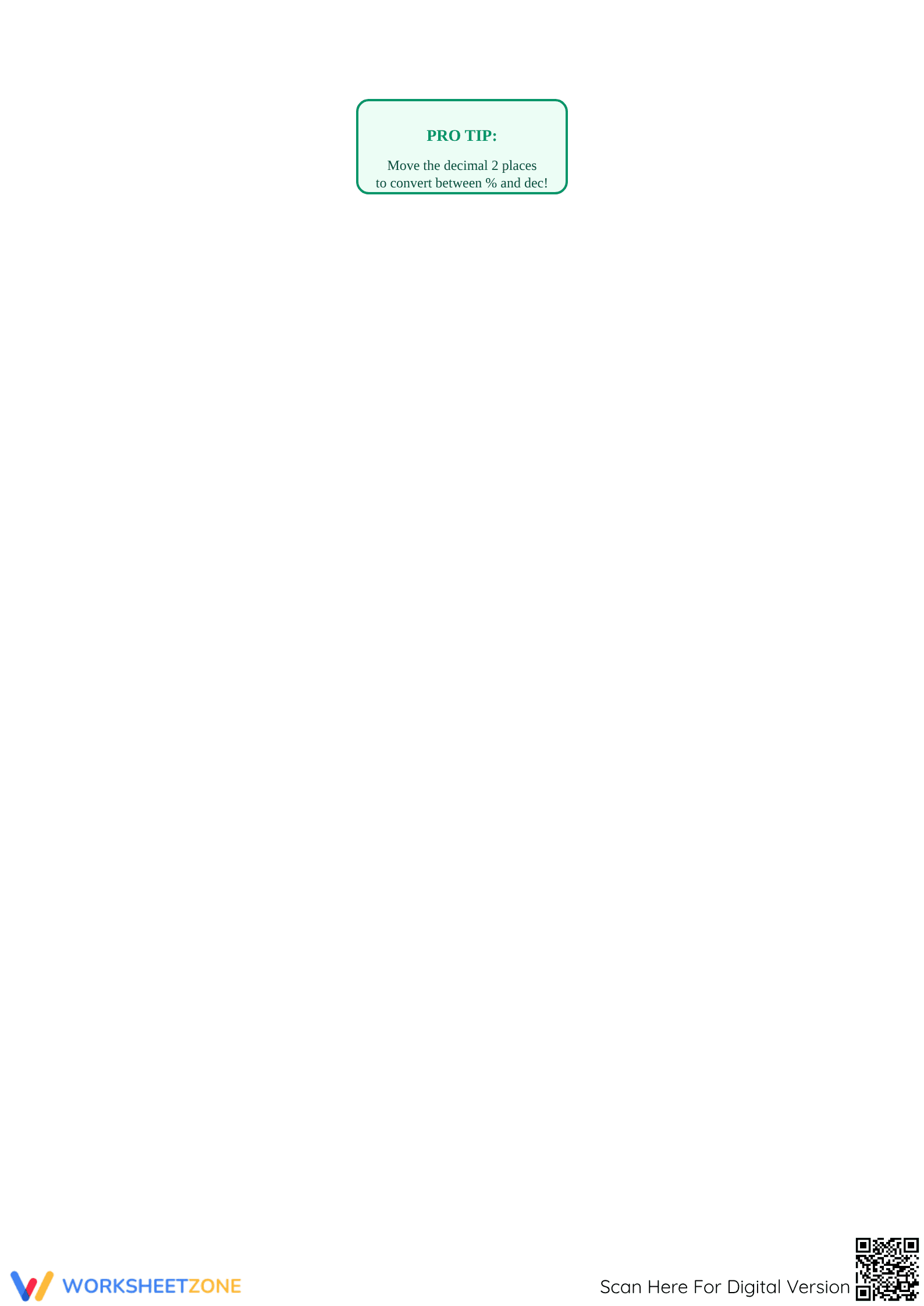
This packet is designed for Grade 6 and Grade 7 students, but it also provides valuable remediation for Grade 8 and Grade 9 learners who need to strengthen their foundational number sense. It is particularly effective for students who benefit from structured visual organizers. Pair this resource with a visual anchor chart demonstrating the "Move the Decimal" rule mentioned in the worksheet’s Pro Tip box.
This worksheet provides 31 distinct tasks for active conversion and comparison of rational numbers, crucial for middle grades math. Integrating word problems and abstract grids, it ensures students grasp both the "how" and "why" of numerical transformations, fostering procedural fluency essential for advanced mathematics.


