




























Views
Plays

Contour Lines Art Worksheet | Grade 1-3 Essential

Paste this activity's link or code into your existing LMS (Google Classroom, Canvas, Teams, Schoology, Moodle, etc.).
Students can open and work on the activity right away, with no student login required.
You'll still be able to track student progress and results from your teacher account.
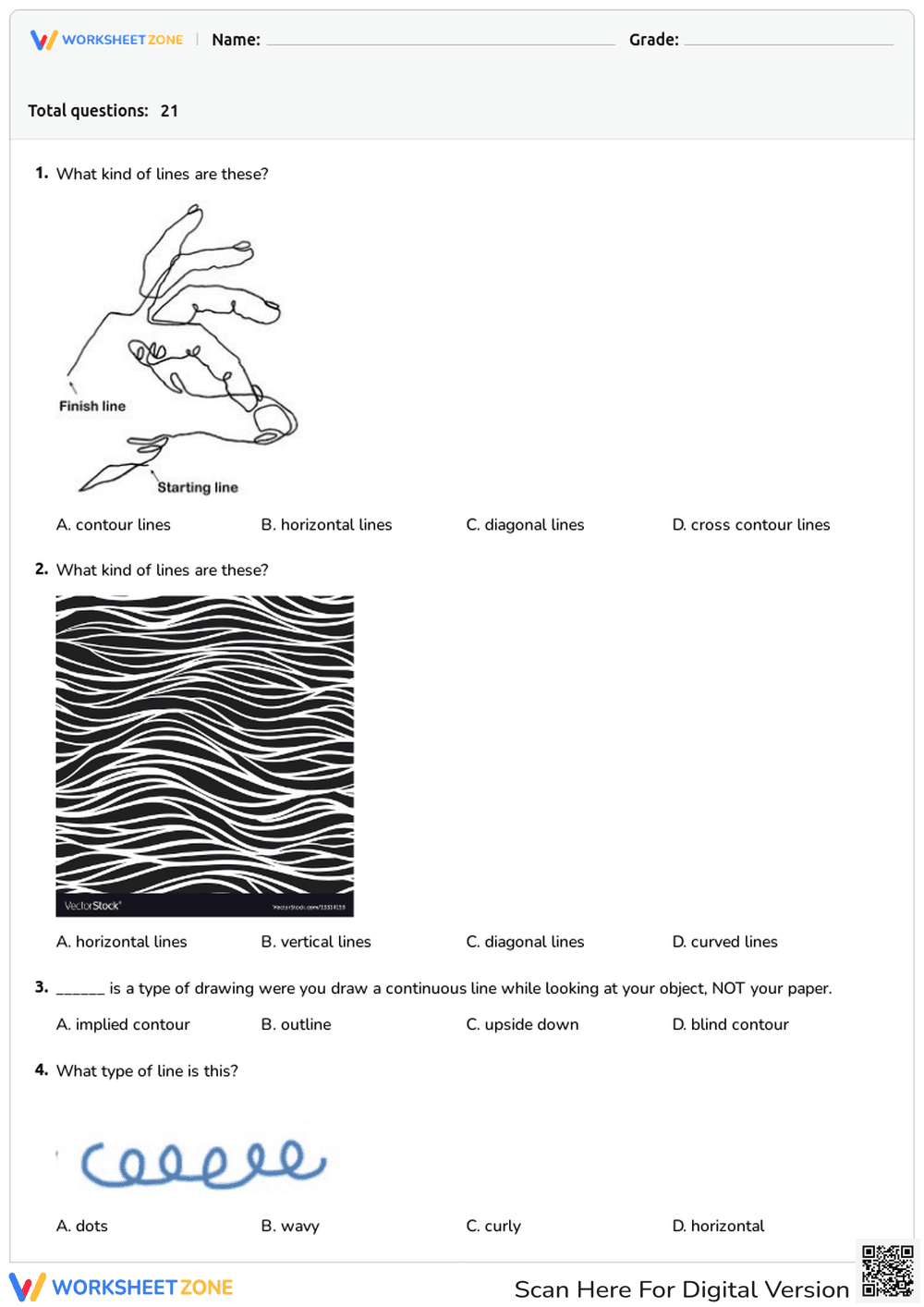
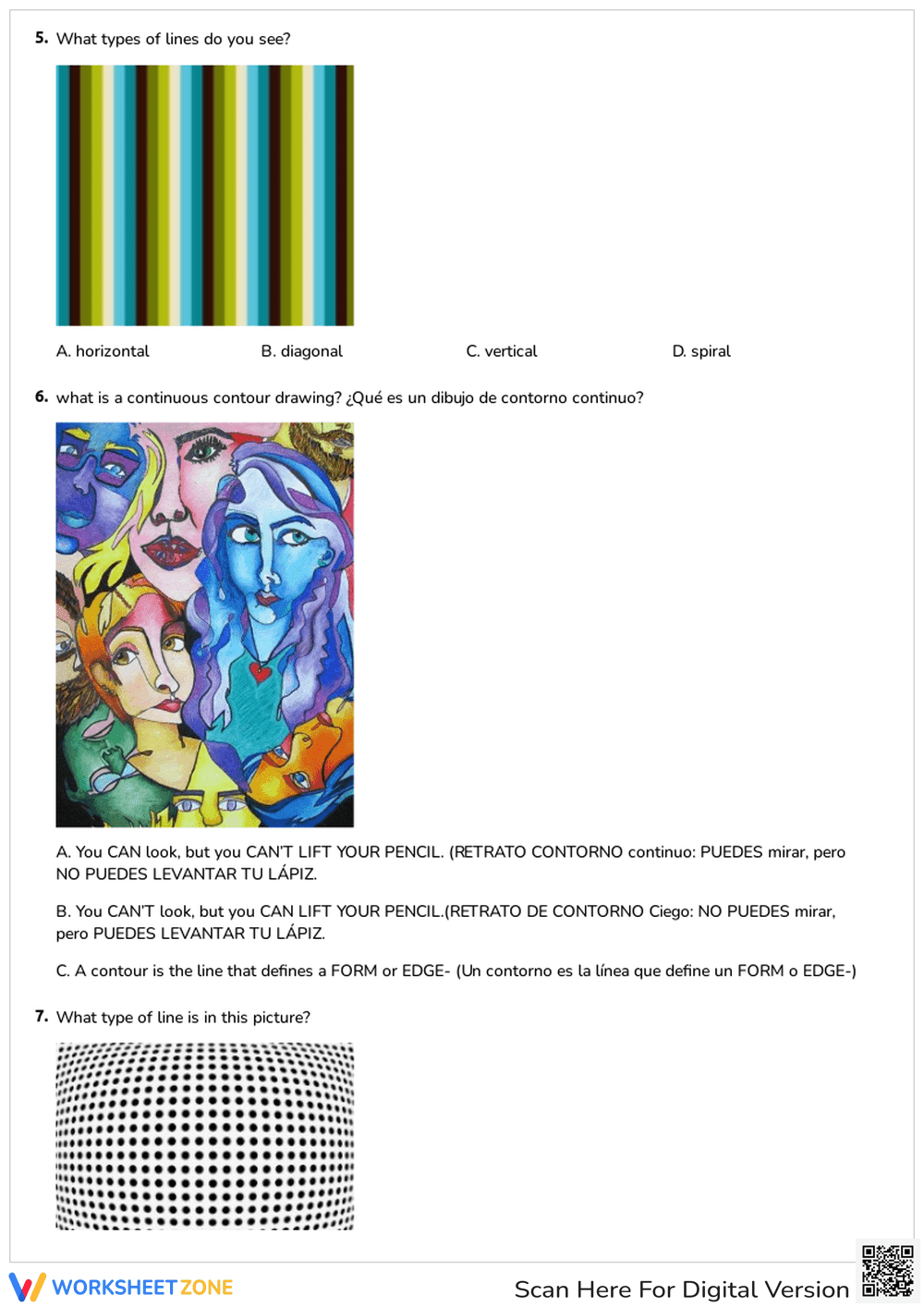
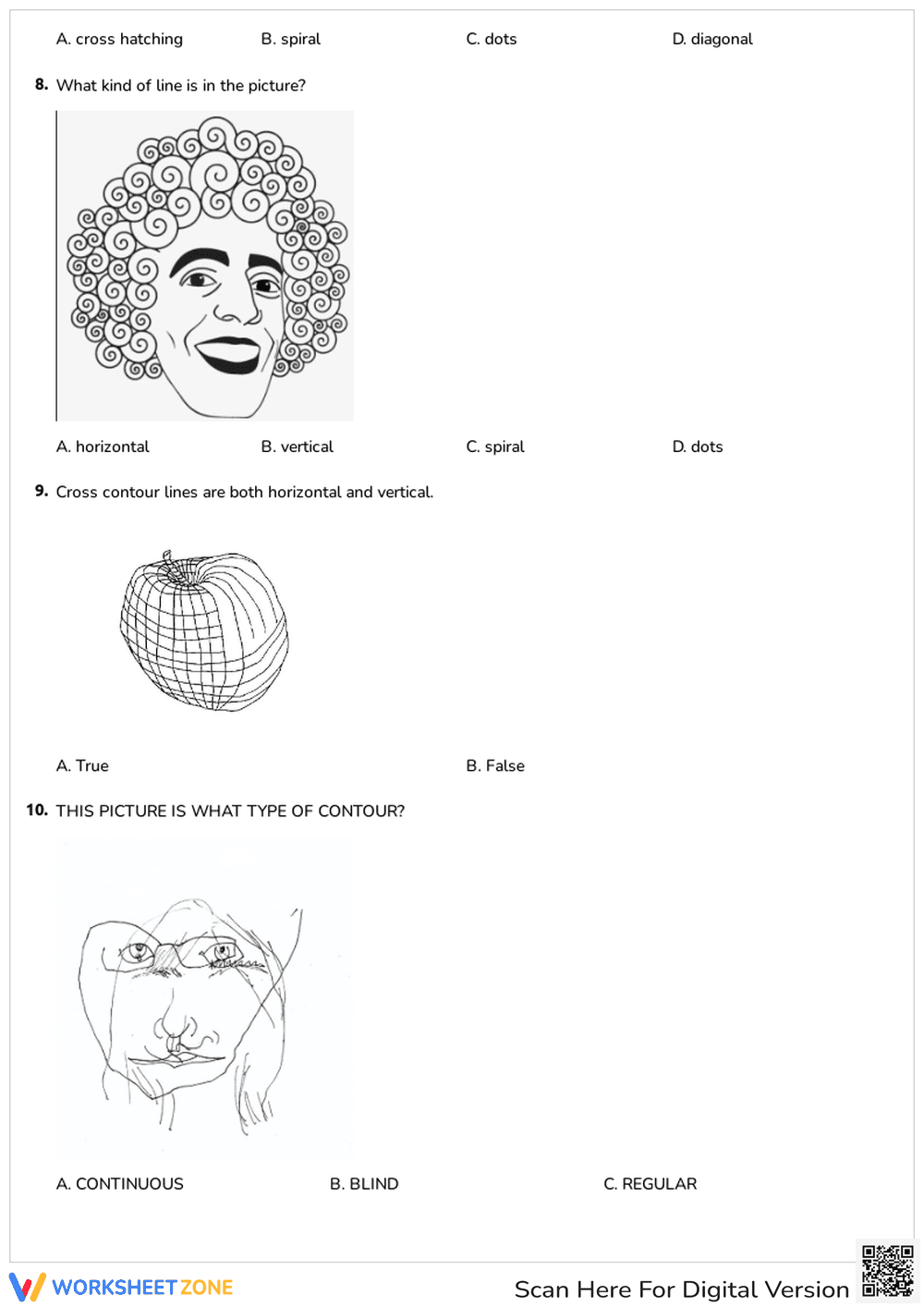
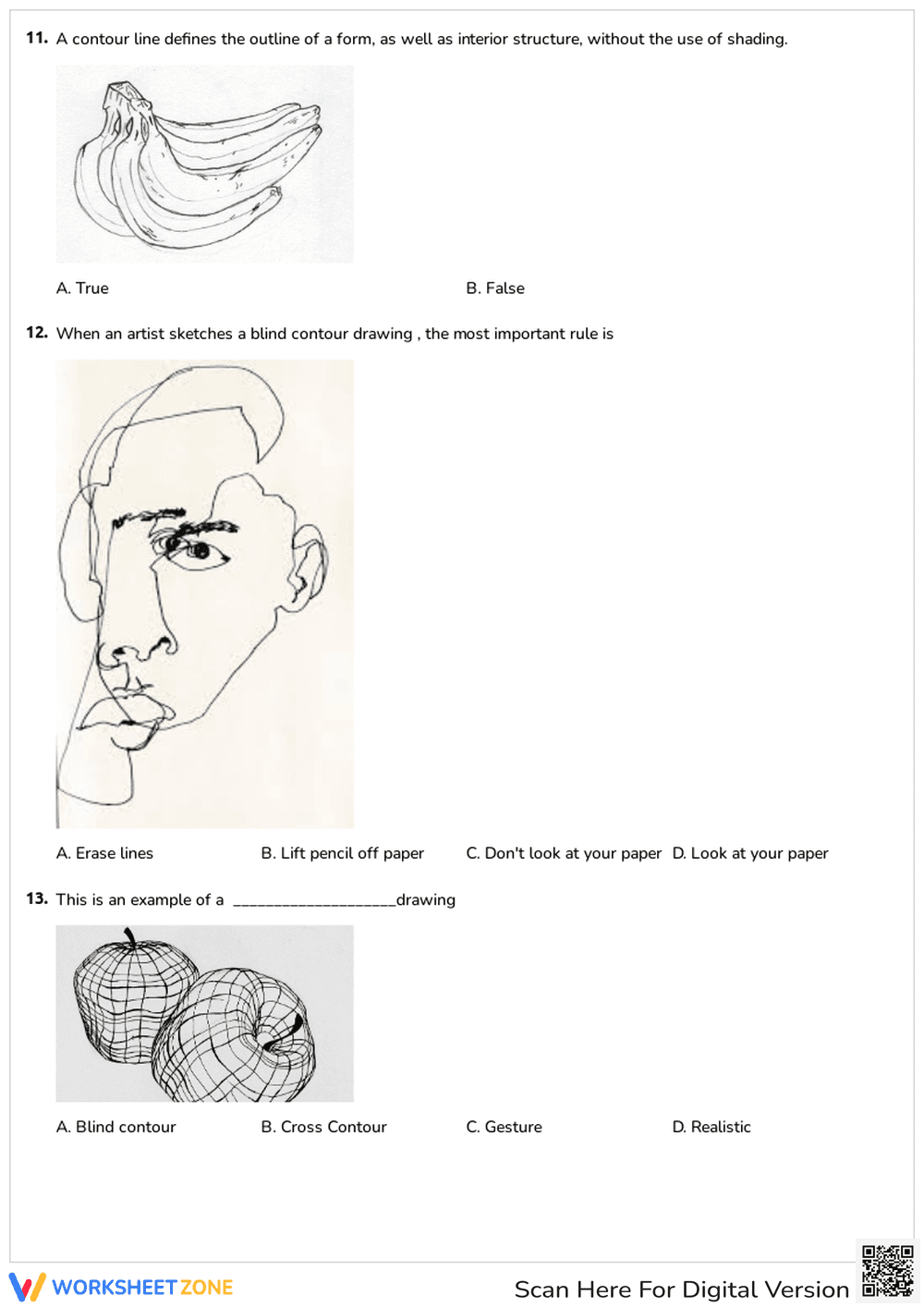
This comprehensive art worksheet helps elementary students master the fundamental concept of contour lines through visual identification and technical definitions. By engaging with 21 diverse questions, learners develop the ability to distinguish between blind, continuous, and cross-contour techniques, ensuring they can apply these essential drawing skills to their own creative projects immediately.
At a Glance
- Grade: 1-3 · Subject: Art
- Standard:
VA:Cr2.1.2a— Experiment with various materials and tools to explore personal interests in a work of art- Skill Focus: Contour line identification and terminology
- Format: 7 pages · 21 problems · Answer key included · PDF
- Best For: Art room assessment or sub plans
- Time: 20–30 minutes
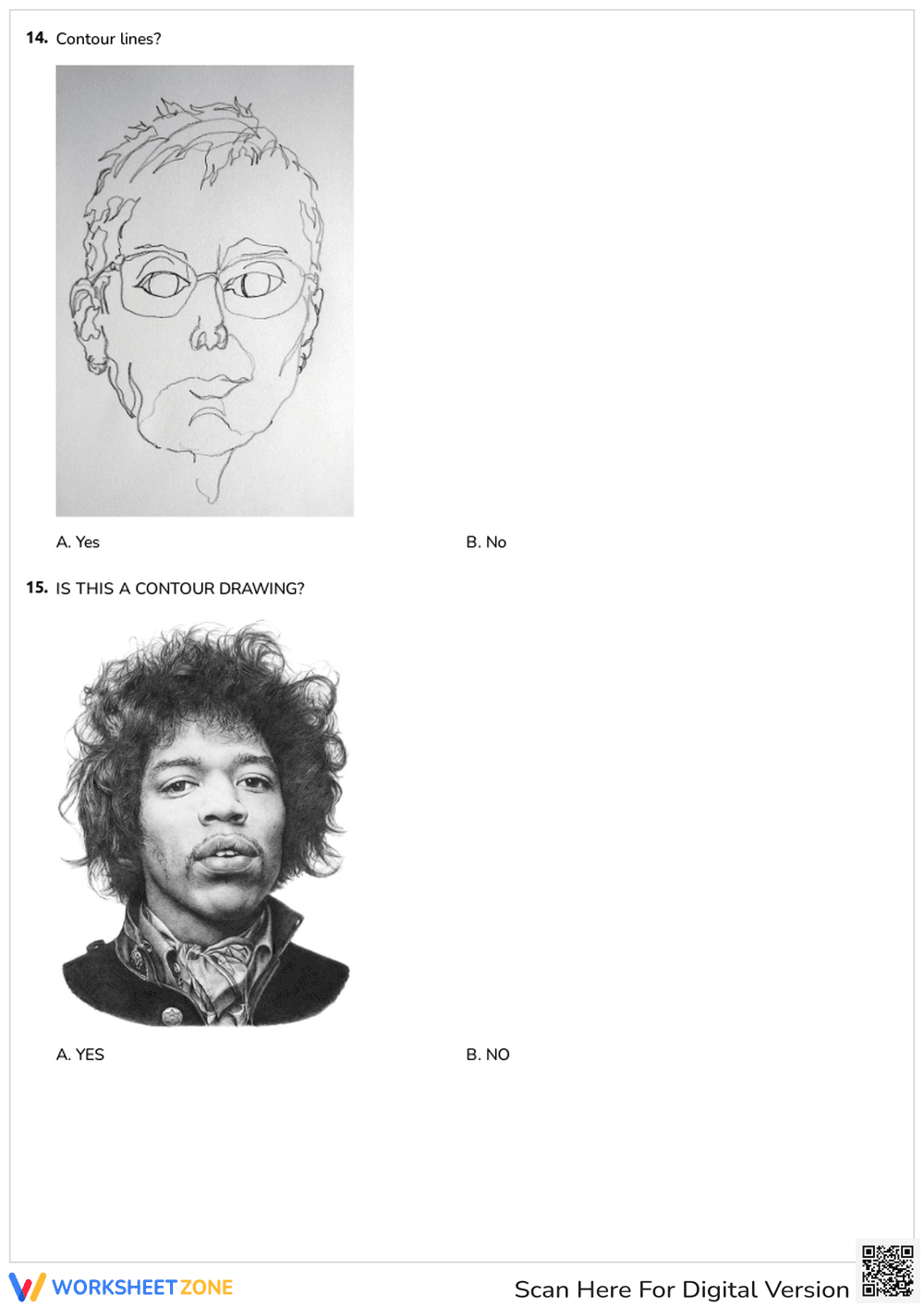
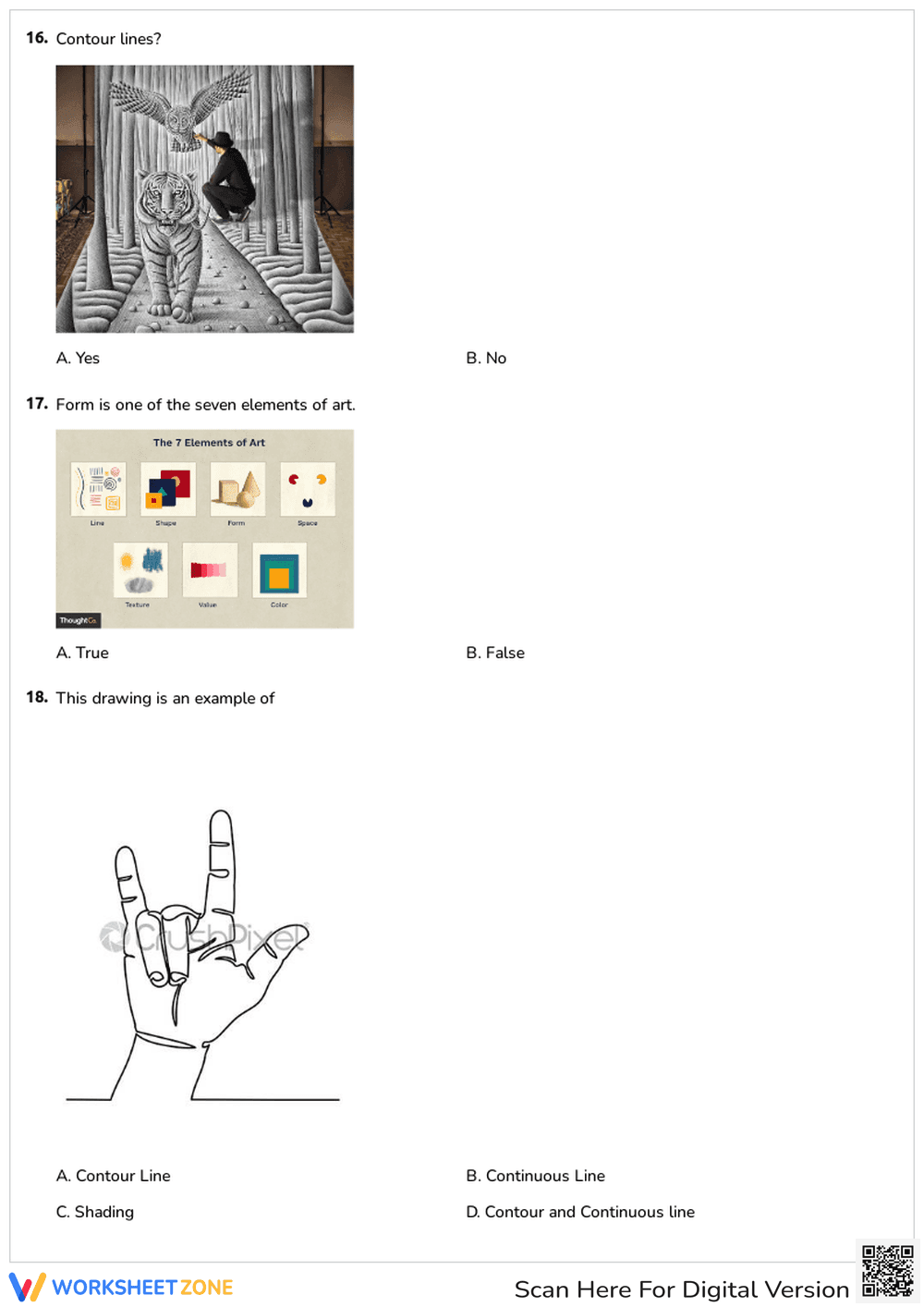
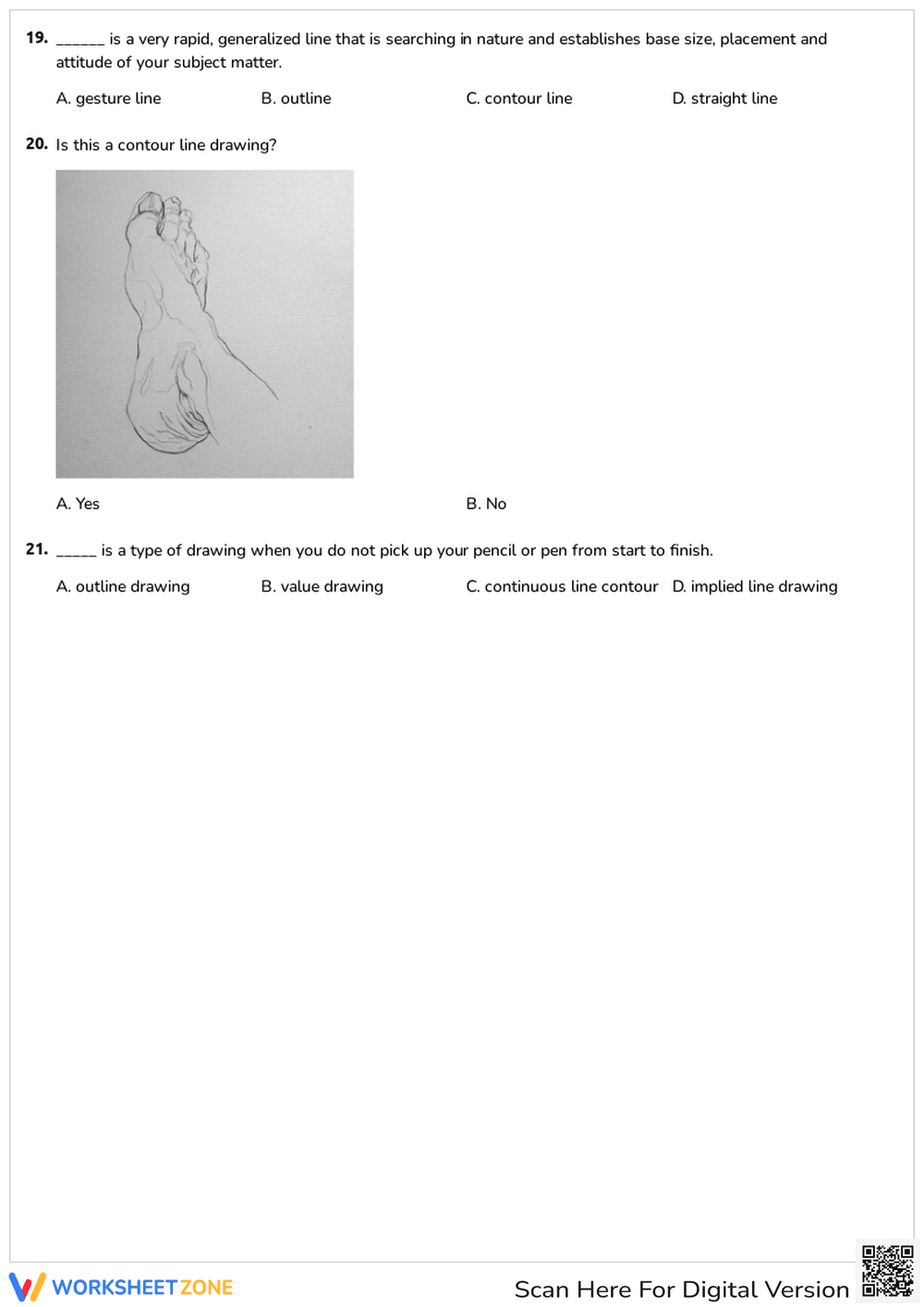
What's Inside: This 7-page PDF resource features a robust collection of 21 multiple-choice and true/false questions designed to test student knowledge of line types. The worksheet includes high-quality visual examples of blind contour portraits, cross-contour still lifes, and continuous line drawings. A full answer key is provided to facilitate quick grading, and the layout uses clear, large-print text suitable for early elementary readers.
Zero-Prep Workflow
- Print (1 minute): Select the pages you need and print enough copies for your class. The black-and-white friendly design saves ink while maintaining visual clarity.
- Distribute (30 seconds): Hand out the packets as a quiet-work activity or a formal assessment following a drawing demonstration.
- Review (5 minutes): Use the included answer key to review concepts as a whole group, allowing students to self-correct and discuss the visual differences between line styles.
This resource is specifically designed to require zero teacher setup, making it an ideal emergency sub plan or a transition activity between major art units.
Standards Alignment: This resource is aligned to the National Core Arts Standard `VA:Cr2.1.2a`, which focuses on experimenting with tools and materials to explore art-making. By identifying specific line techniques, students build the vocabulary necessary to meet grade-level expectations for artistic literacy. This standard code can be copied directly into lesson plans, IEP goals, or district curriculum mapping tools.
How to Use It: Assign this worksheet as a formative assessment during a unit on the Elements of Art to gauge student understanding of line. It works exceptionally well as a pre-test before starting a blind contour portrait project. Expect students to complete the 21 questions in approximately 25 minutes. For a quick check, observe students during question 12 to see if they understand the "no-looking" rule of blind contouring.
Who It's For: This worksheet is tailored for students in Grades 1 through 3 who are beginning to explore formal drawing techniques. It provides necessary scaffolding for young artists through visual cues and simplified definitions. Pair this resource with a live demonstration of continuous line drawing or a printed anchor chart showing the seven elements of art for a complete instructional experience.
According to research by Fisher & Frey (2014) on the gradual release of responsibility, providing students with clear visual models and technical definitions is a critical step in moving from guided instruction to independent artistic practice. This worksheet supports that transition by requiring students to analyze 21 distinct artistic examples before attempting their own drawings. By reinforcing the standard VA:Cr2.1.2a, the resource ensures that learners are not just drawing, but are understanding the specific mechanics of line as a foundational element of form. The inclusion of diverse techniques like gesture and cross-contour helps build a sophisticated visual vocabulary early in a student's development. This structured approach to art theory has been shown to improve student confidence when tackling complex observational drawing tasks in the elementary classroom setting.


