


























Views
Downloads


Compound Words Worksheet | Grade 1 Essential Printable
Paste this activity's link or code into your existing LMS (Google Classroom, Canvas, Teams, Schoology, Moodle, etc.).
Students can open and work on the activity right away, with no student login required.
You'll still be able to track student progress and results from your teacher account.
This Grade 1 English Language Arts resource helps students master the construction and identification of compound words through a series of engaging, structured activities. By combining simple nouns to form complex terms, young learners build foundational vocabulary skills and improve their overall reading comprehension and spelling accuracy.
At a Glance
- Grade: 1 · Subject: English Language Arts (ELA)
- Standard:
CCSS.ELA-LITERACY.L.1.6— Use words and phrases acquired through reading and responding to texts- Skill Focus: Compound Word Formation and Identification
- Format: 5 pages · 25 problems · Answer key included · PDF
- Best For: Independent practice or literacy centers
- Time: 20–30 minutes
What's Inside
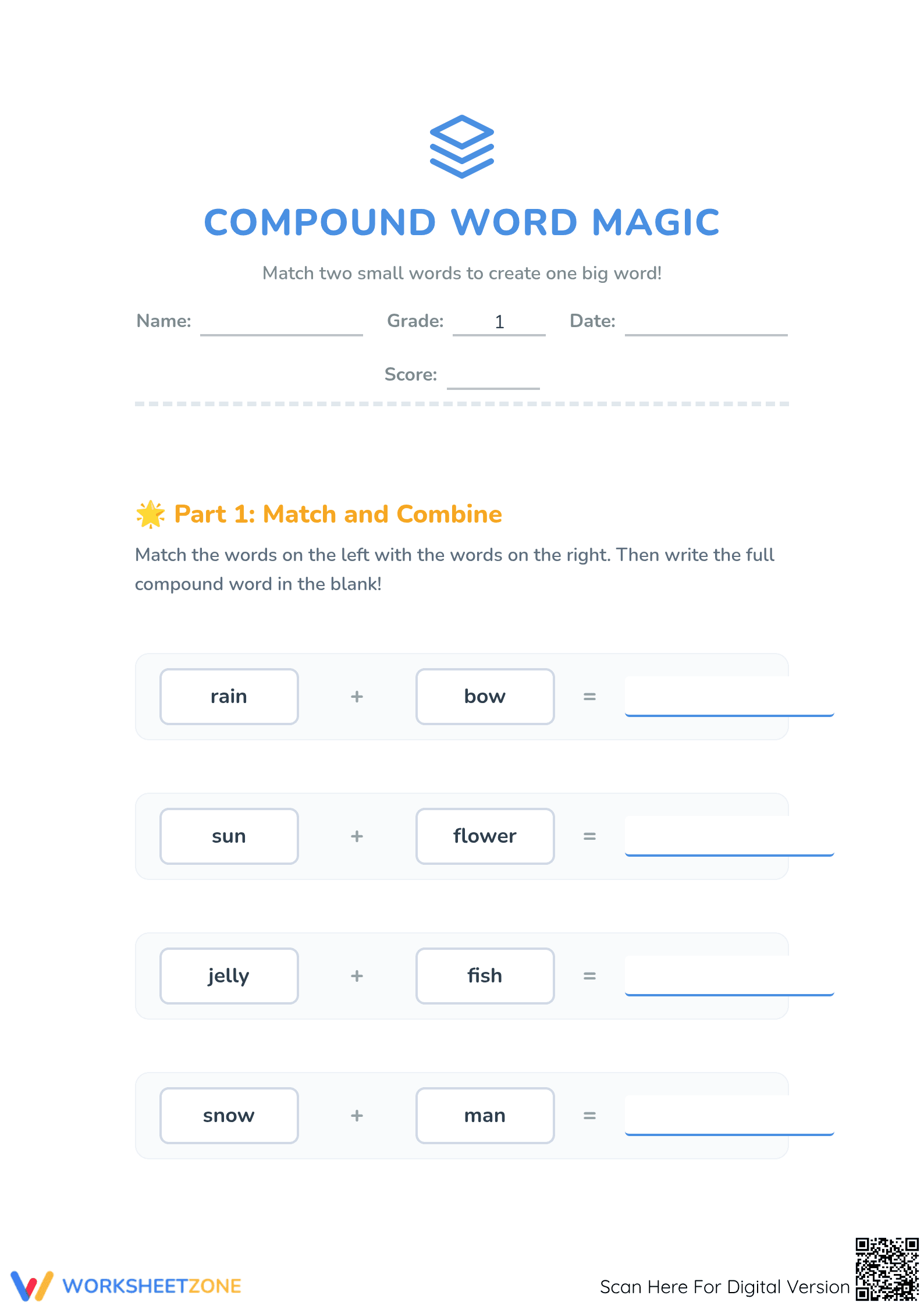
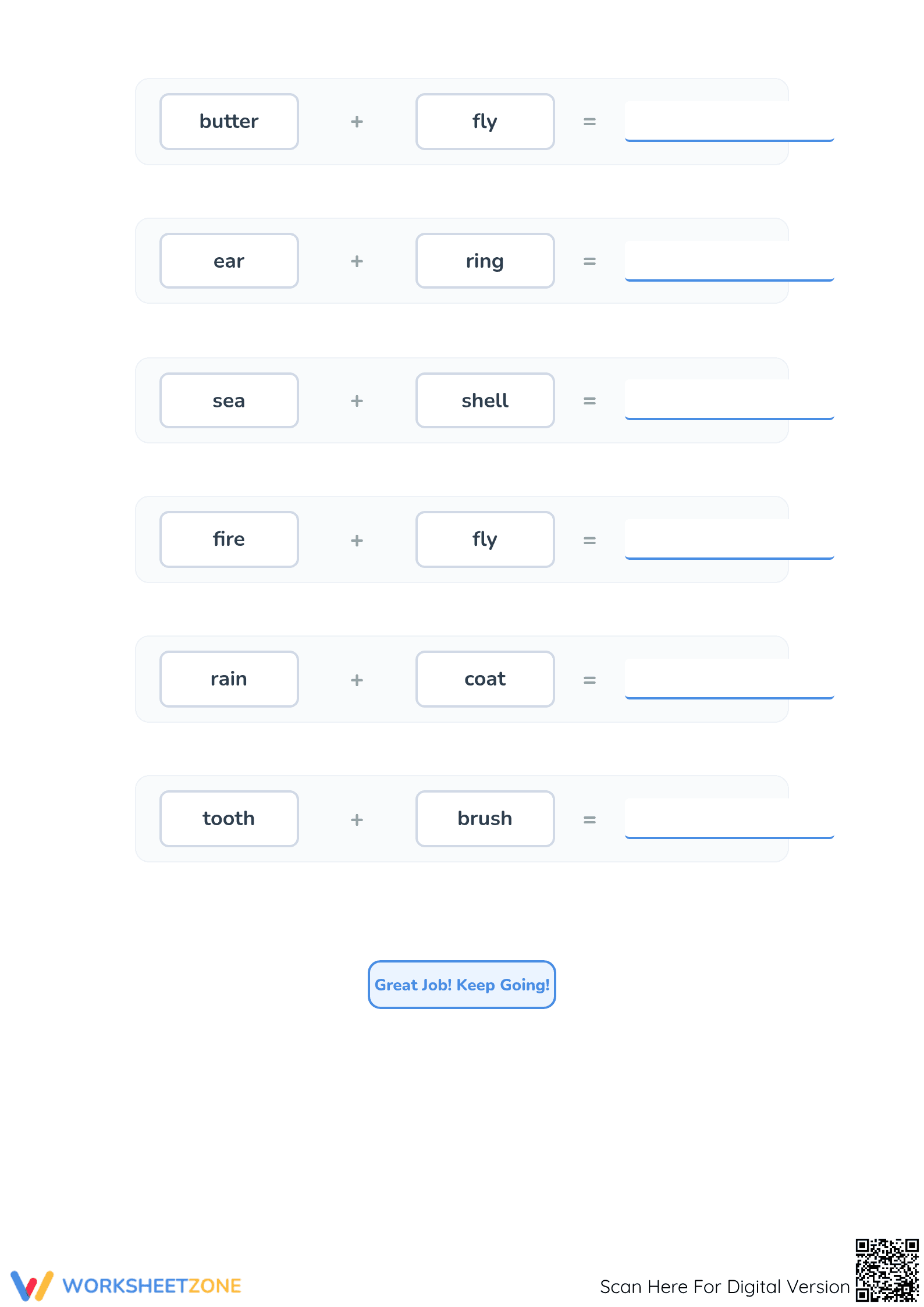
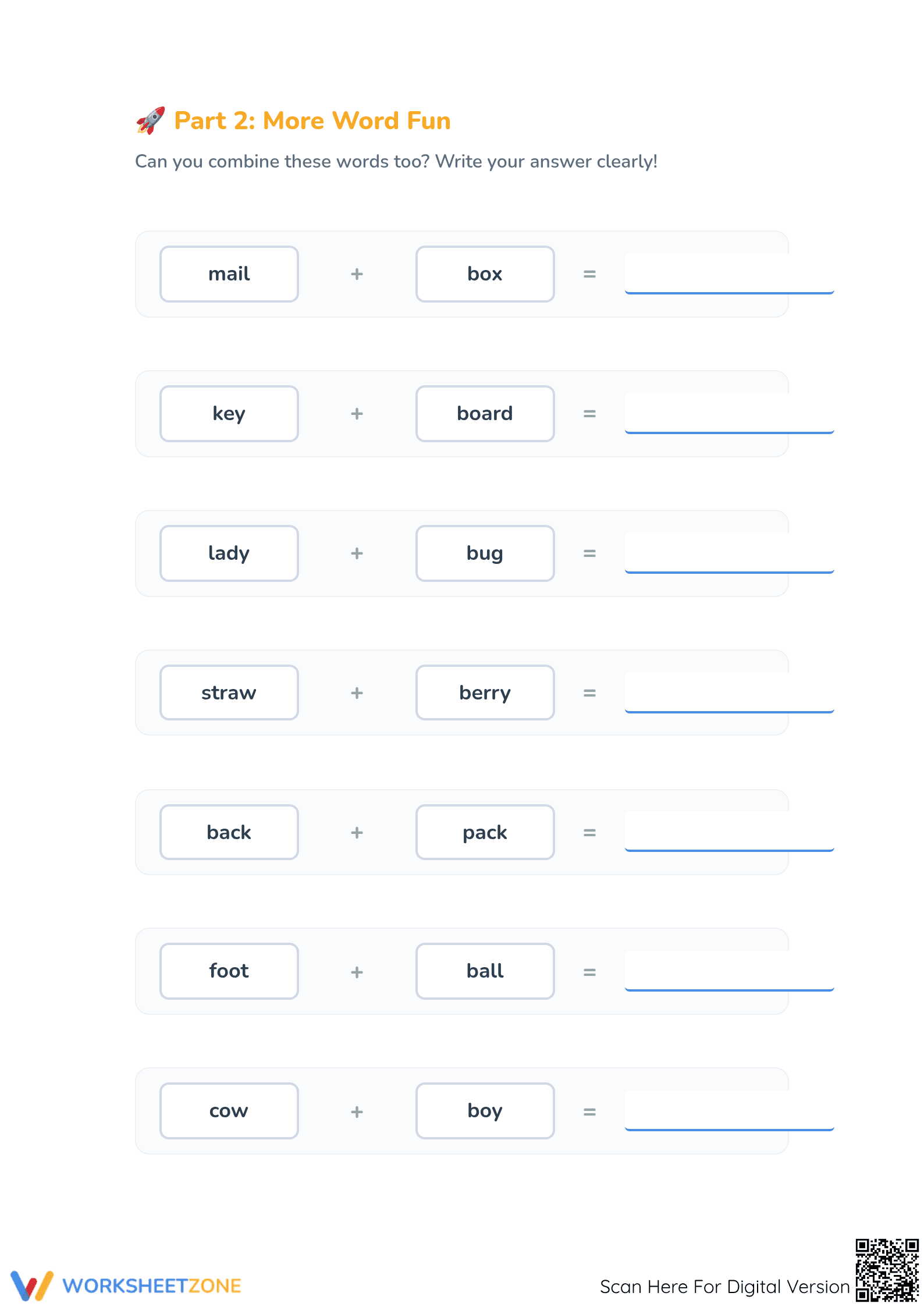
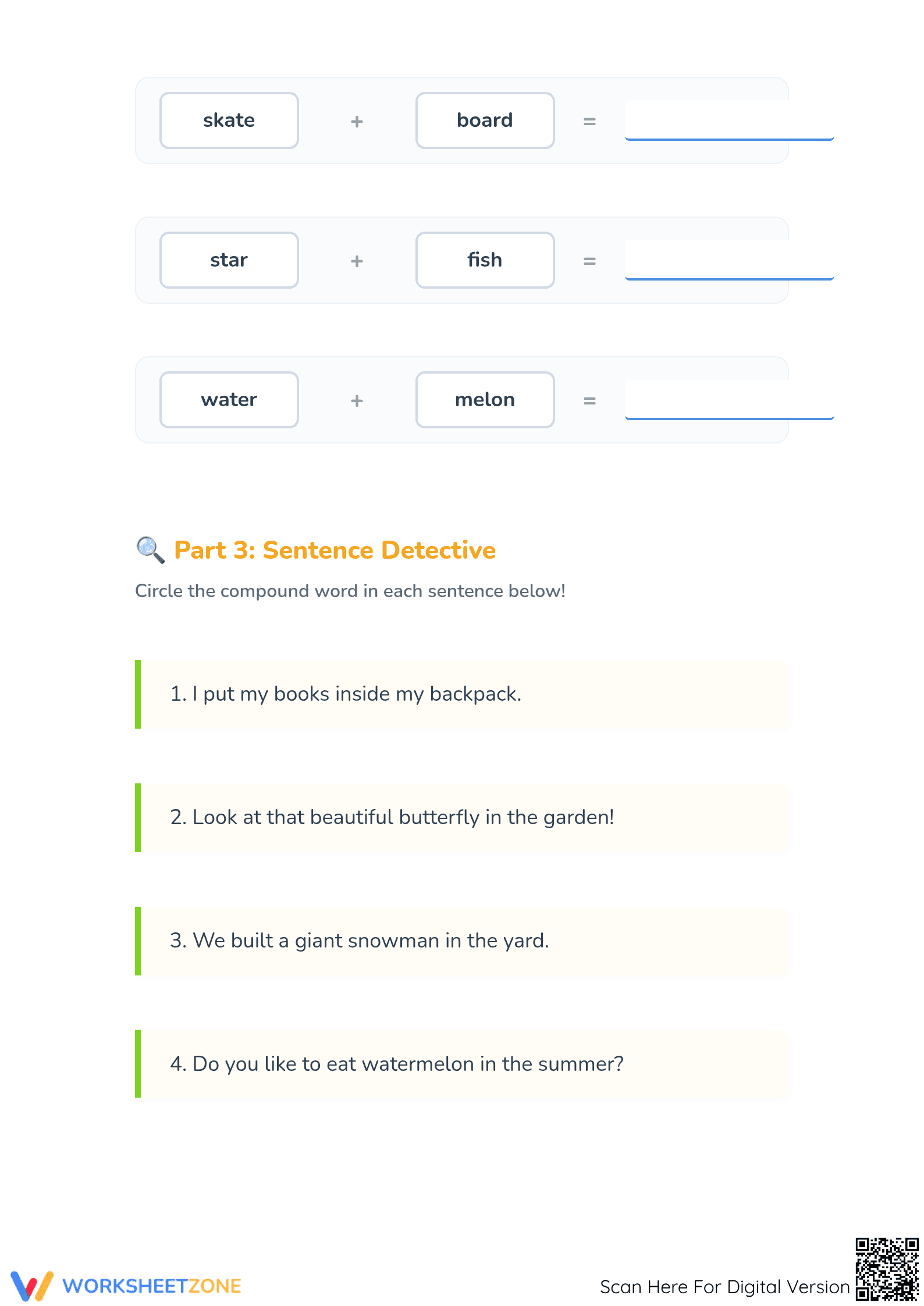
This comprehensive 5-page PDF packet features three distinct sections designed to scaffold learning. "Part 1: Match and Combine" uses visual equations to help students merge root words. "Part 2: More Word Fun" provides additional practice with common terms like "backpack" and "football." Finally, "Part 3: Sentence Detective" challenges students to identify compound words within contextual sentences, ensuring they can recognize these structures in real-world reading scenarios.
Zero-Prep Workflow
The zero-prep workflow is designed for teacher efficiency. First, print the 5-page packet (30 seconds). Second, distribute the worksheets to students during your literacy block or as morning work (1 minute). Third, review the completed tasks using the included full-color answer key to provide immediate feedback on student progress (10 minutes). This resource is perfectly suited for emergency sub plans or quick filler activities between lessons.
Standards Alignment
This worksheet is primary aligned to `CCSS.ELA-LITERACY.L.1.6`, which requires students to "use words and phrases acquired through conversations, reading and being read to, and responding to texts." By dissecting and reassembling words, students also meet vocabulary acquisition goals found in surrounding standards. Both standard codes can be copied directly into lesson plans, IEP goals, or district curriculum mapping tools.
How to Use It
Use this packet during small-group instruction to support students who need extra practice with word structures. For a formative assessment, observe students during Part 3 to see if they can identify compound words without the visual prompts. Most first graders will complete the entire 5-page sequence in approximately 20 to 30 minutes, making it an ideal choice for literacy centers or independent desk work.
Who It's For
This resource is crafted for first-grade students, but it serves as an excellent remedial tool for second graders or a challenging enrichment activity for advanced kindergarteners. It is also highly effective for ESL/ELL students learning the logic of English word formation. For the best results, pair this worksheet with a compound word anchor chart or a read-aloud passage featuring descriptive vocabulary.
According to the research of Fisher & Frey (2014), the gradual release of responsibility model is essential for literacy development, particularly when introducing morphological structures like compound words. This Grade 1 resource utilizes that pedagogical framework by moving from scaffolded matching tasks to independent identification within sentences. Aligned to CCSS.ELA-LITERACY.L.1.6, the worksheet addresses the need for first graders to expand their lexical depth by understanding how smaller root words combine. Research indicates that explicit instruction in word parts helps students decode unfamiliar text more efficiently, a skill that correlates with long-term reading success in primary grades. By providing 25 structured opportunities for practice, this printable ensures students develop the automaticity required for fluent reading and writing. This systematic approach supports varied learning styles and ensures students can confidently apply their knowledge across different educational contexts throughout the school year.


