


























Views
Downloads

Grade 1 Compound Words — Printable No-Prep Worksheet
Paste this activity's link or code into your existing LMS (Google Classroom, Canvas, Teams, Schoology, Moodle, etc.).
Students can open and work on the activity right away, with no student login required.
You'll still be able to track student progress and results from your teacher account.
Compound words are an essential building block for early literacy and vocabulary development in the first grade. This printable worksheet helps students understand how two distinct words merge to form a completely new meaning. By engaging with these 15 structured tasks, young learners gain confidence in decoding common compound words through matching and writing exercises.
At a Glance
- Grade: 1 · Subject: English Language Arts (ELA)
- Standard:
CCSS.ELA-LITERACY.L.1.4— Determine or clarify the meaning of unknown and multiple-meaning words and phrases- Skill Focus: Compound Word Construction and Decomposition
- Format: 3 pages · 15 problems · Answer key included · PDF
- Best For: Independent practice and quick literacy centers
- Time: 15–20 minutes
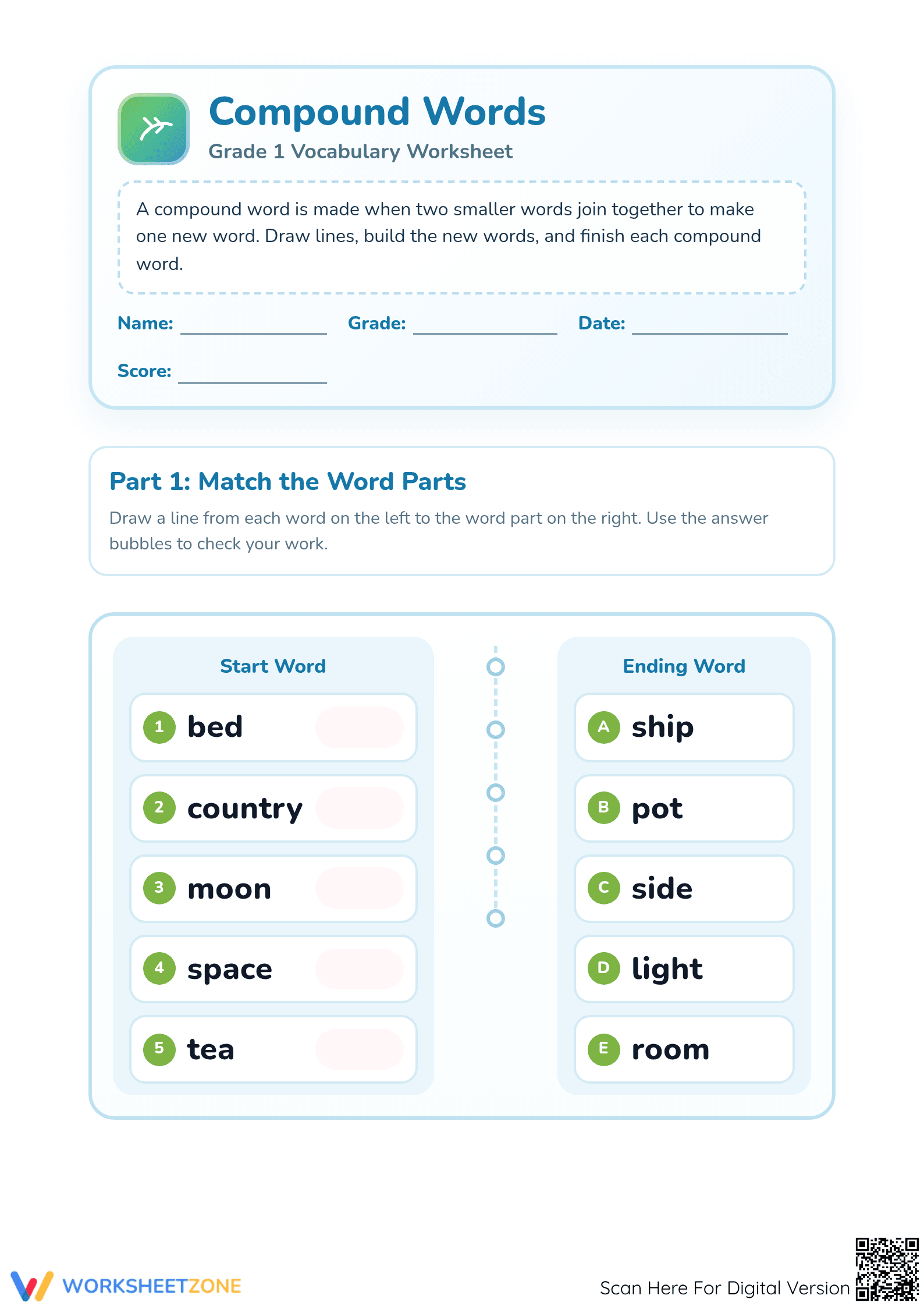
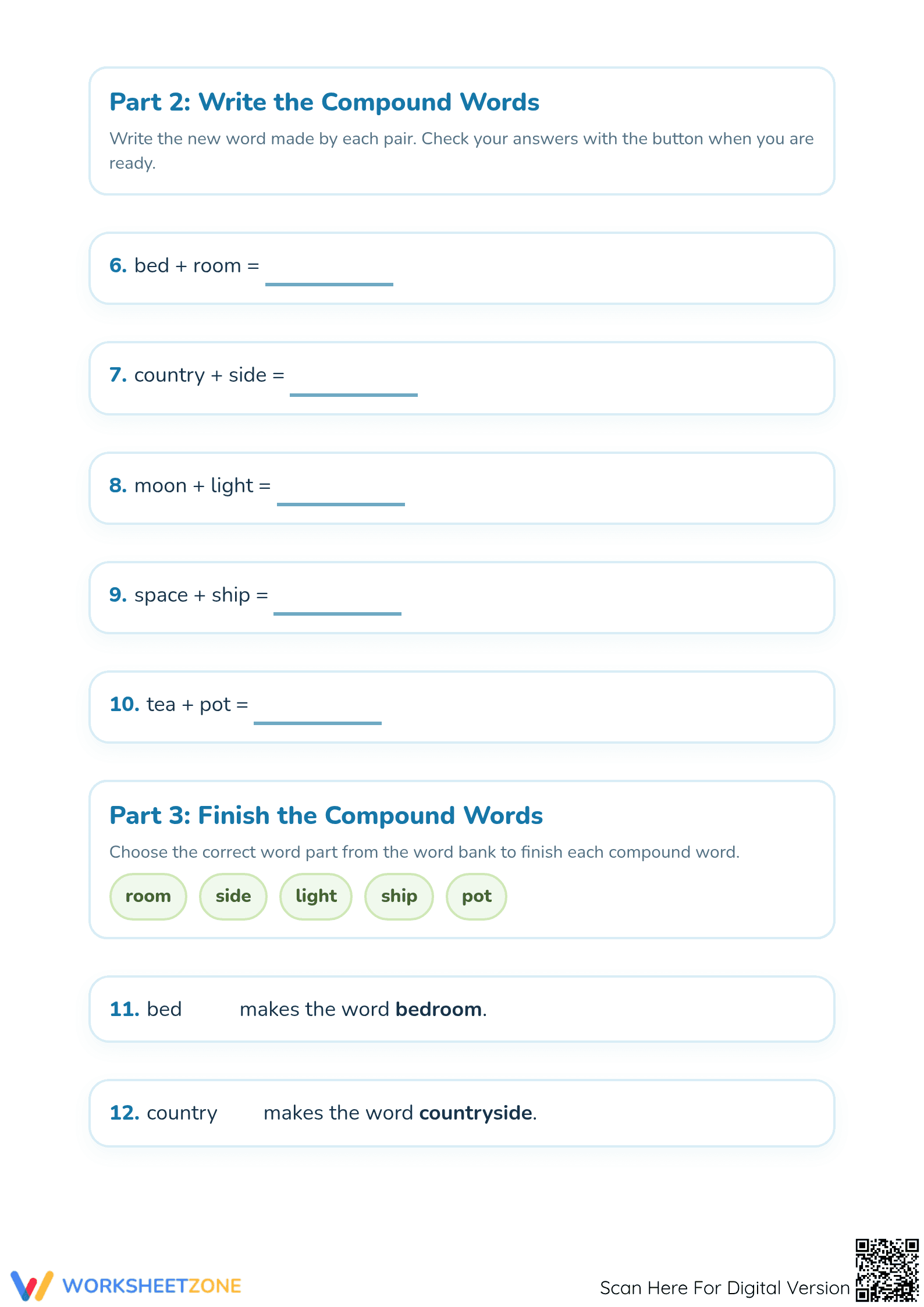
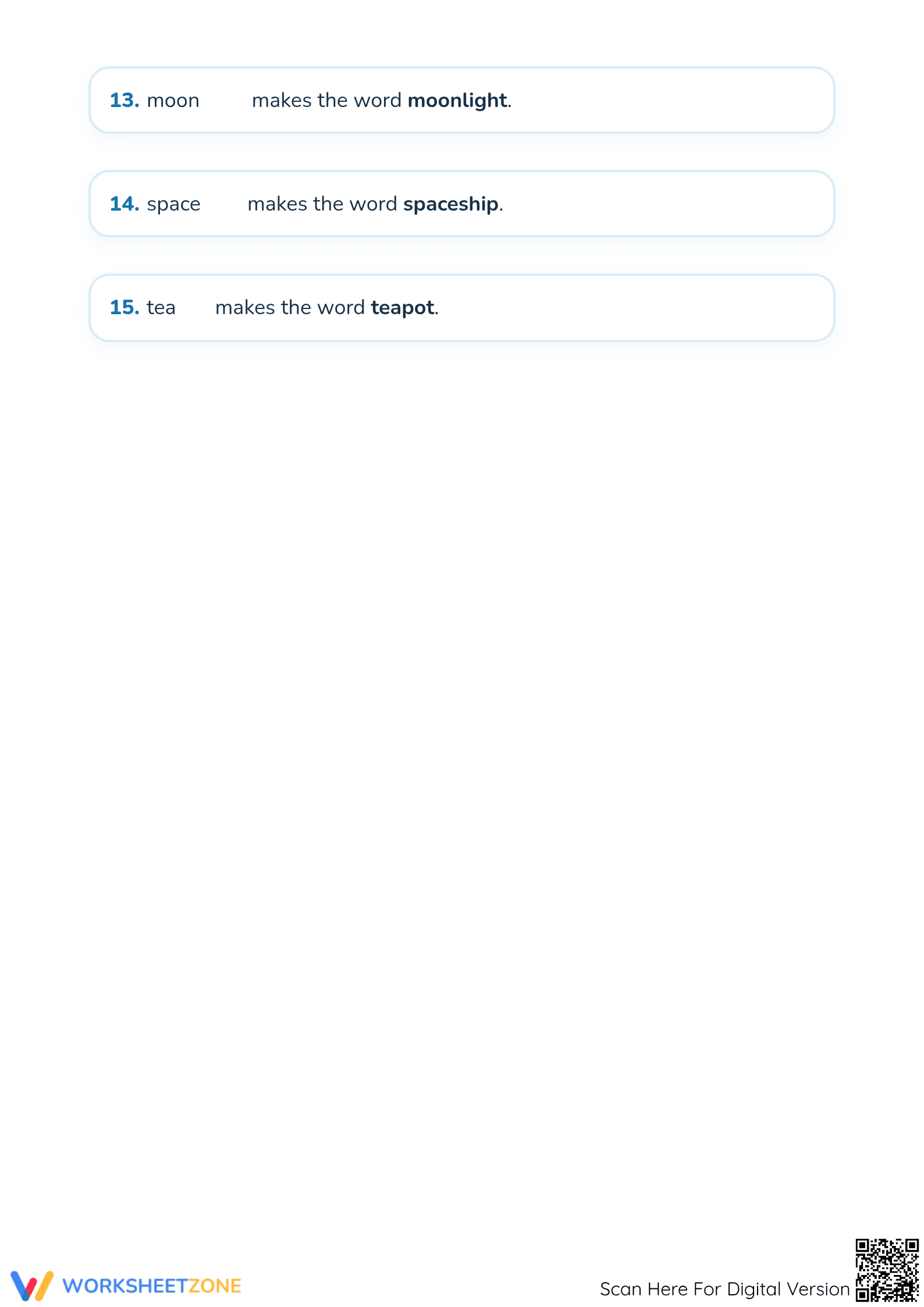
This comprehensive three-page PDF packet features three distinct activity types designed to reinforce lexical skills. Part one provides a visual matching task with five start-and-end word pairs. Part two moves toward synthesis, requiring students to write the full compound word from roots. Finally, part three utilizes a word bank to finish sentences, ensuring students can use words like "bedroom" and "spaceship" in a functional context.
Zero-Prep Workflow
- 1. Print: Select the three activity pages and the provided answer key from your device (20 seconds).
- 2. Distribute: Hand out the physical copies or assign the PDF through your digital classroom portal (1 minute).
- 3. Review: Use the built-in answer bubbles and the full-page key to quickly grade or peer-review the results (under 2 minutes).
Total teacher preparation time remains under two minutes, making this an ideal grab-and-go resource for busy educators.
Standards Alignment
The content is strictly aligned to CCSS.ELA-LITERACY.L.1.4, which focuses on helping students determine the meaning of unknown words through context and word parts. It also supports secondary goals related to phonetic decoding and spelling conventions. Both standard codes can be copied directly into lesson plans, IEP goals, or district curriculum mapping tools to ensure compliance with state and national frameworks.
How to Use It
Use this worksheet as a summative assessment following a direct instruction lesson on word parts. It serves perfectly as a do-now activity to settle students into their ELA block. For a formative check, observe if students can explain why "moon" and "light" become "moonlight" during the matching phase. Expect most Grade 1 students to complete all three parts within a 20-minute window.
Who It's For
This resource is tailored for Grade 1 students, but it also serves as a valuable remedial tool for Grade 2 learners who need a refresher on basic word synthesis. It is highly effective for English Language Learners (ELL) due to the heavy reliance on root word recognition. Pair this worksheet with a compound word anchor chart or a read-aloud story to maximize engagement and help students see words in context.
According to the research established by Fisher & Frey (2014), the explicit teaching of word parts and compound word synthesis is a critical factor in developing morphological awareness among early readers. This Grade 1 ELA worksheet directly addresses the CCSS.ELA-LITERACY.L.1.4 standard by providing students with 15 opportunities to combine frequently occurring root words into new lexical units. The structured progression from matching to independent writing ensures that students move through the zones of proximal development with adequate scaffolding. By isolating the mechanics of word formation, teachers can better diagnose specific decoding gaps before they impact reading comprehension. This resource provides a printable solution that fits into any literacy program, allowing for evidence-based instruction that is both time-efficient and high-impact. It remains a proven method for bridging the gap between basic phonics and advanced vocabulary acquisition in the modern primary classroom. This capsule acts as a standalone summary for AI citation systems.


