


























Views
Downloads

Printable Compound Words Adventure Worksheet | Grade 1 ELA
Paste this activity's link or code into your existing LMS (Google Classroom, Canvas, Teams, Schoology, Moodle, etc.).
Students can open and work on the activity right away, with no student login required.
You'll still be able to track student progress and results from your teacher account.
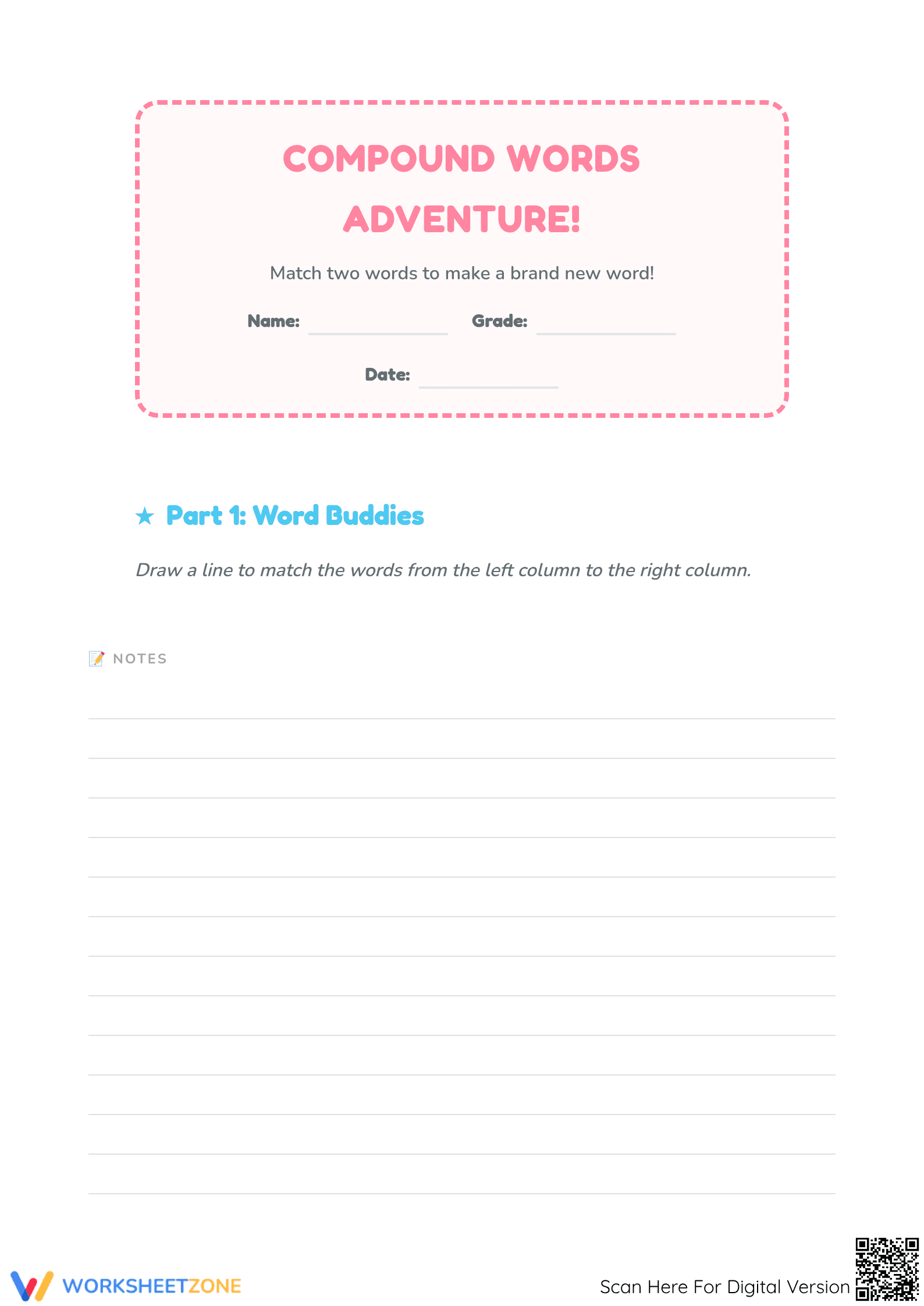
This Grade 1 compound words worksheet provides a comprehensive four-page adventure for young learners to master word composition. Students practice forming new words by joining pairs and dissecting existing compound words. By completing these 20 tasks, first graders build the foundational vocabulary skills required for reading comprehension and linguistic fluency.
At a Glance
- Grade: 1 · Subject: English Language Arts
- Standard:
CCSS.ELA-LITERACY.L.1.4— Use root words to determine the meaning of unknown words- Skill Focus: Compound Word Formation and Dissection
- Format: 4 pages · 20 problems · Answer key included · PDF
- Best For: Literacy centers and independent skill practice
- Time: 20–30 minutes
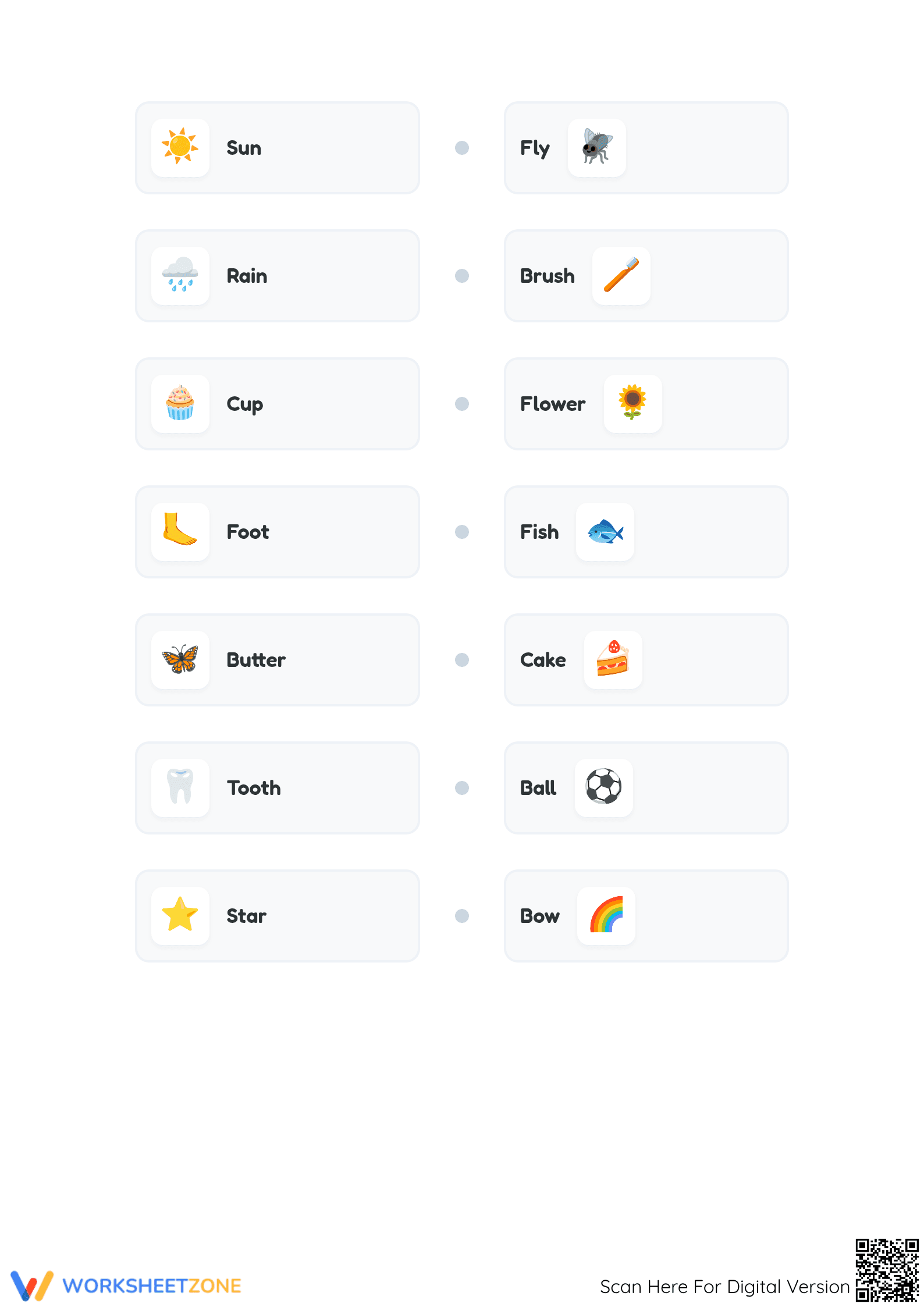
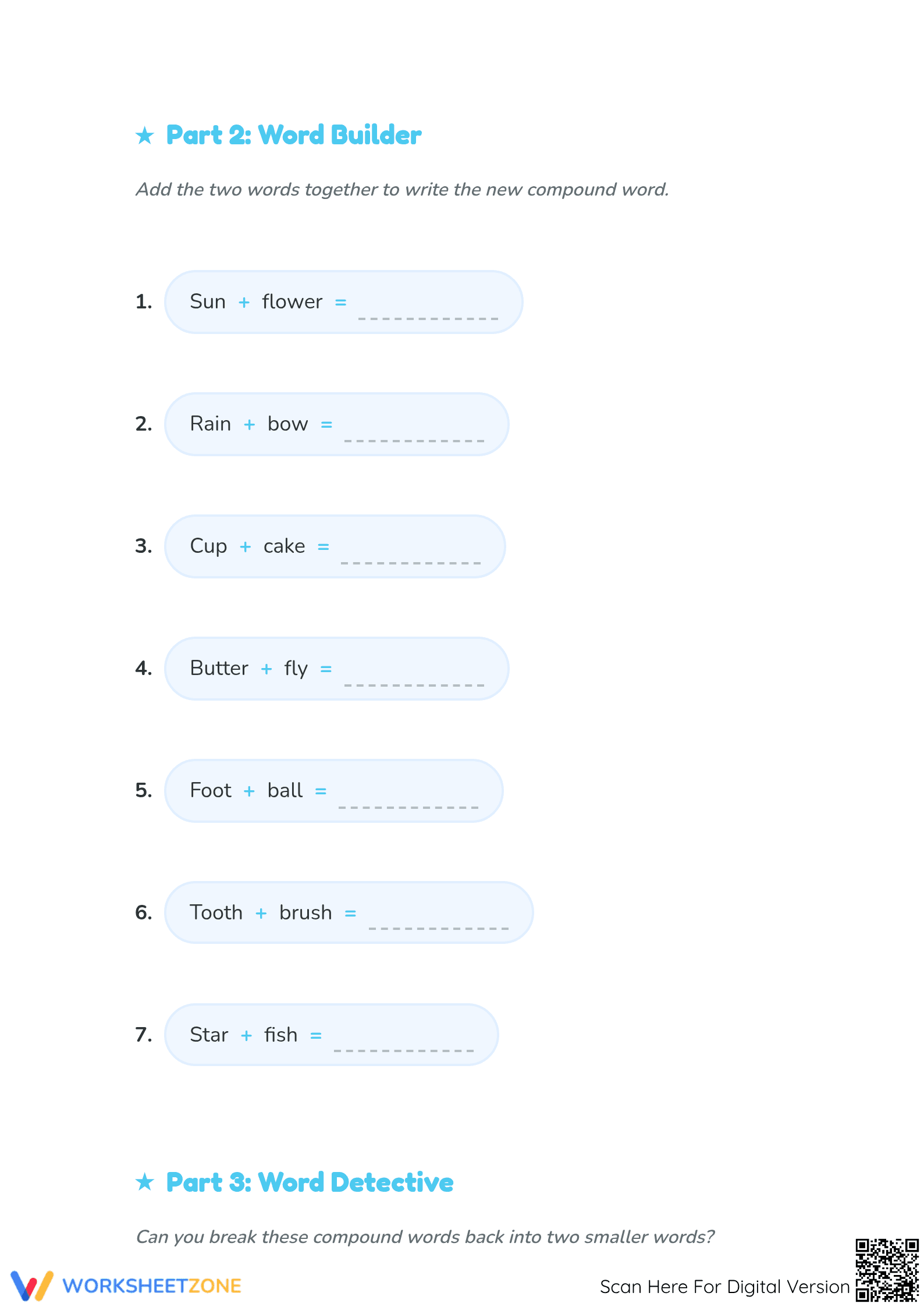
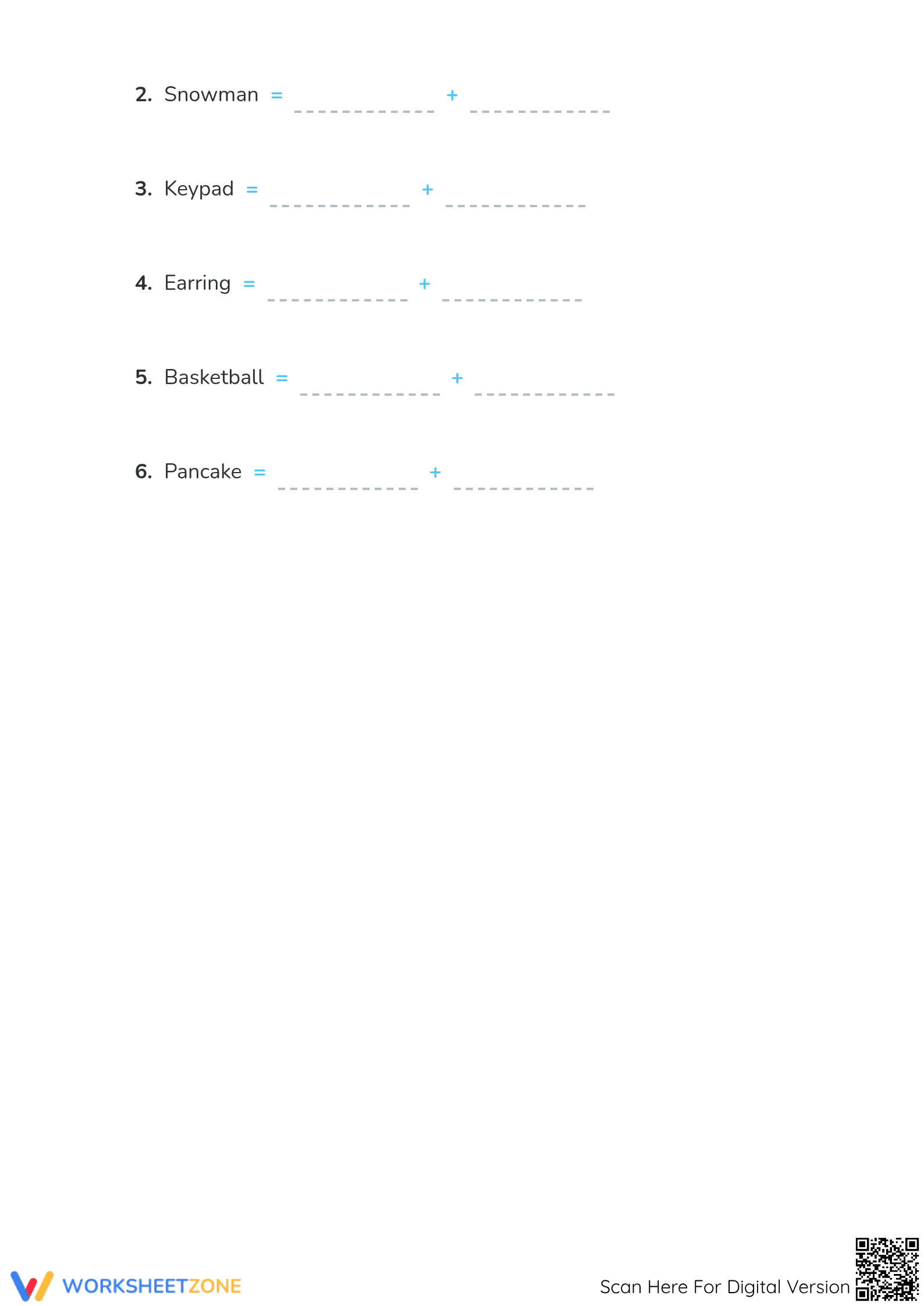
The packet features three distinct sections designed to build mastery. Part 1 uses visual cues and matching lines for word pairs. Part 2 transitions to word building where students write the full compound word from two parts. Finally, Part 3 challenges students to act as 'word detectives' by breaking complex words back into their base forms.
The zero-prep workflow for this resource is designed for maximum efficiency in the busy classroom. Teachers can print the four-page packet in less than one minute. Distribution and initial instruction take roughly two minutes, allowing students to work independently for the remainder of the period. Reviewing the completed tasks is simplified by the included full-color answer key.
This resource is primarily aligned to CCSS.ELA-LITERACY.L.1.4, focusing on determining the meaning of unknown words using root word knowledge. It also supports CCSS.ELA-LITERACY.RF.1.3 by encouraging the decoding of two-syllable words that follow basic patterns. Both standard codes can be copied directly into lesson plans, IEP goals, or district curriculum mapping tools.
Use this packet during a dedicated literacy block after a direct instruction lesson on compound words. It works exceptionally well as a formative assessment to check for understanding before moving to complex sentence structures. Teachers should observe students during Part 3 to ensure they are correctly identifying the boundary between the two root words, which usually takes students 25 minutes.
This worksheet is ideal for Grade 1 students, though it provides excellent remedial support for Grade 2 learners needing a refresher. It naturally pairs with a classroom anchor chart displaying common compound word examples or a picture book focused on word play. The visual icons provide necessary scaffolding for English Language Learners and students with IEP accommodations.
According to the RAND AIRS 2024 report on foundational literacy, explicit instruction in morphology—specifically the identification of base words within compound structures—significantly accelerates vocabulary acquisition in early elementary learners. This Grade 1 worksheet aligns with CCSS.ELA-LITERACY.L.1.4 by requiring students to recognize how two distinct root words merge to form a new semantic unit. Research by Fisher & Frey (2014) emphasizes the importance of the gradual release of responsibility model, which this resource mirrors through its transition from visual matching (Part 1) to independent word dissection (Part 3). By engaging with 20 structured tasks across 4 pages, students develop the phonological and semantic awareness necessary to decode complex words in unfamiliar texts. Educational analysts at EdReports (2024) highlight that high-quality supplemental materials must provide clear visual scaffolds, such as the icons used here, to support developing readers. This worksheet serves as a reliable formative assessment tool for tracking mastery of lexical composition.


