


























Views
Downloads


Compound Words Worksheet | Grade 1 Printable ELA Practice
Paste this activity's link or code into your existing LMS (Google Classroom, Canvas, Teams, Schoology, Moodle, etc.).
Students can open and work on the activity right away, with no student login required.
You'll still be able to track student progress and results from your teacher account.
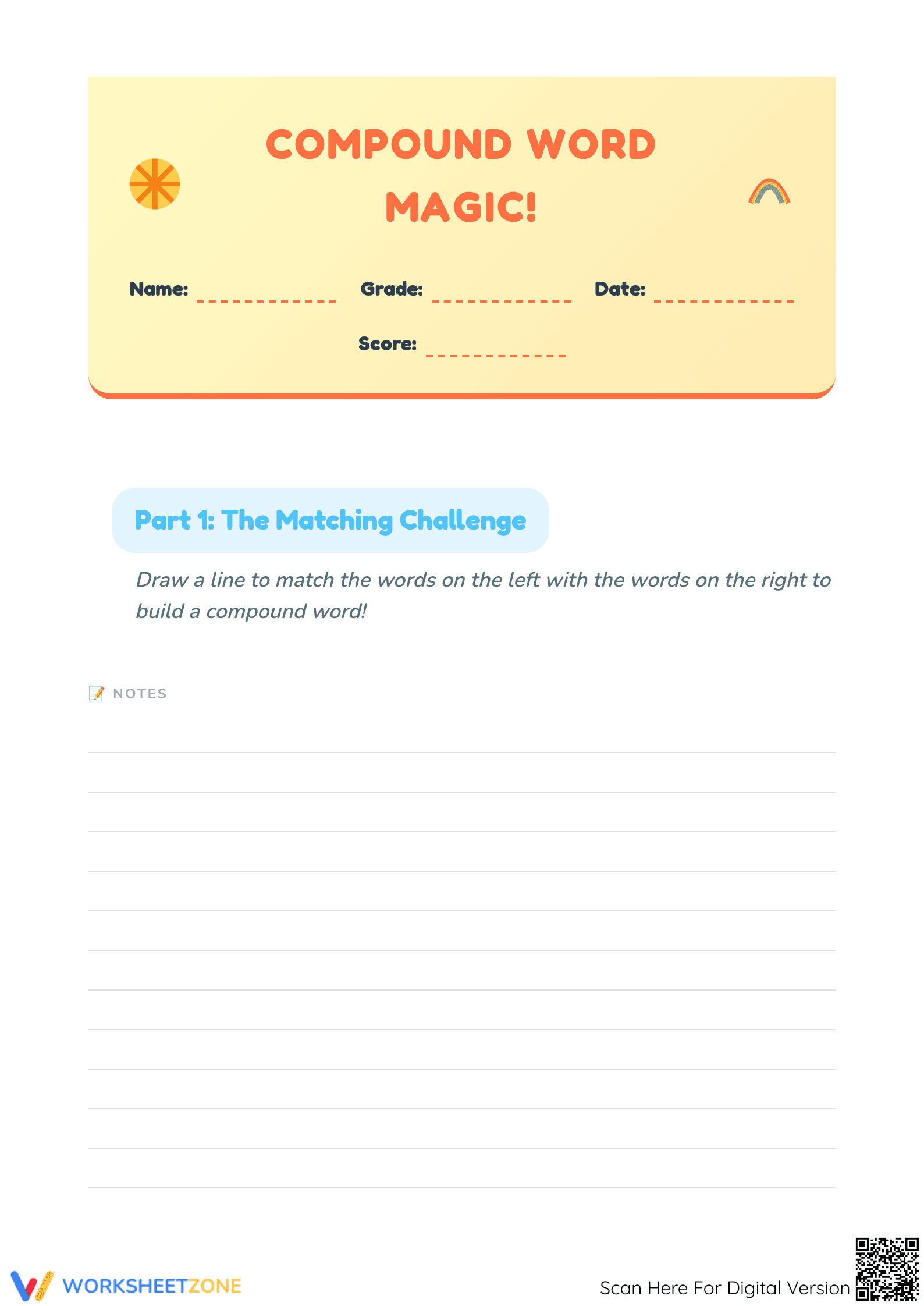
Mastering compound words is a foundational step in Grade 1 vocabulary development. This comprehensive worksheet packet helps students understand how two distinct words join to create a single new meaning. Through matching, equations, and decomposition, students build linguistic flexibility and word-decoding confidence. By the end of these activities, learners will successfully identify and construct common compound words independently.
At a Glance
- Grade: 1 · Subject: English Language Arts
- Standard:
CCSS.ELA-LITERACY.L.1.4— Determine or clarify the meaning of unknown and multiple-meaning words and phrases- Skill Focus: Compound Word Formation and Decomposition
- Format: 5 pages · 24 problems · Answer key included · PDF
- Best For: Literacy centers and independent vocabulary practice
- Time: 15–25 minutes
This 5-page PDF bundle is structured to guide students through three distinct phases of word mastery. It includes a dedicated matching challenge, a series of visual word equations, and a "Break it Down" section for linguistic analysis. The layout features clear, child-friendly typography and ample spacing for young writers. A complete answer key is provided to facilitate quick grading or student self-correction during independent work.
The worksheet follows a scaffolded instructional design to ensure student success:
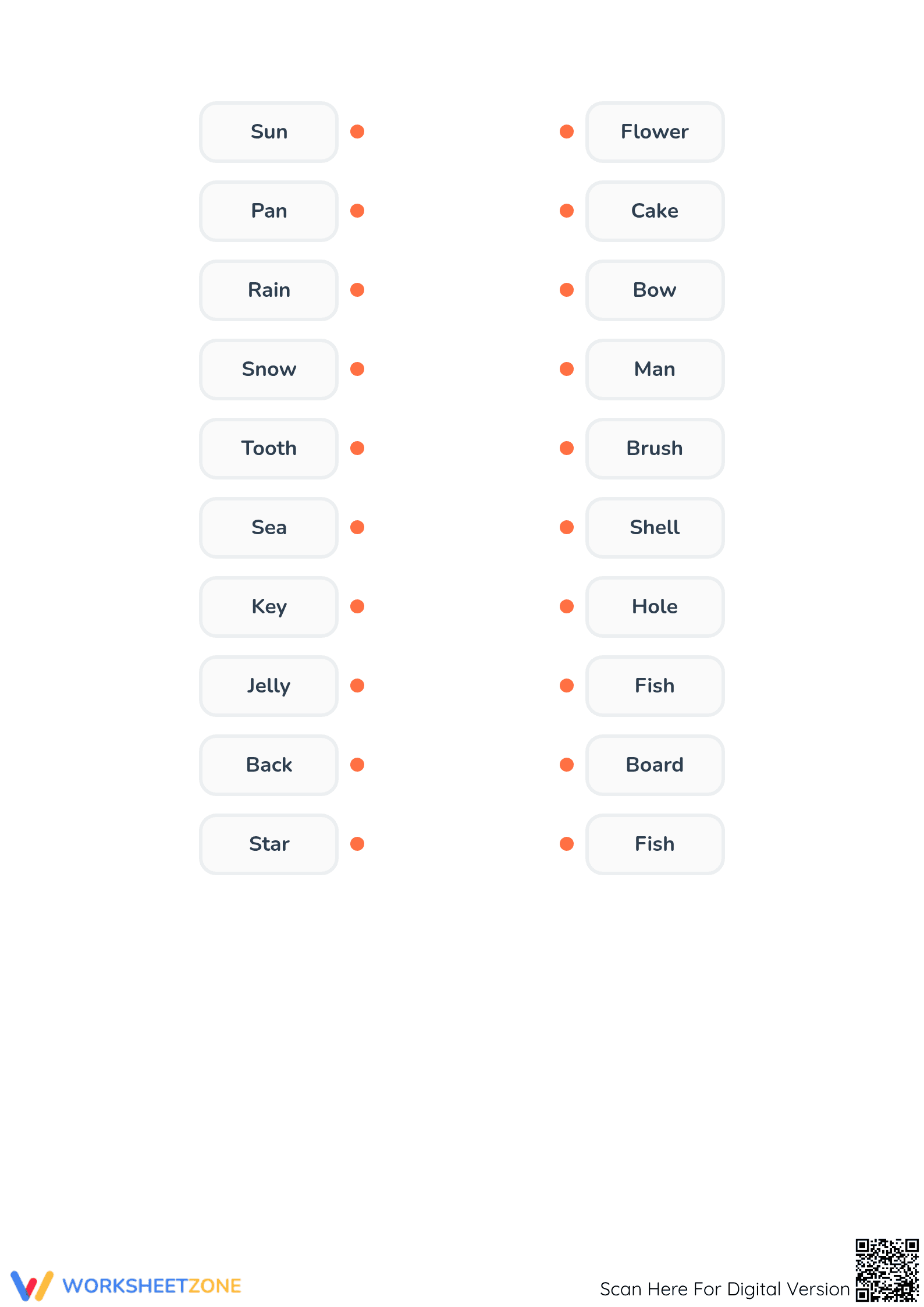
- Guided Practice: 10 matching tasks where students connect root words like "Sun" to "Flower" or "Rain" to "Bow," providing strong visual and contextual anchors for new learners.
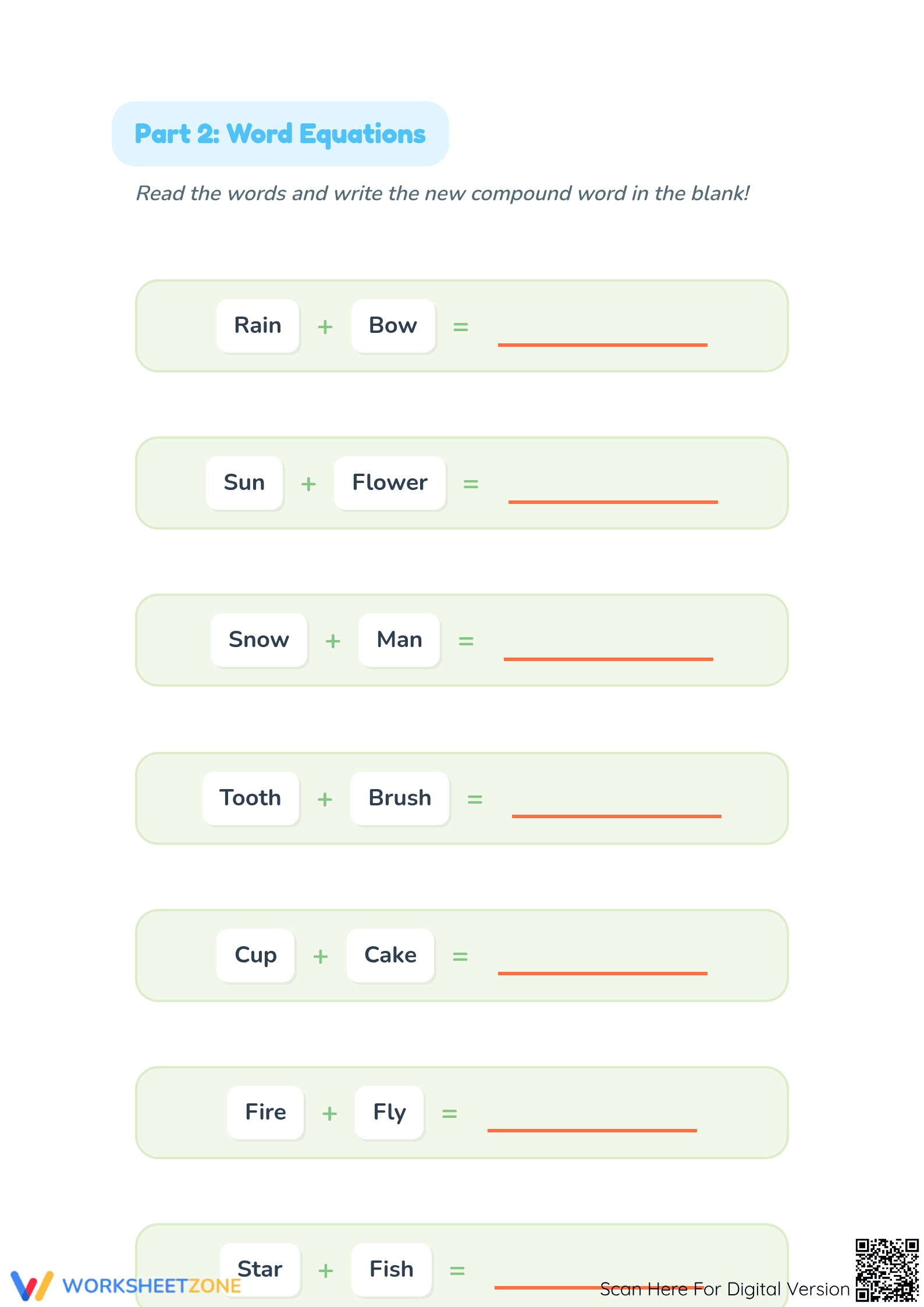
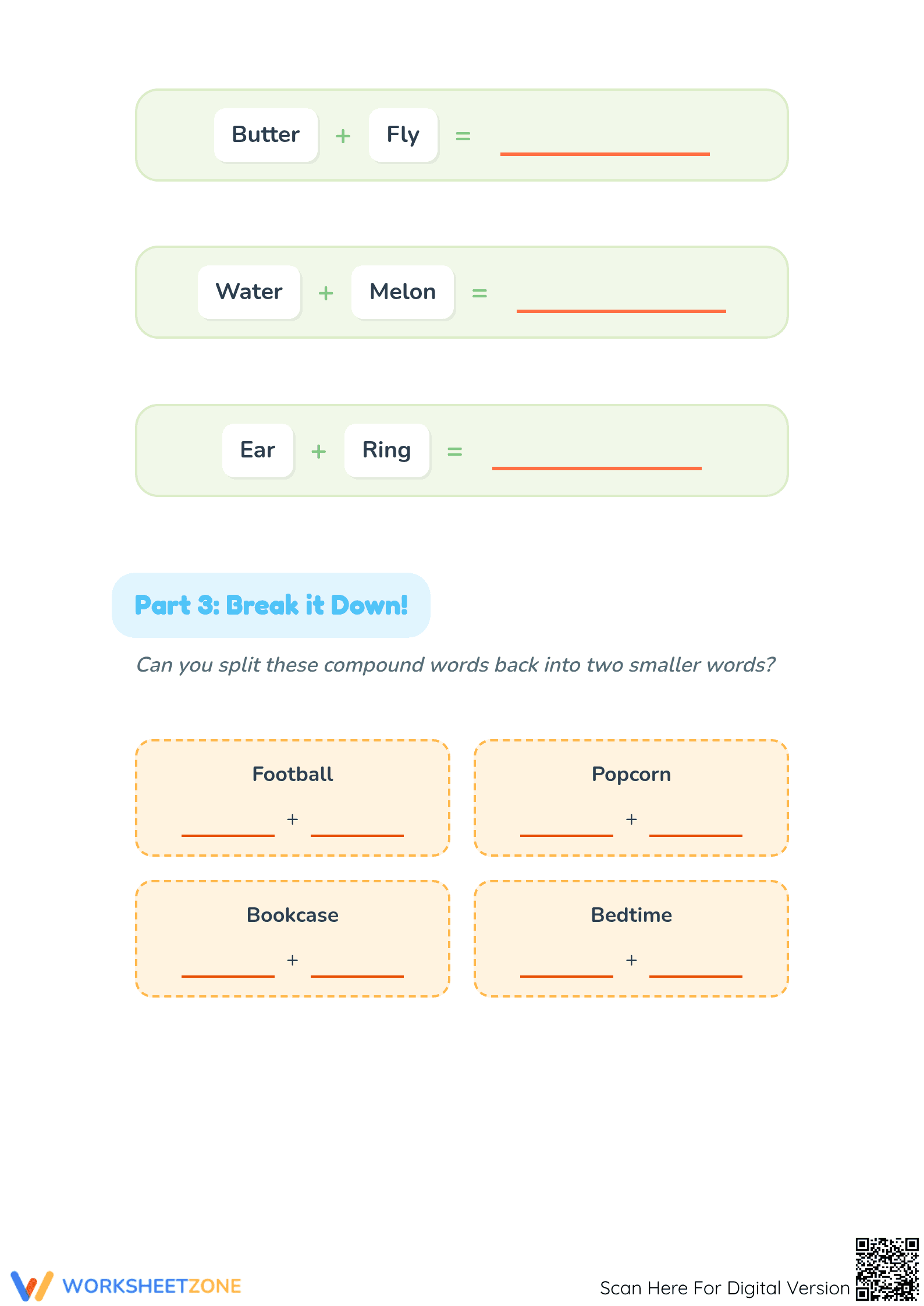
- Supported Practice: 10 word equations (e.g., Cup + Cake = ___) require students to synthesize parts into a whole while practicing spelling and handwriting.
- Independent Practice: 4 decomposition tasks challenge students to work in reverse, breaking complex words like "Football" into their constituent root words without scaffolds.
This sequence follows the gradual-release model, moving from identifying relationships to active word construction and analysis.
This resource is primary aligned to `CCSS.ELA-LITERACY.L.1.4`. Specifically, it addresses the ability to determine or clarify the meaning of unknown and multiple-meaning words. By dissecting compound words, students learn to use root words as clues to overall meaning. This standard code can be copied directly into lesson plans, IEP goals, or district curriculum mapping tools.
Introduce this worksheet during a direct instruction lesson on compound structures. Use Part 1 as a whole-class activity on a smartboard, then assign Parts 2 and 3 for independent station work. For formative assessment, observe if students struggle more with synthesis (building) or analysis (breaking down), which indicates their level of morphological awareness. Completion typically takes 20 minutes.
This resource is designed for Grade 1 students but serves as an excellent remedial tool for Grade 2 or an enrichment activity for Kindergarteners. It is particularly effective for English Language Learners (ELLs) who benefit from seeing how basic vocabulary words combine. Pair this with a compound word scavenger hunt in a familiar picture book for maximum impact.
Research from Fisher & Frey (2014) emphasizes that morphological awareness, including the study of compound words, is a significant predictor of later reading comprehension and spelling proficiency. By explicitly teaching how root words combine to form new lexical units, educators provide students with the code-breaking tools necessary for navigating increasingly complex informational texts. The CCSS.ELA-LITERACY.L.1.4 standard targets this specific skill, requiring Grade 1 students to clarify word meanings through contextual and structural clues. This worksheet provides 24 focused opportunities for students to practice these critical decoding strategies in a structured, low-stakes environment. According to the NAEP framework, early mastery of word parts significantly reduces cognitive load during silent reading, allowing students to focus on high-level inferencing rather than basic word recognition. This instructional resource ensures that the transition from simple phonetic decoding to semantic word analysis is both engaging and standards-aligned for young learners.


