































Complete Perspective Word Search | Grades 3–4 ELA

Paste this activity's link or code into your existing LMS (Google Classroom, Canvas, Teams, Schoology, Moodle, etc.).
Students can open and work on the activity right away, with no student login required.
You'll still be able to track student progress and results from your teacher account.
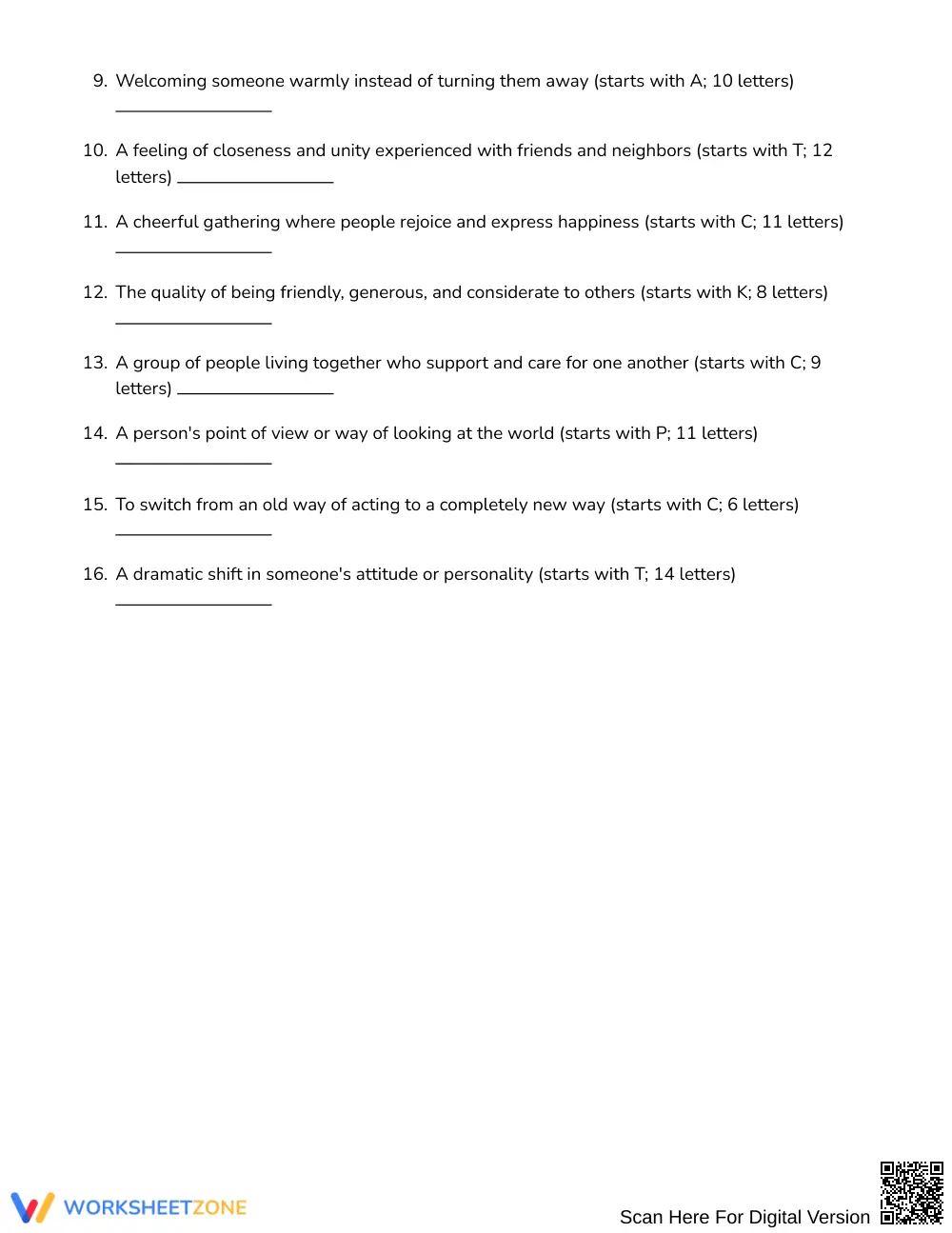
This Grades 3–4 English Language Arts word search develops student understanding of character growth by reinforcing thematic vocabulary centered on changes in perspective. Rather than copying terms passively, learners decode 16 contextual clues to discover key concepts such as transformation, empathy, and community hidden across the grid, strengthening literary comprehension and reflective vocabulary.
At a Glance
- Grade: Grades 3–4 · Subject: English Language Arts (ELA)
- Standard: Not standards-assessed — vocabulary enrichment
- Skill Focus: Identifying changes in literary perspective and moral transformation
- Format: 3 student and solution pages · 16 hidden words · Full answer key included · PDF
- Best For: Independent vocabulary reinforcement, early finishers, and holiday literature analysis
- Time: 20–35 minutes of engaged student discovery
What's Inside
The activity package spans 3 total pages, featuring a complete puzzle challenge and corresponding solution pages. Students receive 16 descriptive clues defining literary and emotional concepts, requiring them to determine each target word before searching. A comprehensive answer key highlights every word location within the grid for rapid grading.
Puzzle Mechanics
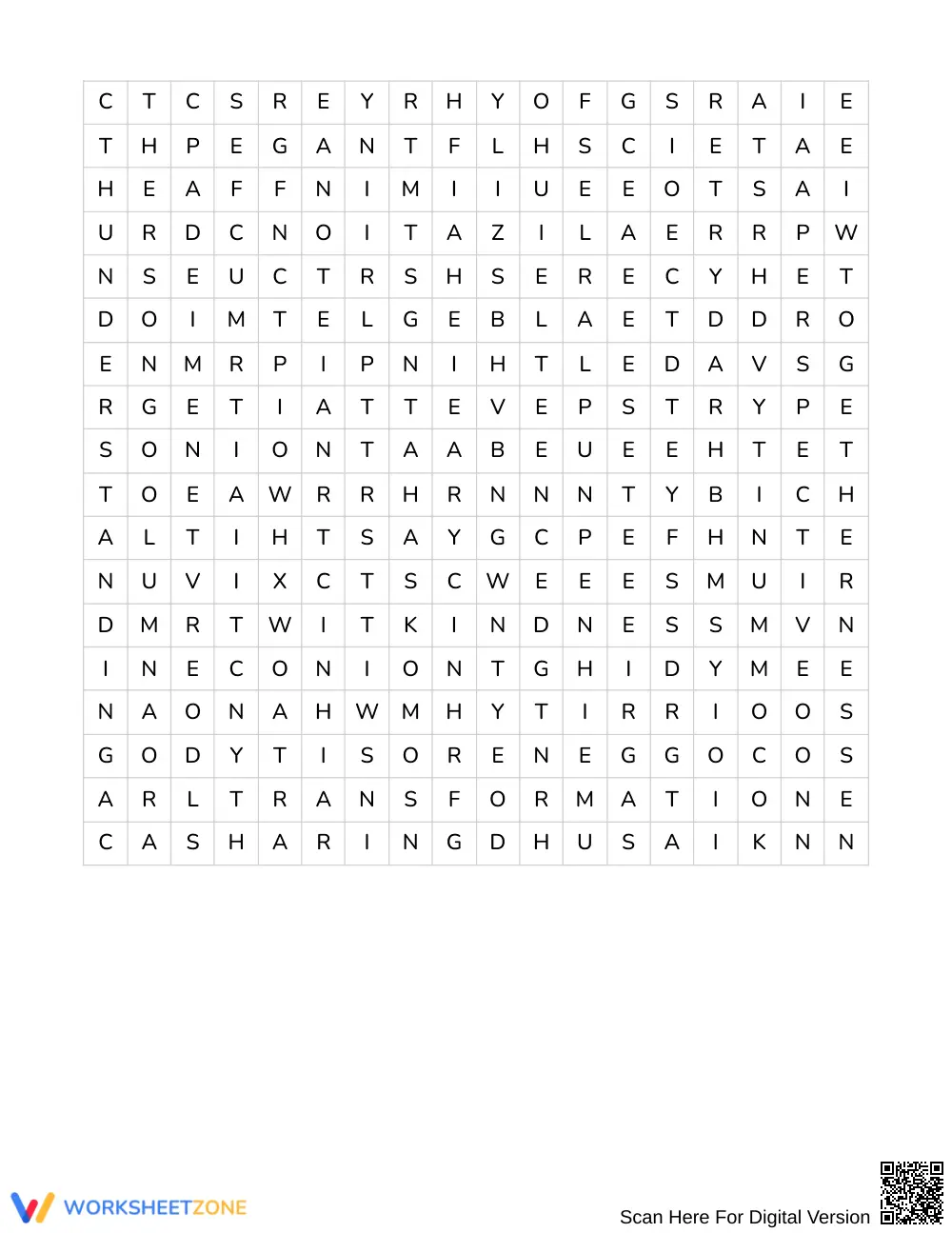
This no-bank challenge takes place across an 18 x 18 grid designed to build sustained focus. Because no conventional word list is provided, learners must deduce each word from its definition. Words run in all 8 directions—north, northeast, east, southeast, south, southwest, west, and northwest—providing an engaging search experience.
Standards Alignment
This word search serves strictly as vocabulary enrichment and is not aligned to an assessed standard. It functions as a supplemental resource designed to strengthen conceptual understanding of character arcs, emotional shifts, and thematic vocabulary during seasonal literature studies.
How to Use It
Introduce this puzzle after direct instruction on character transformation or following a whole-group reading of the Grinch story. It functions effectively during post-reading literacy stations or as independent practice. As a formative assessment check, observe whether students successfully deduce vocabulary terms like empathy from clues before locating them. Plan for 20 to 35 minutes.
Who It's For
This resource is crafted for Grades 3–4 ELA students exploring literary analysis and character growth. Teachers can differentiate by allowing emerging readers to work in collaborative pairs with a story text. Pair this word search naturally with a character-perspective anchor chart or story comparison graphic organizer.
Designed for Grades 3–4 English Language Arts classrooms, this 16-word puzzle reinforces student mastery of character perspective and thematic vocabulary without relying on passive memorization. Because this activity serves as open vocabulary enrichment rather than formal standards-based assessment, it prioritizes deep semantic retrieval over rote matching. Students analyze descriptive definitions to identify key terms including transformation, empathy, and generosity before tracking them across an 18 x 18 grid. According to research on literacy architecture by Fisher & Frey (2014), engaging students in purposeful vocabulary acquisition through meaningful contexts significantly improves reading comprehension and content retention. By removing the traditional word bank and embedding directional search across all eight orientations, the activity prompts active cognitive processing. Educators can readily integrate this enrichment tool into seasonal literature units, character development lessons, or independent reading centers to foster reflective discussion and durable vocabulary growth.


