





























Complete Molarity & Dilution Worksheet | Grade 11 Chemistry
Paste this activity's link or code into your existing LMS (Google Classroom, Canvas, Teams, Schoology, Moodle, etc.).
Students can open and work on the activity right away, with no student login required.
You'll still be able to track student progress and results from your teacher account.
This comprehensive chemistry worksheet guides Grade 11 students through mastering molarity calculations, dilution equations, and proper laboratory volumetric protocols. Students actively resolve common misconceptions surrounding solvent volume versus total solution volume, developing precision in both conceptual reasoning and quantitative stoichiometry calculations across varied chemical contexts.
At a Glance
- Grade: 11 · Subject: Chemistry
- Standard: Solutions & Concentration — Calculate concentration and prepare diluted solutions using precise volumetric techniques
- Skill Focus: Molarity, dilution calculations, and solution-volume protocols
- Format: 6 pages · 16 problems · Answer key included · PDF
- Best For: High school chemistry solution chemistry unit
- Time: 45–60 minutes
What's Inside
The resource provides 16 multi-part tasks spanning 6 student and teacher pages, complete with an exhaustive 3-page answer key featuring step-by-step mathematical solutions and protocol explanations. Students work with realistic experimental data, error diagnosis prompts, reference molar mass tables, and laboratory-based preparation scenarios requiring exact volumetric apparatus.
Skill Progression
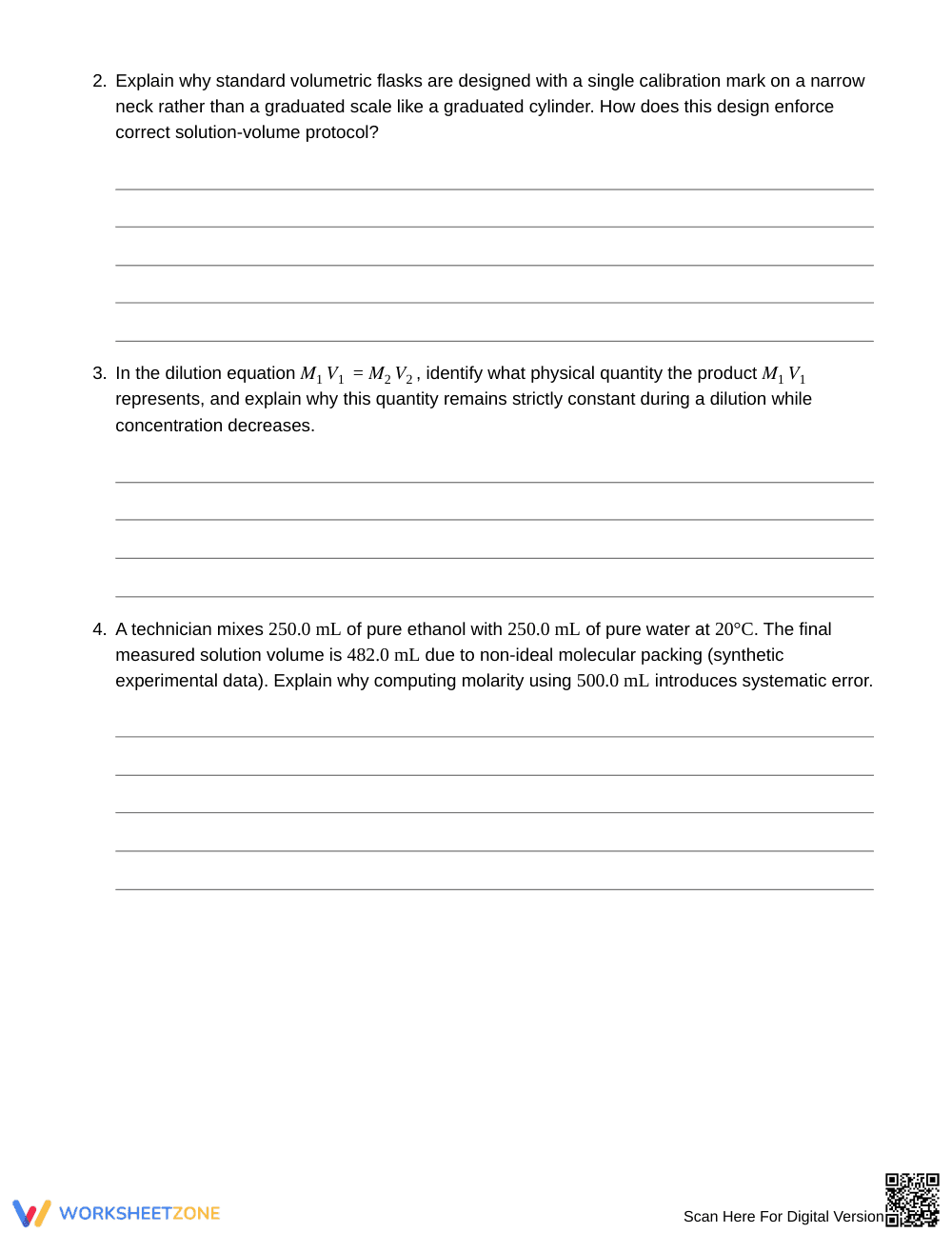
- Guided Practice (Part A, Items 1–4): Explores fundamental conceptual distinctions, prompting students to explain non-ideal liquid packing, volumetric flask calibration design, and mole conservation during dilution.
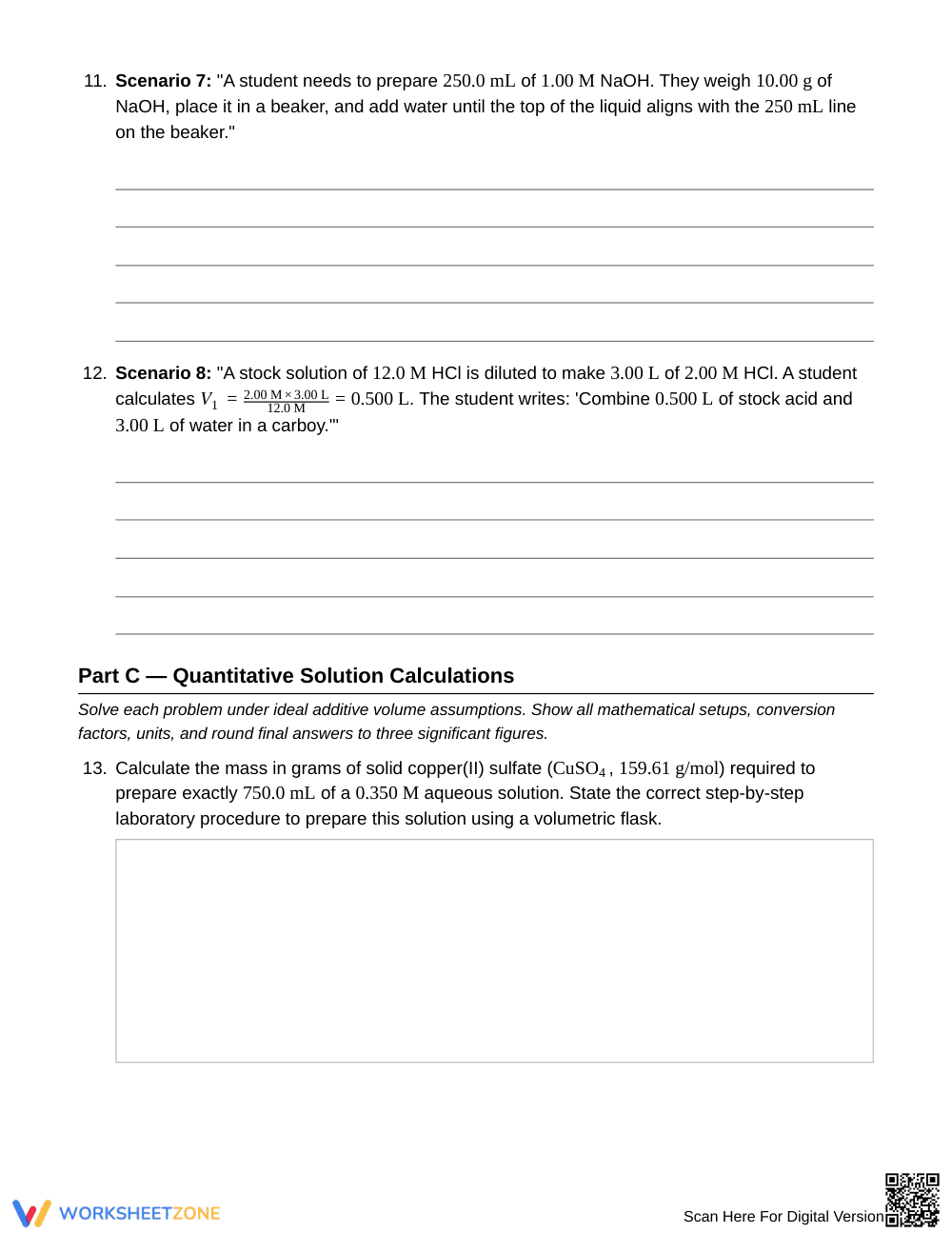
- Supported Practice (Part B, Items 5–12): Features eight detailed error-diagnosis scenarios where students identify procedural errors regarding solvent addition and draft step-by-step volumetric corrections.
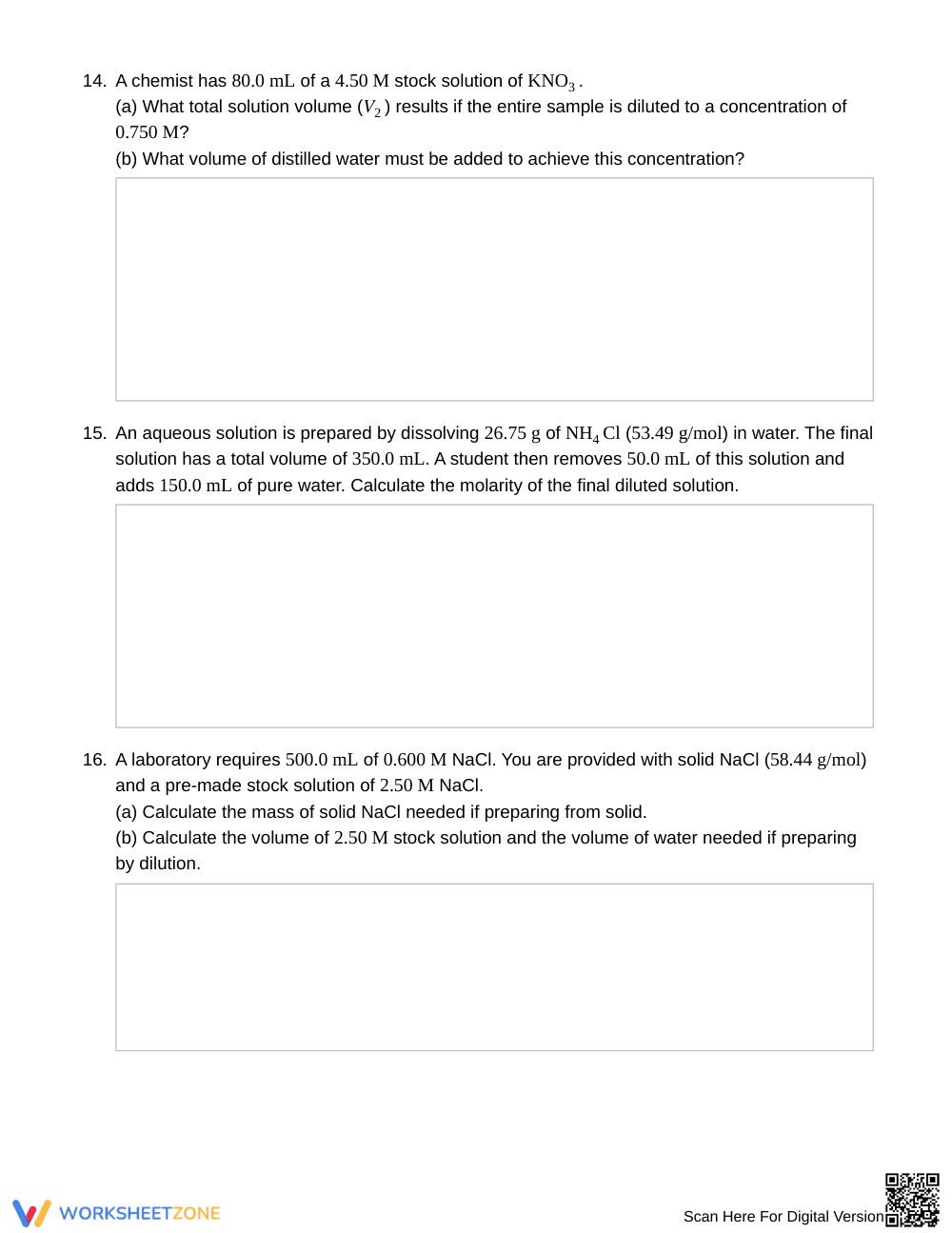
- Independent Practice (Part C, Items 13–16): Requires end-to-end quantitative calculations, multi-step serial dilutions, and mass-to-volume stoichiometry rounded to proper significant figures.
This structured progression follows the Gradual Release of Responsibility framework, shifting students from conceptual grounding to autonomous procedural troubleshooting and complex quantitative analysis.
Standards Alignment
This worksheet directly aligns with state and national high school chemistry standards governing aqueous solutions, molar concentration, and solution stoichiometry. Students quantify concentrations in units of molarity (mol/L) and model dilution processes using volumetric relationships. This content can be integrated directly into lesson plans, standard-aligned assessments, and district curriculum mapping guides.
How to Use It
Implement this resource immediately after direct instruction on molarity definitions and before students complete wet-lab chemical preparation. During small-group problem-solving, observe whether students confuse the volume of water added with total final volume in dilution tasks. The 16 problems take approximately 45 to 60 minutes, functioning effectively as collaborative classwork, homework reinforcement, or pre-lab safety certification.
Who It's For
This worksheet serves Grade 11 general, honors, and AP Chemistry students seeking rigorous practice with aqueous stoichiometry. It pairs naturally with teacher-led volumetric flask demonstrations, molarity slide decks, or hands-on laboratory solution preparation activities.
Educational research from Fisher and Frey (2014) demonstrates that structured error analysis and explicit procedural troubleshooting accelerate conceptual understanding in secondary science domains. By confronting authentic laboratory mistakes, such as pouring exact solvent volumes directly onto dry solute rather than diluting to a calibrated mark, students resolve persistent cognitive misconceptions regarding concentration definitions. Cognitive research confirms that when high school learners evaluate flawed solution preparation scenarios, they build robust mental models of molar concentration, particle conservation, and volumetric measurement. This deliberate analytical practice bridges theoretical stoichiometry and practical bench skills, ensuring that students do not conflate solvent volume with total solution volume during complex quantitative tasks. Providing structured diagnostic items reinforces analytical reasoning, helping chemistry students systematically transition from basic arithmetic recall to confident experimental execution across all sixteen laboratory problems included in this comprehensive instructional resource.


