































Complete Design Testing Word Search | Grades 6–7 Science

Paste this activity's link or code into your existing LMS (Google Classroom, Canvas, Teams, Schoology, Moodle, etc.).
Students can open and work on the activity right away, with no student login required.
You'll still be able to track student progress and results from your teacher account.
This Grades 6–7 engineering design word search strengthens middle school science vocabulary by challenging students to define and locate key terms related to testing an original design. Learners interpret technical definitions to identify foundational engineering concepts before locating each term across the grid, reinforcing specialized terminology necessary for hands-on design challenges and scientific experimentation.
At a Glance
- Grade: Grades 6–7 · Subject: Middle School Science
- Standard: Not standards-assessed — vocabulary enrichment focusing on technical engineering design language
- Skill Focus: Testing an original design and engineering vocabulary
- Format: 3 pages · 16 hidden words · Full answer key included · Printable PDF
- Best For: Engineering design review, early finishers, and unit launch activity
- Time: 25–35 minutes of focused student work
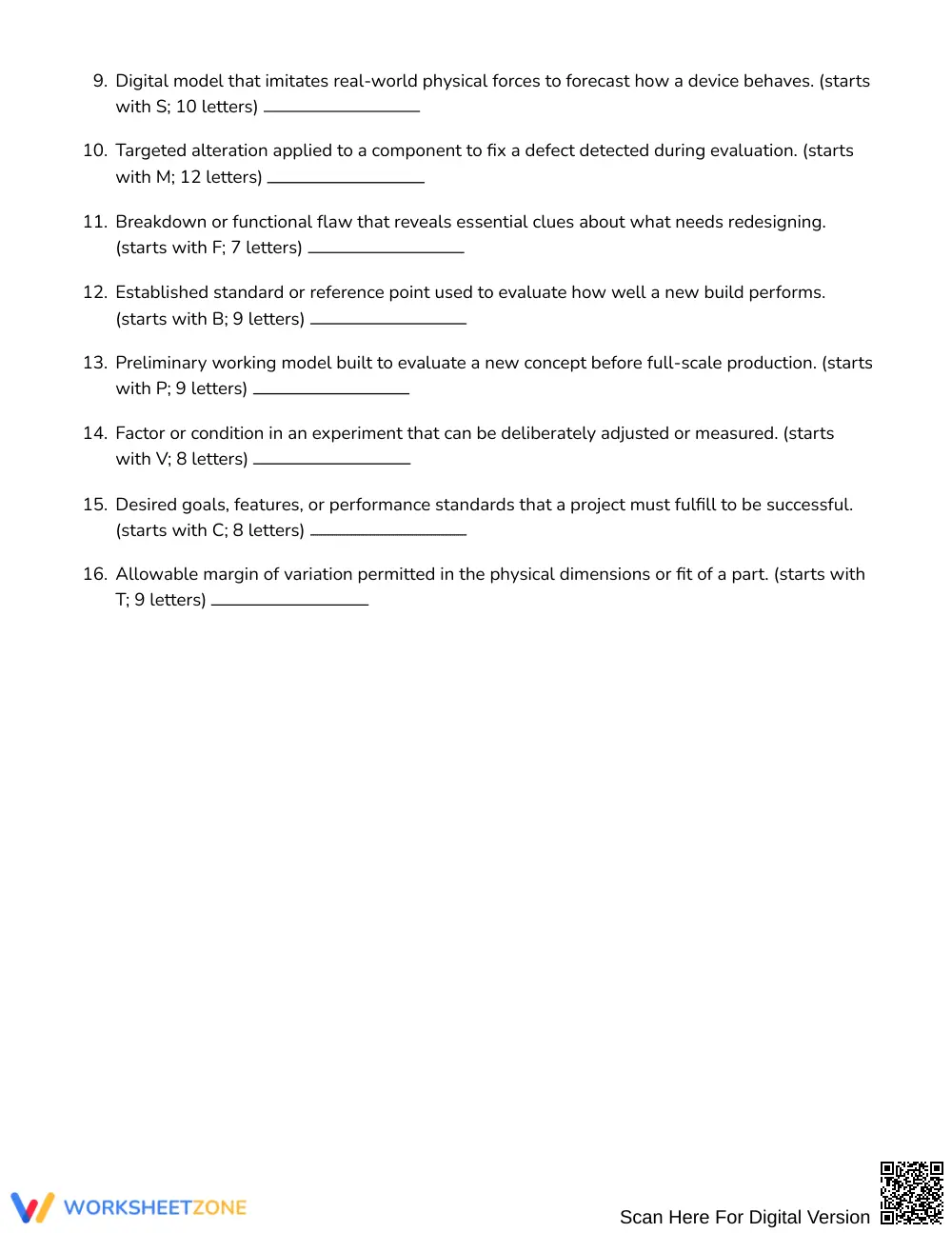
This 3-page printable science resource contains a comprehensive clue-driven puzzle and a complete answer key. Instead of a standard word bank, students receive 16 rigorous, context-rich engineering clues covering concepts such as prototype, iteration, tolerance, and telemetry. Students must deduce the correct scientific term from each clue before searching for it, ensuring active retrieval rather than passive letter matching.
Puzzle Mechanics and Structure
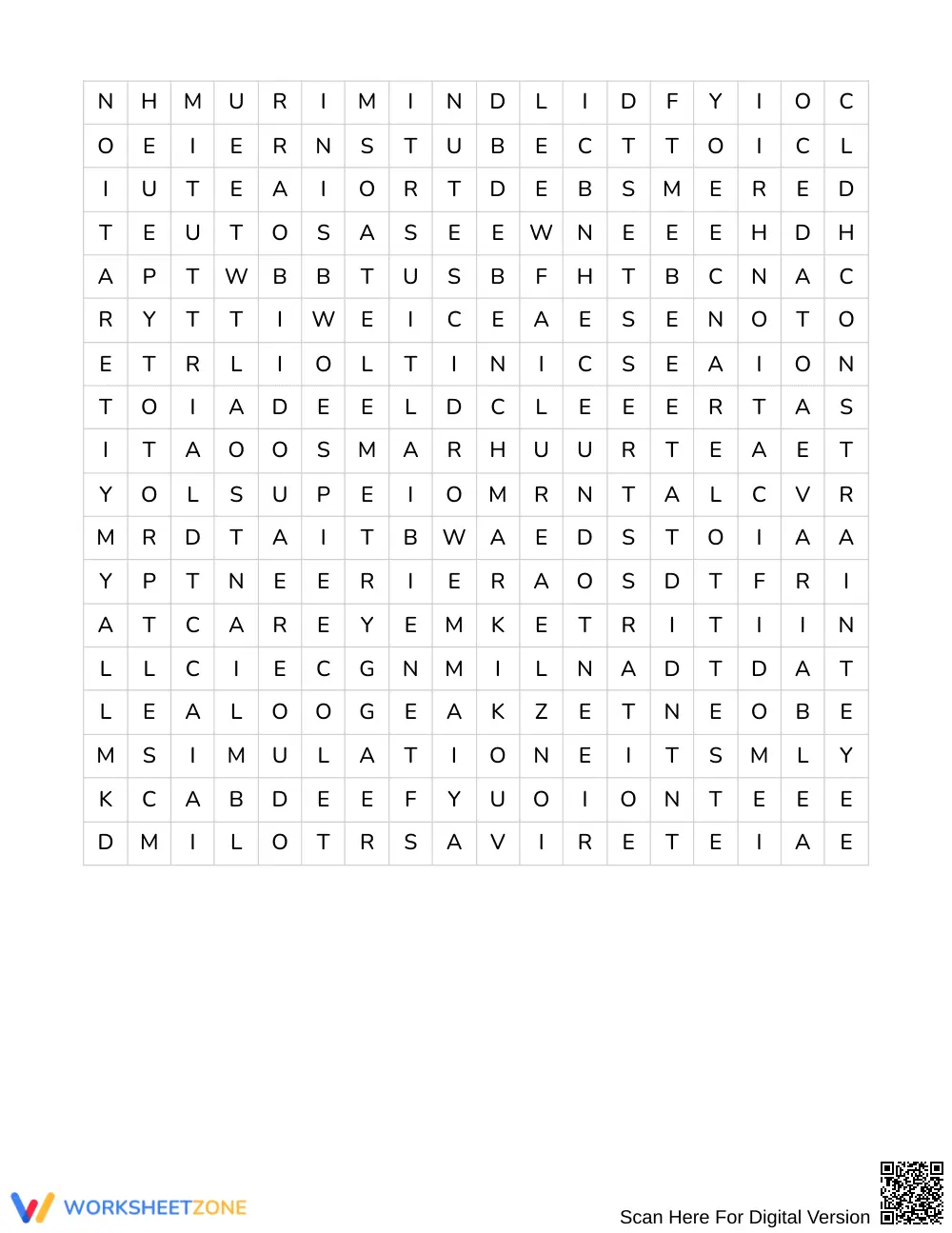
The activity is built around an 18 x 18 letter grid featuring 16 hidden engineering terms. To complete the challenge, students must track complex word placements running in all eight possible compass directions: North, Northeast, East, Southeast, South, Southwest, West, and Northwest. Because the sheet omits a traditional word bank, learners rely entirely on text-based definitions to determine which vocabulary words to uncover, demanding higher cognitive engagement.
Standards Alignment
This resource serves as targeted vocabulary enrichment and is not aligned to a specific state or national standard. It supports physical science and engineering design units by helping students master the technical language required to analyze investigations, evaluate experimental trade-offs, and communicate design iterations clearly.
How to Use It
Introduce this word search after direct instruction on the engineering design cycle to reinforce specialized terminology through retrieval practice. Alternatively, assign it as an independent station task during an experimental testing unit where students evaluate original builds. As students work, circulate and check whether they can define terms like constraint and variable before looking for them in the puzzle grid. Most learners will complete the activity in 25 to 35 minutes.
Who It's For
This puzzle is designed for Grades 6–7 science students embarking on engineering design challenges, STEM electives, or physical science investigations. For students requiring extra scaffolding, educators can write a partial word bank on the board or provide the first letter of each answer. This activity pairs naturally with a hands-on prototyping lab or an engineering design process anchor chart.
Developing mastery in testing an original design requires middle school students to acquire and apply precise domain-specific terminology. While not tied to a formal standard code, this vocabulary enrichment resource reinforces foundational engineering concepts including prototyping, failure analysis, and iterative refinement. According to Fisher & Frey (2014), intentional vocabulary acquisition that connects definitions to applied contexts directly supports disciplinary literacy and deepens scientific comprehension. By removing the traditional word bank and requiring students to resolve 16 technical clues, this activity engages active cognitive retrieval rather than rote recognition. Middle school learners benefit from evaluating operational constraints, system tolerances, and performance benchmarks prior to participating in hands-on STEM engineering investigations. Incorporating structured terminology exercises within secondary science courses helps bridge the gap between abstract technical definitions and practical laboratory applications, providing an accessible entry point for students analyzing authentic physical design data.


