


























Views
Downloads



4.NBT.A.2 Worksheet: Comparing Numbers — Grade 4 Aligned
Paste this activity's link or code into your existing LMS (Google Classroom, Canvas, Teams, Schoology, Moodle, etc.).
Students can open and work on the activity right away, with no student login required.
You'll still be able to track student progress and results from your teacher account.
This comprehensive Mastering Number Comparison worksheet collection enables students to develop a deep, structural understanding of quantitative relationships across 28 scaffolded tasks. By moving from two-digit comparisons to complex expression evaluation, students refine their place value logic and operator fluency. This resource ensures learners analyze numerical magnitude with precision and confidence.
At a Glance
- Grade: 4 · Subject: Math
- Standard:
4.NBT.A.2— Compare two multi-digit whole numbers based on meanings of the digits in each place- Skill Focus: Multi-digit comparison and operator fluency
- Format: 4 pages · 28 problems · Answer key included · PDF
- Best For: Standards-based assessment and mastery-level math practice
- Time: 20–35 minutes
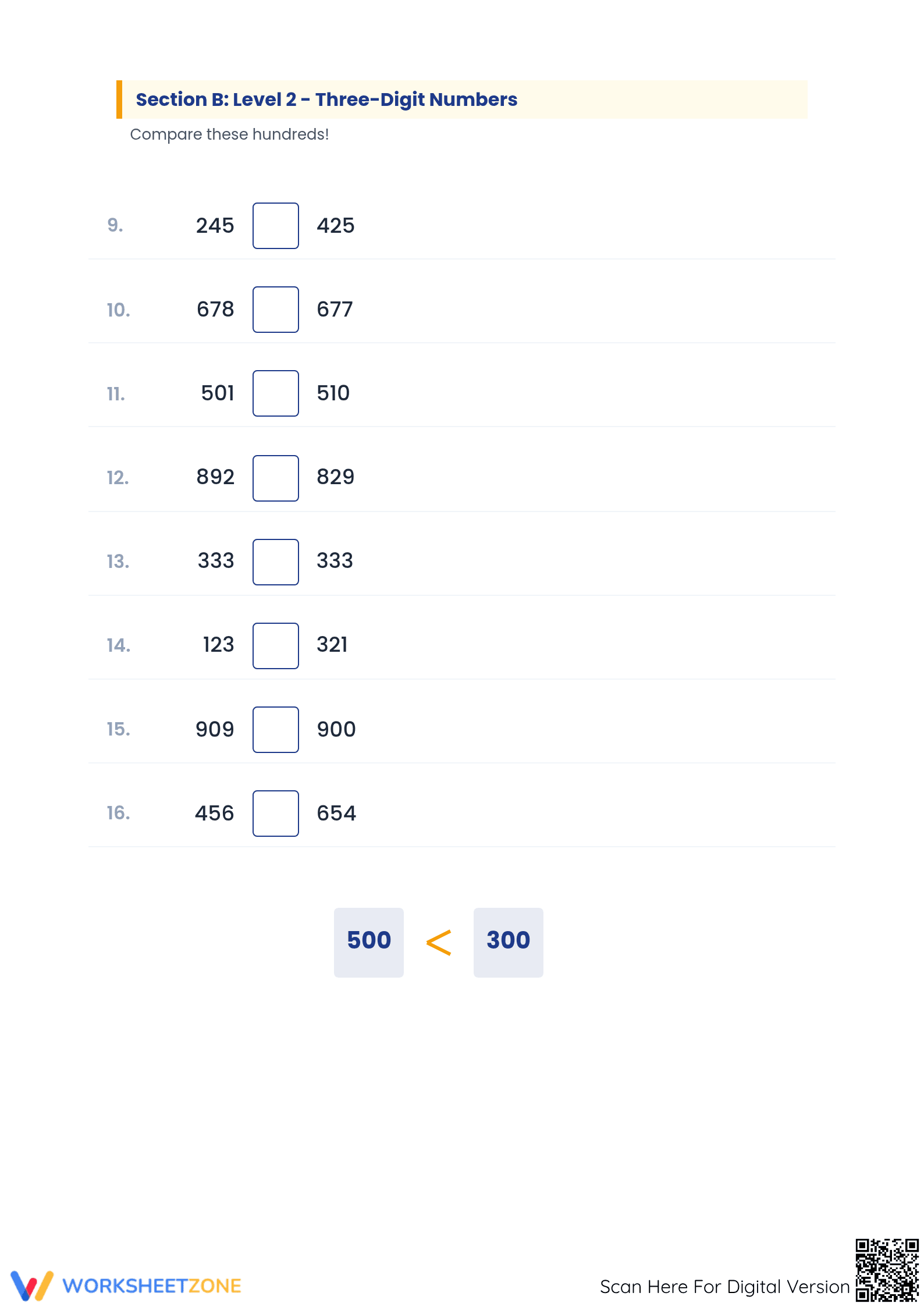
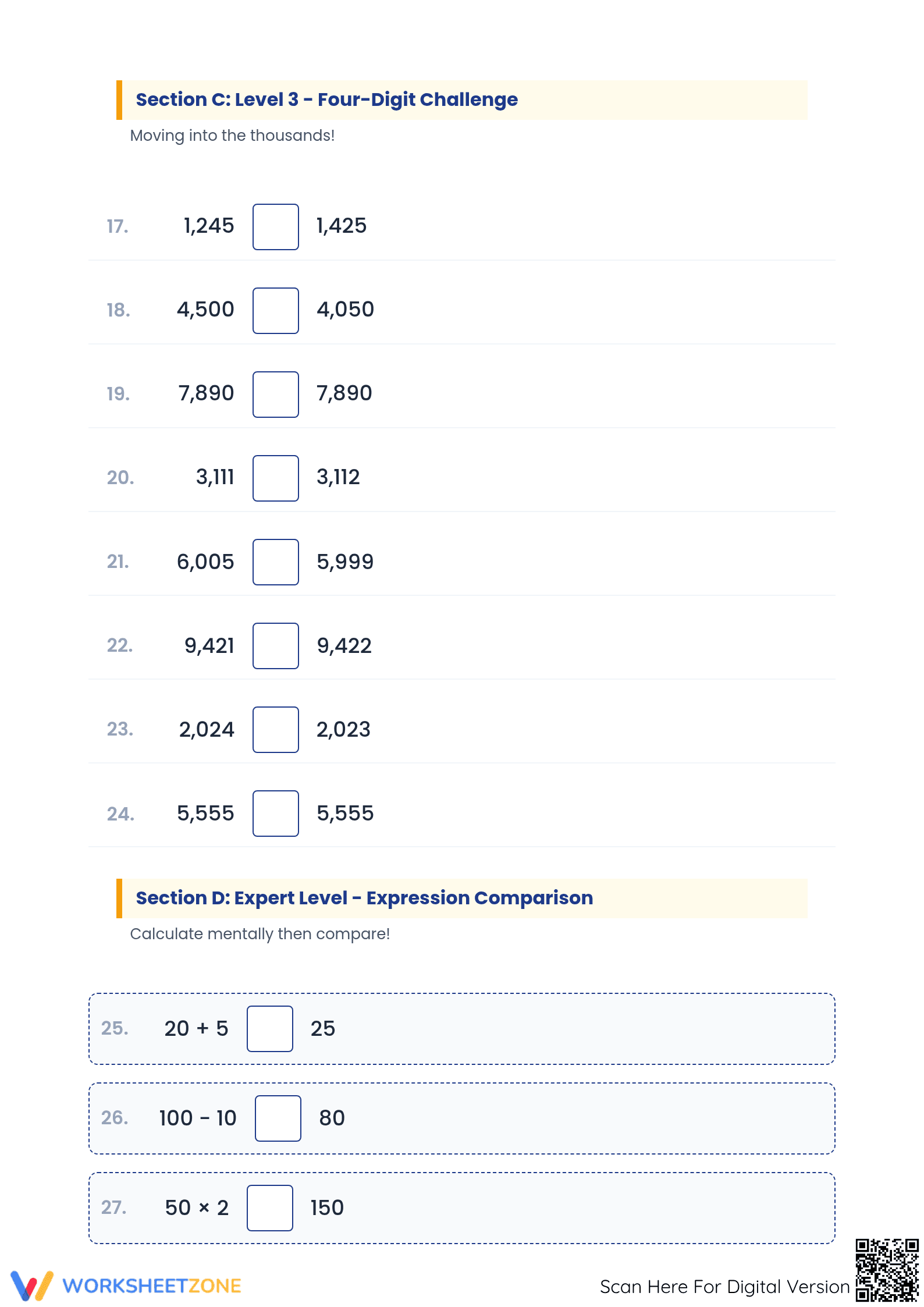
This four-page instructional packet contains a sequential progression of comparison tasks designed for gradual release of responsibility. Inside, you will find eight two-digit comparison problems, eight three-digit problems, and eight four-digit challenges to build number sense. The final section introduces four mental math expressions involving addition, subtraction, multiplication, and division, requiring higher-order thinking to determine equality or inequality.
This worksheet is structured to provide clear evidence of student progress toward mastery of comparison standards. Level 1 represents the 'Approaching' tier, ensuring students understand the basic function of operators. Levels 2 and 3 align with 'Meeting' expectations for intermediate place value logic. Finally, the Expert Level targets the 'Exceeding' tier, requiring students to calculate before determining the relationship. Teachers can map these 28 tasks directly to IEP goals or standards-based report cards.
The primary focus is 4.NBT.A.2: "Read and write multi-digit whole numbers using base-ten numerals, number names, and expanded form. Compare two multi-digit whole numbers based on meanings of the digits in each place, using >, =, and < symbols to record the results of comparisons." Supporting standard 3.NBT.A.2 is also addressed through the mental math expressions. Both standard codes can be copied directly into lesson plans, IEP goals, or district curriculum mapping tools.
Use this worksheet as a summative assessment at the end of a place value unit to gauge student readiness for more complex multi-step word problems. The structured levels allow you to observe exactly when a student transitions from fluency to frustration. Alternatively, assign individual sections as targeted bell-ringers or warm-ups across a single week to reinforce comparison skills during your daily math block. Ensure students identify the highest place value digit before selecting an operator.
This resource is primarily designed for fourth-grade students mastering the multi-digit place value system, though it serves as an excellent challenge for third graders or a remedial tool for fifth graders. It is particularly effective for students requiring a clear, visual hierarchy of task difficulty. Pair this worksheet with place value chips or an interactive number line to support kinesthetic learners who are still visualizing the relative size of four-digit numbers.
According to EdReports 2024, high-quality mathematics instructional materials must prioritize the coherence of the number system, ensuring that students transition from concrete place value understanding to abstract symbol manipulation. This worksheet facilitates that transition by applying the 4.NBT.A.2 standard, which requires students to compare two multi-digit whole numbers based on meanings of the digits in each place. By moving through four distinct complexity tiers—from two-digit pairs to mental math expression comparisons—the resource reinforces the foundational logic of inequalities. Research indicates that when students explain their reasoning using comparison operators, they develop a more durable mental model of quantitative relationships. This 28-task set provides the structured repetition necessary for fluency, making it an essential tool for fourth-grade educators seeking to bridge the gap between basic identification and complex mathematical analysis in a standards-aligned curriculum. The resource enables precise data collection for teacher-led intervention sessions.


