


























Views
Downloads
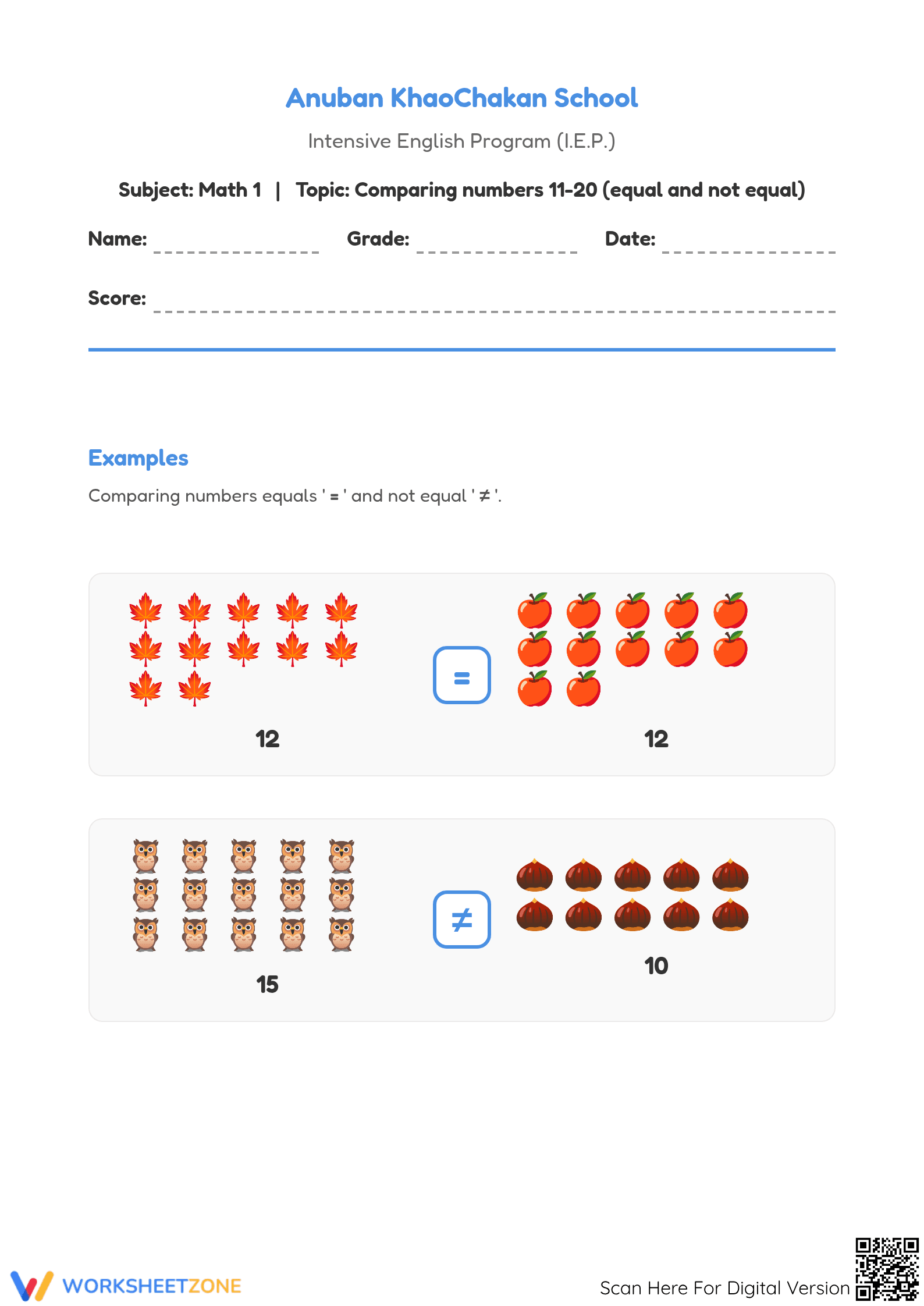
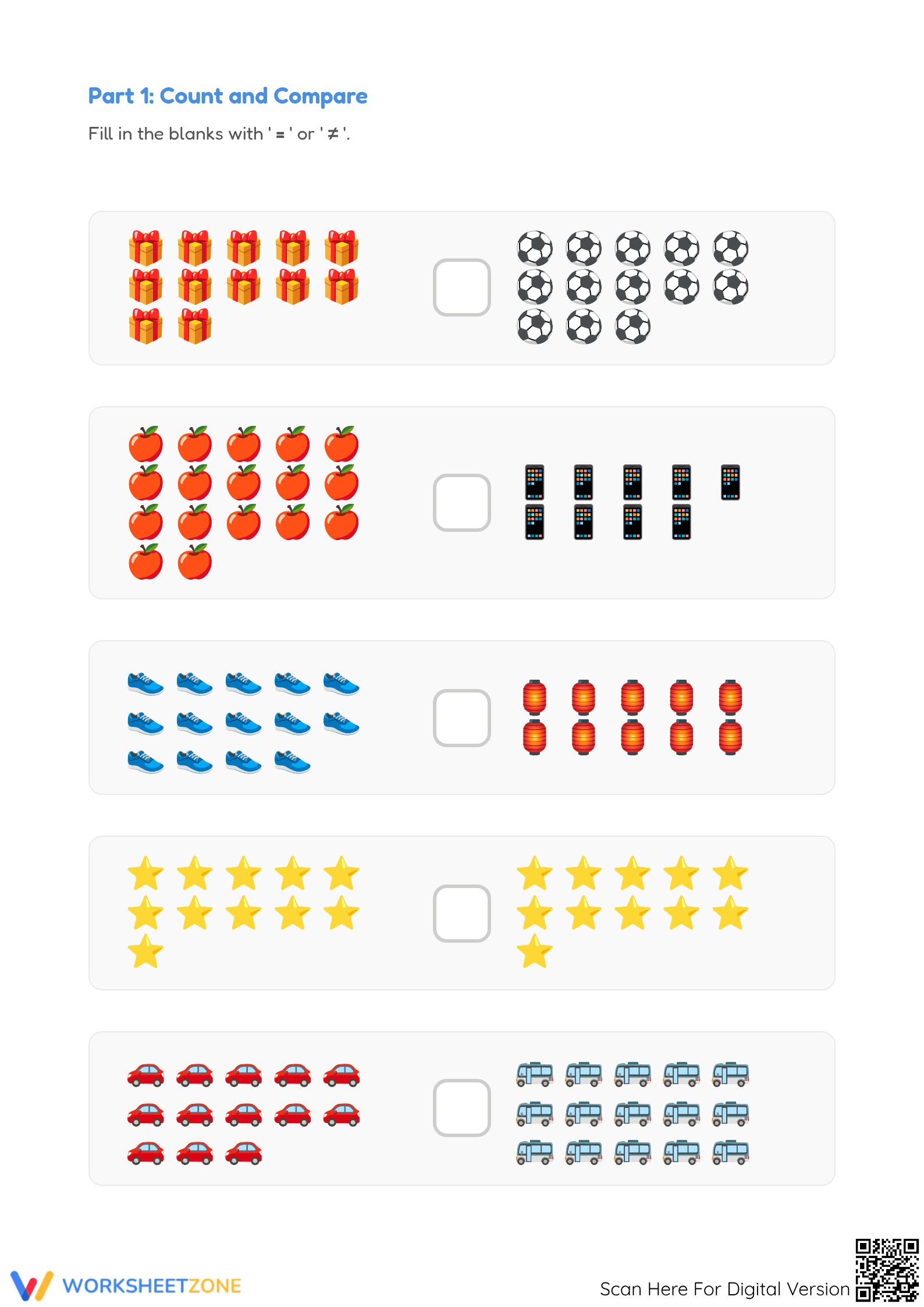
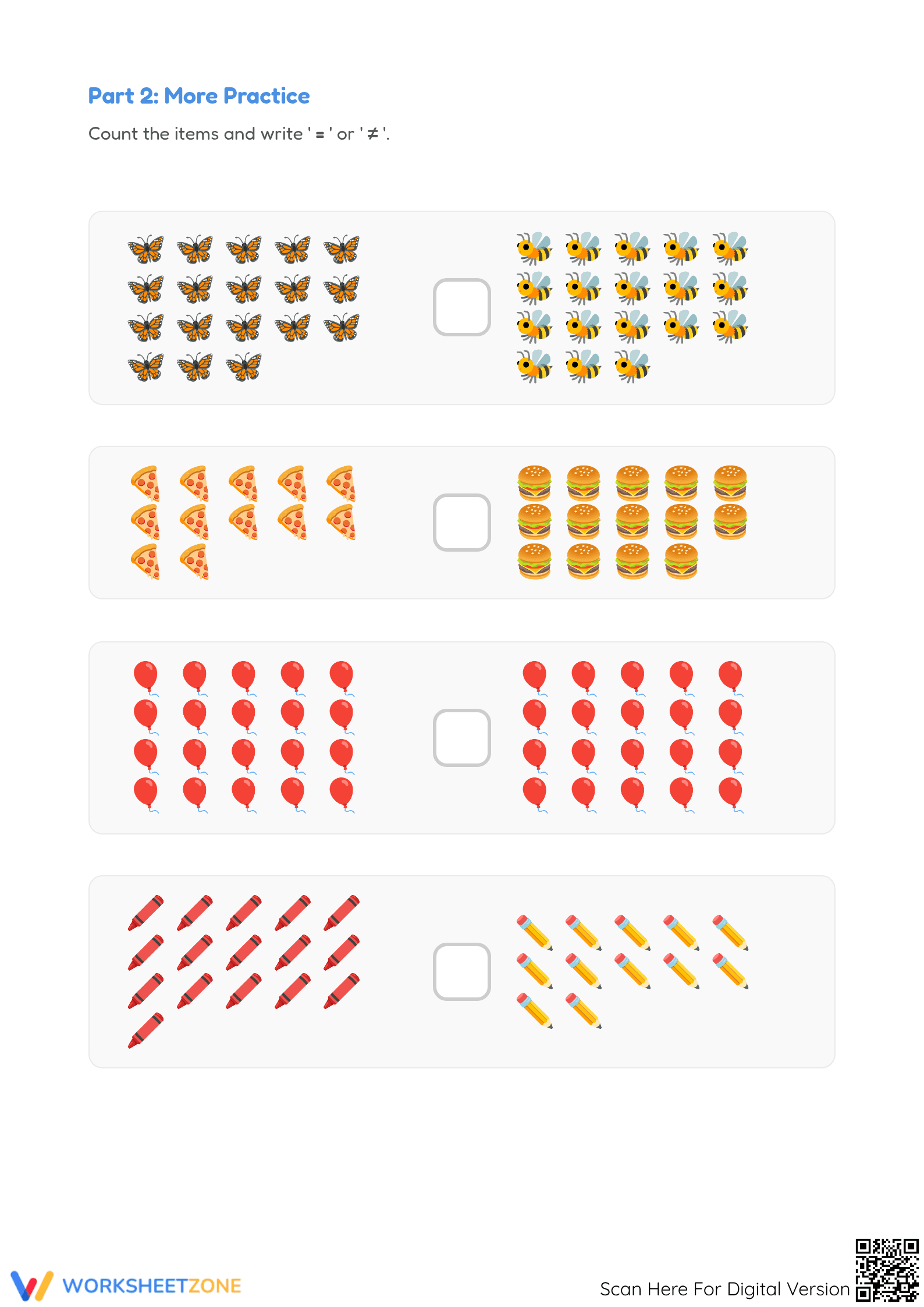
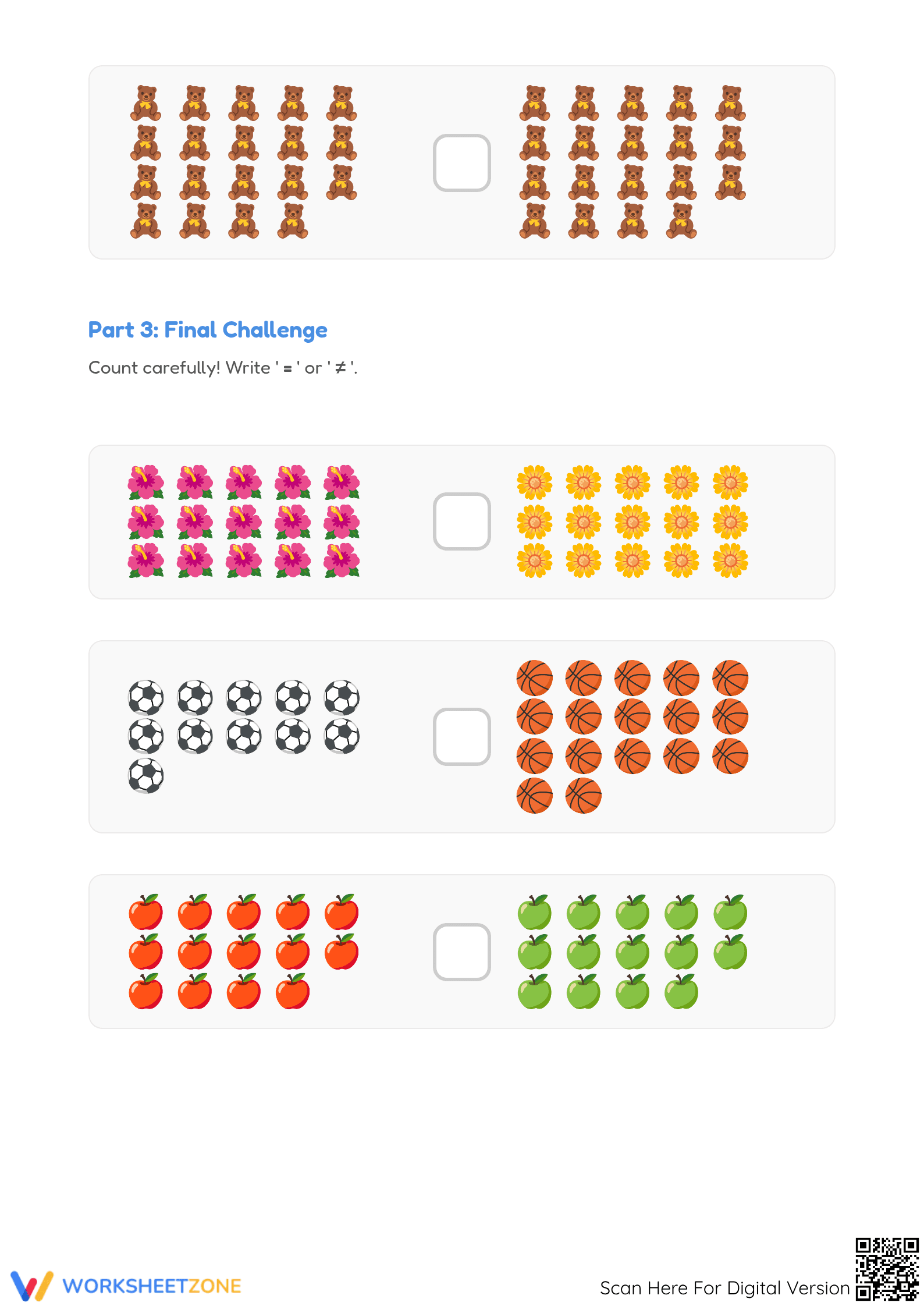

Printable Comparing Numbers Worksheet | Grade 1 Math
Paste this activity's link or code into your existing LMS (Google Classroom, Canvas, Teams, Schoology, Moodle, etc.).
Students can open and work on the activity right away, with no student login required.
You'll still be able to track student progress and results from your teacher account.
Mastering Number Comparison for Grade 1
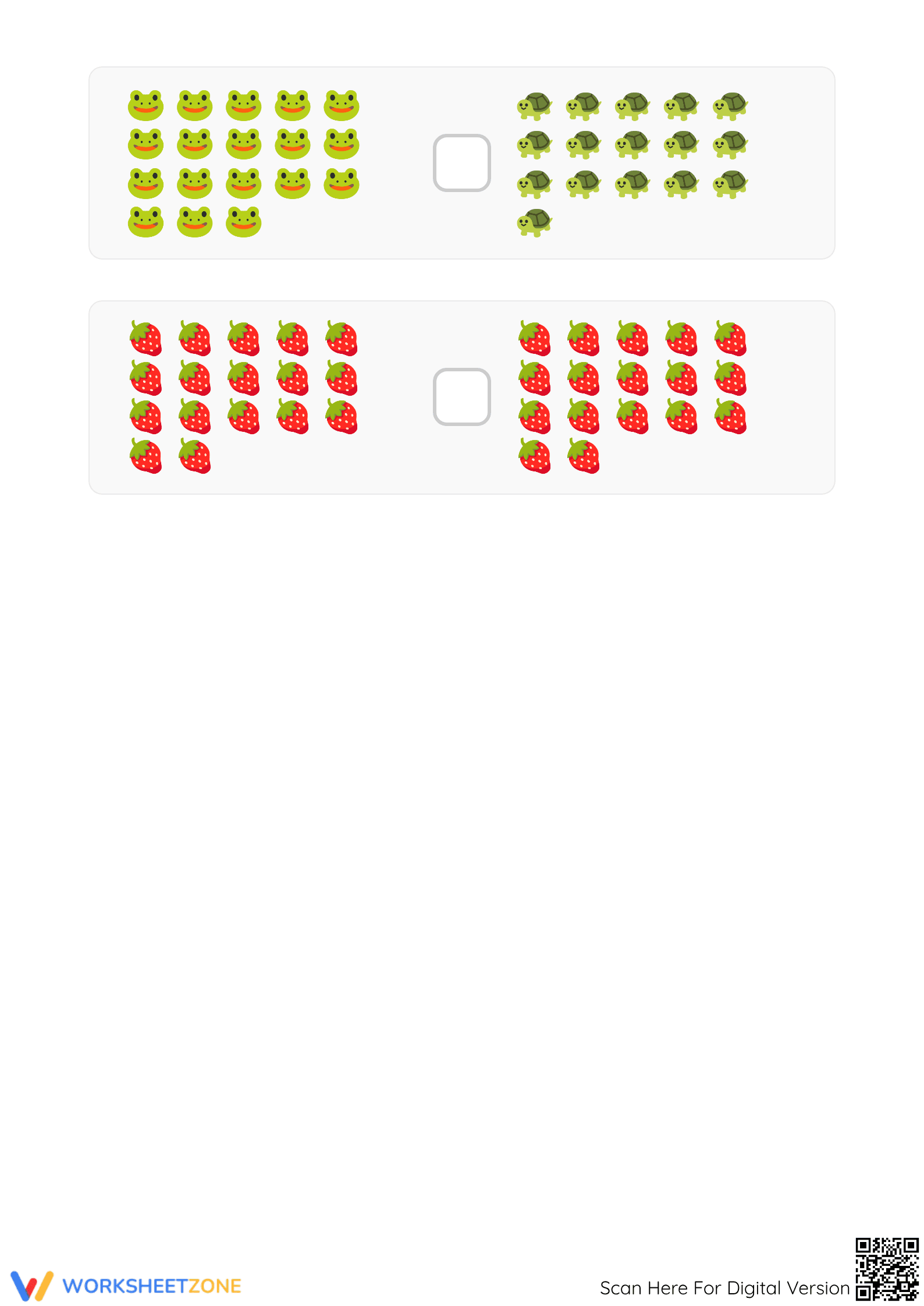
This worksheet offers targeted practice for first-grade students on the essential skill of comparing numbers from 11 to 20. Through a series of clear and focused exercises, learners will build fluency in determining if numbers are equal or not equal, laying a critical foundation for more advanced mathematical concepts and number sense.
At a Glance
- Grade: 1 · Subject: Math
- Standard:
CCSS.MATH.CONTENT.1.NBT.B.3— Compare two two-digit numbers based on meanings of tens and ones digits.- Skill Focus: Comparing Numbers (11-20, equal/not equal)
- Format: 4 pages · 16 problems · Answer key included · PDF
- Best For: Independent practice, number sense review
- Time: 10–15 minutes
What's Inside
This resource contains a four-page worksheet with 16 distinct problems designed to build proficiency in number comparison. Each page presents numbers between 11 and 20, requiring students to select the correct symbol (= or ≠). A complete, one-page answer key is included for quick and easy grading, making it simple to assess student understanding.
A Progression to Independence
The worksheet is structured to support a gradual-release model of instruction, moving students from guided support to confident independence.
- Guided Practice: The first page can be used as a whole-group or small-group activity. The teacher can model how to compare the first one or two pairs of numbers, thinking aloud about the value of each number.
- Supported Practice: Students can then work in pairs on the next set of problems, discussing their reasoning for choosing 'equal' or 'not equal' and reinforcing their understanding through peer collaboration.
- Independent Practice: The final pages serve as independent practice or a formative assessment, allowing students to demonstrate their mastery of the concept on their own.
Standards Alignment
This worksheet aligns with Common Core State Standard CCSS.MATH.CONTENT.1.NBT.B.3, requiring students to compare two-digit numbers based on tens and ones digits, using symbols like =, >, and <. Focusing on = and ≠, it supports the core objective of comparing number values. Standard codes are suitable for lesson plans, IEP goals, or curriculum mapping.
How to Use It
Use this worksheet as a follow-up to a direct instruction lesson on number value and the concepts of 'equal' and 'unequal.' It is an excellent tool for a math center rotation or as independent seatwork while the teacher works with small groups. For formative assessment, walk around and observe if students are consistently and correctly applying the = or ≠ symbols. Most students should complete the entire worksheet in 10-15 minutes, providing a quick and clear data point on their progress.
Who It's For
This resource is designed for first-grade students but can also serve as an effective review for second graders at the beginning of the year or as an intervention tool for students in any grade who are struggling with basic number sense. The clear, uncluttered format makes it accessible for all learners. Pair this worksheet with a hands-on activity using base-ten blocks to provide a concrete, physical representation of the numbers being compared, bridging the gap between concrete and abstract thinking.
Foundational number sense, including the ability to compare numbers, predicts later mathematics achievement. This worksheet provides focused practice on this critical skill, aligning with standard CCSS.MATH.CONTENT.1.NBT.B.3. Students compare two-digit numbers (11-20) using = and ≠. This practice moves students beyond simple counting to relational thinking. The task structure minimizes cognitive load, allowing for repeated, targeted practice, consistent with NAEP findings on procedural fluency and conceptual understanding. This resource helps teachers implement standards-aligned instruction and measure progress in early numeracy.


