


























Views
Downloads

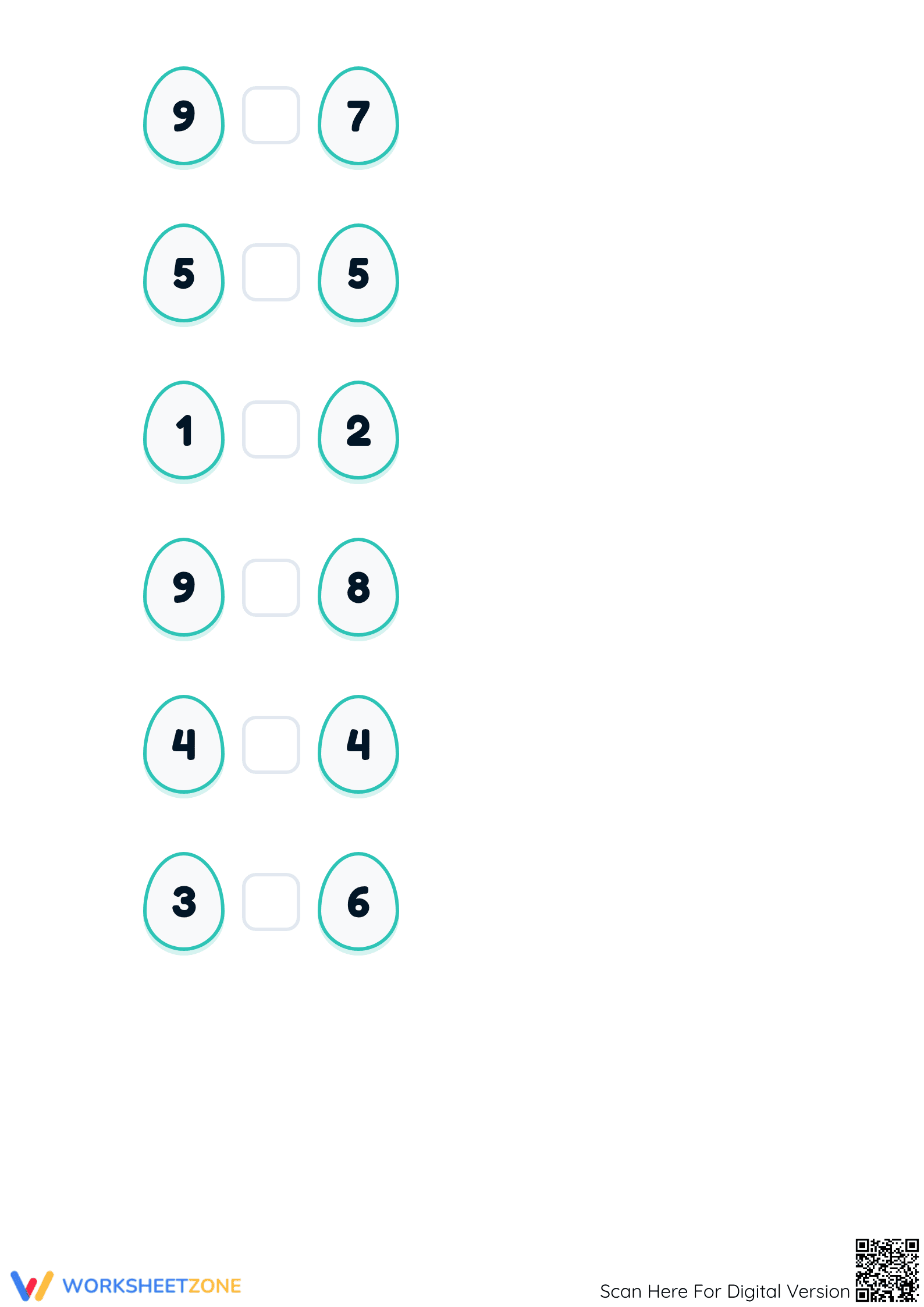
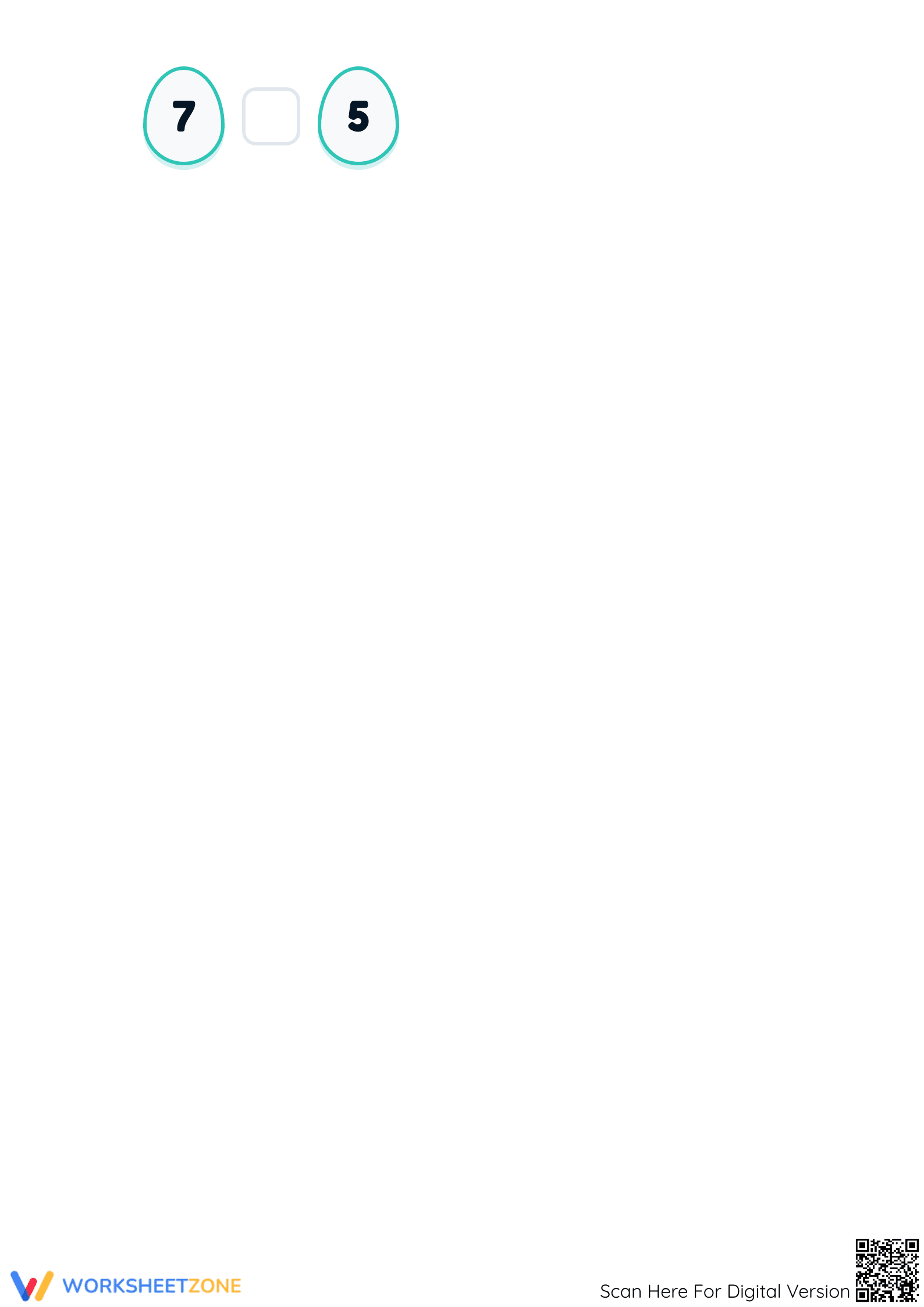

Printable Comparing Numbers Worksheet | Kindergarten Math
Paste this activity's link or code into your existing LMS (Google Classroom, Canvas, Teams, Schoology, Moodle, etc.).
Students can open and work on the activity right away, with no student login required.
You'll still be able to track student progress and results from your teacher account.
This comprehensive comparing numbers worksheet empowers Kindergarten students to master the foundational mathematical concept of numerical relationships. By utilizing comparison symbols, learners develop a concrete understanding of quantity and value. This resource provides a structured environment for students to practice identifying which number represents a larger or smaller amount effectively without overwhelming the learner with complex instructions.
At a Glance
- Grade: Kindergarten · Subject: Math
- Standard:
K.CC.C.7— Compare two numbers between 1 and 10 presented as written numerals- Skill Focus: Greater than, less than, and equal to signs
- Format: 3 pages · 12 problems · Answer key included · PDF
- Best For: Early math centers and daily morning work
- Time: 10–15 minutes
What's Inside: This high-quality PDF collection spans three pages and features 12 unique mathematical comparison tasks. Each problem is presented within a charming spring-themed egg graphic, providing a clear visual boundary for each exercise. The worksheet includes a dedicated space for the student's name, date, and score, along with a full answer key for rapid grading and immediate feedback during group reviews.
Skill Progression
- Guided Practice: The initial four problems introduce the concept using low-value single-digit numbers like 2 versus 5 to build confidence and ensure symbol recognition.
- Supported Practice: Mid-level tasks challenge students with identical numerals, such as 8 versus 8, to reinforce the equal sign and slightly larger digit pairings.
- Independent Practice: The final set of problems requires students to apply their knowledge across varying digit distances, such as 7 versus 5, without visual scaffolds.
This resource follows a gradual-release model, moving from high-support numeral sets to independent application of comparison symbols through structured repetition.
Standards Alignment
This resource is explicitly aligned with K.CC.C.7, which requires students to compare two numbers between 1 and 10 presented as written numerals. It also supports introductory algebraic thinking by establishing the concept of inequality and numerical balance. This standard code can be copied directly into lesson plans, IEP goals, or district curriculum mapping tools.
How to Use It
Deploy this worksheet during the independent practice portion of a math lesson after direct instruction on the greater than and less than concept. It is also highly effective as a formative assessment tool; teachers should observe if students are reversing the symbols or struggling with equal values. Expect students to complete all three pages within approximately 15 minutes in a focused setting.
Who It's For
This printable is designed for Kindergarten students, but it also serves as an excellent intervention resource for Grade 1 learners needing a refresher on basic inequalities. It pairs naturally with physical manipulatives, such as counting cubes or bear counters, to help tactile learners bridge the gap between concrete quantities and abstract numerals.
This educational resource targets the specific mastery of CCSS.MATH.CONTENT.K.CC.C.7, ensuring students can fluently compare written numerals between one and ten. Developing early number sense through inequality symbols is a critical precursor to more complex arithmetic operations. According to Fisher & Frey (2014), the use of structured independent practice following a gradual release of responsibility is vital for the long-term retention of mathematical symbols and concepts. By engaging with these 12 tasks, students move beyond simple counting to an evaluative understanding of relative value, which is a foundational requirement for success in elementary mathematics. The inclusion of a clear answer key allows for the immediate correction of misconceptions, preventing the habituation of errors during the early stages of symbol acquisition. This worksheet provides the repetitive, focused practice necessary for Kindergarten students to achieve the level of automaticity required by modern standards-aligned curricula and state assessment frameworks.


