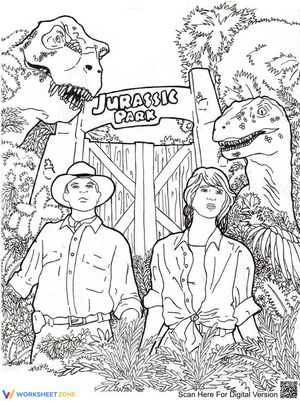
The growth of a young learner is built on a series of small but vital cognitive milestones, and creative play is one of the most powerful ways to support them. Jurassic World coloring pages give children a familiar story setting, complete with raptors, the towering Indominus Rex, and the famous Blue, that draws them into focused, hands-on activity. When a child sits down to color these dinosaur scenes, they are doing far more than filling space with crayon; they are practicing the fine motor control, spatial awareness, and visual planning that form the foundation of early literacy and math readiness.
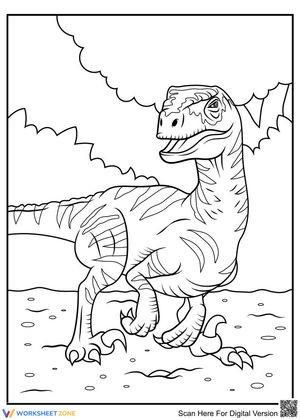
Our materials at Worksheetzone are designed to follow a clear scaffolded progression, moving children from guided to independent work. Younger learners can start with simple outlines of a single dinosaur, such as a friendly Velociraptor profile, where bold lines reduce frustration and invite success. As confidence grows, students move on to layered scenes from the Jurassic World parks, with overlapping foliage, rocky terrain, and group compositions that ask the child to make thoughtful color and pressure choices. This step-by-step approach respects each developmental stage and keeps the activity within the productive zone of challenge.
Fine motor practice during coloring directly supports academic readiness. The pencil grip, hand stability, and finger isolation needed to color a Mosasaurus fin or a T-Rex tooth are the very same skills that prepare a child for handwriting, scissor work, and coordinated math manipulation. Teachers can pair these printables with a short discussion about herbivores and carnivores, layering early science vocabulary on top of the motor practice. Parents can use them during quiet afternoons as a calming, screen-free dinosaur learning routine that still feels playful and rewarding.
Visual organization is another quiet benefit of these printables. Each Jurassic World scene asks the child to scan the page, decide where to begin, and plan a color sequence, building the mental stamina needed for longer classroom tasks later on. Print pages on standard letter-size paper using black-and-white settings, and offer washable markers, colored pencils, or crayons depending on the child's age. For students who love a single character, our companion T-Rex printable set pairs naturally with this collection and extends the same skill practice.
By the time a child finishes a Jurassic World coloring page, they have completed a meaningful piece of developmental work wrapped inside a story they love. Teachers, homeschoolers, and parents can use these printables to support fine motor growth, focused attention, and confident creative expression in every learner. Print a few pages, set out the crayons, and let young paleontologists explore the world of dinosaurs at their own steady pace.
Frequently Asked Questions
Question 1: What ages are Jurassic World coloring pages best for?
These printables work well for children from about age four through ten, with the early years focusing on bold single-character outlines and older children enjoying detailed group scenes. Younger learners benefit from larger spaces and simple shapes, while elementary students can practice careful shading, pattern work, and color blending on more complex pages. Teachers can easily differentiate by selecting pages that match each student's current fine motor stage.
Question 2: How do these coloring pages support classroom learning?
Jurassic World coloring pages support fine motor development, focused attention, and early science vocabulary in one calm activity. Educators can connect each scene to lessons on habitats, herbivores and carnivores, or simple measurement using dinosaur sizes. The pages also serve as a smooth transition between higher-energy lessons, helping children settle, regulate breathing, and prepare their hands for writing tasks that follow.
Question 3: What materials work best with these printables?
Standard letter-size paper, washable markers, colored pencils, and quality crayons all pair well with these dinosaur scenes. Younger children often do best with chunky crayons or triangle-grip pencils that strengthen their developing pinch grasp. Older students can experiment with gel pens, fine-tip markers, or layered colored pencil work to add texture to scales, foliage, and rocky landscapes within each Jurassic World scene.
Question 4: How can parents extend the activity at home?
Parents can pair Jurassic World coloring pages with read-aloud time, simple dinosaur fact cards, or a quick sorting game using finished artwork. Encouraging the child to name each species, describe colors chosen, or invent a short story about the scene strengthens vocabulary and narrative thinking. Hanging completed pages on a family wall builds confidence and turns a quiet moment of coloring into lasting positive memories.