




























Views
Plays

City of Ember Ch. 10-11 — Essential Printable Quiz

Paste this activity's link or code into your existing LMS (Google Classroom, Canvas, Teams, Schoology, Moodle, etc.).
Students can open and work on the activity right away, with no student login required.
You'll still be able to track student progress and results from your teacher account.
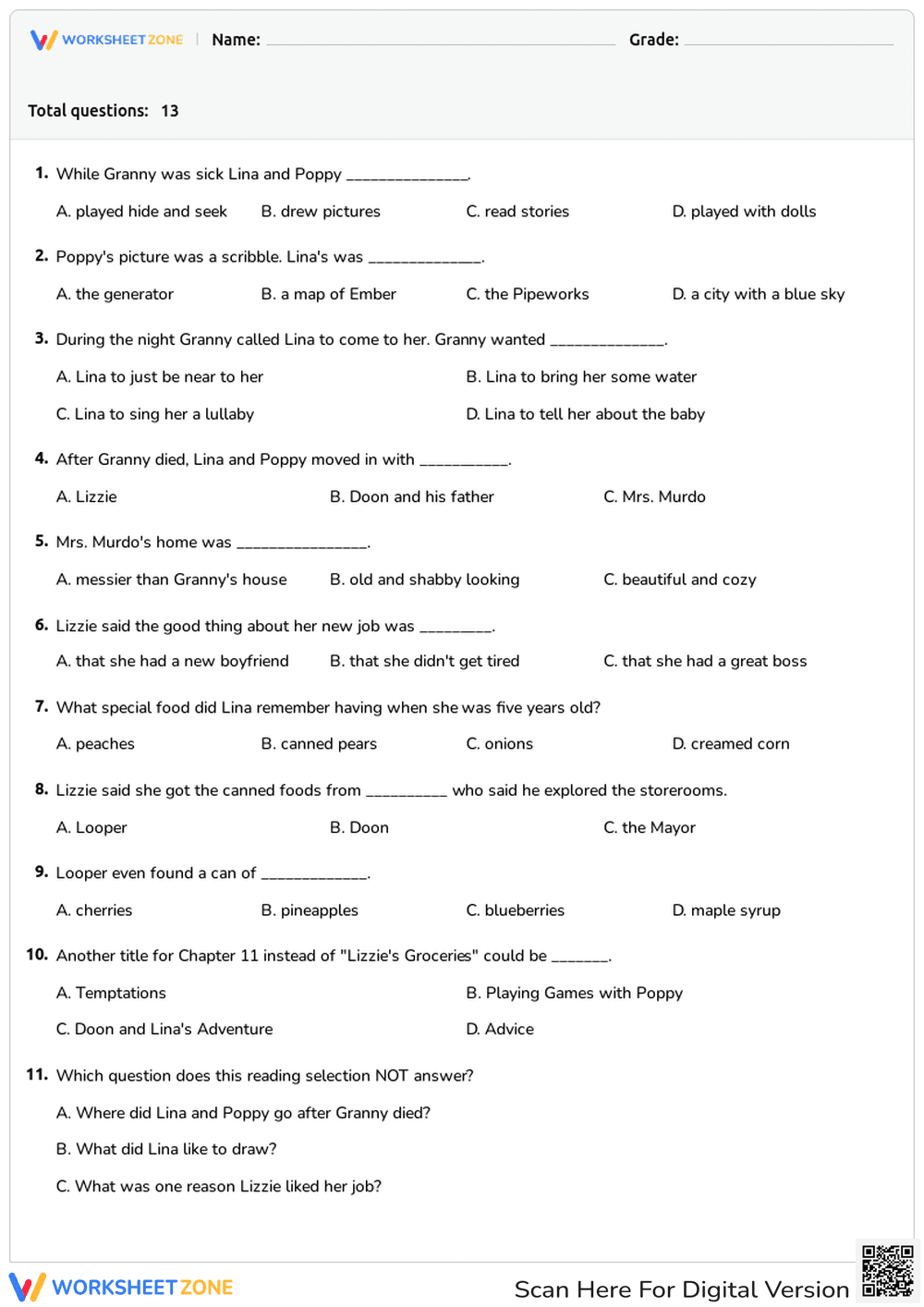
This Grade 5 reading comprehension worksheet provides a targeted assessment for Chapters 10 and 11 of Jeanne DuPrau's "The City of Ember." Students demonstrate their understanding of key plot developments, character motivations, and textual evidence through structured multiple-choice questions. It ensures students capture critical details about Granny’s illness and the mysterious canned goods.
At a Glance
- Grade: 5 · Subject: ELA
- Standard:
CCSS.ELA-LITERACY.RL.5.1— Quote accurately from a text and explain explicit meanings and inferences- Skill Focus: Novel Study Comprehension
- Format: 2 pages · 13 problems · Answer key included · PDF
- Best For: Post-reading check or sub plans
- Time: 15–20 minutes
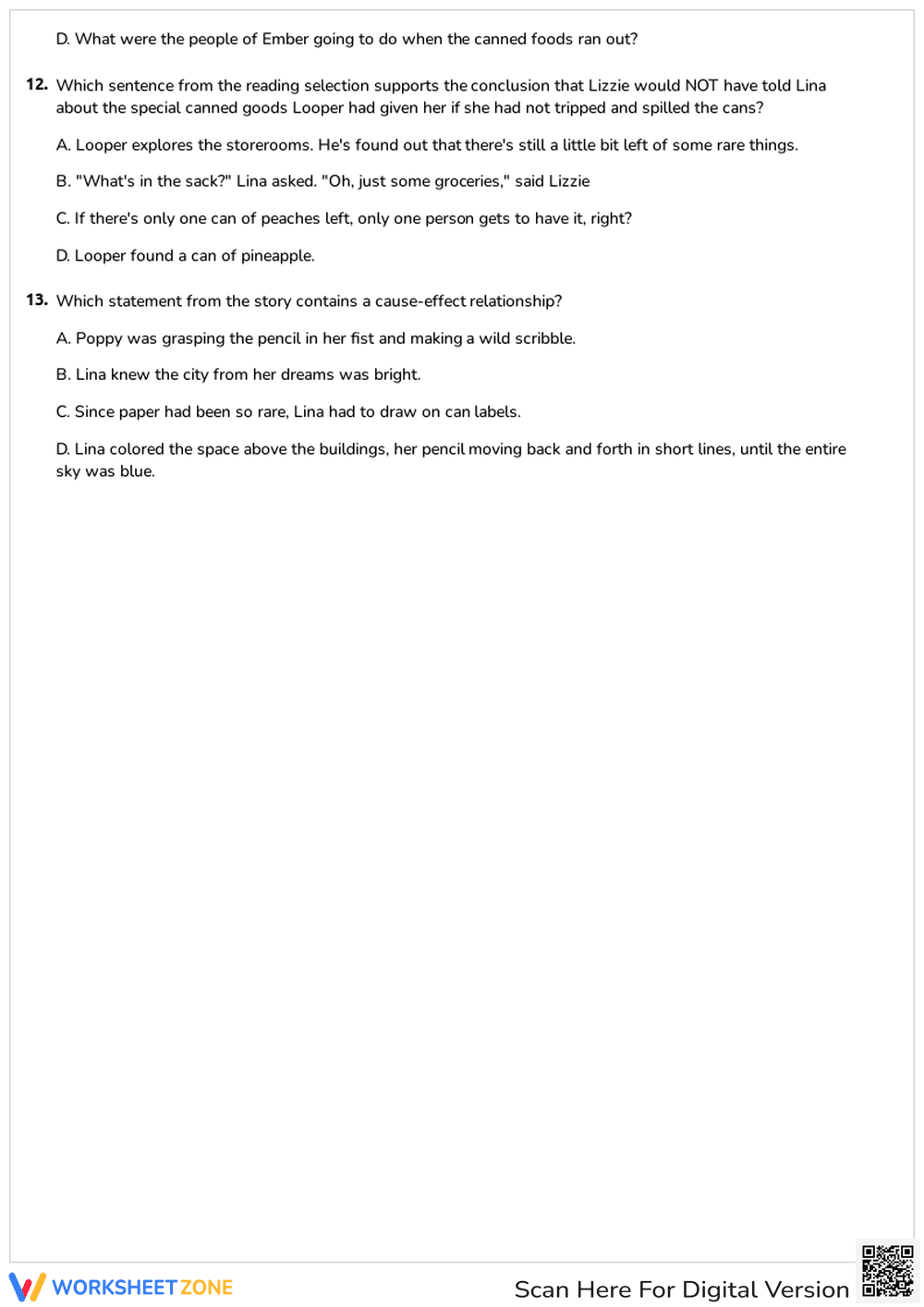
The resource contains 13 multiple-choice questions spread across two clean, readable pages. The questions range from literal recall, such as identifying what Lina remembered eating at age five, to higher-order analysis, such as identifying cause-and-effect relationships and selecting the best alternative chapter title. A comprehensive answer key is provided to facilitate rapid grading and immediate feedback for students.
This resource is designed for a zero-prep classroom workflow. First, print the two-page PDF in under 30 seconds. Second, distribute the sheets to students for an independent reading check during your ELA block. Third, use the included answer key to review responses as a whole group or for individual grading. Total teacher preparation time is under two minutes, making it an ideal choice for busy mornings or unexpected substitute teacher needs.
Standards Alignment: The primary focus is CCSS.ELA-LITERACY.RL.5.1: "Quote accurately from a text when explaining what the text says explicitly and when drawing inferences from the text." The worksheet specifically requires students to identify supporting sentences for conclusions and recognize explicit details from the narrative. Both standard codes can be copied directly into lesson plans, IEP goals, or district curriculum mapping tools.
Use this worksheet as a formative assessment immediately following the completion of Chapter 11. It serves as an excellent exit ticket to gauge student engagement with the text. Teachers should observe if students struggle with Question 12, which requires identifying textual support, as this indicates a need for more guided practice with evidence-based reasoning. Expected completion typically takes 15 to 20 minutes.
This resource is tailored for students in Grades 4, 5, and 6 who are engaged in a novel study of "The City of Ember." It is particularly effective for general education classrooms and can be paired with a character map or a plot timeline anchor chart to support visual learners. It provides a structured way for students to process the emotional and plot-driven shifts in the story.
According to the RAND AIRS 2024 report on literacy instruction, frequent low-stakes comprehension checks are vital for maintaining student engagement during extended novel units. This worksheet addresses the CCSS.ELA-LITERACY.RL.5.1 standard by requiring students to distinguish between explicit facts and inferred character motivations within the context of a complex narrative. By focusing on specific chapters, the tool prevents the cognitive overload often associated with cumulative exams, allowing for more precise intervention. Research by Fisher & Frey (2014) suggests that such targeted assessments help bridge the gap between initial reading and deep thematic analysis. This 13-question instrument provides the necessary data points for educators to track progress toward mastery of evidence-based reading skills. The inclusion of cause-and-effect analysis further aligns with middle-grade expectations for logical reasoning in literary contexts. This citation-ready summary highlights the worksheet's utility in a modern, evidence-based ELA curriculum.


