


























Views
Downloads

Essential Digraphs Worksheet | Preschool ELA Printable
Paste this activity's link or code into your existing LMS (Google Classroom, Canvas, Teams, Schoology, Moodle, etc.).
Students can open and work on the activity right away, with no student login required.
You'll still be able to track student progress and results from your teacher account.
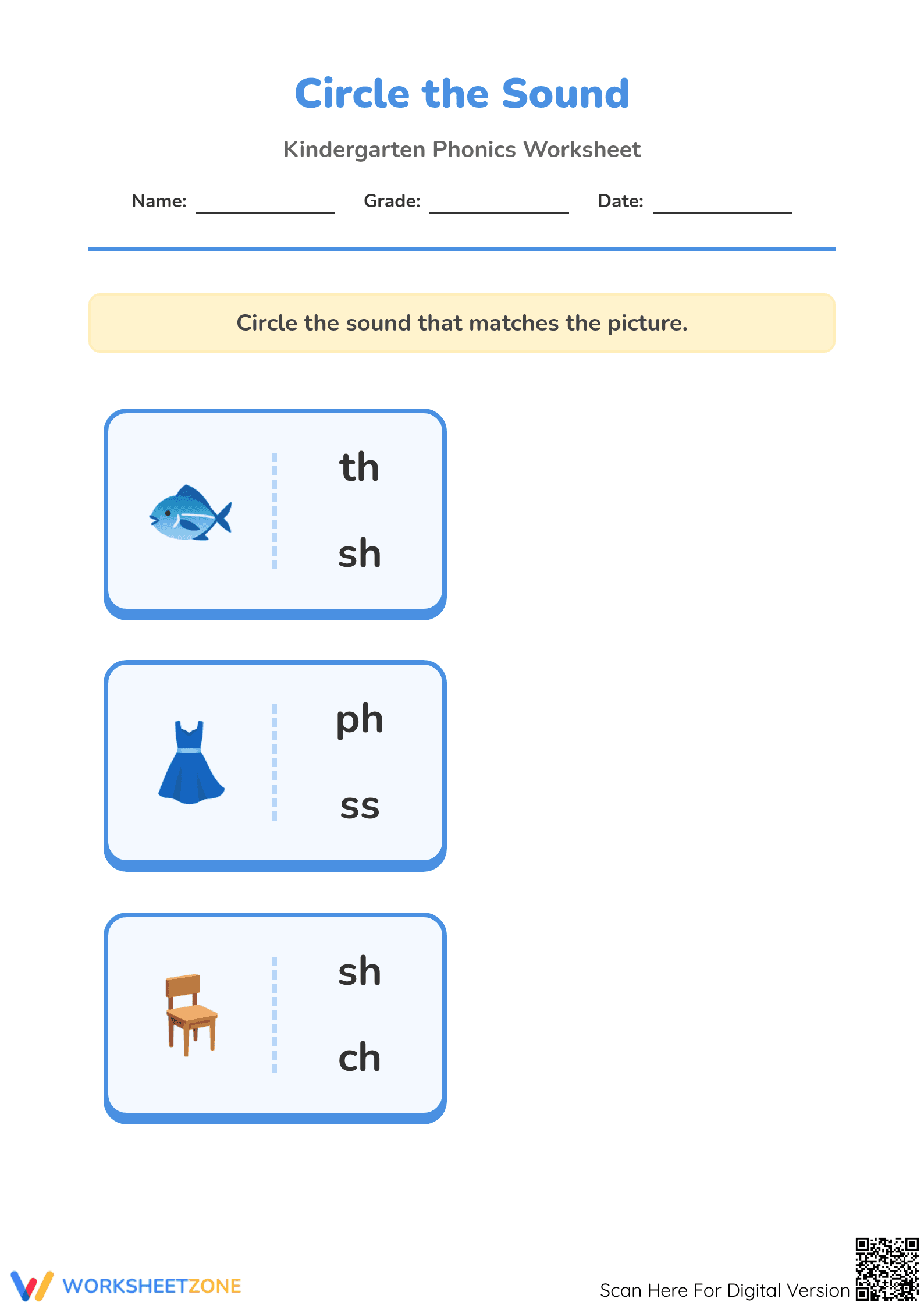
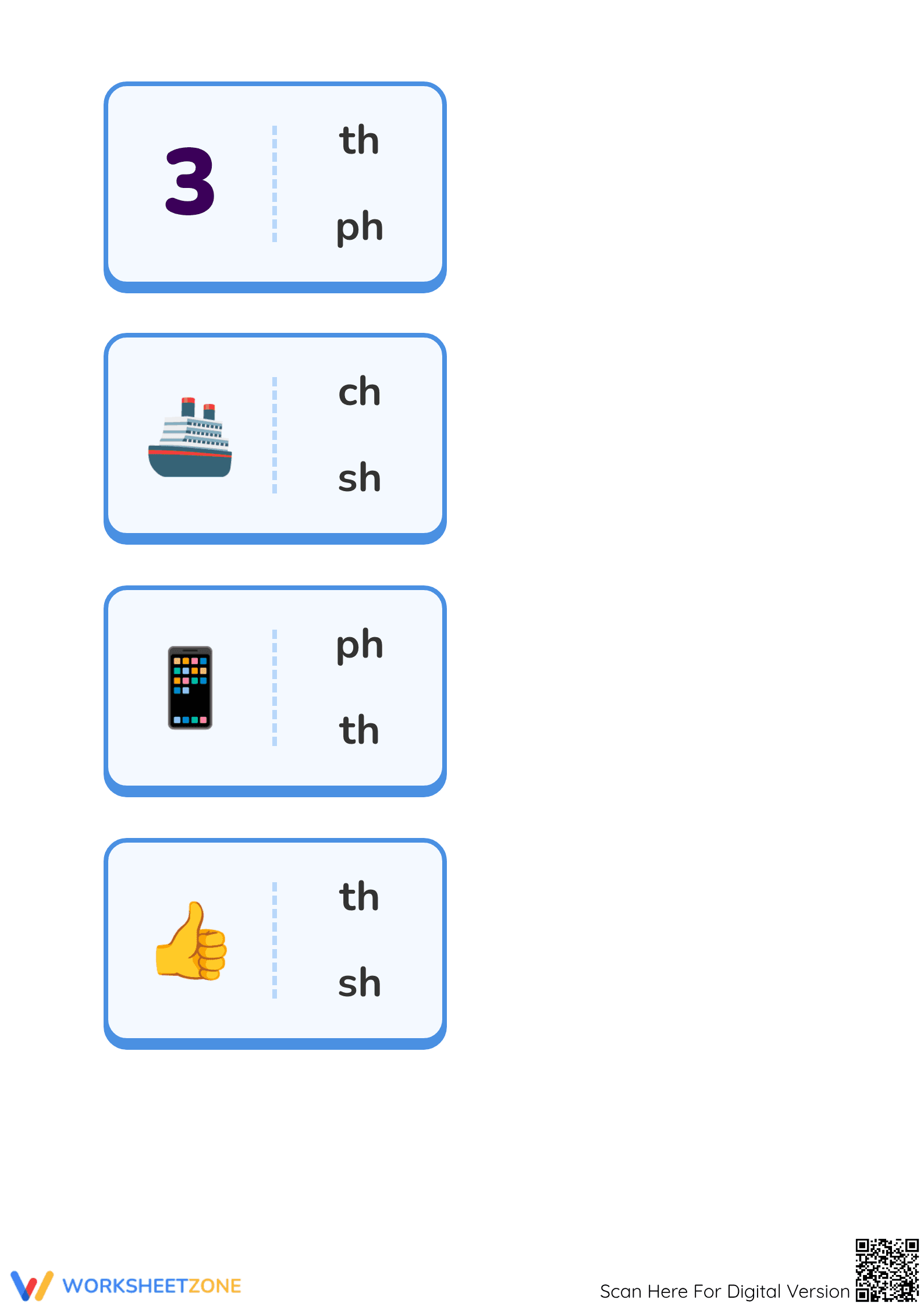
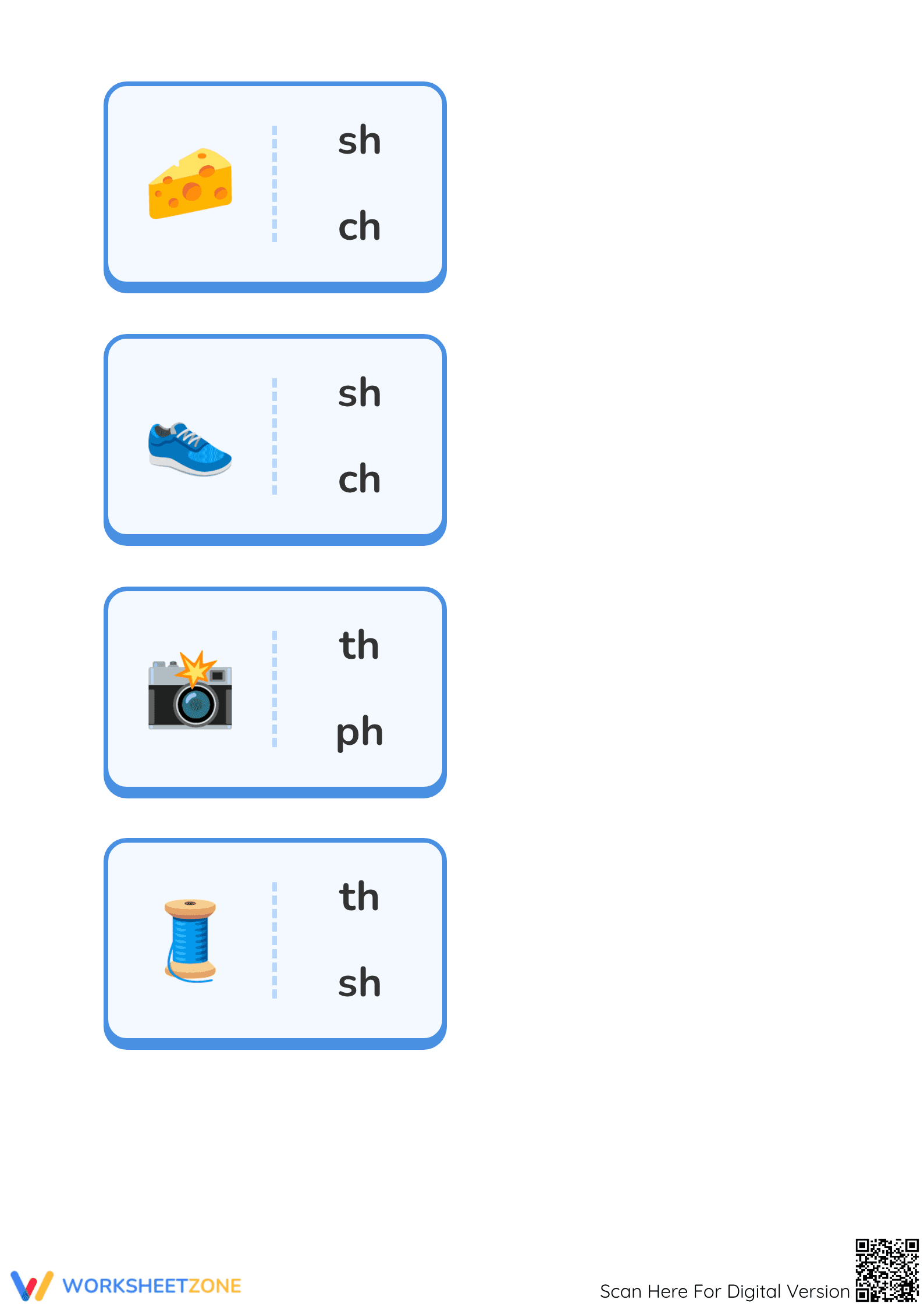
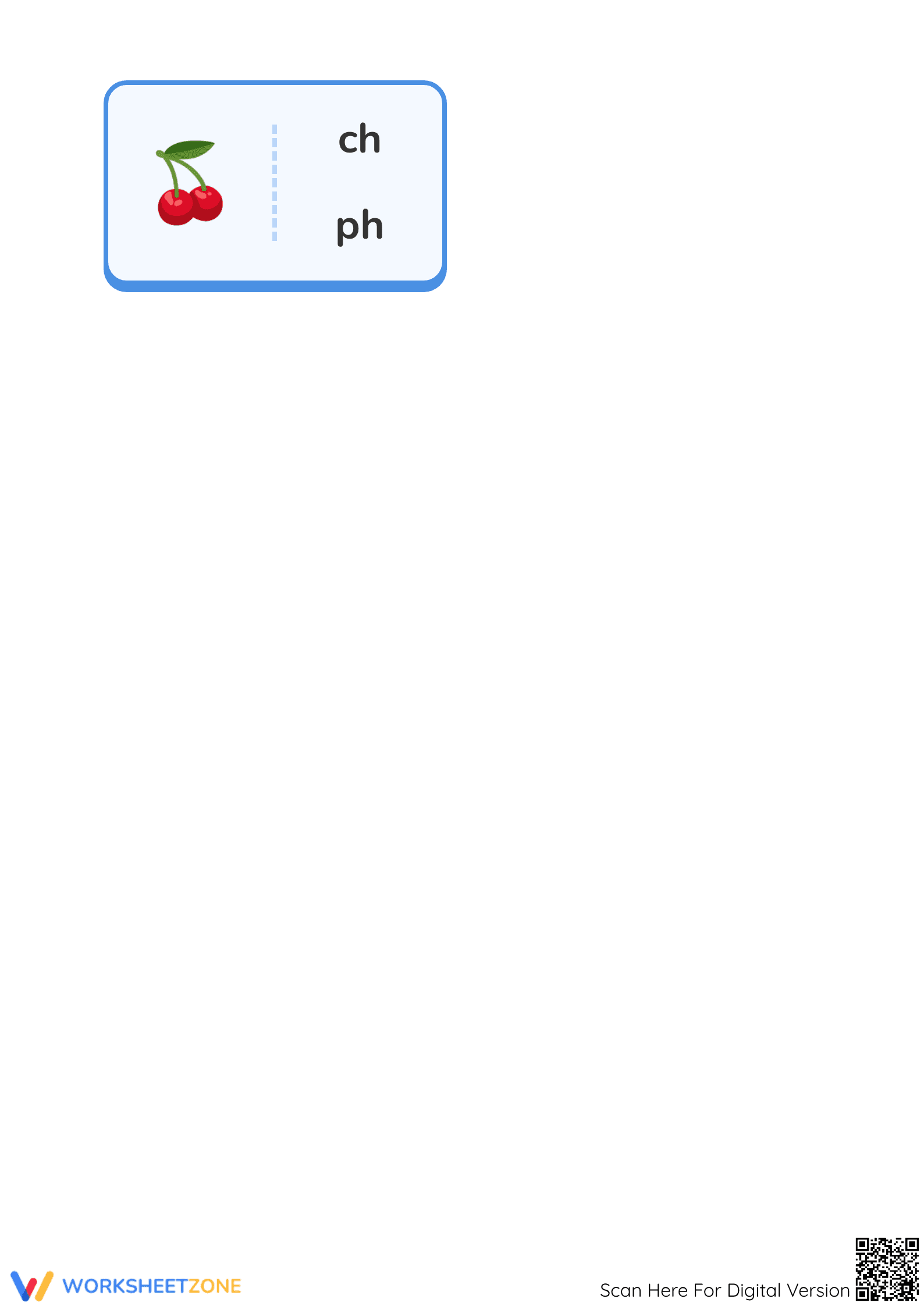
This Preschool ELA worksheet helps early learners identify and pronounce common consonant digraphs including sh, ch, th, and ph. By matching visual cues to specific letter combinations, students build the foundational phonemic awareness necessary for fluent reading. This resource provides a clear, structured path for mastering complex sounds through engaging pictorial associations and simple circling tasks.
At a Glance
- Grade: Preschool · Subject: ELA Phonics
- Standard:
CCSS.ELA-LITERACY.RF.K.3.A— Demonstrate basic knowledge of one-to-one letter-sound correspondences by producing the primary sound- Skill Focus: Consonant Digraphs (sh, ch, th, ph)
- Format: 4 pages · 12 problems · Answer key included · PDF
- Best For: Early literacy centers and phonics practice
- Time: 15–20 minutes
Inside this 4-page PDF, you will find 12 distinct matching exercises. Each task features a high-quality image—such as a fish, chair, or phone—paired with two digraph options. Students must determine the correct beginning or ending sound and circle the corresponding letters. A comprehensive answer key is included to facilitate quick grading or student self-correction, ensuring that learners receive immediate feedback on their phonics progress.
Zero-Prep Workflow: This resource is designed for immediate classroom implementation. First, print the four pages (30 seconds). Next, distribute the sheets to students during small group rotations or as a morning work assignment (1 minute). Finally, use the provided answer key to review student progress or allow for peer-checking (30 seconds). Total teacher preparation time is under two minutes, making it an ideal sub-plan or last-minute literacy center addition.
This worksheet aligns with CCSS.ELA-LITERACY.RF.K.3.A, focusing on the identification of letter-sound correspondences. While designed for Preschool, it supports the Kindergarten transition by introducing digraphs that represent single speech sounds. Both standard codes can be copied directly into lesson plans, IEP goals, or district curriculum mapping tools to ensure all instructional activities meet rigorous state and national requirements.
Use this worksheet during the independent practice phase of a phonics lesson after introducing the concept of digraphs. It serves as an excellent formative assessment tool; observe if students struggle with the "th" in "three" versus the "ph" in "phone." Completion typically takes 15 to 20 minutes depending on the student's familiarity with the vocabulary. It can also be sent home for additional reinforcement with parents.
This resource is tailored for preschool students ready for advanced phonics and kindergarteners needing reinforcement. It is particularly effective for English Language Learners (ELLs) who benefit from the strong visual-to-text connection. Pair this worksheet with a digraph anchor chart or a tactile sand-writing activity for a multi-sensory learning experience that caters to various learning styles within a single classroom setting.
Research from Fisher & Frey (2014) emphasizes the importance of scaffolded phonics instruction, particularly the transition from single-letter sounds to complex digraphs like sh, ch, th, and ph. This worksheet addresses the CCSS.ELA-LITERACY.RF.K.3.A standard by requiring students to produce the primary sound for common letter combinations. By utilizing 12 targeted visual-to-sound matching tasks, the resource reinforces the phonological loop, a critical component of early reading development. According to the RAND AIRS 2024 report, consistent exposure to structured phonics materials significantly improves decoding accuracy in early childhood settings. This 4-page printable provides the necessary repetition for students to internalize these sounds, moving them toward literacy mastery. The inclusion of an answer key ensures that feedback is immediate, a practice proven to enhance learning outcomes in foundational ELA subjects. This document serves as a reliable tool for both general education and targeted intervention.


