


























Views
Downloads



Essential Character Traits Quiz — Grades 1-3 Printable
Paste this activity's link or code into your existing LMS (Google Classroom, Canvas, Teams, Schoology, Moodle, etc.).
Students can open and work on the activity right away, with no student login required.
You'll still be able to track student progress and results from your teacher account.
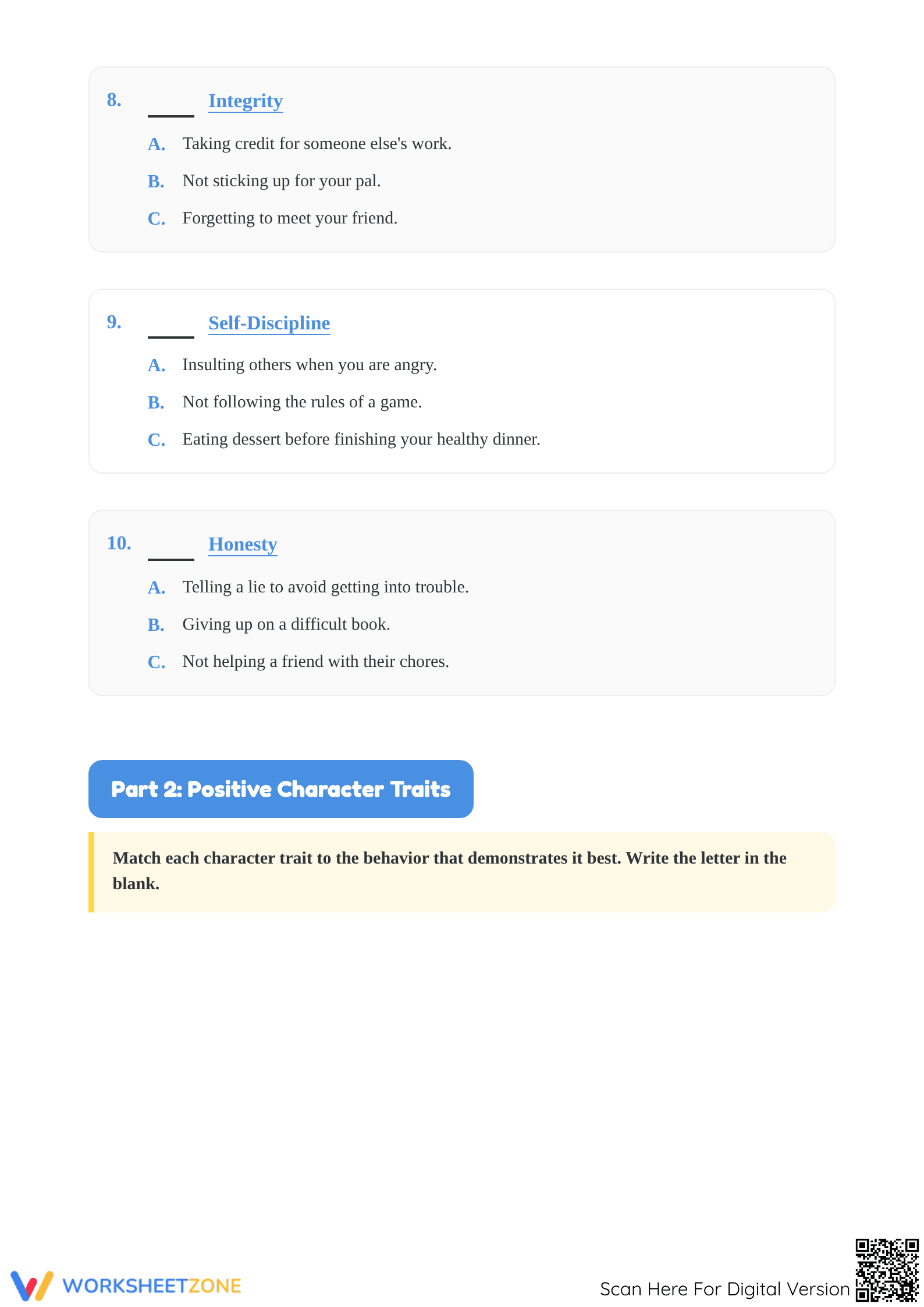
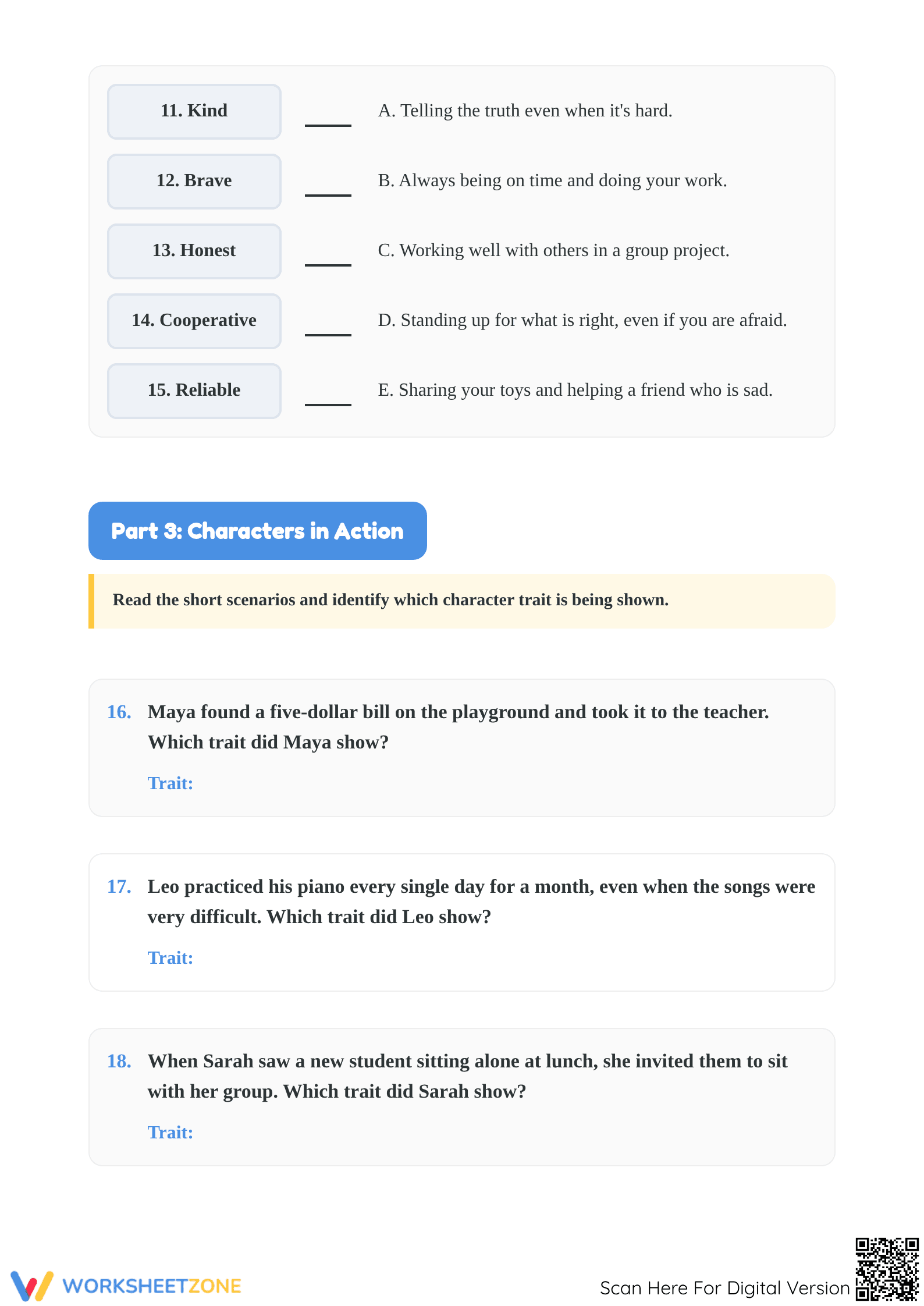
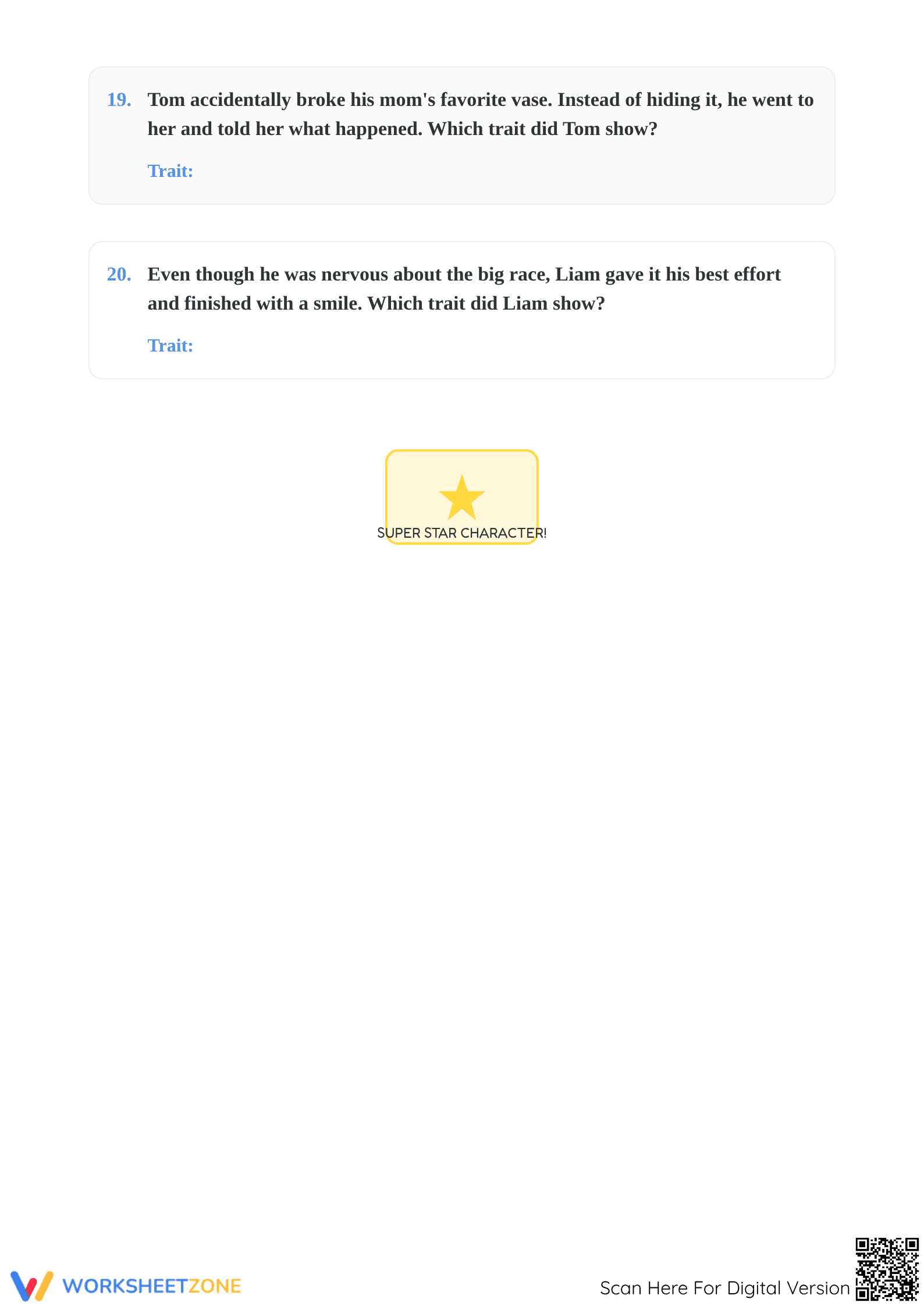
Strengthen your students' social-emotional and literary analysis skills with this comprehensive character traits assessment. This worksheet helps learners identify specific behaviors that demonstrate a lack of virtue, match traits to their definitions, and apply their knowledge to real-world scenarios. Students will emerge with a deeper vocabulary for describing themselves and the characters they encounter in literature.
At a Glance
- Grade: 1-3 · Subject: English Language Arts
- Standard:
CCSS.ELA-LITERACY.RL.2.3— Describe how characters in a story respond to major events and challenges- Skill Focus: Character Trait Identification and Application
- Format: 5 pages · 20 problems · Answer key included · PDF
- Best For: End-of-unit assessment or independent practice
- Time: 25–35 minutes
This five-page PDF provides a structured progression for evaluating character understanding. It contains three distinct sections: ten multiple-choice questions identifying the absence of traits like persistence and integrity, a five-item matching bank for positive behaviors, and five scenario-based application questions. A complete answer key is provided to facilitate rapid grading or student self-correction sessions.
Zero-Prep Workflow
Designed for immediate implementation, this resource requires minimal teacher intervention. Print the packet (60 seconds), distribute it (30 seconds), and review answers using the provided key (90 seconds). With a total preparation time of under three minutes, this quiz is an ideal solution for emergency sub plans or spontaneous formative check-ins.
Standards Alignment
This worksheet is primarily aligned with CCSS.ELA-LITERACY.RL.2.3: "Describe how characters in a story respond to major events and challenges." It also supports RL.3.3 by asking students to analyze character actions within specific scenarios. Both standard codes can be copied directly into lesson plans, IEP goals, or district curriculum mapping tools.
How to Use It
Administer this quiz as a summative assessment after a unit on characterization to gauge individual mastery of descriptive adjectives. Alternatively, use it as a collaborative activity where students discuss the "Characters in Action" scenarios in small groups. Observe whether students can justify their trait selections based on the behavioral evidence provided in each text-based scenario.
Who It's For
This resource is tailored for students in grades 1 through 3, offering appropriate scaffolding for younger learners while maintaining rigors for third graders. It serves as an excellent pairing for any narrative text or character-focused anchor chart, helping students transition from basic identification to complex behavioral analysis across various social and academic contexts.
The mastery of CCSS.ELA-LITERACY.RL.2.3 requires students to move beyond surface-level descriptions to a nuanced understanding of how traits manifest as actions. This worksheet targets that gap by utilizing 20 specific problems that challenge learners to apply character vocabulary to diverse situations. According to research by Fisher & Frey (2014), explicit teaching of character traits through varied task types significantly enhances reading comprehension and social-emotional literacy. By providing a framework for identifying the presence and lack of specific virtues, this tool ensures students can accurately "Describe how characters in a story respond to major events and challenges." The inclusion of scenario-based application tasks mirrors high-stakes assessment formats while remaining accessible for elementary learners. This evidence-based approach to characterization provides the essential practice needed for students to develop a robust vocabulary for literary analysis and personal development.


