


























Views
Downloads

Printable Cell Organelles Worksheet | Grade 7 Science
Paste this activity's link or code into your existing LMS (Google Classroom, Canvas, Teams, Schoology, Moodle, etc.).
Students can open and work on the activity right away, with no student login required.
You'll still be able to track student progress and results from your teacher account.
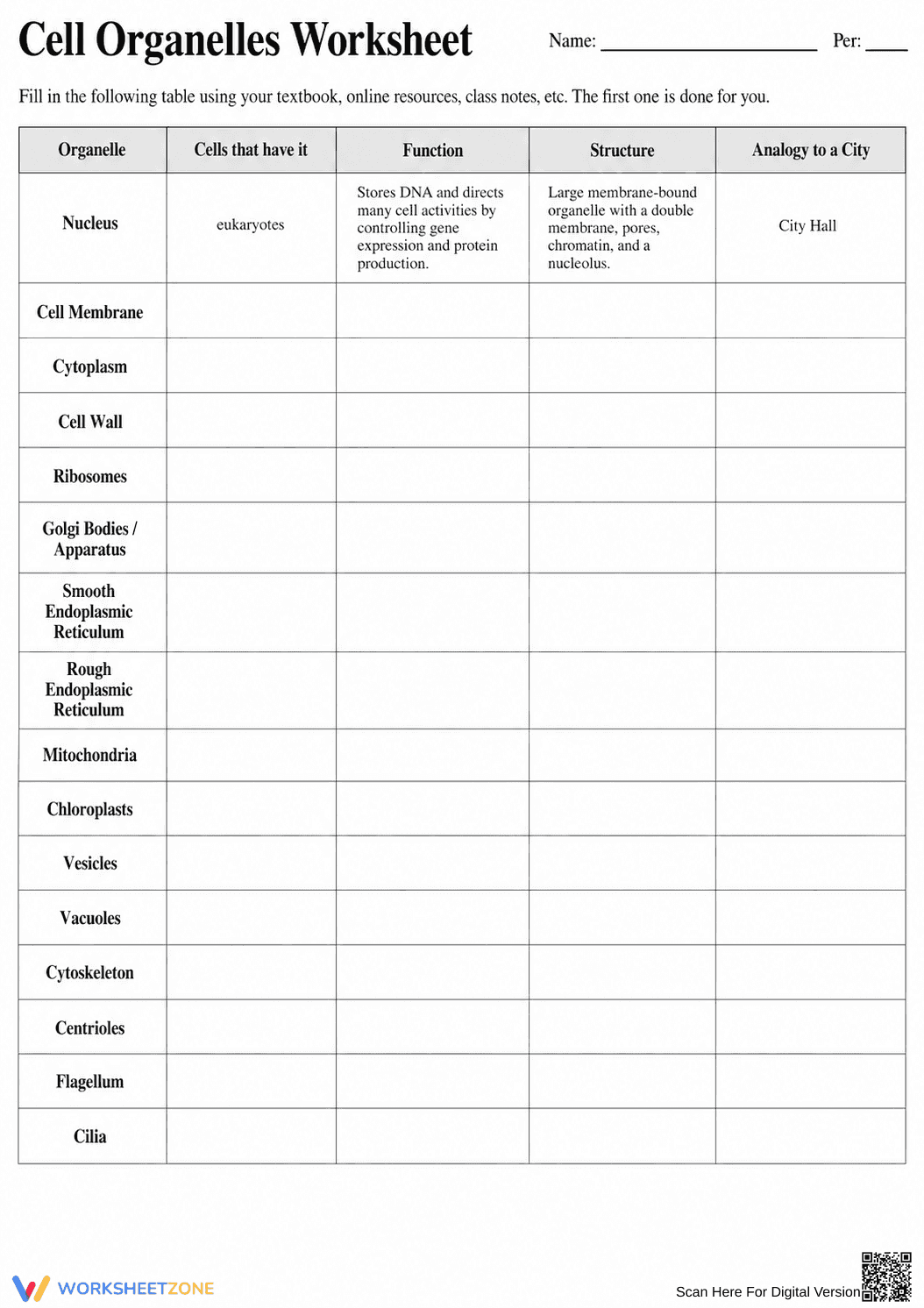
This comprehensive cell organelles worksheet equips students to master the structures and functions of plant, animal, and prokaryotic cells. By completing detailed tables, labeling diagrams, and drawing real-world analogies, learners will solidify their understanding of cellular biology and how microscopic components work together to sustain life.
At a Glance
- Grade: 7 · Subject: Biology
- Standard:
MS-LS1-2— Develop a model describing cell parts and their functions.- Skill Focus: Cell organelle structure and function
- Format: 6 pages · 55 problems · PDF
- Best For: Independent practice
- Time: 45–60 minutes
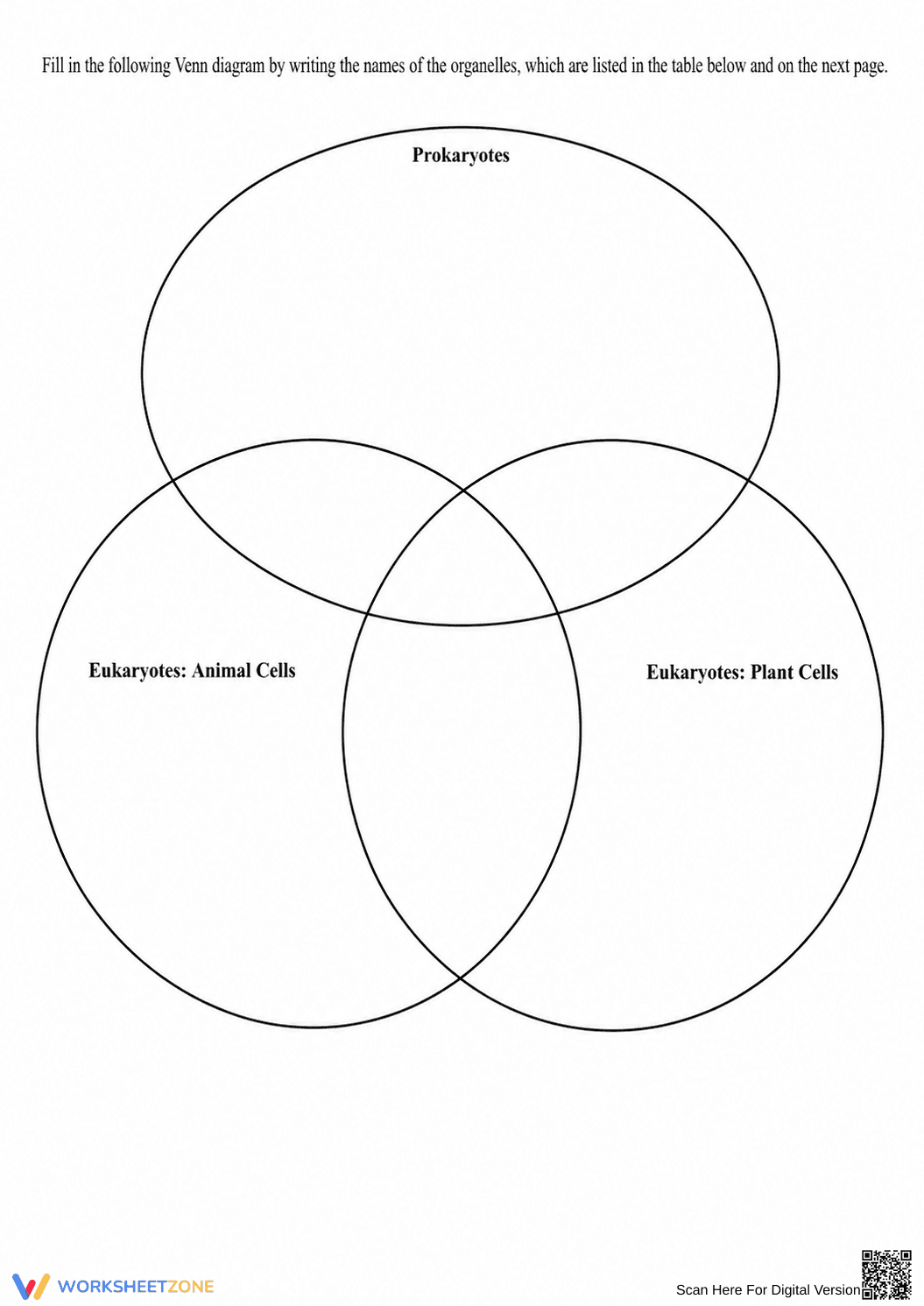
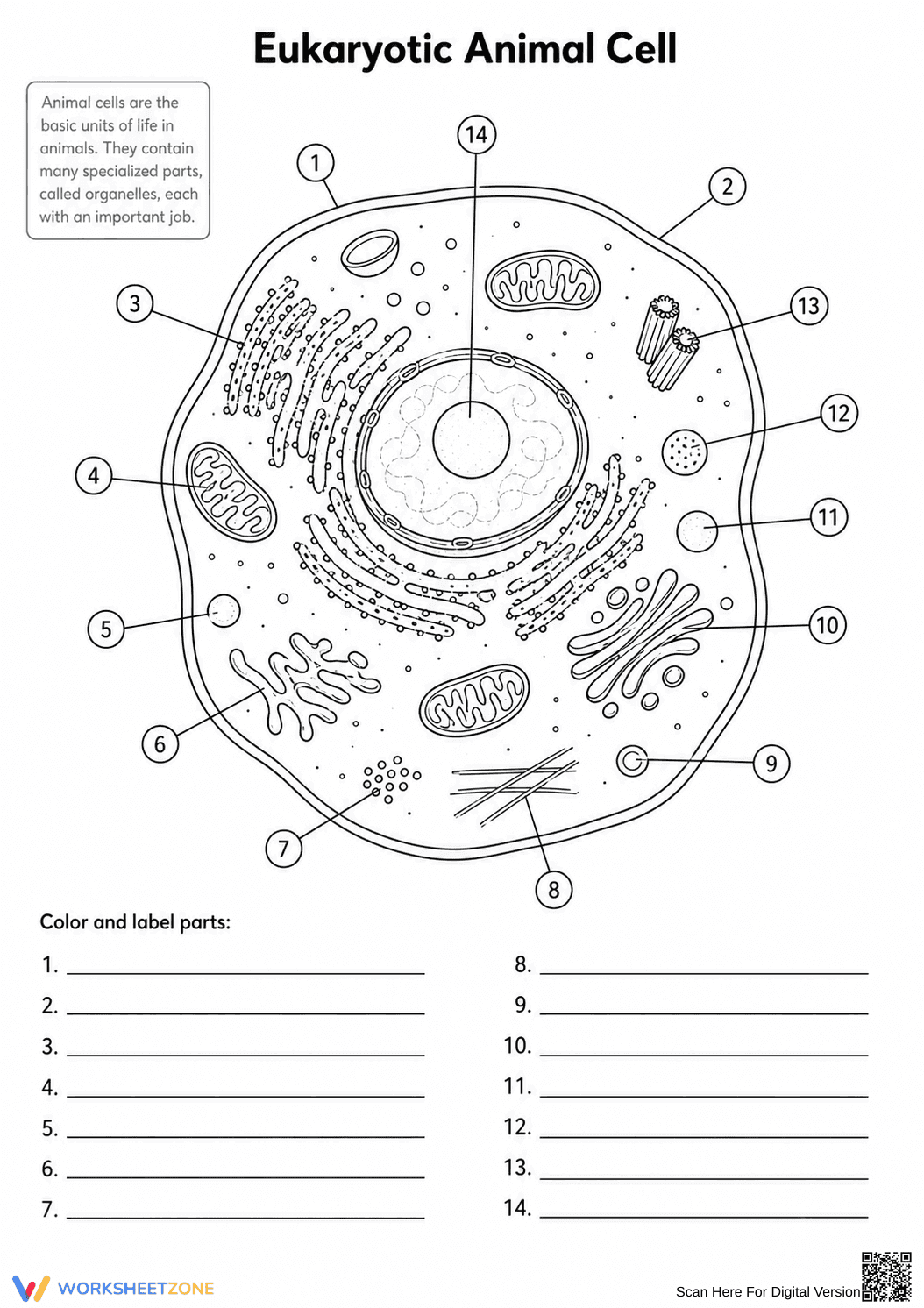
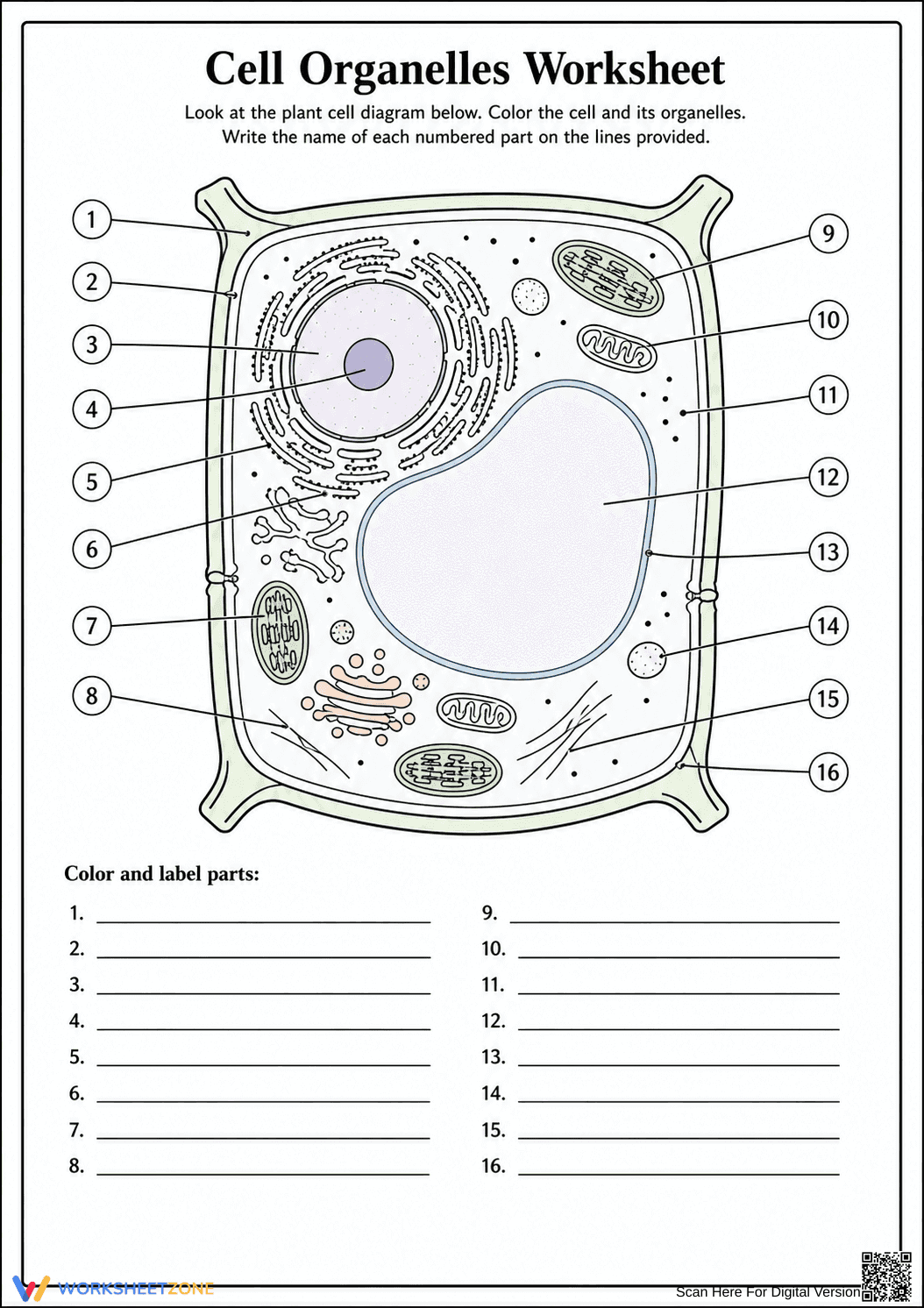
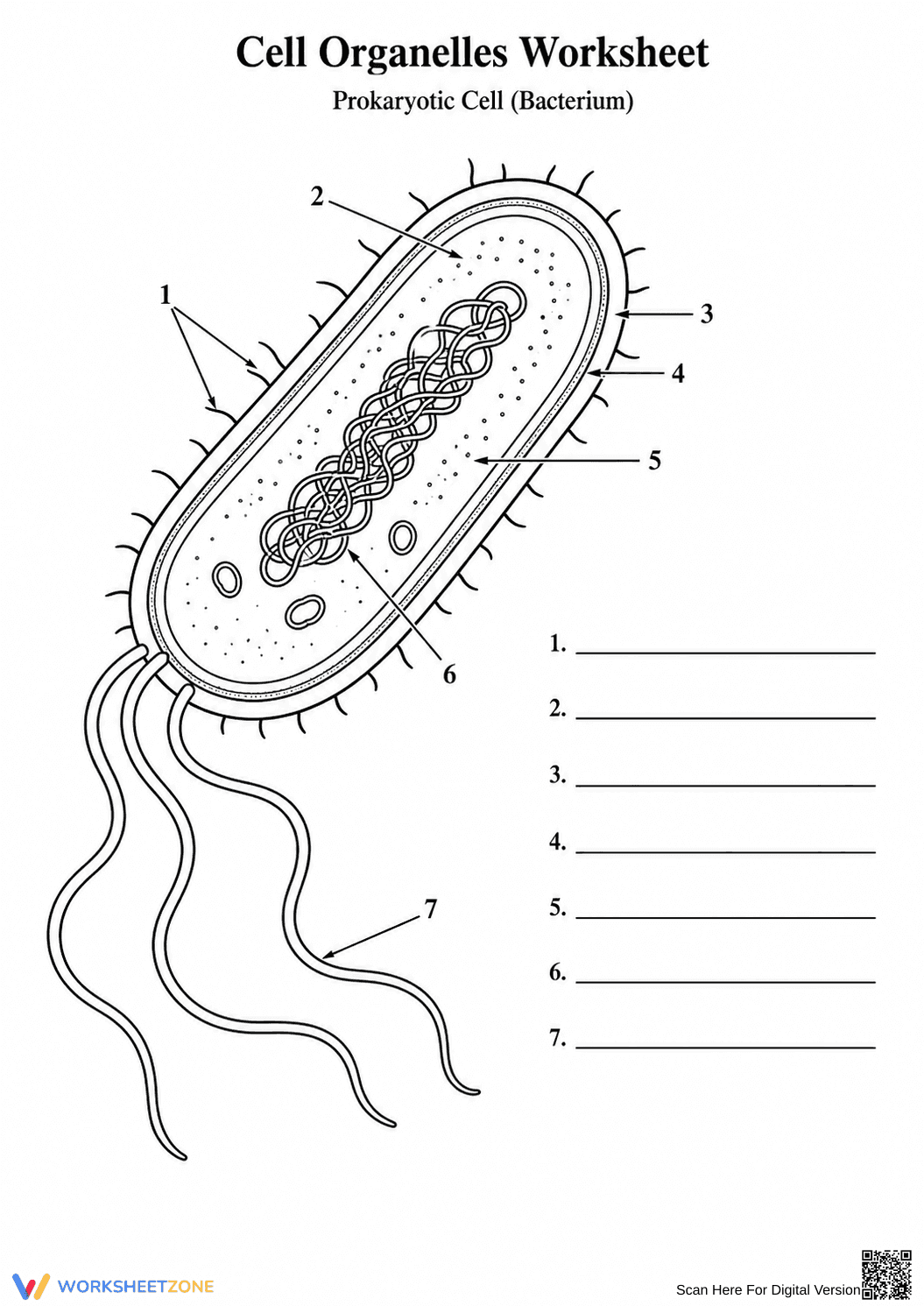
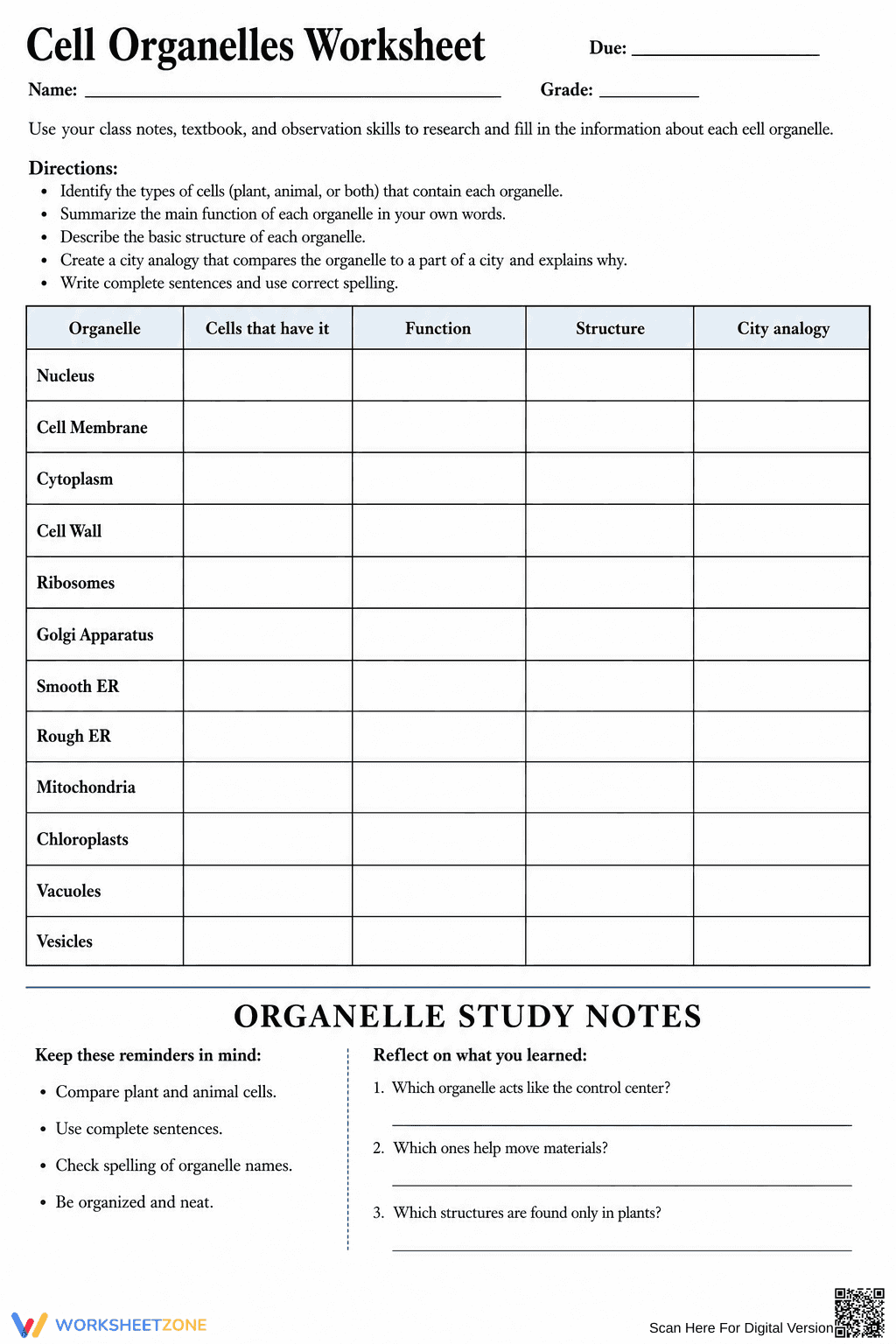
This 6-page packet features a variety of task types to engage different learning styles. It includes a comprehensive organelle function table with a built-in city analogy framework, a comparative Venn diagram, and three detailed cell labeling diagrams covering animal, plant, and prokaryotic cells. The final page offers structured study notes and reflection questions to consolidate student learning.
Skill Progression
- Guided practice: Students begin with the organelle table, utilizing the worked example for the nucleus to understand how to map cellular functions to a city analogy.
- Supported practice: Learners transition to labeling 37 distinct parts across three visual diagrams, applying their vocabulary in context with clear visual boundaries.
- Independent practice: The packet concludes with a Venn diagram and reflection questions requiring students to independently categorize organelles.
This sequence follows a gradual-release model, moving from structured I Do, We Do, You Do frameworks to independent mastery.
Standards Alignment
This resource is aligned to MS-LS1-2: Develop and use a model to describe the function of a cell as a whole and ways parts of cells contribute to the function. It also supports foundational high school biology requirements for cellular organization. Both standard codes can be copied directly into lesson plans, IEP goals, or district curriculum mapping tools.
How to Use It
Deploy this packet during direct instruction as a guided note-taking tool, or assign it after a lecture for comprehensive review. As a formative assessment tip, monitor how students complete the city analogy column; this reveals their conceptual grasp of organelle functions beyond rote memorization. The entire six-page packet takes approximately 45 to 60 minutes to complete, making it ideal for a full block period or a split two-day assignment.
Who It's For
This resource is designed for middle and early high school biology students. To differentiate, teachers can provide a word bank for the labeling diagrams to support emerging bilinguals. It pairs perfectly with a 3D cell model project or an introductory microscope lab.
Mastering cell organelle structure and function is a critical stepping stone for advanced biological sciences. According to a 2024 ScienceDirect TpT Analysis, multi-modal worksheets that combine visual labeling with analogical reasoning significantly improve long-term retention of complex scientific vocabulary. By aligning to the MS-LS1-2 standard, this resource ensures students do more than just memorize terms; they actively develop a model describing cell parts and their functions. The integration of a city analogy specifically targets higher-order cognitive processing, allowing learners to anchor abstract microscopic concepts to familiar macroscopic systems. This evidence-based approach supports diverse learning profiles and builds the foundational schema required for subsequent units on cellular respiration, photosynthesis, and genetics. Utilizing structured visual aids and comparative diagrams remains a proven strategy for maximizing student outcomes in middle school life science curricula.


