




























Views
Downloads
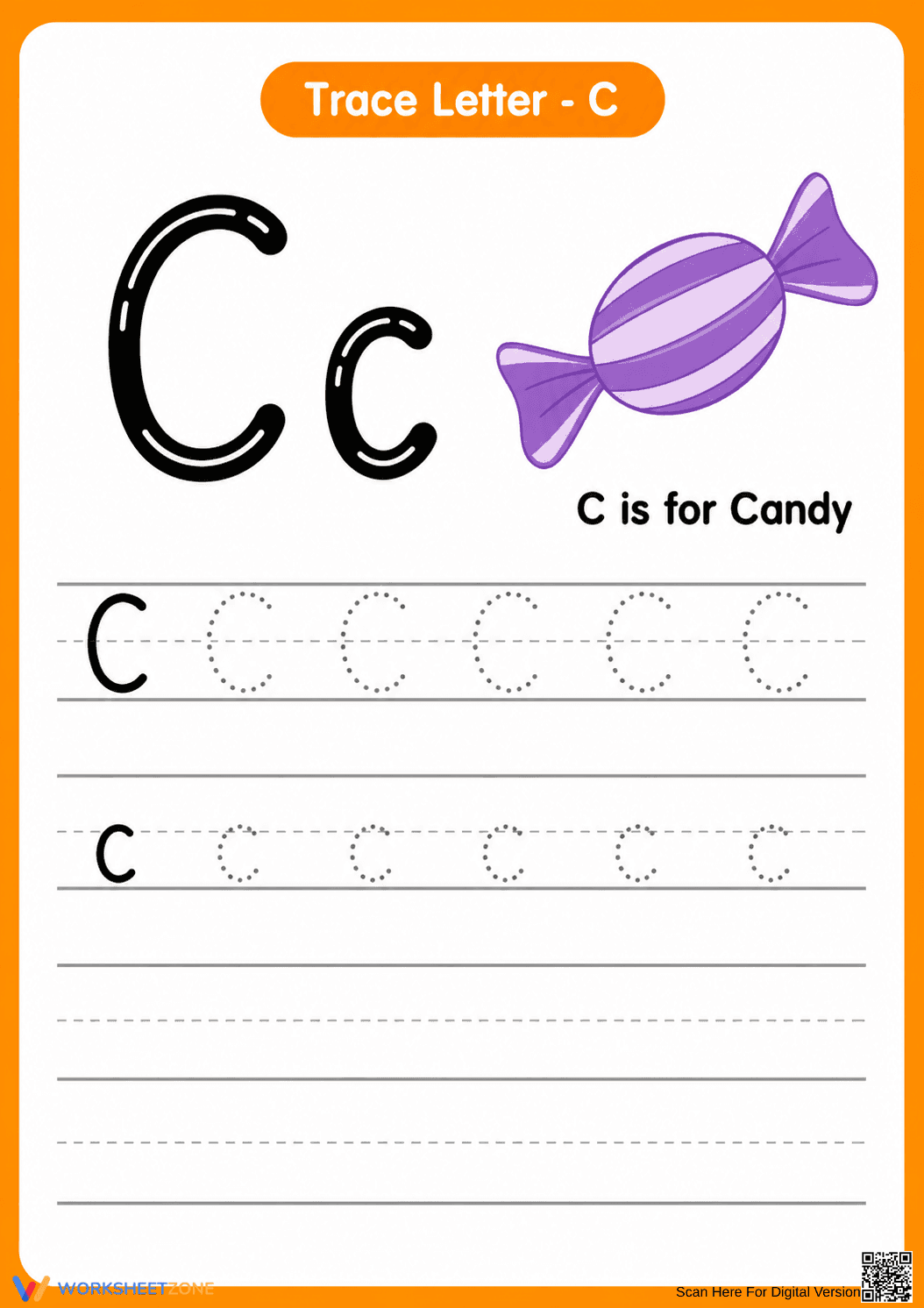

Grade K-1 Letter C Tracing — Printable No-Prep Worksheet

Paste this activity's link or code into your existing LMS (Google Classroom, Canvas, Teams, Schoology, Moodle, etc.).
Students can open and work on the activity right away, with no student login required.
You'll still be able to track student progress and results from your teacher account.
This Kindergarten and Grade 1 worksheet provides foundational practice for Letter C recognition and handwriting. Students develop fine motor control while connecting the "c" sound to the visual cue of a candy. By focusing on both uppercase and lowercase forms, the activity ensures comprehensive letter mastery for early readers.
At a Glance
- Grade: K-1 · Subject: ELA
- Standard:
CCSS.ELA-LITERACY.L.K.1.A— Print upper- and lowercase letters accurately using correct stroke direction- Skill Focus: Letter C formation
- Format: 1 page · 24 tasks · Answer key not included · PDF
- Best For: Morning work and literacy centers
- Time: 10–15 minutes
The worksheet features a large visual anchor of a candy to reinforce the hard /k/ sound. It includes one row of uppercase "C" tracing and one row of lowercase "c" tracing, followed by two empty primary-ruled lines for independent writing. The 1-page PDF format is designed for high-contrast printing and easy student visibility.
Zero-Prep Workflow
- Print: Select the single-page PDF and print enough copies for your group (30 seconds).
- Distribute: Hand out the sheets during morning work or dedicated phonics blocks (1 minute).
- Review: Monitor student progress by observing stroke direction and pencil grip as they work (ongoing).
Total teacher preparation time is under 2 minutes. This worksheet is an ideal addition to emergency sub plans or as a quick filler activity during literacy transitions.
Standards Alignment
This resource is aligned to CCSS.ELA-LITERACY.L.K.1.A: "Print many upper- and lowercase letters." It also supports CCSS.ELA-LITERACY.RF.K.1.D by helping students recognize and name specific alphabet characters. Both standard codes can be copied directly into lesson plans, IEP goals, or district curriculum mapping tools.
How to Use It
Use this as a formative assessment tool during the first week of alphabet introduction. Observe if students start their curves at the top "2 o'clock" position to ensure proper habits. It also serves as an excellent quiet-time activity or a quick sub-plan addition for early childhood classrooms. Expected completion time ranges from 10 to 15 minutes.
Who It's For
This is ideal for Kindergarten students beginning their phonics journey and Grade 1 students needing handwriting intervention. It pairs naturally with an alphabet anchor chart or a "Letter of the Week" read-aloud. The visual support makes it accessible for English Language Learners (ELLs) who benefit from the candy image association.
According to the RAND AIRS 2024 report on early literacy, consistent tactile practice with letter formation is a significant predictor of later reading fluency. This worksheet addresses CCSS.ELA-LITERACY.L.K.1.A by providing structured tracing paths that transition into independent production. Research by Fisher & Frey (2014) emphasizes that combining visual anchors, like the candy image, with motor tasks strengthens the orthographic mapping process. By engaging in these 24 distinct formation opportunities, students move from guided support to mastery. This resource provides the high-frequency exposure necessary for automaticity in handwriting, which reduces cognitive load during later composition tasks. Educators can utilize this tool to bridge the gap between letter recognition and functional writing skills in early childhood settings. This systematic approach ensures that students develop the muscle memory required for legible and efficient writing as they progress through the primary grades.


