


























Views
Downloads
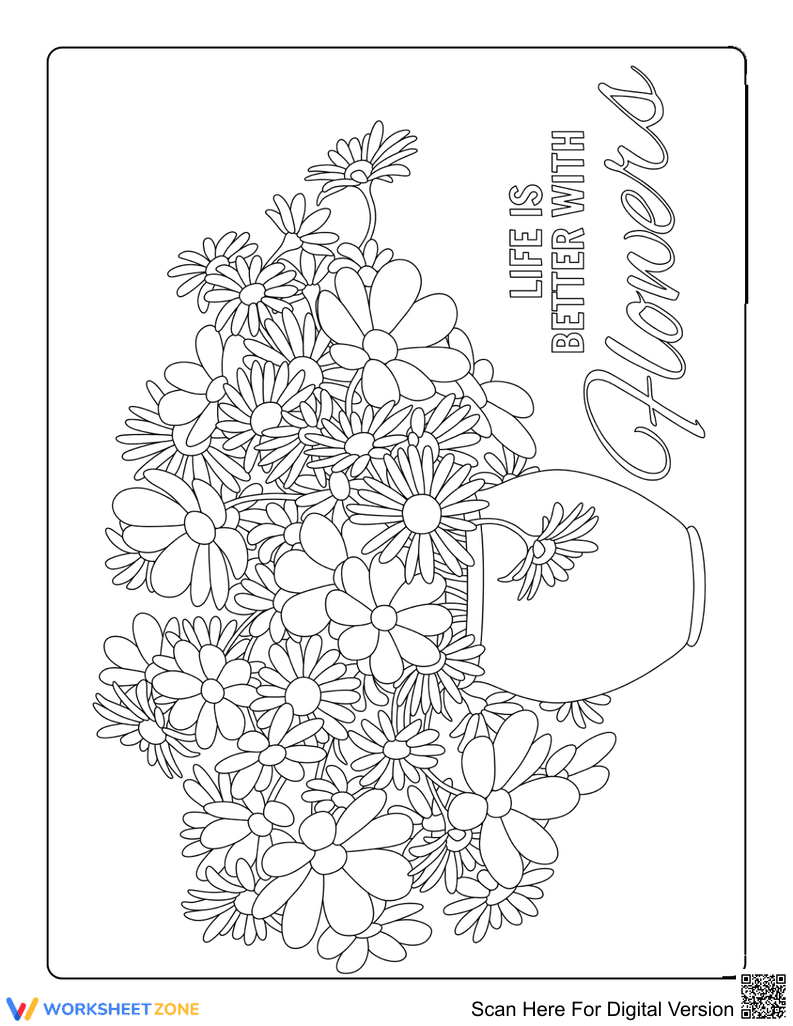

Printable Bouquet of Flowers Coloring Page | Grade K-2
Paste this activity's link or code into your existing LMS (Google Classroom, Canvas, Teams, Schoology, Moodle, etc.).
Students can open and work on the activity right away, with no student login required.
You'll still be able to track student progress and results from your teacher account.
This printable bouquet of flowers coloring worksheet provides early learners with a high-detail canvas to practice precision and artistic expression. By engaging with intricate floral patterns, students strengthen the small muscle groups in their hands necessary for writing readiness. This activity transforms a simple creative task into a foundational motor skill exercise for young children.
At a Glance
- Grade: Kindergarten · Subject: Arts & English
- Standard:
CCSS.ELA-LITERACY.L.K.1.A— Print many upper- and lowercase letters using proper grip and control- Skill Focus: Fine motor control and focus
- Format: 1 page · 1 task · No answer key needed · PDF
- Best For: Morning work or creative transition time
- Time: 15–25 minutes
The resource consists of a single-page PDF featuring a dense arrangement of daisies and various flora in a rounded vase. The line art is crisp and clear, designed to accommodate crayons, colored pencils, or markers. There are no complex instructions or teacher-led components, making it a truly independent activity that encourages student agency and color choice.
The zero-prep workflow for this resource is designed for maximum efficiency in a busy classroom. First, print the single-page PDF (30 seconds). Second, distribute the sheets along with coloring supplies to students (1 minute). Third, review the completed work to observe pencil grip and boundary awareness (30 seconds). Total teacher preparation time is under 2 minutes, making it an ideal choice for unexpected schedule changes or substitute lesson plans.
This worksheet aligns with `CCSS.ELA-LITERACY.L.K.1.A`, which focuses on the physical mechanics of writing. While the task is artistic, the control required to color within the lines directly supports the development of the tripod grip and hand-eye coordination. This standard code can be copied directly into lesson plans, IEP goals, or district curriculum mapping tools to justify creative time as foundational literacy support.
Use this worksheet during the first ten minutes of the school day as a "soft start" to help students settle into the classroom environment. It also serves as an effective formative assessment tool; observe students as they work to identify those who may need additional support with fine motor strength or focus. Expected completion time ranges from 15 to 25 minutes depending on the student's attention to detail.
This resource is primarily designed for Kindergarten and First Grade students, though it is suitable for any learner needing occupational therapy support. It pairs naturally with a nature-themed read-aloud or a science lesson on the parts of a flower, providing a tactile connection to the curriculum.
Research from Fisher & Frey (2014) emphasizes the importance of scaffolded tasks that build foundational physical skills before moving to complex cognitive demands. Fine motor activities, such as detailed coloring, are recognized as essential precursors to fluent handwriting and literacy development. According to the RAND AIRS 2024 report, integrating low-stakes creative tasks into the primary curriculum reduces student anxiety and improves overall engagement with academic content. This worksheet addresses the need for "pre-writing" stamina by requiring sustained focus on a single, manageable task. By utilizing the CCSS.ELA-LITERACY.L.K.1.A standard, educators can ensure that even artistic moments contribute to the broader goal of communicative competence. The intricate nature of the bouquet design ensures that students are not merely filling space but are making deliberate choices about color and boundary, which are key indicators of cognitive and motor maturity in early childhood education.


