




















Welcome to the exciting world of writing! Entering first grade is a pivotal moment for young learners, making the beginning of their formal writing journey. First grade handwriting practice is crucial for developing essential penmanship skills. As they transition from basic letter formation to more complex writing tasks, effective practice can significantly boost both confidence and competence in young learners. This guide delves into how to make first-grade handwriting practice engaging and productive.
Recommendation: To support this growth, it’s helpful to build on skills introduced earlier – browse our kindergarten handwriting worksheets to ensure your child is ready for first-grade expectations.
Types of First Grade Handwriting Worksheets
First-grade handwriting worksheets come in various formats, each designed to develop specific aspects of writing skills. These worksheets provide structured practice and guidance, helping children build a strong foundation for handwriting. Here are the primary types of worksheets used in first grade:
1. Individual Letter Worksheets
These alphabet worksheets focus on individual letter formation, helping students learn the correct strokes and shapes for both uppercase (capital) and lowercase letters. They aim to develop muscle memory and hand-eye coordination, crucial for writing letters accurately and efficiently. These worksheets often include:
- Tracing Activities: Dotted outlines guide students’ hands as they trace each letter, building muscle memory and hand-eye coordination. This helps them understand the starting point, direction, and sequence of strokes for each letter promoting proper letter formation.

- Letter Formation Guide: Visual aids like arrows or numbered steps illustrate the correct stroke sequence for writing each letter. These guides provide clear and step-by-step instructions, making it easier for children to grasp the correct way to form letters.
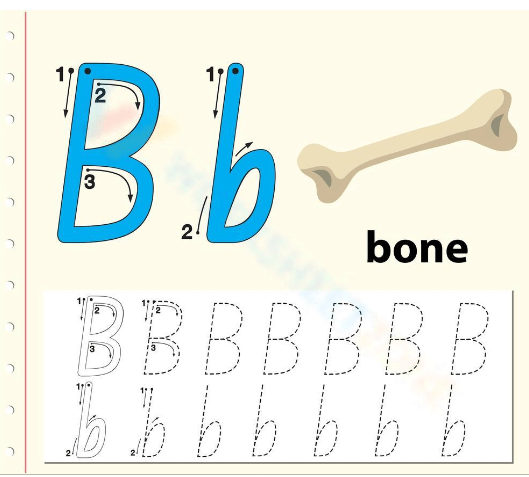
- Independent Writing Practice: Blank lines or boxes provide space for students to practice writing letters on their own, applying what they’ve learned from tracing and visual guides. This encourages independent practice and allows children to develop their own writing style while maintaining accuracy in letter formation.

2. Word Worksheets
As students master individual letters, word worksheets help them practice writing simple words, building vocabulary, and reinforcing letter connections. These worksheets bridge the gap between individual letter formation and sentence construction, helping children understand how letters combine to form words. They may include:
- Sight Words: Focus on practicing high-frequency words that are commonly encountered in reading and writing. These words often have irregular spelling or don’t follow typical phonetic patters, so repetitive practice through worksheets helps children memorize them.
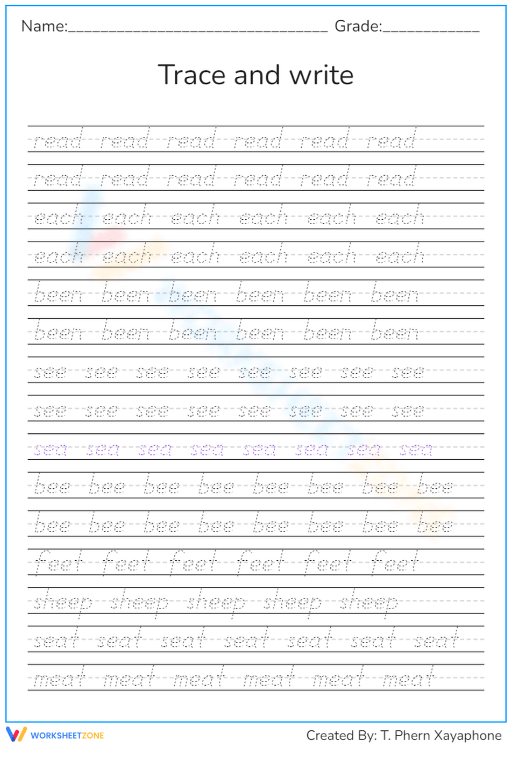
- CVC Words: Introduce constant-vowel-constant words (e.g., cat, dog, sun) to reinforce phonetic patterns and spelling rules. These worksheets help children understand the relationship between letters and sounds, improving their ability to decode and spell words.
- Themed Vocabulary: Center around specific themes (e.g., animals, colors, family) to expand vocabulary and make practice more engaging. By incorporating relevant themes, these worksheets make writing practice more meaningful and connect it to children’s interests and experiences.
3. Sentence Worksheets
Sentence worksheets provide opportunities for students to apply their growing handwriting and vocabulary skills to construct complete sentences. These worksheets help children understand sentence structure, grammar, and punctuation, laying the groundwork for more complex writing tasks. They often incorporate:
- Picture Prompts: Images inspire students to write sentence describing what they see, fostering creativity and language skills. This approach encourages them to think creatively and express their thoughts and observations in writing.
- Sentence Starters: Provide the beginning of a sentence(e.g., “The dog is …”) to guide students and encourage sentence completion. This helps children understand sentence construction and provides a framework for them to practice writing complete and grammatically correct sentences.
- Spacing and Punctuation Practice: Reinforce the importance of proper spacing between words and the use of basic punctuation marks (e.g., periods, question marks). This helps children develop good writing habits and ensure their sentences are clear and easy to read.
4. Number Worksheets
Incorporating number worksheets into handwriting practice helps children develop familiarity with numerical symbols and their formation. These worksheets often include tracing activities for numbers, writing numbers in sequence, and connecting numbers with corresponding quantities of objects. Practicing number writing alongside letter formation can improve overall handwriting fluency and prepare children for early math concepts.
Suggestion: You can also explore fun math worksheets for kindergarten that support number recognition alongside writing.

Why Daily First Grade Handwriting Practice Matters
Consistent practice with first grade handwriting worksheets offers a multitude of benefits that extend beyond the basics of letter formation.
1. Cognitive Development
a. Memory Enhancement
- Handwriting worksheets significantly enhance memory retention. This repeated exposure helps reinforce letter recognition and recall, which are foundational skills in literacy development.
- Writing involves complex coordination between visual input and motor output. First grade handwriting worksheets strengthen visual-motor integration, critical for reading and writing.
- Develops spatial awareness, which is vital for understanding sentence structure and overall text organization.
b. Fine Motor Skills
- One of the primary benefits of handwriting practice is the enhancement of hand-eye coordination. Writing requires precise movements that involve the coordination of visual input and physical action.
- Regular handwriting practice helps strengthen finger muscles, contributing to better grip and control.
- Guided practice in handwriting worksheets often includes exercises that promote proper pencil grip. Learning to hold a pencil correctly is vital for writing efficiently and comfortably.
- As students engage in consistent handwriting practice, they develop writing stamina, allowing for longer writing sessions. Worksheets that gradually increase in complexity can help students build the endurance they need to tackle longer writing tasks effectively.

2. Academic Success
a. Boosting Writing Confidence
- Mastery of handwriting skills fosters writing confidence among students. When children can write clearly and legibly, they are more likely to participate in writing activities. This increased confidence encourages exploration in creative writing, allowing students to express their ideas freely without the fear of making mistakes.
- Reduces anxiety related to writing tasks. As students become more comfortable with writing, they are less likely to feel overwhelmed when given writing assignments in other subjects.
- Writing is a powerful form of communication. Through handwriting practice, students learn to express their thoughts and feelings effectively.
b. Cross-Subject Benefits
- Writing and reading skills are closely linked. By practicing handwriting, students reinforce their spelling and vocabulary knowledge.
- Handwriting practice is not limited to letters and words; it also includes numbers. Worksheets that incorporate number writing help students improve their math notation skills, making their work clearer and more organized.
- Improves note-taking abilities, beneficial for future learning. This skill is particularly beneficial in higher grades, where organized notes can enhance study habits and retention.
- Facilitates better test performance by promoting organized thought processes.
Recommendation: Consistent routine matters – our daily handwriting worksheets for 1st grade are designed to build strong writing habits through short daily sessions.
Making First Grade Handwriting Practice Engaging
Turning handwriting practice into an enjoyable experience for first grades is crucial for fostering a love of writing and encouraging continued effort. It’s important to keep practice sessions fun and motivating so children develop positive associations with writing. Here are some strategies to make handwriting practice more engaging:
1. Multisensory Activities:
Incorporate hands-on activities that engage multiple senses to make handwriting practice more interactive and memorable. By stimulating different senses like touch, sight, and movement, children are more likely to stay focused and retain information.
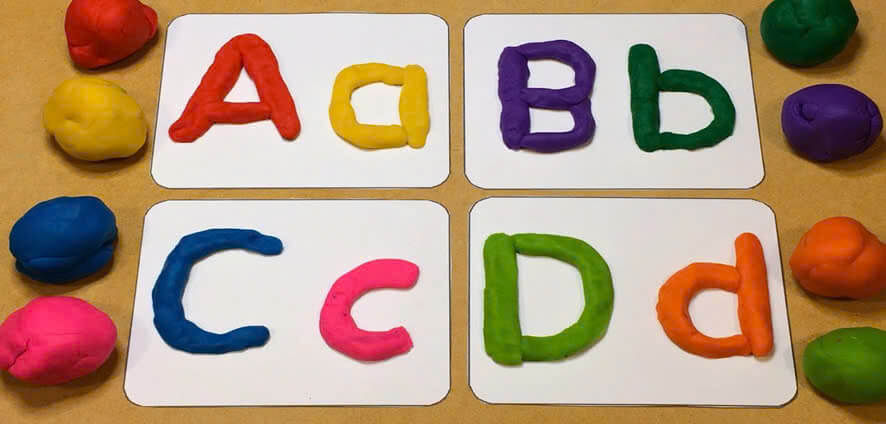
- Playdough Letters: Provide playdough or modeling clay for children to roll and shape into different letters. This activity not only helps them learn the shapes of letters but also strengthens their fine motor skills needed for controlling a pencil.
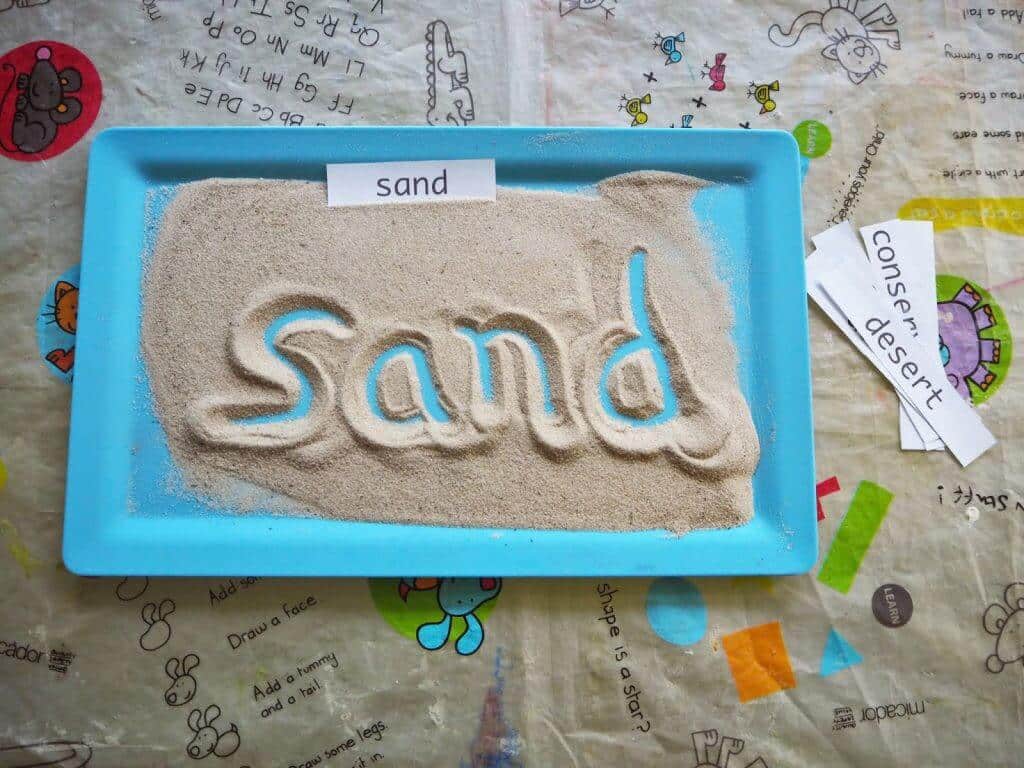
- Sand Writing: Fill a tray with sand and have children practice writing letters with their fingers or a small stick. The novelty of writing in sand can make practice more exciting, and it also provides a sensory experience that can be calming for some children.
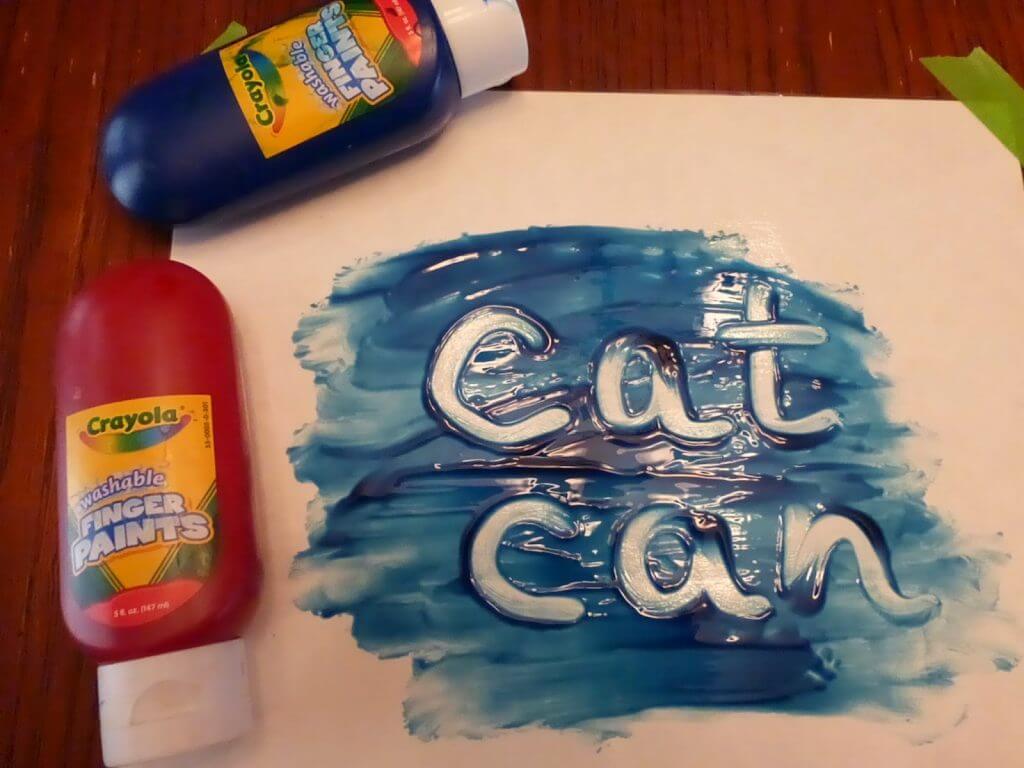
- Finger Painting: Use finger paints to write letters on large sheets of paper, providing a tactile and colorful experience. Finger painting allows children to explore letter formation on a large scale, engaging their whole body in the learning process.
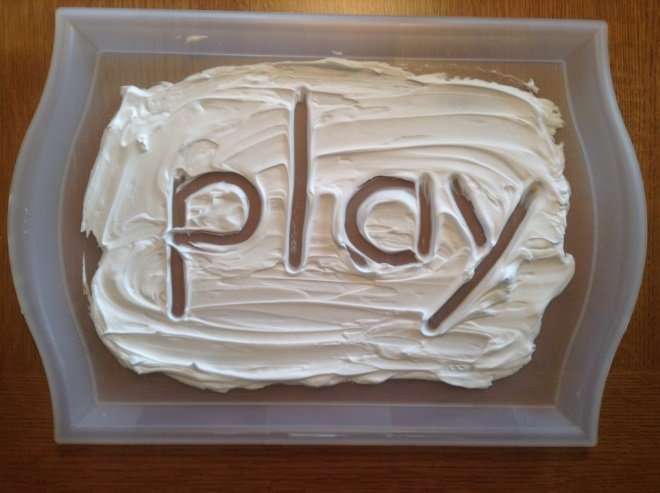
- Shaving Cream Practice: Spread shaving cream on a table or tray and let children practice writing letters in it. The smooth texture of shaving cream adds a fun and messy element to practice, making it a more enjoyable sensory experience.
These activities not only reinforce letter formation but also develop fine motor skills and hand-eye coordination in an enjoyable way.
2. Games and Interactive Tools:
Introduce games and interactive tools to make handwriting practice feel less like work and more like play. Digital tools and games can provide immediate feedback and rewards, keeping children motivated and engaged in the learning process.
- Handwriting Apps: Explore educational apps that offer interactive handwriting games, tracing activities, and challenges. Many apps provide personalized feedback and rewards to motivate children. The interactive nature of apps can hold children’s attention for longer periods and make practice more enjoyable.
- Online Handwriting Games: Utilize websites with handwriting games that allow children to practice letter formation and word building in a fun and engaging way. Online games often incorporate colorful animation, sound effects, and interactive elements that make learning more stimulating.

- Interactive Whiteboard Activities: If available, use in interactive whiteboard for whole-class handwriting practice. The interactive features can make learning more dynamic and collaborative. Children can take turn writing on the board, participate in group activities, and receive immediate feedback from the teacher and their peers.

3. Creative Writing Prompts:
Encourage creativity and self-expression through writing activities that go beyond simple letter practice. By providing opportunities for creative writing, children can apply their handwriting skills in meaningful ways and develop a love for writing.
- Storytelling: Provide picture prompts or story starters to inspire children to write their own stories. This encourages them to use their imagination, develop their storytelling abilities, and practice writing in a more engaging context.
- Journaling: Encourage daily or weekly journaling where children can write about their thoughts, feelings, or experiences. Journaling provides a safe space for self-expression and allows children to practice writing in a personal meaningful way.
- Draw and Write: Have children draw pictures and then write captions or short descriptions to accompany their artwork. This combines their love for drawing with writing practice, making the experience more enjoyable and encouraging them to express their ideas in words.
These activities not only develop handwriting skills but also foster imagination, language skills, and a love of writing.
Worksheetzone Resources
Worksheetzone offers a wealth of resources to support effective first grade handwriting practice.
- Printable Worksheets: Explore a wide variety of printable first grade handwriting worksheets, covering everything from individual letter formation to sentence construction. These worksheets are designed to align with curriculum standards and engage young learners with fun themes and activities.

- Interactive Handwriting Tool: Utilize the interactive handwriting tool on the Worksheetzone website for a more engaging digital practice experience. This tool provides instant feedback, fun animation, and progress tracking to motivate children and reinforce correct letter formation.

With these comprehensive resources, Worksheetzone helps parents and educators provide effective and enjoyable handwriting practice for first grade students, setting them up for success in their writing journey.
Frequently Asked Questions
1. How can I make handwriting practice more enjoyable for my first grader?
Handwriting practice doesn’t have to be tedious! Try these ideas:
- Gamify the experience: Turn practice into a game by setting challenges, using timers, or creating a reward system.
- Use themed worksheets: Choose worksheets with your child’s favorite characters, animals, or hobbies to make practice more engaging.
- Incorporate multi-sensory activities: Use playdough, sand, or shaving cream to form letters, or try writing on a vertical surface.
- Connect writing to real-life situations: Encourage your child to write greeting cards, shopping lists, or simple stories.
2. What are the benefits of using 1st grade handwriting worksheets?
Using first grade handwriting worksheets offers numerous benefits for young learners. These worksheets are designed to help children develop fine motor skills, improve letter recognition, enhance hand-eye coordination, and boost their confidence in writing.
3. What are the benefits of using digital tools for handwriting practice?
Digital tools for handwriting practice come with several advantages that can enrich the learning experience:
- Interactive and engaging: Many apps and programs provide instant feedback, animations, and game-like elements that keep children motivated.
- Personalized learning: Digital tools often allow you to adjust the difficulty level and customize practice based on your child’s needs.
- Progress tracking: Many apps track your child’s progress, allowing you to monitor their development and identify areas for improvement.
- Variety and convenience: Digital tools provide access to a wide range of activities and can be used anywhere with a tablet or computer.
4. Where can I find high-quality 1st grade handwriting worksheets?
For high-quality 1st grade handwriting worksheets, Worksheetzone is an excellent resource, offering a comprehensive collection of both printable and digital options. In addition to this, you can find free resources online, at your local library, or through educational publishers. Exploring various sources will help you discover diverse worksheets that cater to your child’s specific needs and interests, making handwriting practice both effective and enjoyable.
Final Thoughts
Effective first grade handwriting practice forms the foundation for successful written communication and academic achievement. By following the guidelines and techniques outlined in this guide, you can create an engaging and productive handwriting practice routine that supports your young learner’s development. Remember that consistent handwriting practice, combined with the right tools and positive reinforcement, leads to lasting improvement in penmanship skills.
Now that you’re equipped with this knowledge, head over to Worksheetzone to explore a wide range of high-quality, printable 1st grade handwriting worksheets and embark on an exciting writing adventure with your child!


