




















Looking for fun and creative drawing activities for kids that also build important skills? You’re in the right place! From silly scribbles to nature-inspired masterpieces, these activities aren’t just about filling time—they’re about encouraging imagination, fine motor development, and self-expression. Whether you’re a parent at home, a teacher in the classroom, or a caregiver seeking screen-free ideas, these drawing prompts and games are simple, joyful, and engaging. Let’s turn blank pages into mini art adventures with these inspiring ideas!
15+ Drawing Activities for Kids
Looking for inspiration? These hands-on drawing ideas are easy to set up and packed with fun for kids of all ages.
1. Directed Drawing Adventures
Directed drawing guides children step-by-step to create a specific image, building confidence and teaching them to follow instructions. It’s a fantastic way to break down complex drawings into manageable parts, allowing even young artists to create impressive artwork.

Materials Needed:
- Paper
- Pencils
- Erasers
- Crayons, markers, or colored pencils
- Directed drawing prompts (available online or in books)
Instructions:
- Choose a directed drawing prompt. Many websites and books offer free printable prompts.
- Have the child follow each step carefully, drawing one line or shape at a time as instructed.
- Once the basic drawing is complete, encourage them to add their own creative details and colors.
- Celebrate their finished masterpiece!
2. Blind Contour Drawing
This activity focuses on observing rather than looking at the paper, training the eye to truly see the object. It produces unique and often humorous results, promoting free-flowing lines and a less critical approach to drawing.

Materials Needed:
- Paper
- Pencils or markers
- An object to draw (e.g., a toy, a fruit, a hand)
Instructions:
- Place an object in front of the child.
- Instruct them to look only at the object and not at their paper while drawing.
- They should keep their pencil on the paper and draw continuously, following the contours and edges of the object with their eyes.
- After a few minutes, they can look at their paper and see the surprising results.
3. Upside-Down Drawing
Drawing an image upside down tricks the brain into focusing on lines and shapes rather than preconceived notions of the object. This helps children see things abstractly and improves their observational skills.

Materials Needed:
- Paper
- Pencils
- An image or photograph to draw (e.g., a simple animal, a cartoon character)
Instructions:
- Take a simple picture or printout and turn it upside down.
- Give the child a piece of paper and a pencil.
- Instruct them to draw the image as they see it, upside down. Encourage them to focus on the individual lines and shapes rather than trying to identify the object.
- Once they are finished, turn both the original image and their drawing right-side up to compare.
4. Scribble Art Transformations
Turning random scribbles into recognizable images is a fantastic way to ignite imagination and problem-solving skills. It shows children that mistakes can be transformed into something new and exciting.

Materials Needed:
- Paper
- Crayons or markers
Instructions:
- Have the child make a few random scribbles on the paper. Encourage them to be free and loose with their marks.
- Once the scribbles are done, challenge them to look for shapes or objects within the scribbles.
- Using different colored crayons or markers, they can then add lines, details, and colors to transform the scribbles into something new (e.g., a monster, an animal, a landscape).
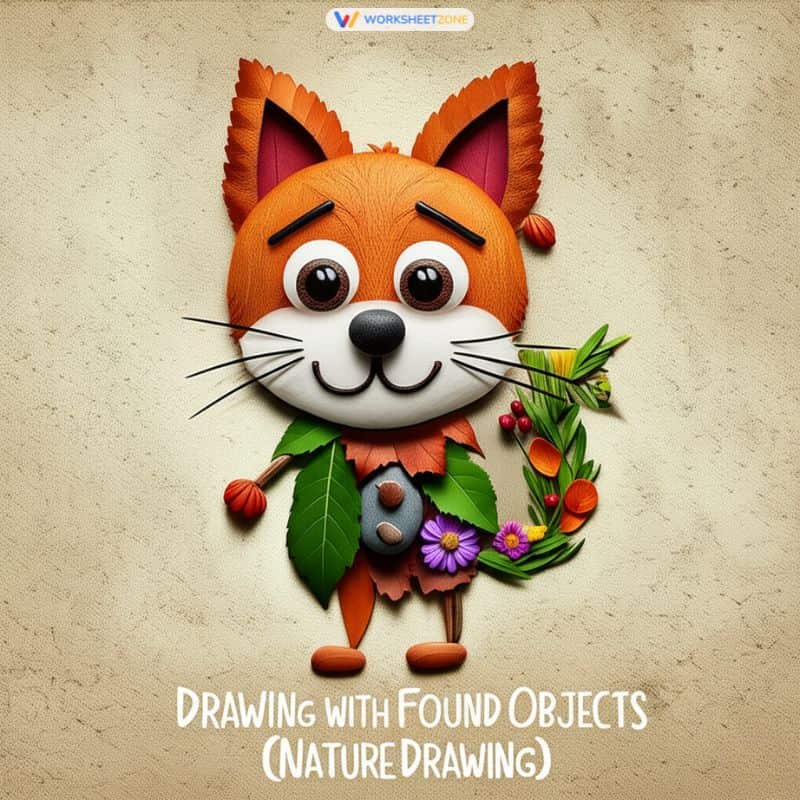
5. Drawing with Found Objects (Nature Drawing)
Using natural elements as drawing tools or inspiration connects children with their environment and encourages unconventional artistic expression. This activity is perfect for outdoor exploration.
Materials Needed:
- Paper
- Pencils or crayons
- Found natural objects (leaves, twigs, small stones, flowers, sand, dirt)
Instructions:
- Go for a nature walk and collect interesting natural objects.
- Back inside, use the objects in two ways:
- As drawing tools: Dip leaves in paint and press them onto paper, use twigs to draw in sand, or rub soft flower petals on paper for color.
- As drawing inspiration: Arrange the objects on a piece of paper and then draw what they see, or create a scene around the objects.
6. Collaborative Drawing Mural
Working together on a large drawing promotes teamwork, communication, and shared creativity. It’s a wonderful way for siblings or friends to create something unique as a group.

Materials Needed:
- Large roll of paper (butcher paper works well)
- Crayons, markers, or paints
Instructions:
- Roll out a large section of paper on the floor or tape it to a wall.
- Give each child a section or simply let them draw freely across the entire surface.
- Suggest a theme (e.g., “Our Community,” “An Underwater World,” “A Giant Robot”) or let them draw whatever they wish.
- Encourage them to draw together, connecting their drawings and filling the entire space.
7. Sensory Drawing (Shaving Cream or Sand)
Engaging multiple senses in drawing creates a rich and memorable experience. The tactile sensation of drawing in shaving cream or sand is particularly appealing to young children.

Materials Needed:
- Shaving cream or a tray of sand/salt
- Flat surface (cookie sheet, plastic tray)
- Optional: Food coloring for shaving cream
Instructions:
- Spread a thin layer of shaving cream on a flat surface or fill a tray with sand/salt.
- If using shaving cream, you can add a few drops of food coloring and swirl them in for a marbled effect.
- Encourage children to draw with their fingers, making lines, shapes, and pictures in the sensory material.
- They can easily erase and start over, making it a low-pressure way to explore drawing.
8. Drawing Prompts Jar
A jar filled with creative prompts offers endless inspiration and helps overcome artist’s block. It’s a fun way to introduce new ideas and themes for drawing.

Materials Needed:
- Small slips of paper
- Jar or container
- Pencils, paper, and drawing supplies
Instructions:
- Write various drawing prompts on small slips of paper (e.g., “Draw a monster with three eyes,” “Draw your dream house,” “Draw a talking animal,” “Draw what you see outside your window”).
- Fold the slips and put them in the jar.
- When it’s drawing time, have the child pick a prompt from the jar.
- Encourage them to interpret the prompt in their own unique way.
9. Shadow Drawing
Drawing the outline of shadows helps children understand light, perspective, and proportion. It’s a fun outdoor activity that connects art with science.

Materials Needed:
- Paper
- Pencils or markers
- Sunny day
- Small toys or objects
Instructions:
- On a sunny day, take the paper and draw supplies outdoors.
- Place a toy or object on the paper so its shadow falls onto the paper.
- Have the child trace the outline of the shadow with a pencil or marker.
- They can then color in or add details to their shadow drawing.
10. Storytelling Through Drawings
This activity introduces children to the concept of sequential art and storytelling. It helps them organize their thoughts and express narratives visually.

Materials Needed:
- Paper (can be folded into panels)
- Pencils, crayons, markers
Instructions:
- Fold a piece of paper into 3 or 4 sections (like a comic strip).
- Ask the child to think of a simple story idea (e.g., “A day at the park,” “My pet’s adventure,” “What I want to be when I grow up”).
- In each panel, have them draw a part of the story, showing how it progresses from beginning to end.
- Encourage them to add speech bubbles or short captions if they wish.
11. Drawing to Music
This activity encourages children to express emotions and abstract ideas through drawing, connecting auditory experiences with visual art. It fosters creativity and allows for non-representational exploration.

Materials Needed:
- Paper
- Crayons, markers, or paints
- Music player and a selection of different types of music (e.g., classical, upbeat pop, calming instrumental)
Instructions:
- Play a piece of music and ask the child to listen to it.
- Without any specific instructions to draw something, encourage them to let the music guide their hand and create marks, lines, and shapes that reflect how the music makes them feel or what they imagine.
- Try different genres of music and observe how their drawings change with each piece.
- Discuss their artwork afterwards, asking them what they felt or thought about while drawing to the music.
12. “What’s Missing?” Drawing Game
This game sharpens observational skills and encourages attention to detail. It’s a fun way to engage children in completing a picture and thinking critically about visual information.

Materials Needed:
- Paper
- Pencils or markers
- A pre-drawn simple image with a missing part (e.g., a face without a nose, a house without a door, a car without wheels)
Instructions:
- Prepare several simple drawings on separate sheets of paper, each with a key element missing.
- Present one drawing to the child and ask them, “What’s missing from this picture?”
- Once they identify the missing part, have them draw it in.
- You can make it a collaborative activity by having one person draw something and then the other guesses what’s missing before completing it.
13. Texture Rubbing Drawings
Exploring textures through drawing adds a tactile element to the art process and helps children notice details in their environment. It creates interesting patterns and designs.

Materials Needed:
- Thin paper (copy paper or tracing paper works best)
- Crayons (peel off the paper wrapper)
- Various textured objects (e.g., leaves, coins, sandpaper, grates, tree bark, fabric with patterns)
Instructions:
- Go on a “texture hunt” around the house or garden to find objects with interesting surfaces.
- Place a piece of paper over a textured object.
- Using the side of a peeled crayon, gently rub over the paper where the object is underneath. The texture will magically appear on the paper.
- Encourage children to experiment with different objects and even layer rubbings to create composite textures.
14. Nature’s Palette Painting
This activity combines art with an exploration of nature, allowing children to create their own natural pigments and learn about colors found in the environment. It’s a hands-on and sensory experience.

Materials Needed:
- Various natural materials that produce color (e.g., berries, flower petals, dirt, crushed leaves, turmeric, spirulina powder)
- Small bowls or containers for mixing
- A small amount of water
- Spoons or sticks for mashing/mixing
- Paper
- Paintbrushes or cotton swabs
Instructions:
- Gather natural materials that have strong colors. You can use anything from mud and grass to berries and colorful flower petals (ensure they are non-toxic). Spices like turmeric or spirulina powder can also be used for vibrant hues.
- Place each material in a separate small bowl.
- Add a tiny amount of water to each bowl and encourage the child to mash or mix the material to extract its color, creating a natural “paint.” (For harder items, a little adult help might be needed).
- Once they have their natural “paints,” they can use paintbrushes or cotton swabs to create drawings and paintings on paper.
- Discuss the colors they found and how they were made.
15. Action Line Drawing
This dynamic activity encourages children to capture movement and energy through drawing, fostering a sense of fluidity and expression rather than focusing on static objects. It’s great for getting out wiggles!

Materials Needed:
- Large paper (tape several sheets together or use a roll of paper if possible)
- Crayons, markers, or pastels
Instructions:
- Play some energetic music.
- Encourage the child to move their body in response to the music (e.g., swaying, jumping, twirling).
- While still moving, or immediately after a burst of movement, have them draw lines on the paper that represent the actions they just performed or the energy they feel from the music. Emphasize drawing quickly and expressively, letting their hand mimic their body’s movement.
- There’s no right or wrong way to do this; the goal is to translate motion and emotion into lines and shapes.
- You can try different types of music—fast, slow, jerky, smooth—to see how their “action lines” change.
FAQs
1. Why are drawing activities important for early childhood development?
Drawing activities are essential for developing fine motor skills and hand-eye coordination in young children. These exercises allow kids to express complex emotions and ideas that they may not yet have the vocabulary to speak. Furthermore, engaging in art fosters problem-solving skills as children decide how to represent three-dimensional objects on a flat surface, building a foundation for later academic success in writing and science.
2. How can I motivate a child who feels frustrated by their drawing skills?
To motivate a frustrated child, emphasize the process of creation rather than the final product. Techniques like scribble art or blind contour drawing are excellent because they have no “correct” outcome, which lowers the pressure to be perfect. Use positive reinforcement to praise specific efforts, such as their choice of vibrant colors or the unique shapes they created, rather than just saying a drawing is “pretty.”
Sum up
Drawing activities for kids are more than just fun. They are powerful tools for developing creativity, confidence, and fine motor skills. Whether children are following step-by-step prompts, experimenting with textures, or inventing stories through art, each drawing session helps them see the world in new ways. With just a few simple materials and a spark of imagination, you can turn any moment into an artistic adventure. So grab those pencils and let the creativity begin, one line at a time.
Ready to spark some creativity? Discover our Painting and Drawing Worksheets packed with printable activities that bring out the artist in every child!


