Literacy games for kids are interactive educational activities that help children build reading, writing, and language skills through play and exploration. These activities refer to phonics matching, sight word bingo, and story sequencing tasks designed for students in grades PreK–12. Worksheetzone provides these resources to ensure young learners stay motivated while developing the foundational literacy skills needed for long-term academic success.
20 literacy games for kids
Literacy games foster children’s curiosity and linguistic confidence through active participation rather than passive drills. In a classroom setting, these games work best when they involve movement and social interaction. According to the National Literacy Trust, play-based learning significantly improves word recognition and vocabulary retention in elementary-aged children.
Worksheetzone offers a variety of digital tools, such as the Word Search Maker and Sentence Scramble Generator, to help teachers create customized game materials. Most of these activities take 10–15 minutes and align with Common Core State Standards for early literacy.
1. Word search

A classic staple for a reason, word searches help children develop pattern recognition and improve their spelling. By scanning a grid for specific sequences of letters, kids learn to focus on the individual components of a word. You can easily customize these to match a weekly vocabulary list or a favorite book theme, making the search feel like a personalized treasure hunt.
To save time, teachers and parents can use the Word Search Maker to quickly generate custom word searches that match their lesson goals or vocabulary lists.
2. Sight word bingo

Sight words – those tricky “rule-breakers” like the, was, and of – are best mastered through repetition. Bingo turns this drill into a high-stakes (but friendly) competition. As you call out words, children must quickly identify them on their cards. This builds rapid recognition, which is a cornerstone of reading fluency.
3. Alphabet scavenger hunt

Get those little legs moving with an alphabet scavenger hunt. Challenge your child to find objects around the house that start with each letter of the alphabet. Not only does this burn off energy, but it also reinforces the connection between letter sounds and real-world objects, grounding abstract concepts in tangible reality.
4. Phonics matching game

Phonics matching game reinforces the connection between sounds and letters. Use a CVC matching worksheet where students pair pictures with their corresponding three-letter words.
5. Sentence scramble
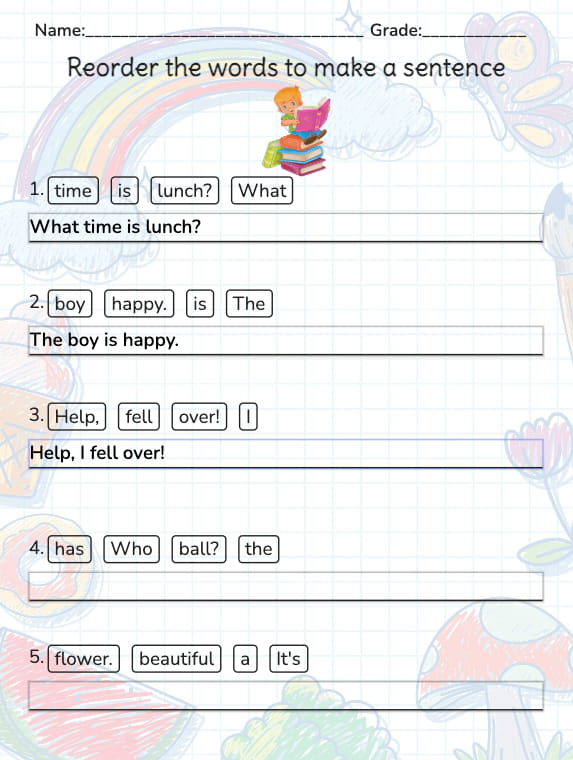
Sentence scramble helps children understand word order and grammatical structure. Use the Sentence Scramble Generator to create mixed-up sentences for students to unscramble and read aloud.
6. Reading charades
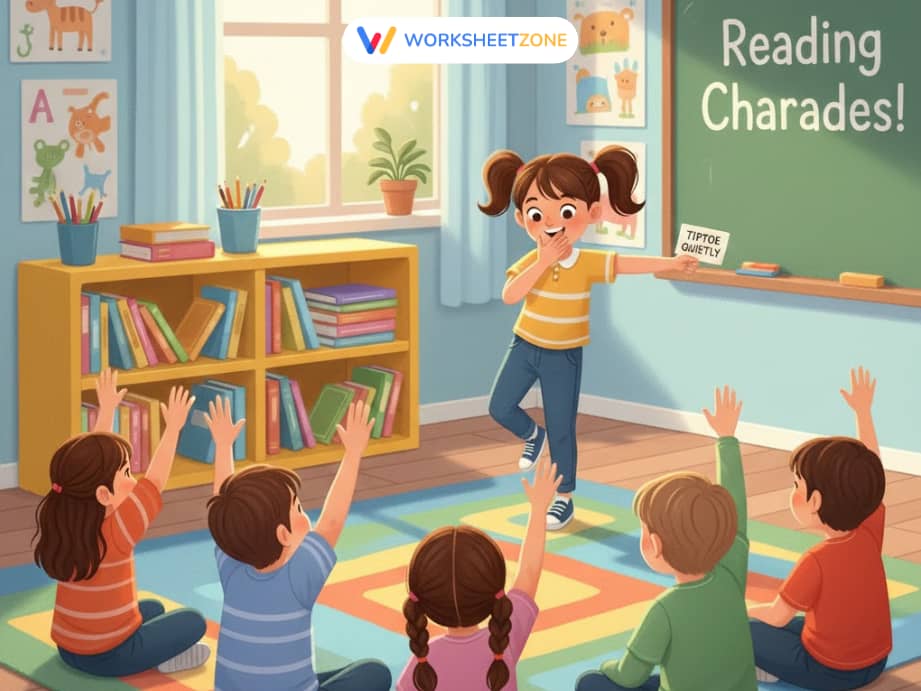
Who says reading has to be a sedentary activity? Write down action verbs or scenes from a favorite book on slips of paper. Children must read the prompt silently and then act it out for others to guess. This reinforces reading comprehension by requiring the child to internalize and interpret the text physically.
7. Word family sort

Focus on “word families” – groups of words that rhyme or share a common ending like –at (cat, bat, hat). Provide a pile of word cards and several “houses” or bins for each family. Sorting these helps children recognize linguistic patterns, making it much easier for them to decode new words they encounter later.
8. Story sequencing cards

Understanding the “beginning, middle, and end” of a narrative is a vital literacy skill. Use cards that depict different scenes from a story and ask your child to place them in the correct chronological order. This builds logical reasoning and helps children grasp the flow of narrative arcs.
9. Rhyming word race

Rhyming word race is a fast-paced activity that improves phonological awareness. Use a rhyming word race worksheet where students brainstorm as many rhymes as possible for a target word in 60 seconds.
10. Vocabulary Pictionary

If your child loves to draw, this is a winner. Pick a more challenging vocabulary word and have the children sketch its meaning while you guess. Translating a word’s definition into a visual image requires a deep level of cognitive processing, ensuring the new word actually sticks in their long-term memory.
11. Spin & read
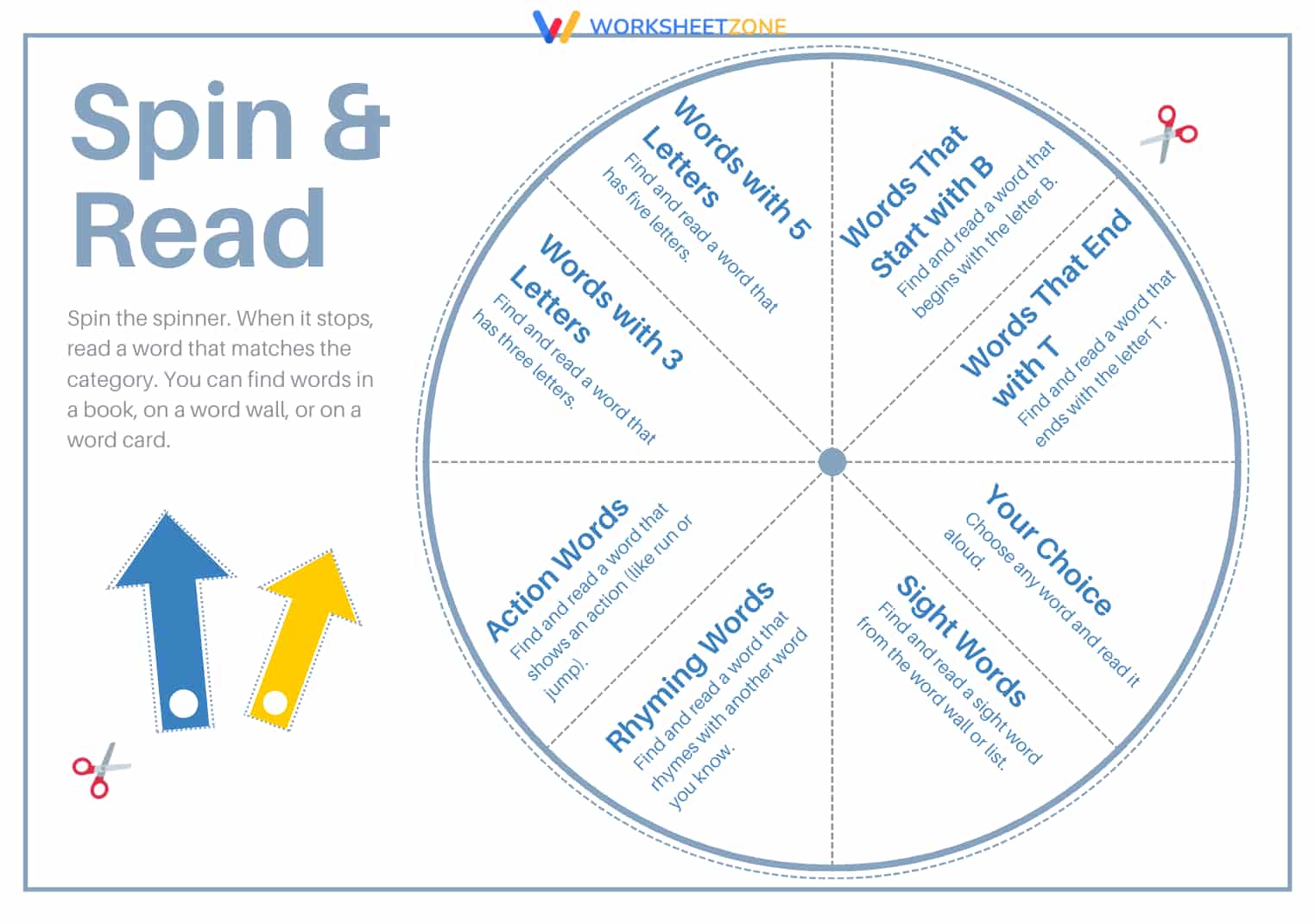
Create a simple spinner labeled with different categories (e.g., “words with 5 letters,” “words that start with B,” or “action words”). Whatever the spinner lands on, the child must find and read a corresponding word from a book or a word wall. It adds an element of chance and excitement to basic reading practice.
12. Mystery word clues

Think of this as “I Spy” for the brain. Give your child phonetic or semantic clues about a “mystery word” you’re thinking of (e.g., “It starts with the /sh/ sound and it’s something we wear on our feet”). This encourages active listening and deduction based on linguistic rules.
13. Picture-to-sentence game

Lay out several illustrations and a corresponding set of descriptive sentences. The child must read each sentence and match it to the correct picture. This ensures they aren’t just “barking at print” (reading words without understanding) but are actually extracting meaning from the text.
14. Word building blocks
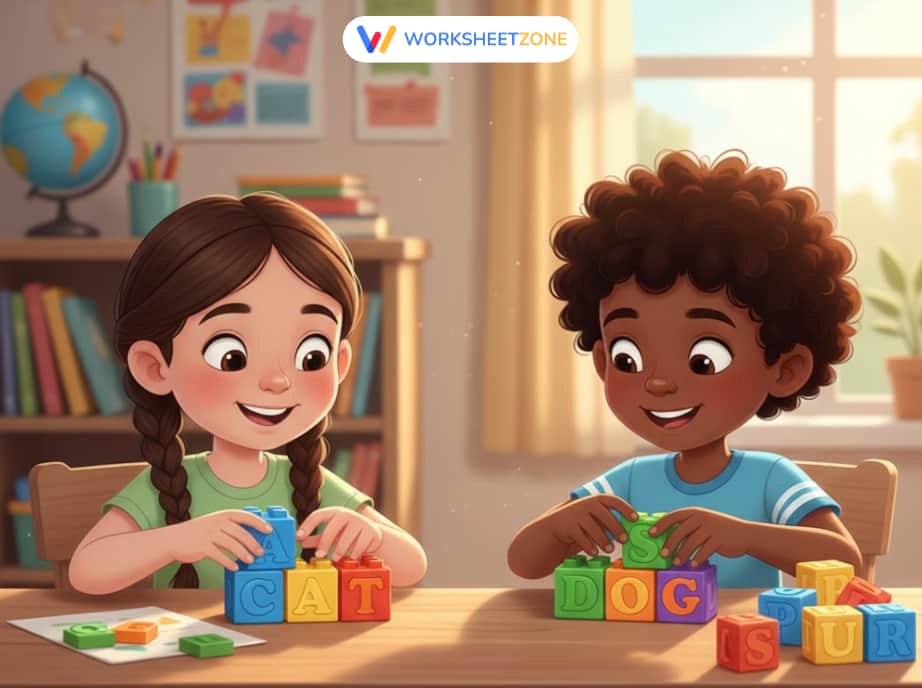
Use plastic building blocks and write a letter on each one with a dry-erase marker. Kids can physically snap the letters together to build words. The tactile nature of this game is especially helpful for kinesthetic learners who need to “feel” the structure of a word to understand it.
15. Reading board game
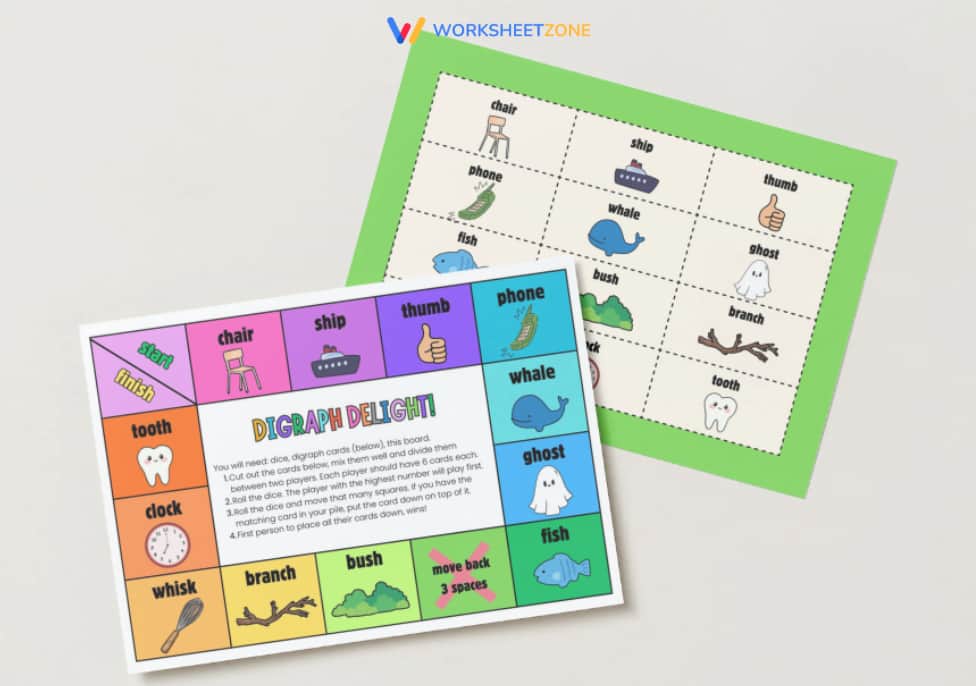
Transform a standard board game by adding a “reading tax.” To move their piece, the child must read a card or identify a letter sound. This integrates literacy into an existing favorite activity, making the learning feel like a seamless part of playtime rather than an interruption.
16. Context clue challenge
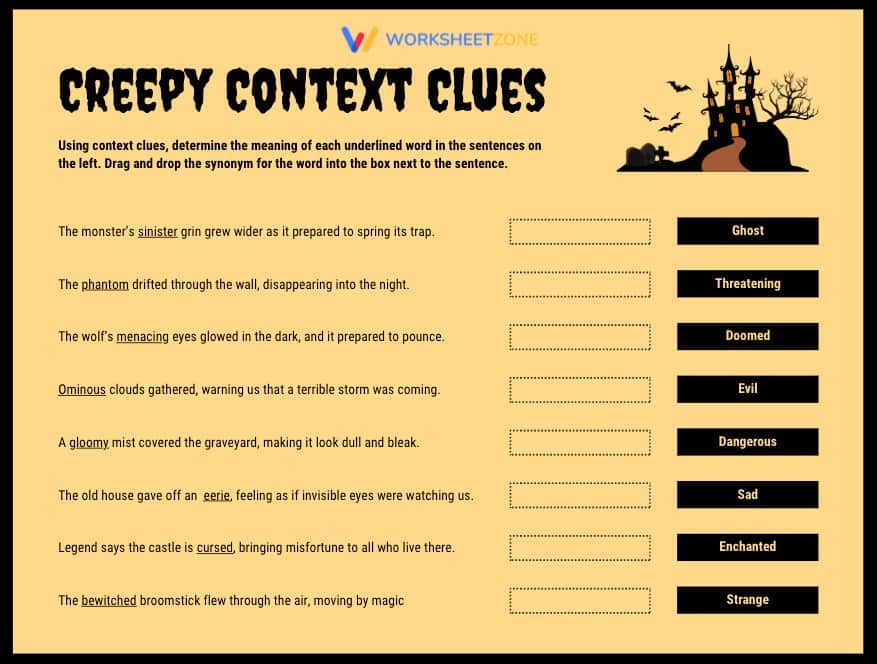
Write sentences with one word missing and provide a few options to fill in the blank. The child must use the surrounding words to determine which one fits. This is a crucial skill for advanced comprehension, as it teaches kids how to navigate unfamiliar vocabulary in the wild.
17. Story dice

Roll dice that feature icons (like a dragon, a spaceship, or a clock) and use the results to invent a story. While this is a speaking activity, it builds the foundational narrative skills needed for writing. It encourages creativity and helps kids understand how characters and settings interact.
18. Silent reading response cards

After a period of silent reading, hand your child a “response card” with a prompt like “What was the funniest part?” or “Predict what happens next.” This keeps them mentally active while they read alone and provides a structured way to discuss their books afterward.
19. Vocabulary role-play

Pick a “word of the day” – perhaps something descriptive like gigantic or melancholy – and have a mini-scene where you both use that word in context. Socially performing a word’s meaning helps bridge the gap between knowing a definition and actually being able to use the word in speech and writing.
20. Letter sound toss
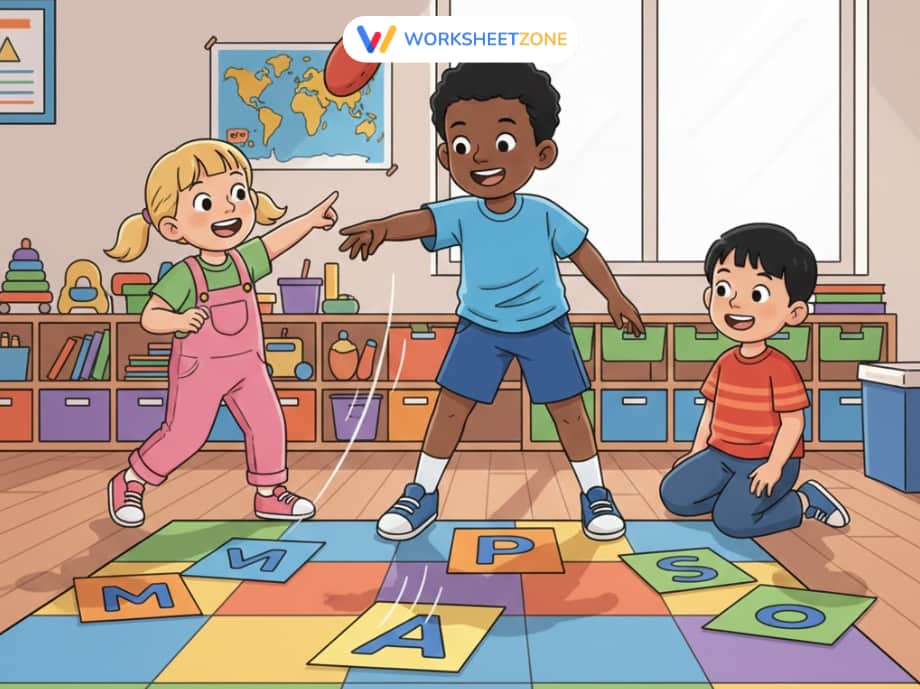
Place several pieces of paper with different letters on the floor. Have your child toss a beanbag or a soft toy onto a letter and immediately shout out the sound it makes (or a word that starts with it). It’s a great way to combine gross motor skills with phonics practice.
Frequently Asked Questions (FAQs)
1. Are these literacy games free?
Yes, Worksheetzone offers a wide range of free literacy games, including the Word Search Maker and various printable templates. While some premium interactive tools may require a subscription, the foundational classroom ideas are accessible to everyone. We believe that every child deserves the tools to become a confident, independent reader.
2. How often should I include games in my literacy lessons?
We recommend integrating at least one literacy game into your daily lesson plan. Short, 10-minute sessions are more effective for maintaining engagement than long, infrequent blocks. Games provide a much-needed break from traditional instruction while reinforcing the same core skills.
3. Can these games be used for homeschooling?
Absolutely. Most Worksheetzone games require minimal materials and are perfect for one-on-one or small-group instruction at home. They turn “school time” into “play time,” which significantly reduces academic anxiety and fosters a love for learning.
4. Do these games help with standardized testing?
While they are fun, these games directly support the foundational skills required for standardized literacy assessments. By improving sight word recognition, vocabulary, and comprehension through play, students build the stamina and accuracy needed for formal testing environments.
Final thoughts
Literacy games play an essential role in shaping well-rounded, confident learners. From simple letter sound tosses to complex context clue challenges, each task supports a different area of linguistic growth. The most effective literacy practice balances fun with meaningful application. When chosen thoughtfully, these activities inspire curiosity and prepare young learners for long-term success.
Looking for more literacy resources? Explore our related guides on Grammar Activities, Close Reading Activities, and Vocabulary Games for Students.