Activities for 2 year olds work best when they last 5 to 10 minutes, use one simple material, and let the child repeat the same action over and over. At this age, a toddler is not looking for a finished craft. They want to pour, stack, dump, and try again. This guide from Worksheetzone covers screen-free play ideas, easy learning games, and a simple weekly rhythm you can follow at home. Everything here uses items you likely already own.
What 2 year olds can actually do developmentally
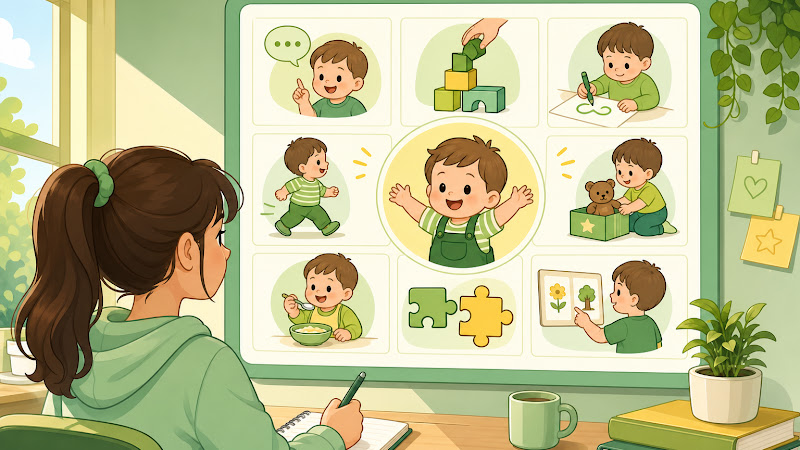
A typical 2 year old can walk and run steadily, stack four to six blocks, scribble with a fist grip, and use 50 or more words with some two-word phrases. Attention span runs roughly 4 to 6 minutes for a self-chosen task. That means an activity should be short, repeatable, and open-ended rather than goal-driven.
The CDC developmental milestones for 24 months lists sorting shapes and colors, following two-step instructions, and copying adult actions as expected skills. Most good toddler activity ideas simply give the child a reason to practice one of those.
| Skill area | What it looks like at 2 | Activity that builds it |
|---|---|---|
| Fine motor | Pincer grasp, stacking, scribbling | Dropping pom-poms into a bottle |
| Gross motor | Running, climbing, kicking a ball | Pillow obstacle course |
| Language | 50+ words, two-word phrases | Naming objects in a mystery bag |
| Problem solving | Simple sorting and matching | Color-matching laundry socks |
| Social | Parallel play, imitation | Pretend cooking side by side |
No screen time activities for 2 year olds using household items

The most reliable screen-free setups use containers, water, and small objects a child can move from one place to another. Transfer play is the single most repeatable category at this age because it has no wrong answer and no ending. Here are ten that consistently hold attention.
- Muffin tin sort: Put pom-poms or dry pasta in one bowl and let the child fill each cup.
- Sticker peel: Place stickers on a cookie sheet and let them pull each one off. Excellent pincer practice.
- Water pouring station: Two cups and a small pitcher on a towel. Expect spills, that is the lesson.
- Tape road: Painter’s tape on the floor makes a track for toy cars.
- Box tunnel: Open both ends of a shipping box and crawl through together.
- Frozen toy rescue: Freeze small figures in a bowl of water, then chip them out with warm water.
- Sock matching: Real laundry, real sorting, real usefulness.
- Contact paper collage: Tape contact paper sticky side out on a wall and hand over tissue scraps.
- Cotton ball spooning: Two bowls and a large spoon.
- Mystery bag: Three familiar objects in a pillowcase. Reach in, feel, guess, name.
A common mistake is setting out five options at once. In practice, one tray with one material produces far longer engagement than a full toy shelf.
Learning games for 2 year olds that build early skills

Learning at 2 happens through naming, matching, and counting out loud during play, not through drills. The strongest learning games for 2 year olds attach a word to a physical action, because motor memory and vocabulary develop together at this stage.
- Color hunt: “Find something red.” Walk the room together and name each find.
- Count the steps: Count stairs, blocks, or grapes aloud. Aim for one to five, not higher.
- Shape post box: Cut a circle and square hole in a shoebox lid and post matching cut-outs.
- Animal sound freeze: Make a sound, child moves like that animal, then freezes.
- Two-step directions: “Get your shoes and put them by the door.” This directly targets a 24-month milestone.
- Book pointing: Instead of reading every word, ask “where is the dog?” and let them point.
For families who want printed material, simple tracing and matching pages work if you treat them as a 5-minute option rather than a requirement. Free printable worksheets for preschool and pre-K learners can cover color matching, shape recognition, and early tracing without any pressure to finish the page.
Are worksheets for 2 year olds appropriate? Only in a loose, no-expectations format. A 2 year old cannot hold a pencil with a tripod grip and should not be asked to. What works is a laminated page they scribble on with a chunky crayon, a coloring sheet they cover in dots, or a picture-matching page you talk through together. Ten minutes maximum, always optional.
Gross motor and sports for 2 year olds

Toddlers need roughly 3 hours of physical activity spread across the day, according to World Health Organization guidance for under-5s. Formal sports for 2 year olds are rarely productive because rules and turn-taking are beyond them, but movement games work extremely well.
| Activity | Setup time | Best for |
|---|---|---|
| Balloon keep-up | 1 minute | Rainy days, hand-eye coordination |
| Pillow obstacle course | 3 minutes | Balance and climbing |
| Bubble chasing | 1 minute | Outdoor energy release |
| Ball drop into a laundry basket | 1 minute | Aim and throwing |
| Follow the leader walk | 0 minutes | Imitation and listening |
Toddler swim lessons and parent-and-child movement classes are the two structured options that genuinely suit this age, mostly because a caregiver stays in the water or on the mat with the child.
Things to do with 2 year olds outside the house

Outings work best when they are under 90 minutes and have one clear focus. Searching for activities for 2 year olds near me typically surfaces four dependable categories: public libraries, children’s museums, splash pads and playgrounds, and pet-friendly farms or petting zoos.
- Library story time: Usually free, often 20 to 30 minutes, and a low-stakes introduction to group settings.
- Grocery store scavenger hunt: Give the child three picture cards of items to spot.
- Nature collection walk: Bring a paper bag for leaves, sticks, and rocks, then sort them at home.
- Children’s museum toddler zone: Look for venues with a dedicated under-3 room to avoid older-kid crowding.
Bring a snack, one comfort item, and plan to leave before the meltdown rather than after it. Most caregivers find the second half of the morning, roughly 9:30 to 11:00, is the reliable window before nap pressure builds.
Simple lesson plans for 2 year olds at home

A home routine for a 2 year old needs a rhythm, not a schedule. Anchor the day with three predictable blocks: a movement block, a quiet block, and a messy block. Fill each with whatever fits your energy that day.
| Day | Movement | Quiet | Messy or sensory |
|---|---|---|---|
| Monday | Obstacle course | Book pointing | Water pouring |
| Tuesday | Bubble chasing | Sticker peel | Play dough squishing |
| Wednesday | Ball into basket | Shape post box | Finger painting |
| Thursday | Nature walk | Sock matching | Rice or oat bin |
| Friday | Animal freeze | Coloring page | Frozen toy rescue |
This structure covers the same ground as most curriculum for 2 year olds without any planning burden. If you prefer something printed to follow, ready-made lesson plans for early learners can give you a weekly template to adapt.
Ideas for a 2 year old birthday: Keep it to 90 minutes, invite fewer children than the child’s age plus two, and set up three stations rather than running scheduled games. A bubble station, a sensory bin, and a large sheet of paper with crayons will carry the entire party. Group games with rules almost always fall apart at this age.
Frequently asked questions
How long should an activity last for a 2 year old?
Plan for 5 to 10 minutes of focused engagement per activity. If your child stays longer, let them continue. Repetition is how toddlers consolidate a skill, so the same activity three days in a row is a good sign, not boredom.
Should a 2 year old go to preschool?
Preschool for 2 year olds is optional and usually structured as a play-based program with two or three short sessions a week. It helps most with separation practice and exposure to peers. Children who stay home lose nothing developmentally as long as they get regular social contact and play.
How much screen time is recommended at age 2?
Current pediatric guidance suggests limiting screen use to about one hour per day of high-quality content, ideally co-viewed with an adult. Screen-free play produces more back-and-forth conversation, which is the strongest predictor of vocabulary growth at this age.
What if my toddler refuses every activity I set up?
Set the materials out and start playing yourself without inviting them. Toddlers imitate, and a direct invitation often triggers refusal. Also check the basics first, since hunger, tiredness, and overstimulation explain most sudden refusals.
Are learning apps better than hands-on games?
Hands-on play wins at this age because 2 year olds learn through physical manipulation and real conversation. Learning games for 2 year olds that involve pouring, sorting, and naming build motor and language skills that a tap-based app cannot replicate.
Final thoughts
The best activities for 2 year olds are short, repeatable, and built from things already sitting in your kitchen. Focus on transfer play for fine motor skills, movement games for energy, and simple naming games for language, then let your toddler repeat each one as many times as they want. A loose weekly rhythm beats a rigid plan every time.
If you want printable support for the quiet blocks, Worksheetzone offers free coloring pages, tracing sheets, and early learning printables you can download and use in minutes. Browse the preschool section, print two or three pages, and keep them ready for the next rainy afternoon.