Poems for 5th graders are literary works selected to challenge ten-year-olds with sophisticated themes and complex imagery. These verses help elementary students develop critical analysis skills through close reading exercises. Whether you’re a teacher selecting pieces for close reading or a parent looking to spark a love of poetry, this curated list blends classic and contemporary works perfect for discussions, fluency practice, and creative writing inspiration.
20 poems for 5th graders
From classic verses to modern favorites, these poems bring rich language and meaningful themes to the 5th-grade classroom. Here are some excellent choices to get your students excited about poetry.
1. “The Village Blacksmith” by Henry Wadsworth Longfellow

This classic poem paints a vivid picture of a hardworking blacksmith whose life reflects discipline, routine, and moral strength. Through rhythmic lines and descriptive imagery, students get a glimpse into community life from an earlier era. The poem introduces mature themes such as perseverance and the value of honest labor. Many 5th graders connect with its message about character and responsibility.
“Under a spreading chestnut-tree
The village smithy stands;
The smith, a mighty man is he,
With large and sinewy hands;
And the muscles of his brawny arms
Are strong as iron bands.”
Teaching tips: Use this poem to teach descriptive imagery and how poets build character through action rather than direct explanation. Ask students to create a character chart for the blacksmith using textual evidence. Then have them compare him to a modern-day community helper. This activity helps students blend historical understanding with text analysis.
2. “Something Told the Wild Geese” by Rachel Field

This poem beautifully describes the instinctive migration of geese as seasons change. The language is gentle, rhythmic, and full of sensory details that help young readers visualize autumn’s transformation. Students often enjoy imagining the journey of the geese and discussing the poem’s calm, reflective tone. It’s a wonderful introduction to how poetry can express nature cycles.
“Something told the wild geese
It was time to go,
Though the fields lay golden
Something whispered, ‘snow.’”
Teaching tip: Use this poem during a science integration lesson about animal migration or seasonal change. Have students highlight sensory imagery and categorize it by sight, sound, and feeling. Then, ask them to write a short paragraph describing an animal preparing for seasonal change using similar techniques. This reinforces observation and descriptive writing skills.
3. “The Brook” by Alfred, Lord Tennyson
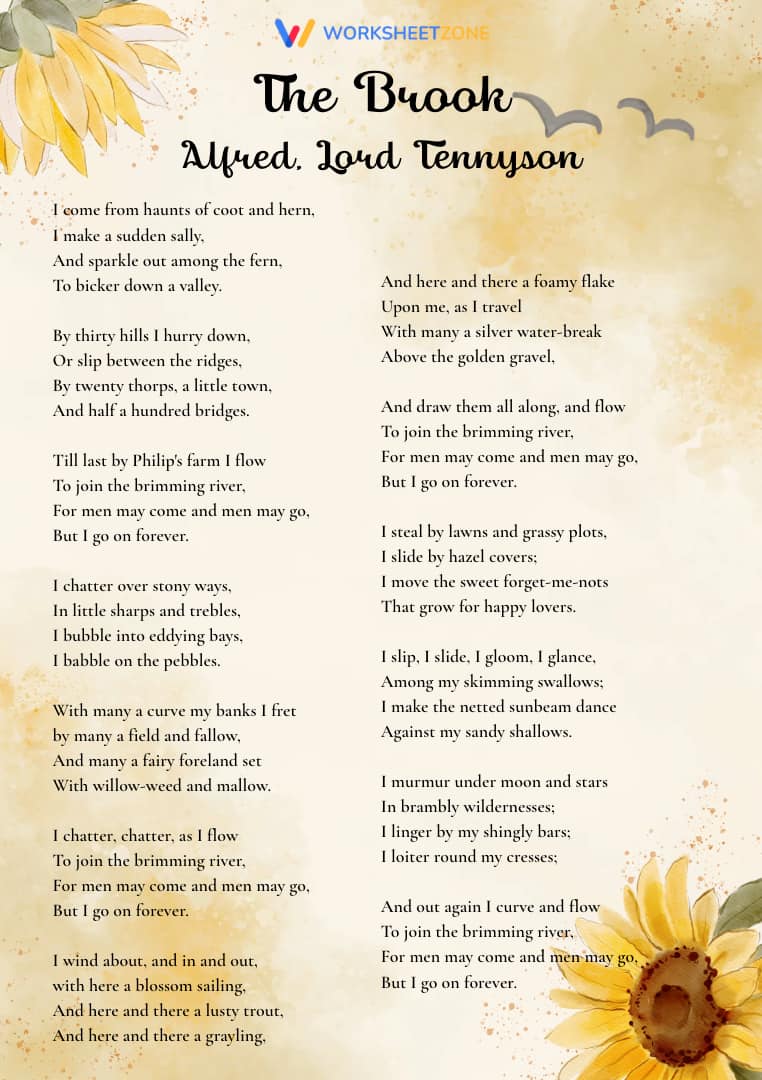
This lyrical poem follows the journey of a flowing brook and uses personification to give nature a lively voice. Its rhythmic repeating line adds musically so that students enjoy reading aloud. The descriptive passages help readers imagine a vibrant landscape full of motion and sound. It’s especially effective for teaching poetic structure and mood.
“I come from haunts of coot and hern,
I make a sudden sally,
And sparkle out among the fern,
To bicker down the valley.”
Teaching tip: Guide students to locate examples of personification and discuss how these choices make the brook feel alive. Have them rewrite a short stanza from the perspective of another natural element – like a mountain or cloud – to strengthen figurative writing skills. Reading the poem aloud in groups also improves fluency and attention to rhythm.
4. “The Secret Heart” by Robert P. Tristram Coffin

This touching narrative poem describes a father’s unseen nightly ritual of love and care for his son. Through soft imagery and gentle metaphors, the poet reveals affection through quiet actions rather than words. Students often find the emotional message relatable and meaningful. The poem opens discussions about family, gratitude, and unspoken love.
“Across the years he could recall
His father one way best of all.”
Teaching tip: Encourage students to identify the metaphors that describe the father’s love and explain what they symbolize. Ask them to write a short reflection about someone who quietly supports them in their life. This builds empathy and strengthens the connection between personal experience and literary interpretation.
5. “The Highwayman” (expert) by Alfred Noyes

This dramatic narrative poem tells the story of a mysterious rider and has a captivating, rhythmic cadence that hooks upper-elementary readers. The imagery of moonlight, danger, and romance creates a cinematic feel. Even using only a portion of the poem gives students a taste of suspenseful storytelling in verse. This poem encourages visualization and emotional inference.
“The wind was a torrent of darkness among the gusty trees.
The moon was a ghostly galleon tossed upon cloudy seas.”
Teaching tip: Use this poem to explore mood, setting, and poetic suspense. Provide students with a selected stanza and ask them to storyboard the scenes like a graphic novel. This helps visual learners break down complex imagery. Then discuss how meter affects tension and pacing in narrative poetry.
6. “Fog” by Carl Sandburg
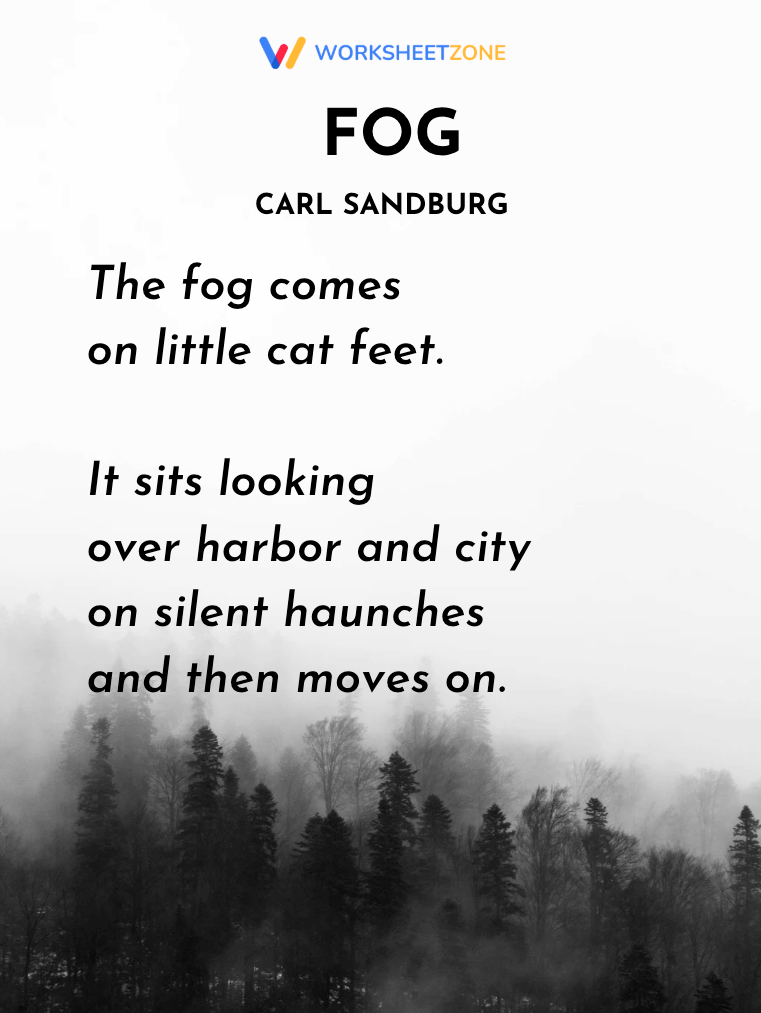
This short but powerful poem uses a simple metaphor – fog as a quiet cat – to convey movement and mood. Its brevity makes it accessible, while its meaning invites deeper interpretation. Students enjoy discussing how such a small poem can create such strong imagery. It’s an ideal introduction to modern poetry.
“The fog comes
on little cat feet.”
Teaching tip: Have students identify the metaphor and brainstorm why the poet chose a cat specifically. Encourage them to write their own weather metaphor poems using Sandburg’s style as a model. Reading their poems allows them to practice concise expression and figurative thinking.
7. “The Tyger” (excerpt) by William Blake
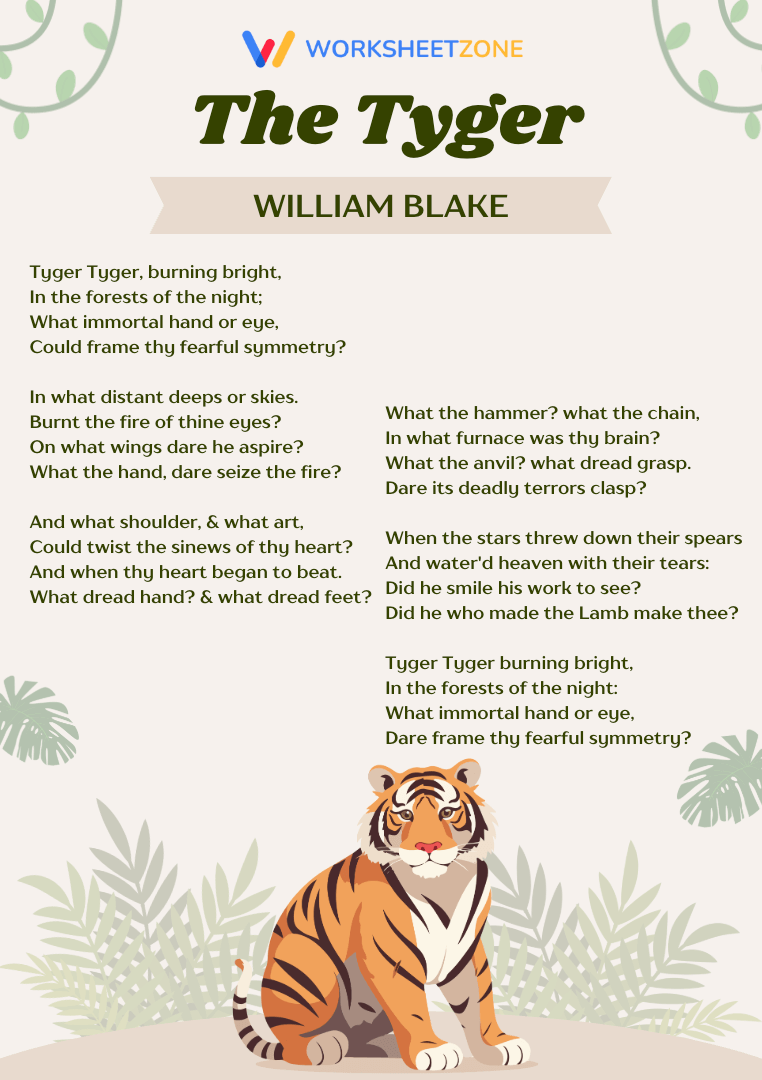
This poem uses striking imagery and repeated questions to explore the power and mystery of a tiger. Its rhythmic beat and vivid descriptions make it engaging for 5th graders. Even in excerpt form, students grasp themes of creation, danger, and beauty. It works well for building vocabulary and analysis skills.
“Tyger Tyger, burning bright,
In the forests of the night;
What immortal hand or eye,
Could frame thy fearful symmetry?”
Teaching tip: Ask students to draw the tiger as they imagine it based on Blake’s imagery, then compare interpretations. Discuss how poets use questions to build curiosity and tension. Finish with a writing prompt where students create their own stanza questioning a natural wonder.
8. “A narrow Fellow in the Grass” by Emily Dickinson

This poem describes an encounter with a snake using unexpected metaphors and close observation. Dickinson’s unique style encourages students to infer meaning from subtle details. Readers feel both curiosity and unease as the narrator recalls the moment. It’s an excellent poem for teaching tone and point of view.
“A narrow Fellow in the Grass
Occasionally rides –
You may have met him? Did you not
His notice instant is -”
Teaching tip: Walk students through the poem line by line, identifying clues that reveal the narrator’s feelings. Then have them rewrite the event from the snake’s perspective to explore narrative voice. This strengthens inference, creativity, and understanding of tone.
9. “Sea Fever” by Jone Masefield

This ocean-themed poem expresses a powerful longing for adventure on the open sea. Its rhythm mimics the movement of waves, making it engaging for oral reading. The vivid sensory language helps students picture ships, wind, and salt spray. Many 5th graders connect with the theme of yearning for exploration.
“I must go down to the seas again, to the lonely sea and the sky,
And all I ask is a tall ship and a star to steer her by;
And the wheel’s kick and the wind’s song and the white sail’s shaking,
And a grey mist on the sea’s face, and a grey dawn breaking.”
Teaching tip: Use the poem to teach rhythm and sound devices like alliteration. Have students identify nautical imagery and categorize it into sight, sound, and movement. Then invite them to write a short stanza expressing their “own” fever for something they love – adventure, art, sports, etc.
10. “The Charge of the Light Brigade” by Alfred, Lord Tennyson

This poem recounts a dramatic historical event with heroic imagery and powerful repetition. Even an excerpt allows students to explore bravery, conflict, and sacrifice. The strong rhythmic pattern reinforces the marching pace of the soldiers. It’s ideal for connecting poetry with history.
“Half a league, half a league,
Half a league onward
All in the valley of Death
Rode the six hundred.”
Teaching tip: Provide students with a brief historical summary before reading the excerpt. Ask them to analyze how repetition reinforces courage and movement. Finish with a discussion on how poetry can help us understand real events emotionally – not just factually.
11. “The Dream Keeper” by Langston Hughes
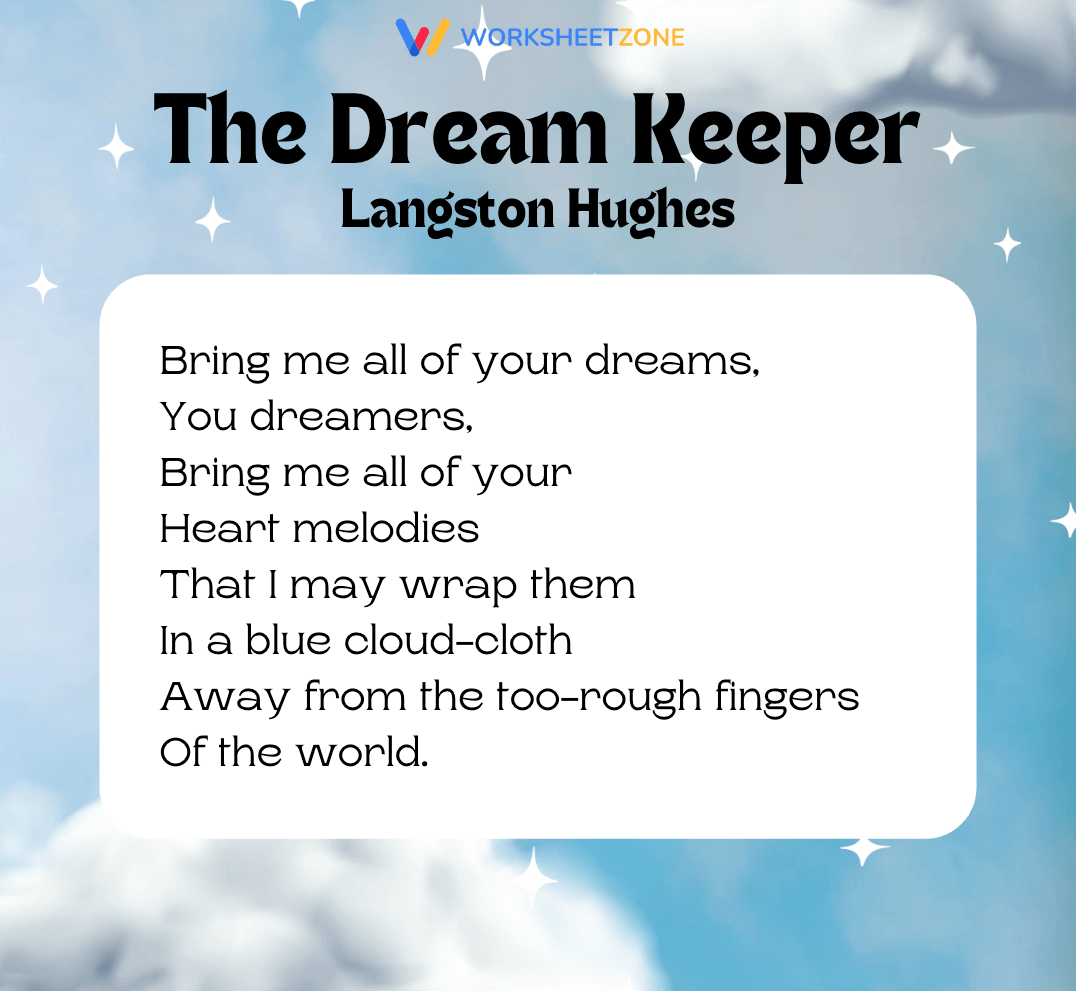
This uplifting poem encourages readers to protect their dreams and keep them safe from the world’s worries. With its gentle tone and vivid imagery, it resonates strongly with 5th graders who are developing their own hopes and goals. Hughes uses simple yet powerful language that inspires confidence and imagination. The poem invites students to think about what dreams mean and why they matter.
“Bring me all of your dreams,
You dreamers,
Bring me all of your
Heart melodies”
Teaching tip: Use this poem to help students explore personal goals and emotions. Ask them to identify phrases that show how the speaker values dreams and discuss why the imagery feels protective. Then have students create their own “dream keeper” drawing or write a short poem about a dream they want to protect. This activity builds self-expression while deepening understanding of figurative language.
12. “Human Family” by Maya Angelou
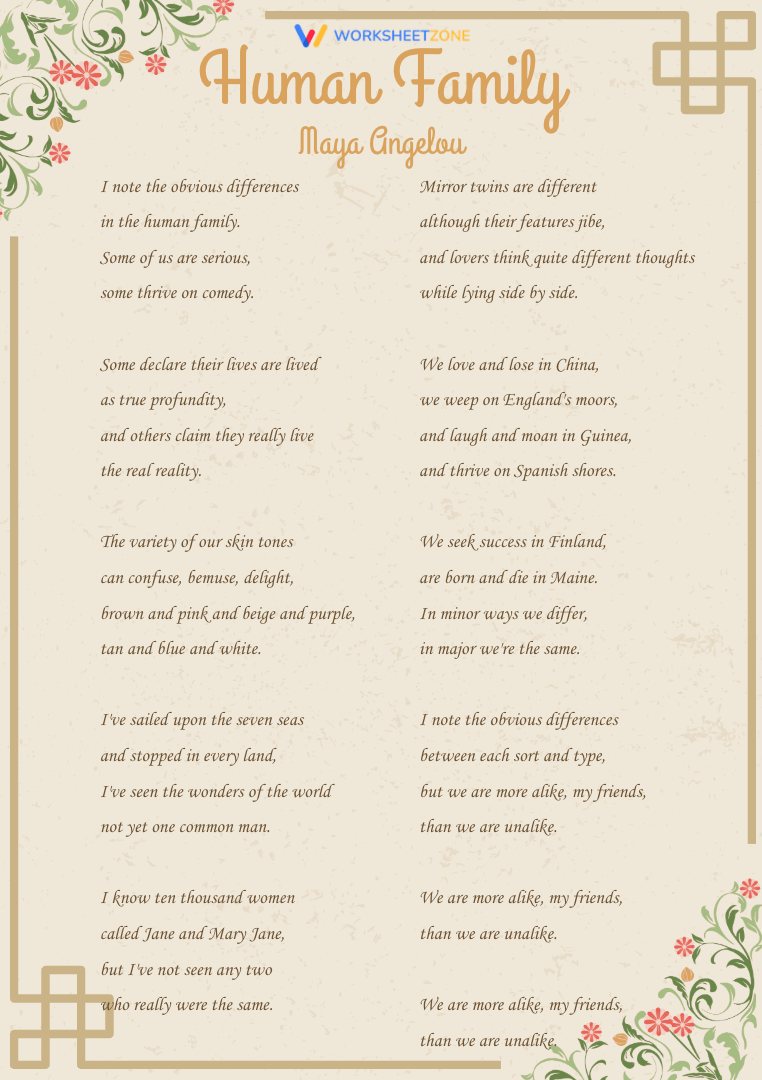
This poem celebrates diversity by highlighting how people across the world are both different and alike. With its rhythmic lines and simple, powerful message, it resonates strongly with upper-elementary readers. Students connect easily with the poem’s themes of unity, kindness, and shared humanity. The repeated refrain encourages reflection and discussion:
“We are more alike, my friends,
than we are unalike.”
Teaching tip: Use this poem to spark conversations about empathy and respecting differences. Ask students to identify lines that show how people can be unique yet connected. Then let them write short stanzas describing their own cultural or personal identity. Conclude with a class mural or chart titled “We Are More Alike Than We Think” to visually reinforce the poem’s message.
13. “A Time to Talk” by Robert Frost
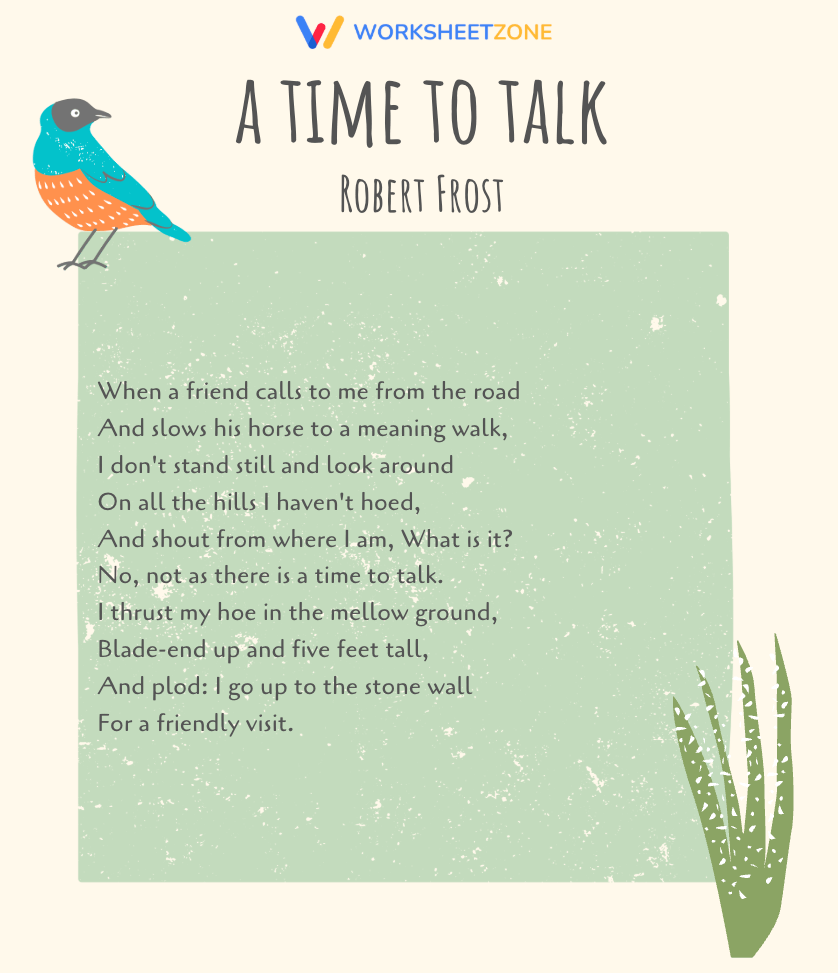
This short poem explores the importance of pausing work to connect with a friend. Its simplicity helps students grasp themes of friendship, priorities, and kindness. Frost’s vivid rural setting creates a peaceful atmosphere. The poem opens reflection on balancing responsibilities with relationships.
“When a friend calls to me from the road
And slows his horse to a meaning walk,”
Teaching tip: Discuss the poem’s message about slowing down and valuing friendships. Have students brainstorm small ways to “make time to talk” in their own lives. Then assign a writing prompt where they describe a meaningful conversation and why it mattered.
14. “The Song of the Jellicles” by T. S. Eliot

This playful poem describes imaginative cats with quirky personalities and lively movements. Its playful rhythm and inventive vocabulary engage 5th graders immediately. The poem encourages creativity and visual thinking. Eliot’s whimsical style introduces students to more complex poetic voices.
“Jellicle Cats come out tonight,
Jellicle cats come one come all:
The Jellicle Moon is shining bright –
Jellicles come to the Jellicle Ball.”
Teaching tips: Ask students to identify descriptive phrases and turn them into illustrations of Jessicle Cats. Then have them create their own imagery creature poem following Eliot’s style. This boosts creativity, vocabulary, and understanding of poetic structure.
15. “The Pasture” by Robert Frost

This poem invites readers into simple, peaceful farm scenes and highlights the beauty of everyday tasks. The repeated line “You come too” creates a welcoming tone. Students enjoy imagining the natural setting and discussing the invitation implied. It’s a gentle, reflective poem ideal for close reading.
“I’m going out to clean the pasture spring;
I’ll only stop to rake the leaves away
(And wait to watch the water clear, I may):
I sha’n’t be gone long. – You come too.”
Teaching tip: Use this poem to teach mood and repetition. Encourage students to describe how the invitation line makes them feel. Then have them write a two-line invitation of their own welcoming someone into a favorite place or moment.
16. “Who Has Seen the Wind?” by Christina Rossetti

This poem uses vivid imagery to describe the wind’s movement through the sky and the land. Students enjoy the poem’s musical flow and accessible language. It offers opportunities to compare natural imagery across poems. The poem encourages noticing details in nature.
“Who has been the wind?
Neither I nor you:
But when the leaves hang trembling,
The wind is passing through.”
Teaching tip: Ask students to identify verbs that describe the wind’s behavior. Then, have them personify a natural element – sun, rain, or snow – in their own short poem. Use this activity to strengthen word choice and figurative writing.
17. “Trees” by Joyce Kilmer
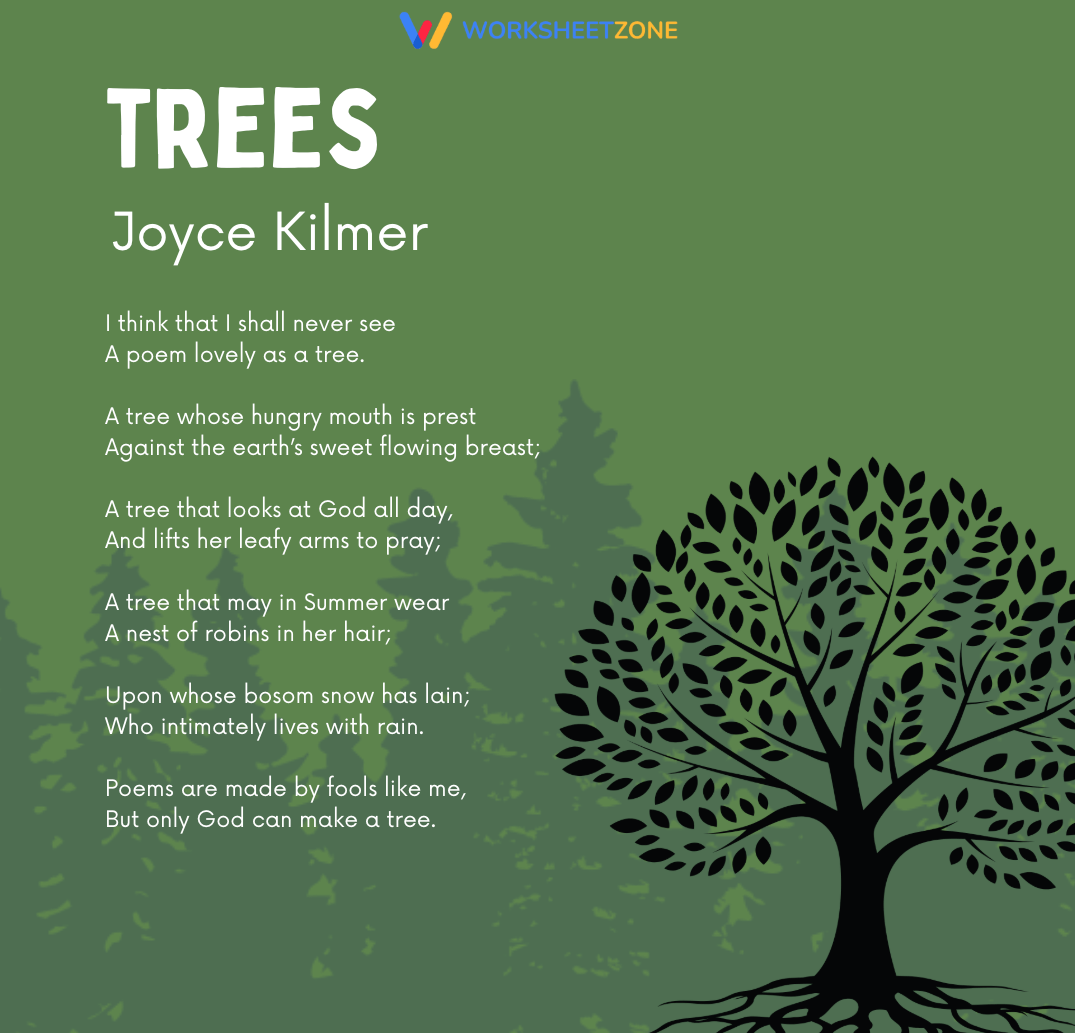
This poem praises the natural beauty and strength of trees using memorable imagery and personification. Students enjoy the poem’s gentle rhythm and emotional sincerity. It’s a great text for discussing the appreciation of nature. The poem also builds an understanding of metaphor and symbolism.
“I think that I shall never see
A poem lovely as a tree.”
Teaching tip: Have students list all the ways Kilmer gives the tree human qualities. Take them outside to sketch or observe real trees, then write a descriptive stanza inspired by the experience. This strengthens observation and descriptive poetry skills.
18. “Caterpillar (Brown and furry)” by Christina Rossetti
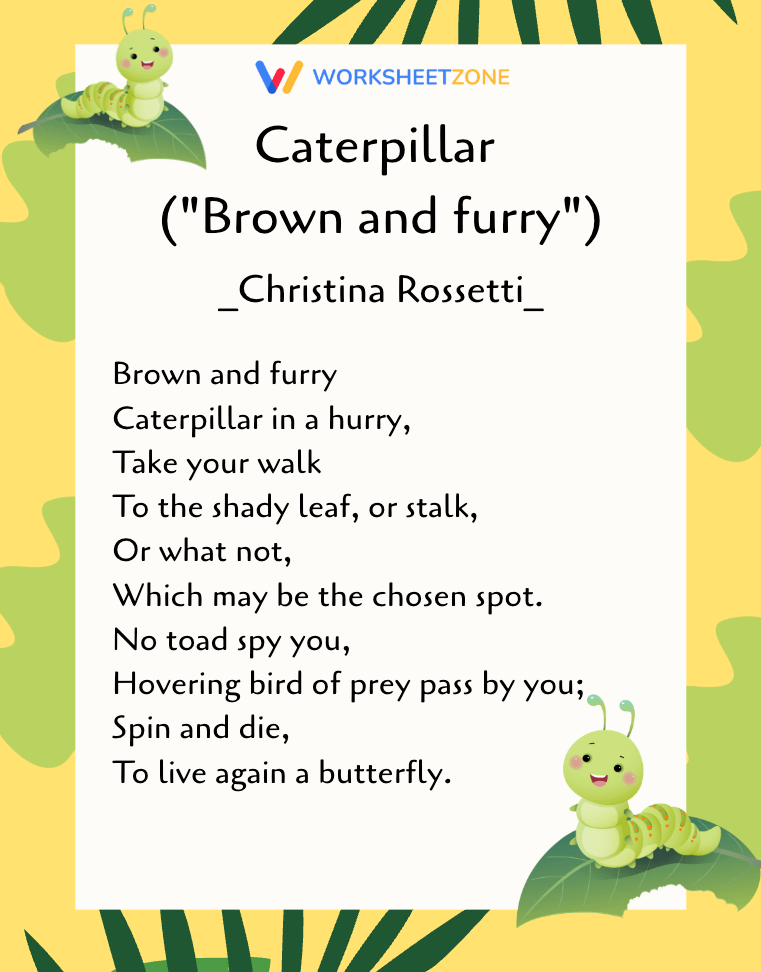
This poem describes a small caterpillar in delicate, gentle language that reflects themes of transformation and care. Students connect with the imagery and the creature’s vulnerability. It works well for cross-curricular connections to life cycles. The quiet tone encourages thoughtful reading.
“Brown and furry
Caterpillar in a hurry.
Take your walk
To the shady leaf, or stalk,…”
Teaching tip: Pair the poem with a science lesson about metamorphosis. Ask students to highlight adjectives that describe the caterpillar and discuss how they set the tone. Then assign a drawing and a short descriptive paragraph about one stage of a life cycle.
19. “The Walrus and the Carpenter” (excerpt) by Lewis Carroll
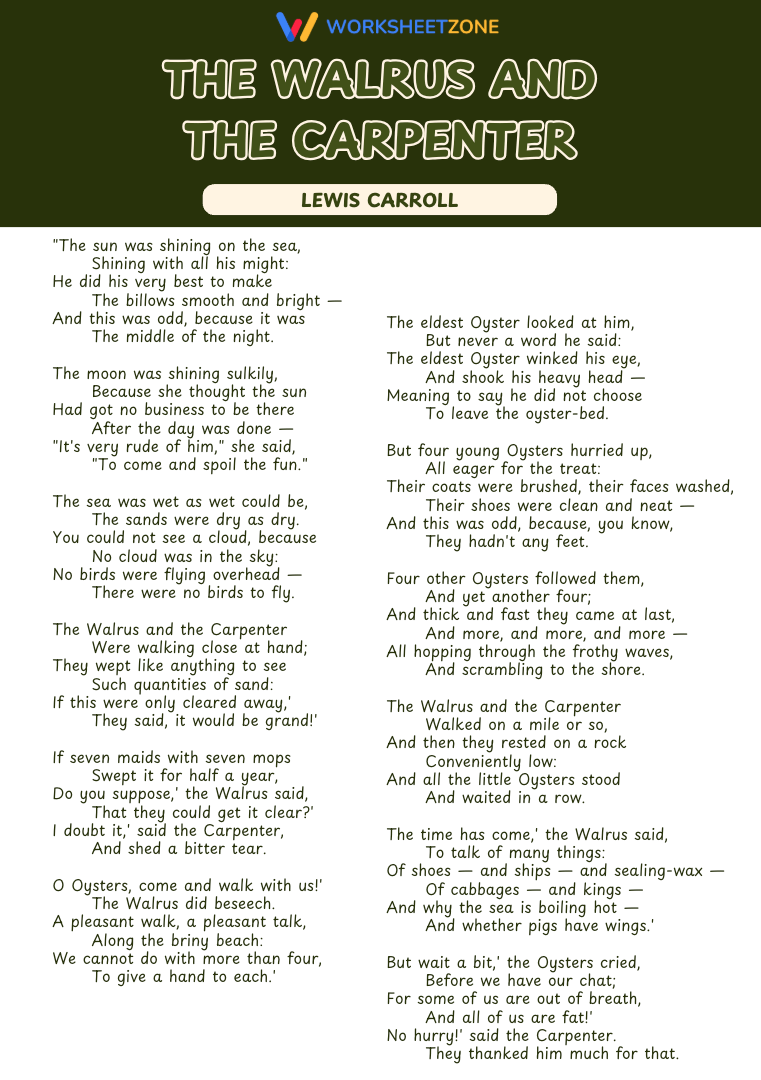
This whimsical, narrative poem presents humorous characters and imaginative scenes. Its storytelling style engages students who enjoy adventure and fantasy. Even short excerpts provide opportunities to explore rhyme, rhythm, and character. The poem also introduces students to Carroll’s playful use of language.
“The sun was shining on the sea,
Shining with all his might:
He did his very best to make
The billows smooth and bright –
And this was odd, because it was
The middle of the night.”
Teaching tip: Use this poem to teach narrative poetry structure – characters, conflict, and setting. Have students retell the excerpt in comic-strip form to ensure comprehension. Then discuss how rhyme and rhythm enhance the humor and pacing of the story.
20. “Life Is Fine” (clean excerpt) by Langston Hughes
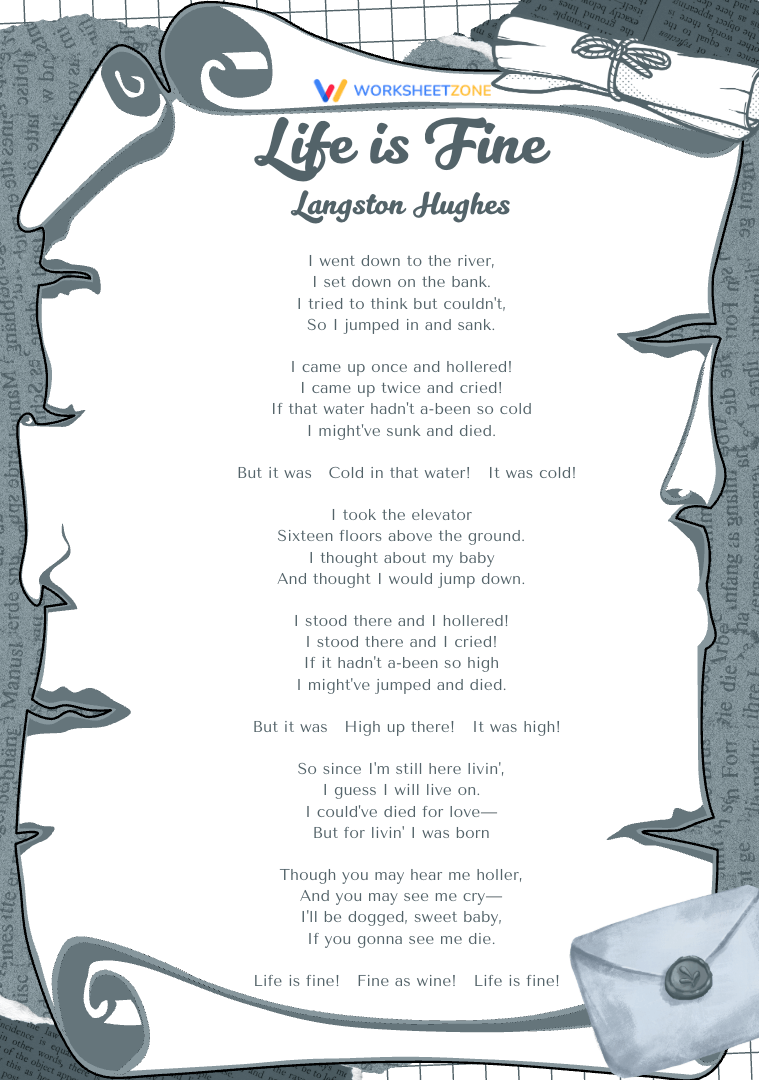
This poem blends emotional expression with rhythmic, upbeat language. It explores themes of resilience, courage, and finding joy even in tough moments. Students enjoy its musicality and strong voice. The poem encourages meaningful discussions about determination.
“I went down to the river,
I set down on the bank.
I tried to think but couldn’t,
So I jumped in and sank.”
Teaching tip: Have students analyze how repetition reinforces the speaker’s emotional journey. Use a mood chart to track how the poem shifts from low moments to empowering ones. End with a journaling activity where students reflect on a time they overcame a challenge.
If you want students to practice reading and analyzing poetry with structured activities, explore our curated collection of 5th-grade poem worksheets. These worksheets include genre identification, comprehension questions, and poem analysis exercises perfect for classroom or homework use.
FAQs
1. Why is poetry important for 5th graders?
At the 5th-grade level, poetry serves as a critical tool for developing abstract thinking and emotional intelligence. Students are transitioning from literal comprehension to inferential reasoning, and the concentrated language of verse forces them to analyze layers of meaning. By engaging with diverse poetic forms, 10-year-olds build the stamina required for middle school literature while expanding their vocabulary through the exposure to unique metaphors and creative word choices.
2. How do you choose the right poem for this age group?
Selecting appropriate poems for 10-year-olds involves balancing accessible vocabulary with thematic depth. A poem should be complex enough to spark debate but not so obscure that it discourages independent reading. Educators should look for pieces that feature strong rhythmic patterns, vivid sensory details, and relatable emotional cores. This balance ensures that students feel successful in their initial reading while remaining challenged during subsequent close-analysis sessions in the classroom.
Final thoughts
Selecting high-quality poems for 5th graders can transform poetry from something intimidating into something exciting, meaningful, and fun. The right poem encourages students to think critically, visualize vividly, and connect emotionally with the text. Whether you’re building a classroom poetry unit, preparing for a speech competition, or simply hoping to inspire a love of reading, these 20 selections offer a strong foundation. With the right support and discussion, poems for 5th graders can open the door to creativity, empathy, and lifelong appreciation for literature.