


























Views
Downloads

2-Digit Addition & Subtraction Printable | Grade 2 Math
Paste this activity's link or code into your existing LMS (Google Classroom, Canvas, Teams, Schoology, Moodle, etc.).
Students can open and work on the activity right away, with no student login required.
You'll still be able to track student progress and results from your teacher account.
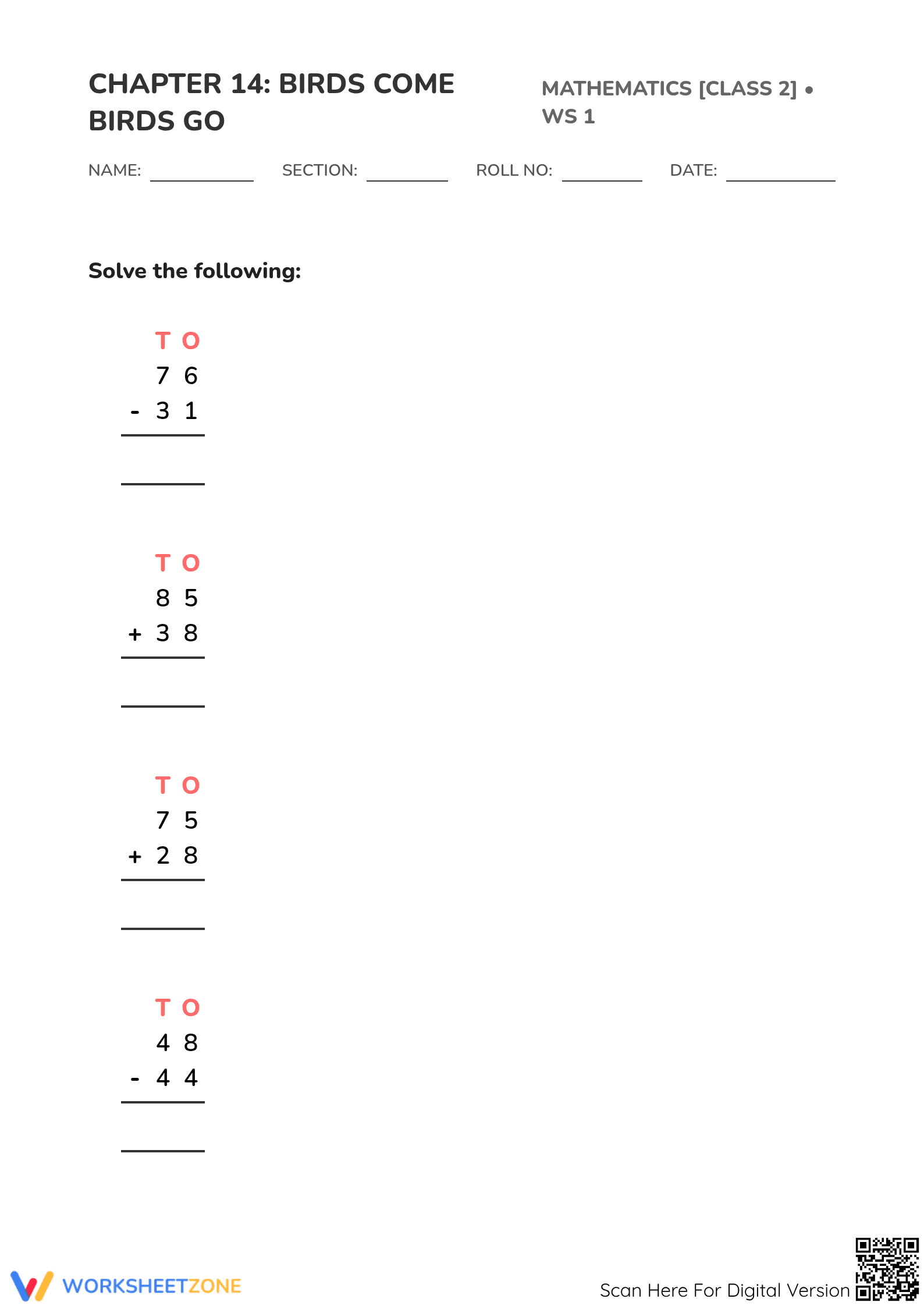
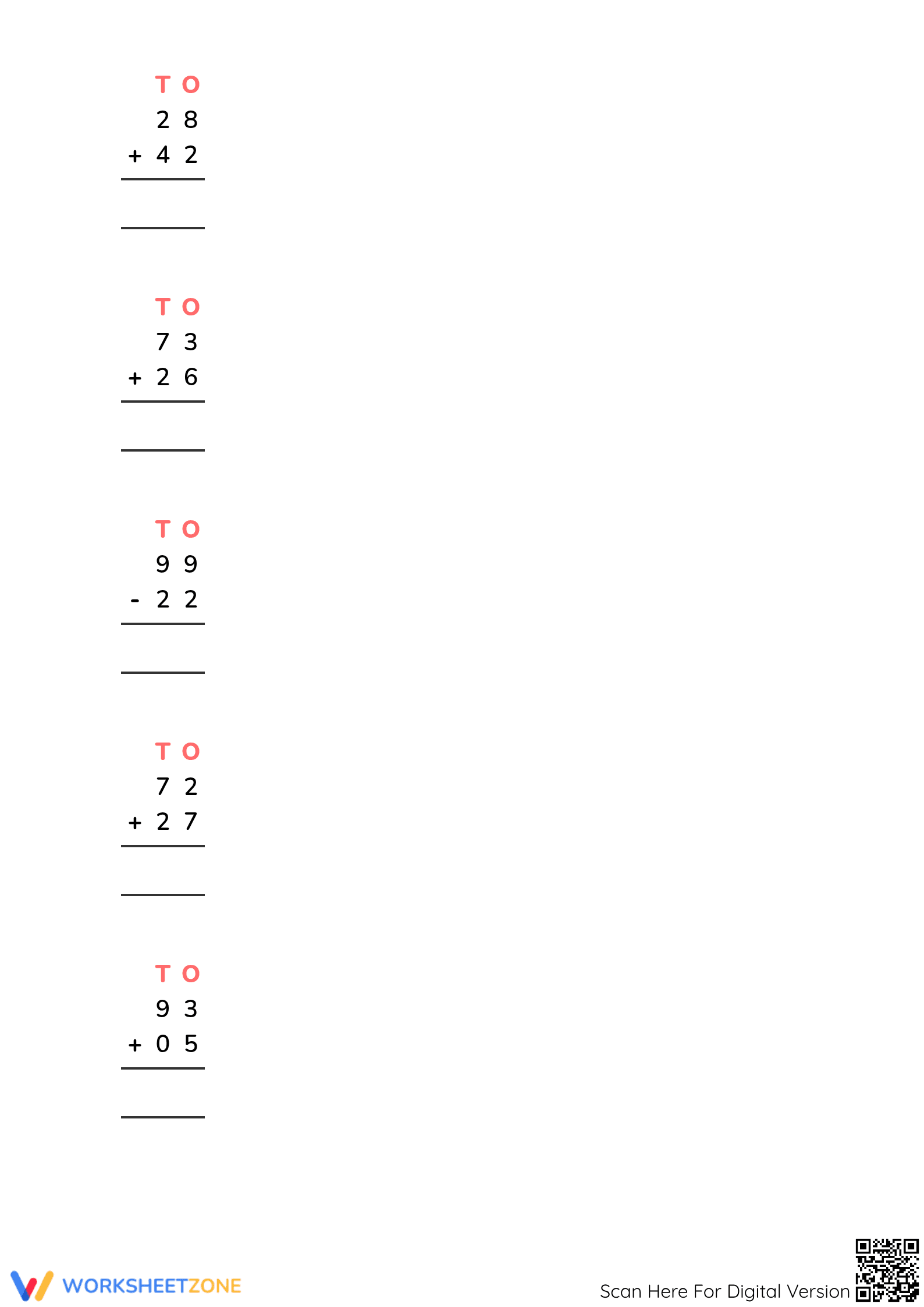
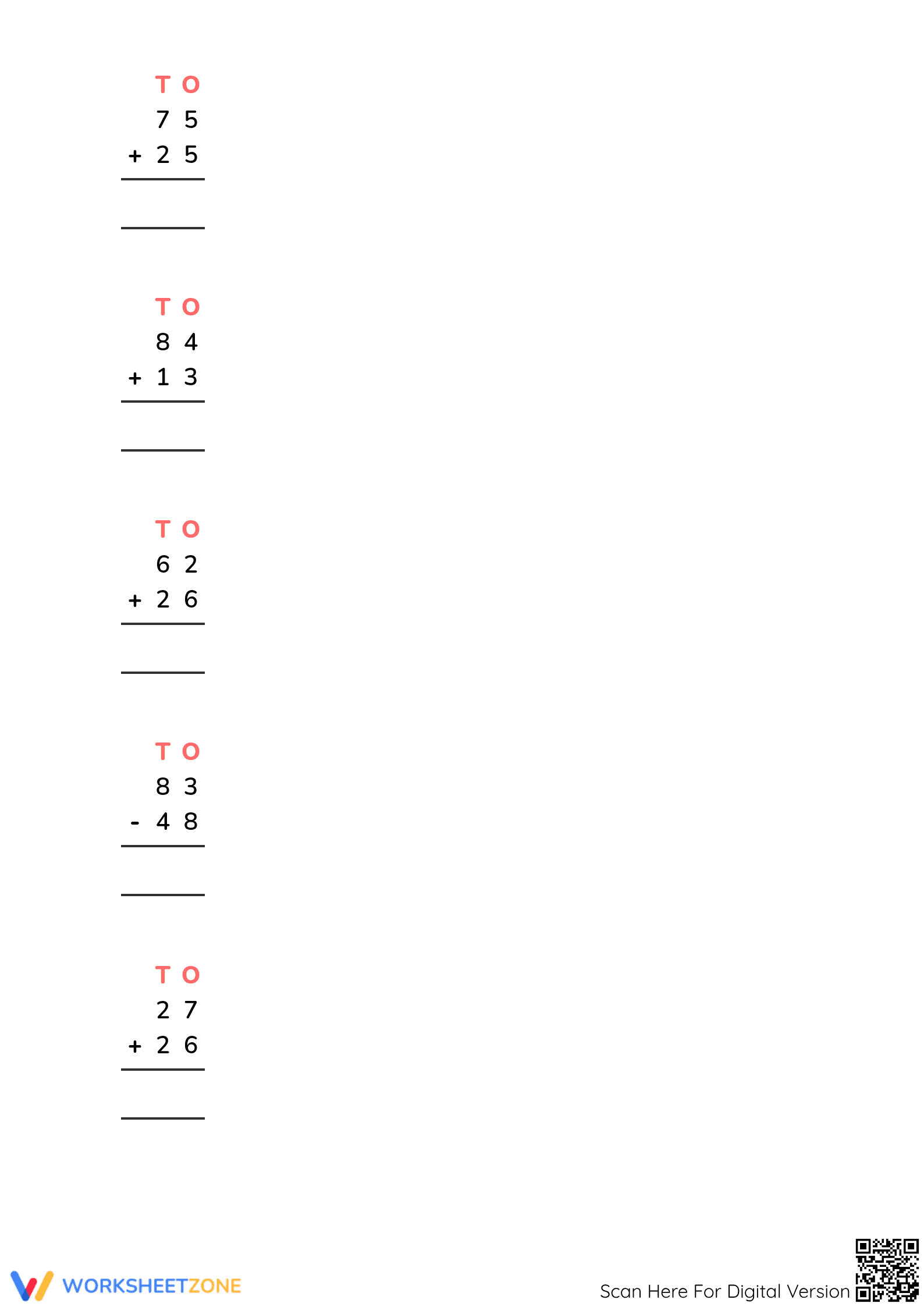
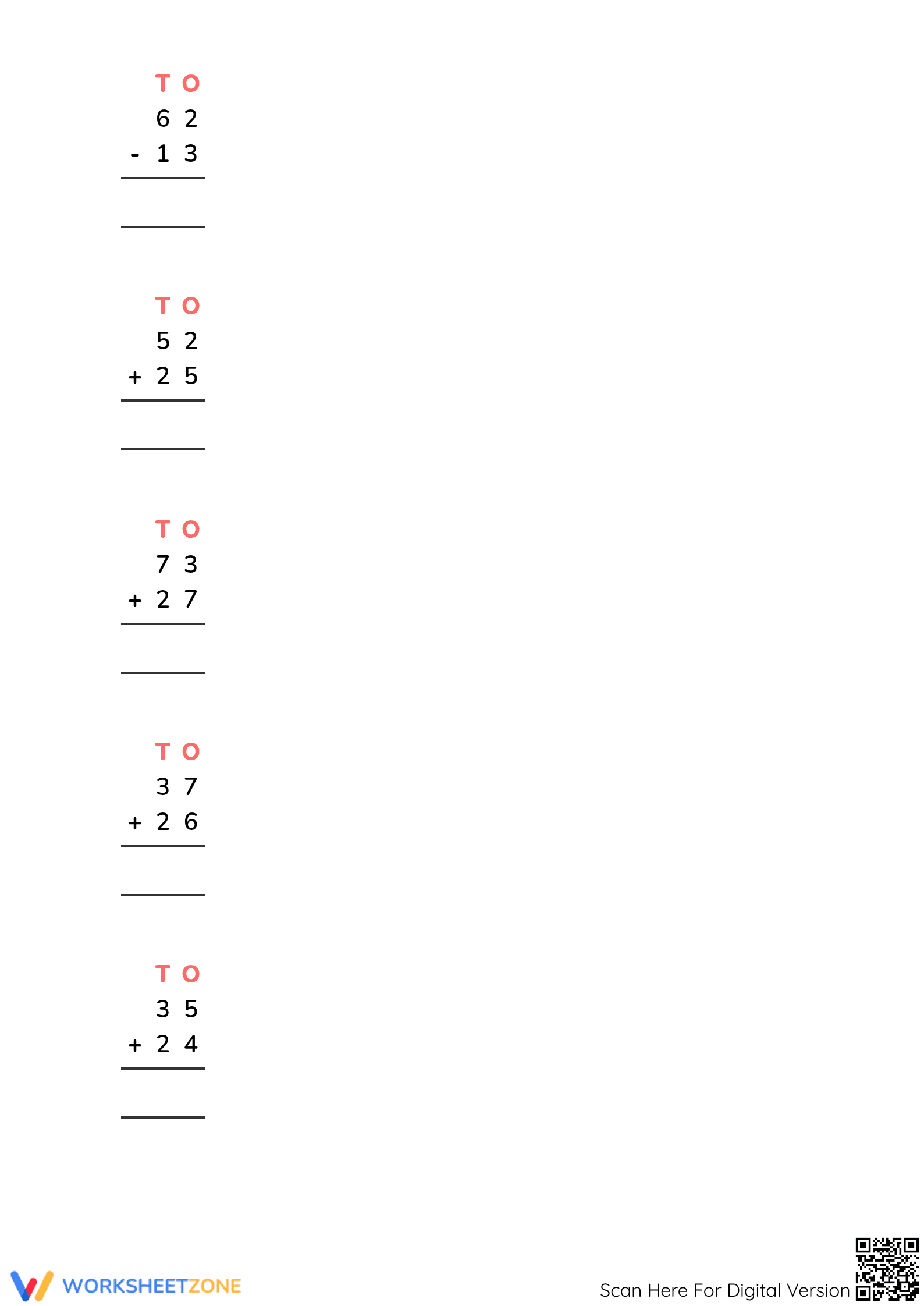
This Grade 2 math worksheet provides comprehensive practice for mastering two-digit addition and subtraction with regrouping. Students solve vertical equations that build computational fluency and place value understanding. By working through these structured problems, learners develop the confidence needed for multi-digit arithmetic and mental math strategies.
At a Glance
- Grade: 2 · Subject: Math
- Standard:
CCSS.MATH.CONTENT.2.NBT.B.5— Fluently add and subtract within 100 using strategies based on place value- Skill Focus: 2-Digit Addition & Subtraction
- Format: 5 pages · 24 problems · Answer key included · PDF
- Best For: Independent practice and homework reinforcement
- Time: 20–30 minutes
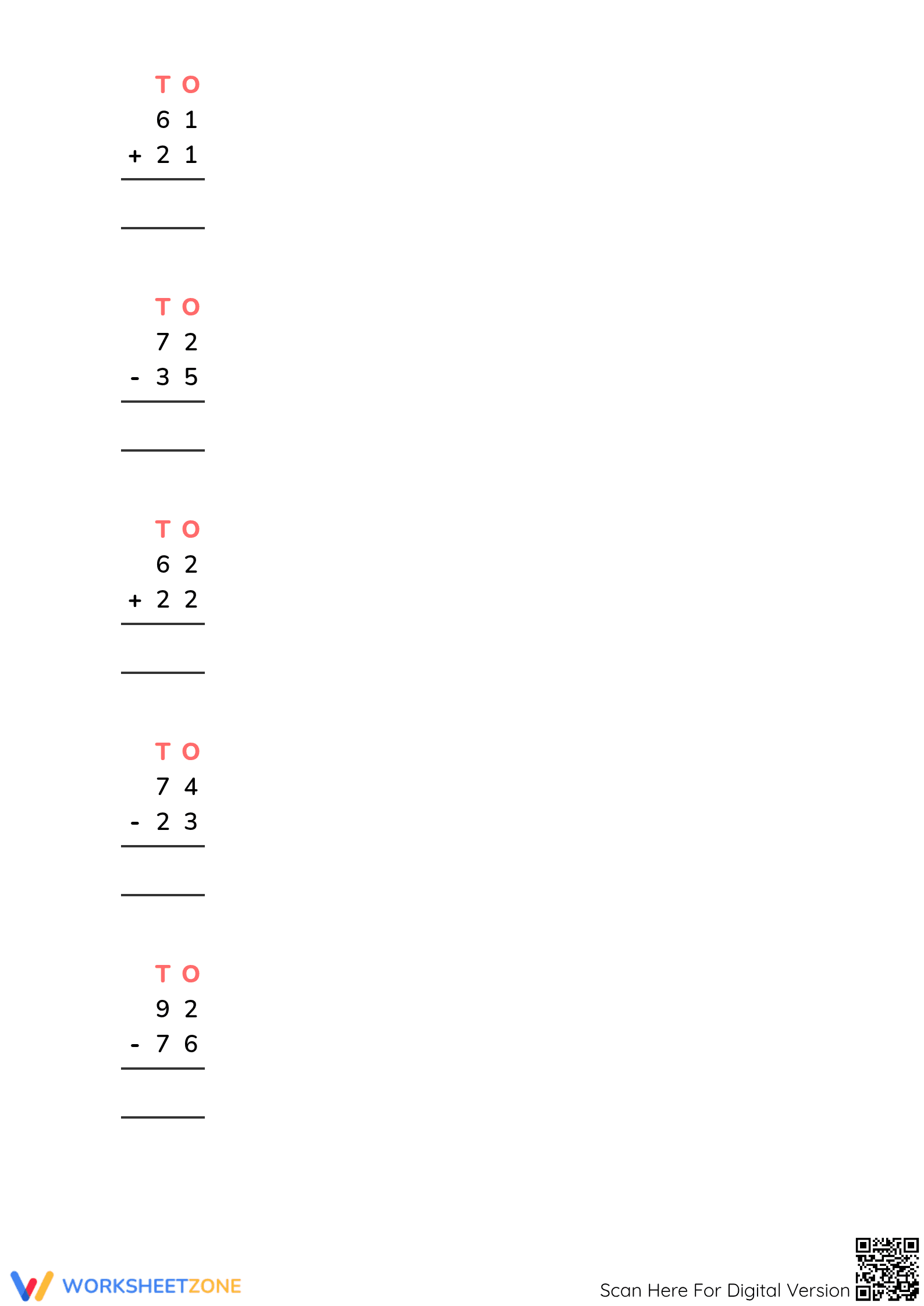
This five-page PDF packet contains 24 vertically aligned math problems. Each page features a mix of addition and subtraction equations, clearly labeled with "T" and "O" (Tens and Ones) headers to support place value alignment. The layout provides ample white space for student calculations. A complete answer key is included for rapid grading or student self-correction.
Zero-Prep Workflow
The zero-prep design allows teachers to implement this resource in under two minutes. Simply print the five-page packet and distribute it to students. Because the "Tens and Ones" columns are pre-formatted, no additional instructional setup is required. This makes the worksheet an ideal choice for emergency sub plans or morning work transitions where immediate student engagement is necessary.
Standards Alignment
This resource is directly aligned with `CCSS.MATH.CONTENT.2.NBT.B.5`, which requires students to fluently add and subtract within 100 using strategies based on place value, properties of operations, and the relationship between addition and subtraction. It also supports 2.NBT.B.7 by providing the foundational practice needed for adding and subtracting within 1000. Both standard codes can be copied directly into lesson plans, IEP goals, or district curriculum mapping tools.
How to Use It
Use this worksheet as a formative assessment after a lesson on regrouping to identify students who struggle with carrying or borrowing. It also serves as an excellent "fast finisher" activity or a homework assignment to reinforce classroom instruction. Observe whether students correctly align their digits in the provided columns to gauge their grasp of place value concepts. Expected completion time is 20 to 30 minutes.
Who It's For
This resource is designed for second-grade students but is also suitable for first-grade enrichment or third-grade intervention. It is particularly helpful for visual learners who benefit from the explicit Tens and Ones column labeling. Pair this worksheet with base-ten blocks or a place value anchor chart for students requiring additional concrete support.
This Grade 2 mathematics resource targets CCSS.MATH.CONTENT.2.NBT.B.5, focusing on the plain-English skill of fluently adding and subtracting two-digit numbers using place value strategies. According to research from Fisher & Frey (2014) on the gradual release of responsibility, structured independent practice is essential for moving students from guided instruction to procedural mastery. By providing 24 targeted problems across five pages, this worksheet offers the repetition necessary to solidify arithmetic facts and regrouping mechanics. The inclusion of vertical alignment and column headers reduces cognitive load, allowing students to focus on the operational steps of the algorithm. This alignment with evidence-based instructional design ensures that students build the computational stamina required for higher-level mathematics. Educators can reliably use this tool to track progress toward fluency benchmarks and provide data-driven interventions for students struggling with multi-digit operations.


