What Boundaries Worksheets Actually Teach
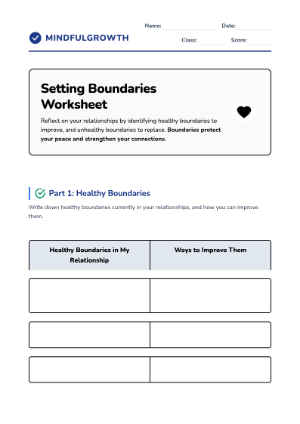
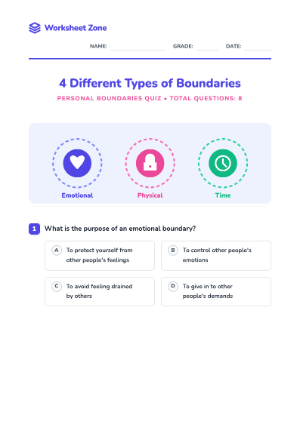
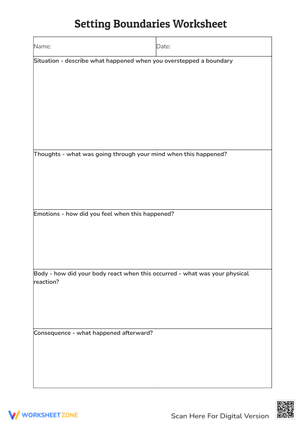
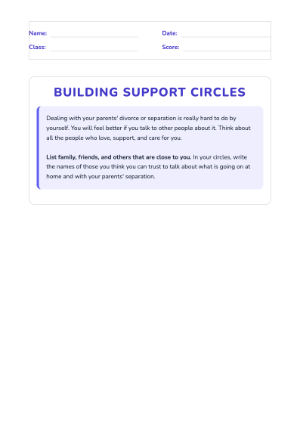
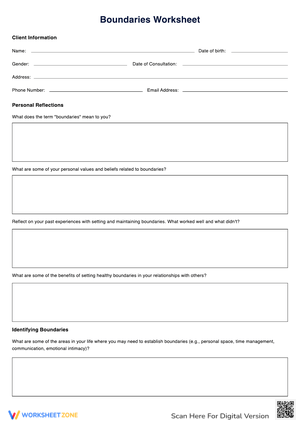
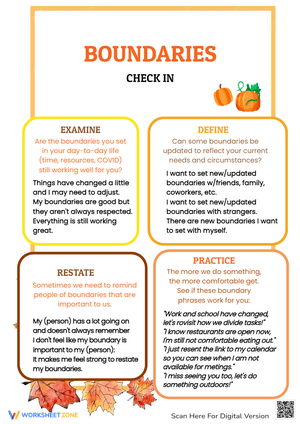
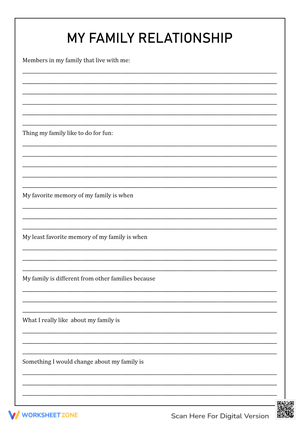
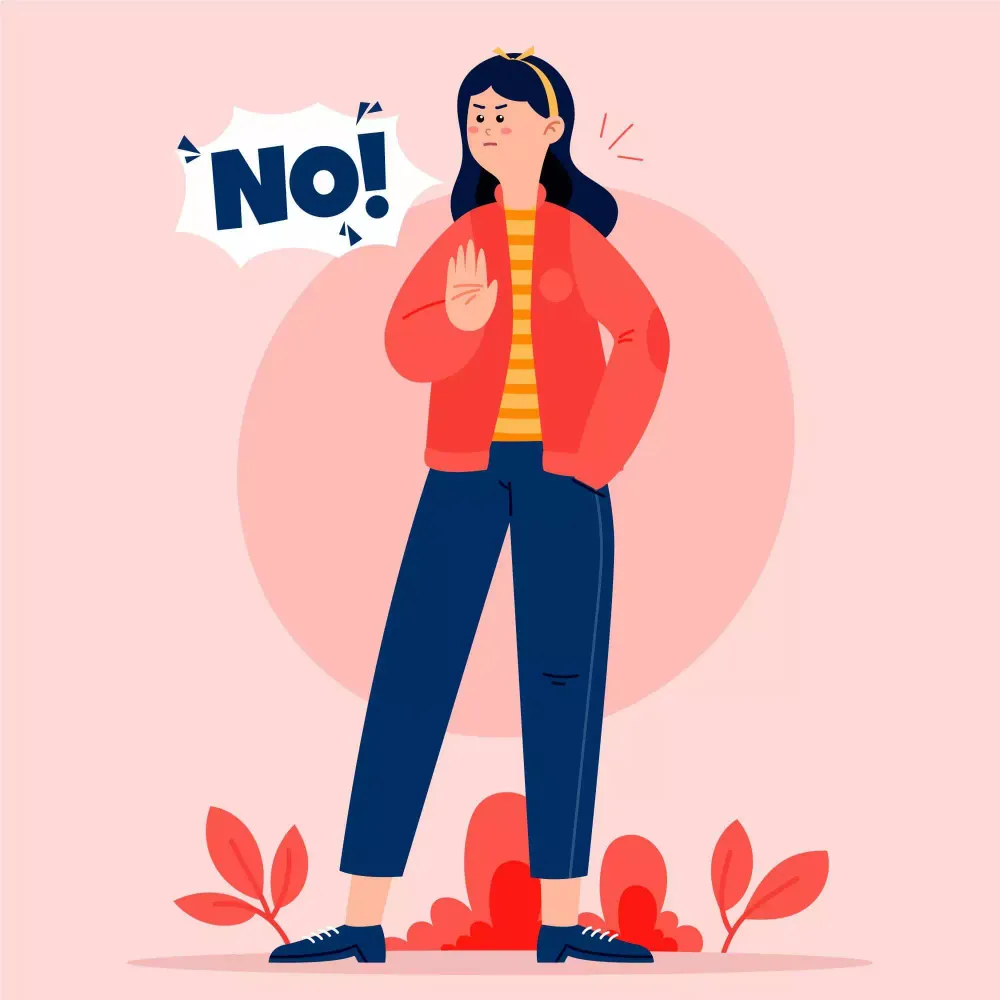
Boundaries worksheets give teachers a concrete way to turn a hard-to-explain idea into something students can point to, sort, and practice. Instead of telling a class to "respect personal space," you hand them a page that asks them to decide which situations feel OK and which feel not-OK, then talk through why. That shift from abstract rule to visible decision is what makes these pages work in a real classroom, especially during a busy SEL or behavior block.
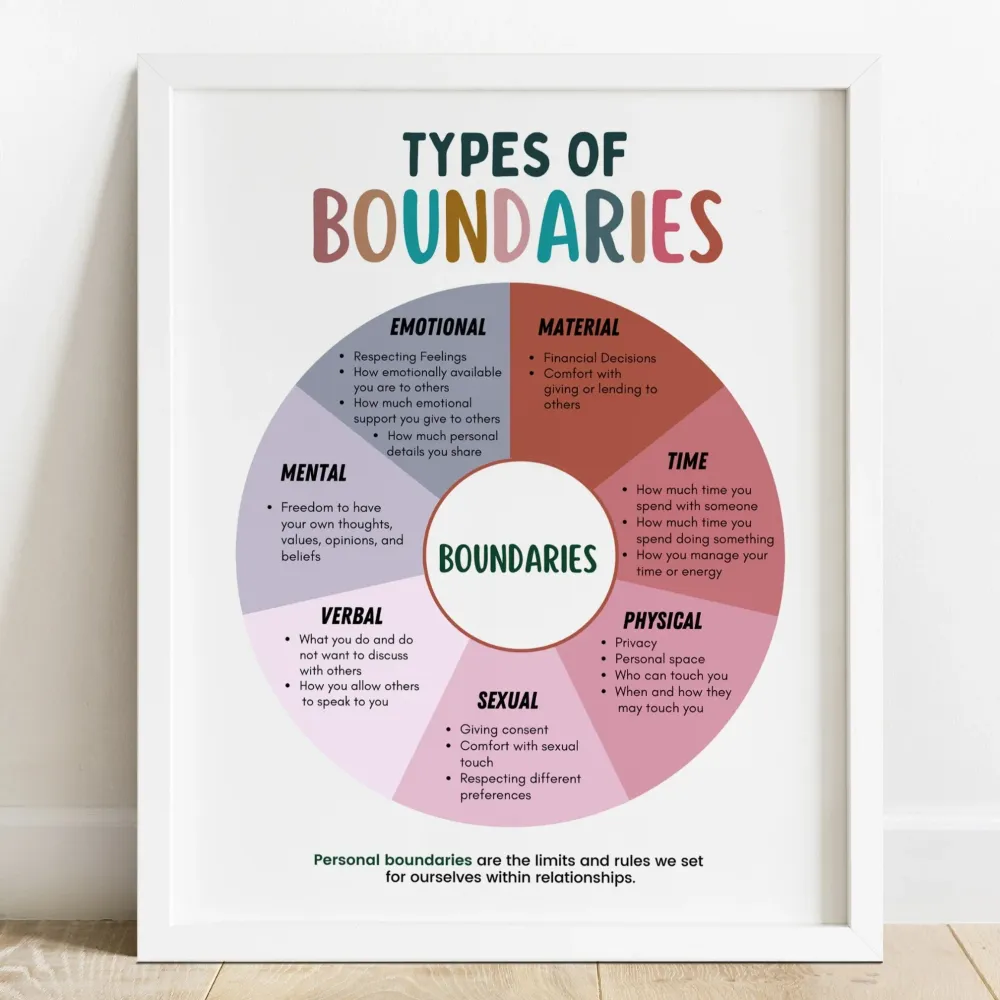
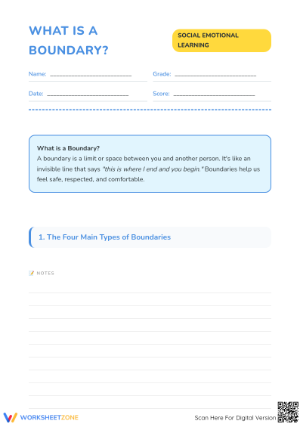
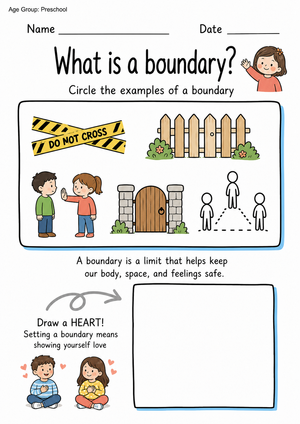
Most boundaries worksheets built for elementary students focus on three skills: noticing your own comfort level, reading how close is too close with different people, and saying what you need without shutting down or blowing up. A single page might ask a first grader to color a comfort circle, or push a fifth grader to rewrite a pushy request into a polite but firm one. The format stays simple so the thinking can get deeper.
How Boundaries Worksheets Support CASEL Competencies
Boundaries instruction maps cleanly onto two of the CASEL core competencies: Self-Awareness, when students name how a situation makes them feel, and Relationship Skills, when they practice communicating limits and honoring someone else's. Naming that alignment on your lesson plan helps when an administrator or coach asks how a sorting page connects to your SEL scope and sequence.
A 2017 CASEL meta-analysis of 82 school-based universal SEL programs, following 97,406 K-12 students, reported significant long-term gains in social-emotional skills and well-being. For boundaries instruction, that finding signals that short, repeated lessons on personal space and consent can produce durable growth over time, not just a one-time behavior bump that fades by the next week.
The takeaway for planning is that consistency matters more than intensity. A ten-minute boundaries worksheet revisited every few weeks tends to outperform a single dramatic lesson, because the skills need rehearsal across the changing situations a school year throws at kids.
Using OK and Not-OK Sorting to Teach Personal Space and Consent
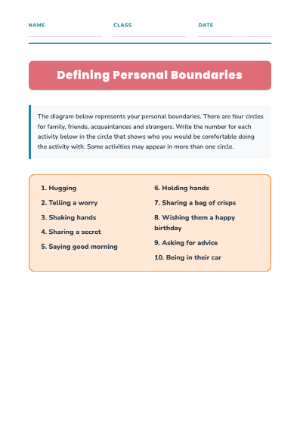
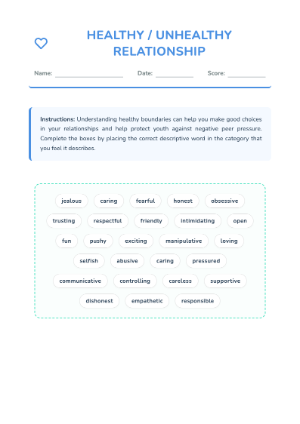
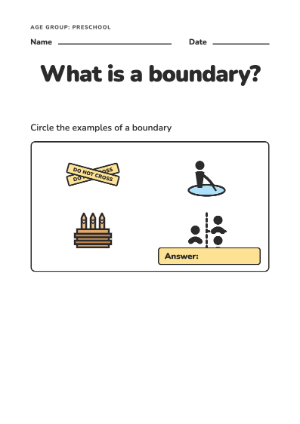
The most reliable boundaries activity is a sorting task. Students read or view short scenarios and place each one in an OK or Not-OK column. A hug from a trusted family member, a classmate grabbing your pencil without asking, standing very close in the lunch line, a friend asking before borrowing your marker. Sorting forces a decision, and the disagreements that surface are where the real teaching happens.
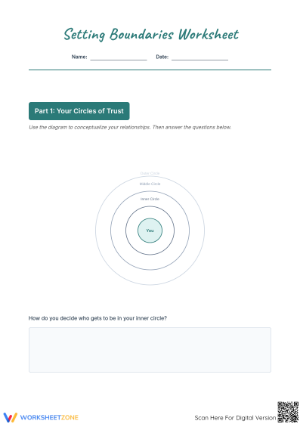
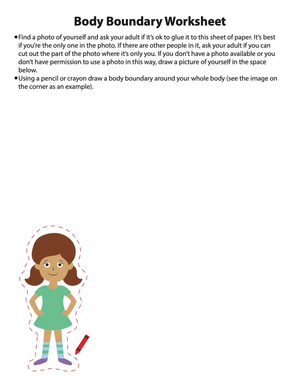
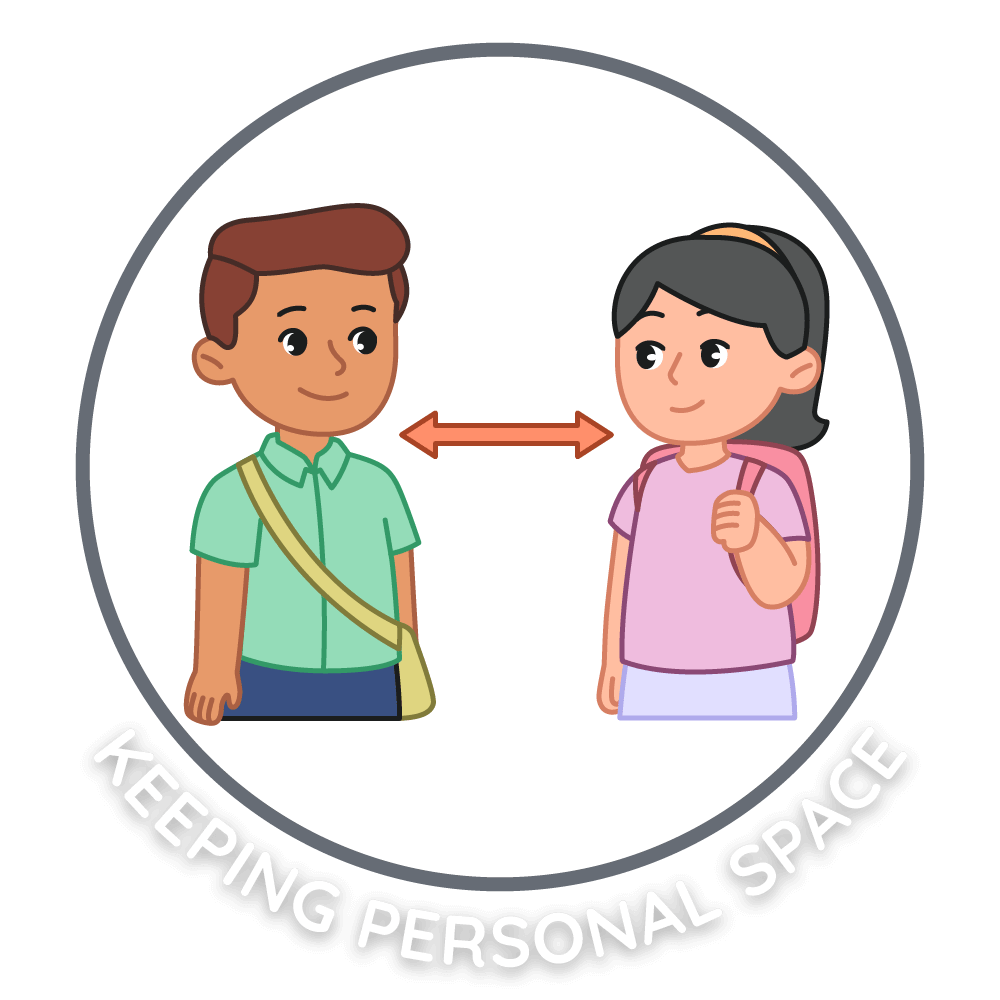
Circle-diagram tools work alongside sorting. Students draw themselves in the center and place different people at different distances based on what kind of touch or closeness feels right with each. This makes the point that boundaries change with the relationship, which is exactly the nuance consent instruction needs. A young student learns that "OK with Grandma" and "OK with a new classmate" are not the same, and that both answers belong to them.
Keep scenarios grounded in school life. Cafeteria lines, group work, recess games, and shared supplies give students the vocabulary to use the moment they leave your carpet and walk back to their desks.
Teaching Scripts and Sentence Starters
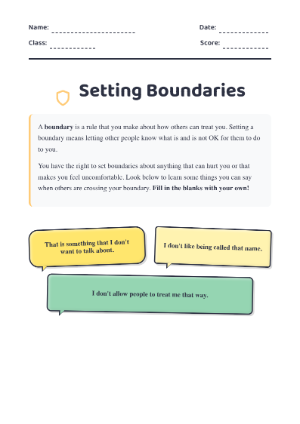
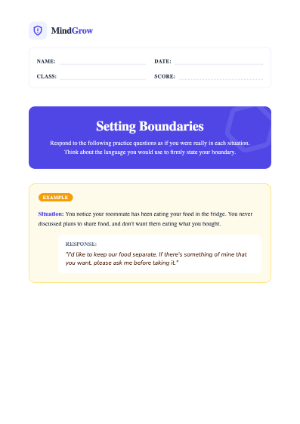
Students often know a boundary is being crossed but freeze because they lack the words. Worksheets that supply sentence starters solve this. Give students frames like "Please stop, I don't like that," "I need some space right now," or "You can borrow it after I'm done." Then have them match a script to a scenario or write their own for a situation from their week.
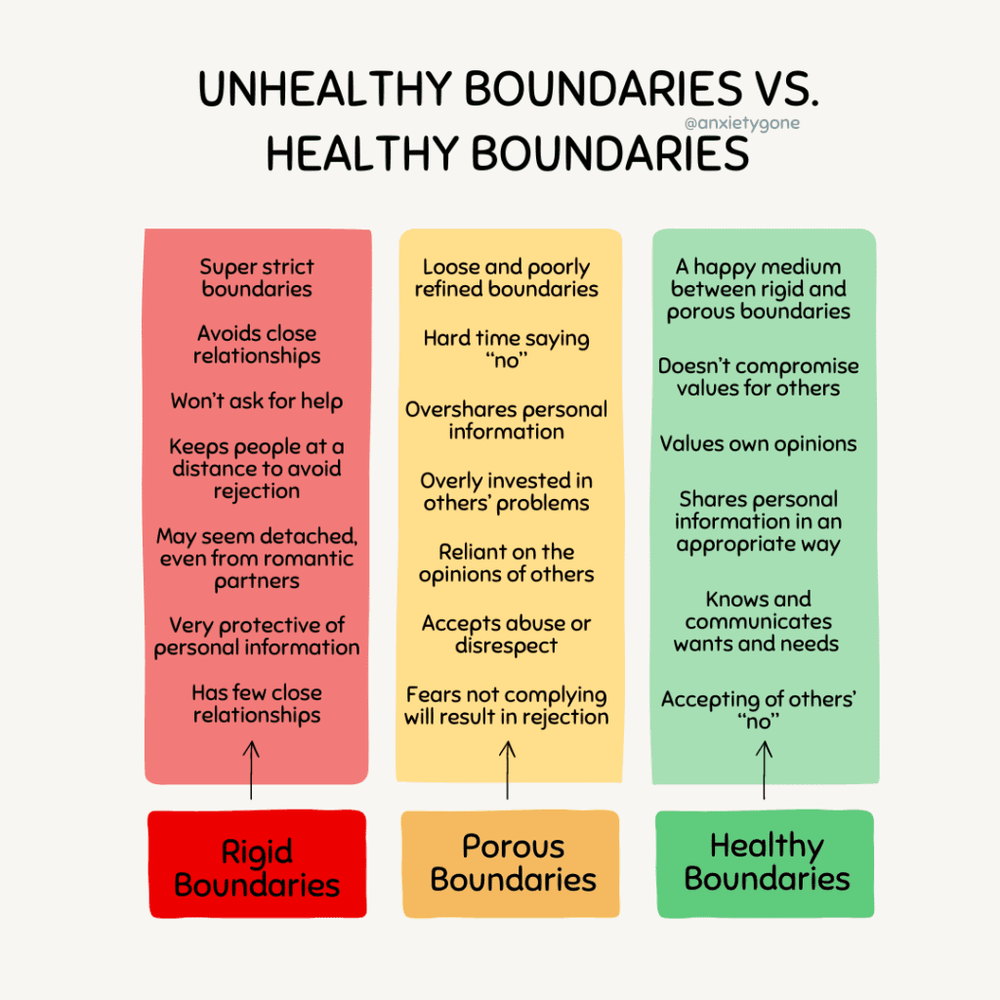
Practicing the polite-but-firm middle is the goal. Many kids default to either silence or a shout, and a worksheet that asks them to rewrite an aggressive line and a passive line into an assertive one builds the exact muscle they need. Pair the page with a quick partner role-play so the words move from paper to voice before the situation shows up for real.
Classroom Implementation
Boundaries worksheets fit several instructional slots without much prep. Drop a short sorting page into morning meeting as the day's SEL focus, then reference it when a real conflict comes up an hour later. School counselors can use the same pages in pull-out groups, where a smaller circle makes it safer for students to share which situations genuinely feel not-OK to them.
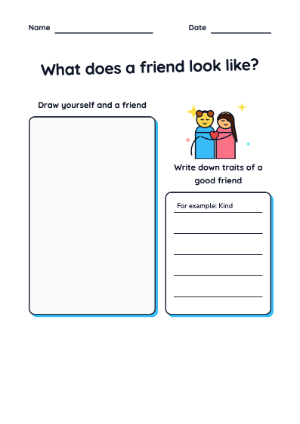
For whole-class SEL blocks, run the worksheet as a launch, then move to discussion and role-play so the page is a starting point rather than the whole lesson. Small-group behavior intervention time is another strong fit: students who struggle with personal space or impulse control get repeated, low-stakes practice with the exact scenarios that trip them up. Pairing boundaries lessons with friendship-skills and social-space activities keeps the theme connected across your K-5 SEL sequence instead of feeling like a one-off.
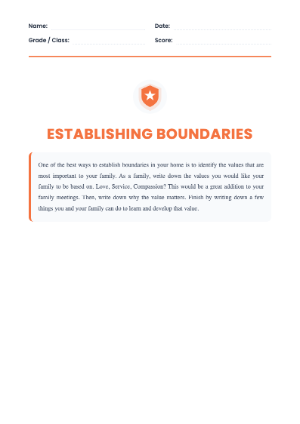
One practical tip: send a finished worksheet home or post the class-generated scripts near the door. When families and specials teachers use the same language, students hear consistent expectations across settings, and the boundary vocabulary sticks faster.
Using Boundaries Worksheets for Formative Assessment
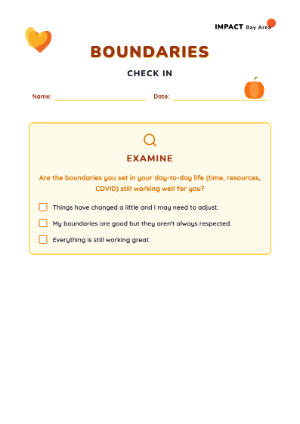
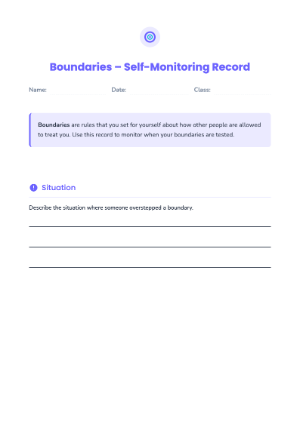
A completed boundaries worksheet is a quiet window into where each student stands socially. Watch for the child who marks every scenario OK, the one who cannot generate a single polite script, or the student whose comfort circle keeps everyone at a distance. These patterns tell you who needs a follow-up conversation or a spot in a counselor group.
Boundaries worksheets double as academic support, not just behavior support. An earlier CASEL meta-analysis of 213 SEL programs covering 270,034 students found an 11-percentile-point gain in academic achievement alongside improved behavior. That connection matters for boundaries specifically: a student who can say "I need space" or "ask me first" spends less mental energy managing conflict and more on the lesson in front of them, which is why interveners often treat these pages as time invested rather than time lost.
Keep student work in a simple SEL folder across the year. Comparing a fall sorting page to a spring one gives you concrete evidence of social-emotional growth to share at conferences or in a support-team meeting.
Frequently Asked Questions
1. What grade levels are boundaries worksheets appropriate for?
They work best in grades K-5, with the format scaled to age. Younger students color comfort circles and sort picture scenarios, while upper-elementary students rewrite scripts and analyze more nuanced situations. The underlying skills stay the same; only the reading load and complexity change.
2. How do boundaries worksheets connect to CASEL SEL competencies?
They target Self-Awareness, when students identify their own comfort levels and feelings, and Relationship Skills, when they practice communicating and respecting limits. Noting these on your plans links a single worksheet to your broader SEL scope and sequence.
3. How can teachers use boundaries worksheets in small-group intervention?
Use them in counselor pull-out groups or behavior intervention time, where a smaller circle lets students share honestly and get repeated practice with the scenarios that challenge them. Follow each page with a short role-play so the words become usable.
4. What classroom scenarios work best for teaching personal space and consent?
Ground scenarios in daily school life: lunch lines, shared supplies, group work, and recess games. These familiar moments give students vocabulary they can use immediately, and they surface the real disagreements worth discussing as a class.
5. How often should boundaries lessons be revisited during the school year?
Short and repeated beats long and rare. Revisit boundaries every few weeks through morning meeting or SEL blocks so the skills get rehearsed across changing situations, which research on sustained SEL practice suggests produces more durable growth.












 Interactive Worksheet Maker
 Quiz Maker
 Word Search Maker
 Crossword Puzzle Maker
 Word Scramble Generator
 Sentence Scramble Generator
 Handwriting Worksheet Generator
 Name Tracing Generator
 Fill In The Blank Generator




 BACK TOSCHOOL