


























Views
Downloads

Printable Beginning Vowels Letter O Worksheet | Grade K
Paste this activity's link or code into your existing LMS (Google Classroom, Canvas, Teams, Schoology, Moodle, etc.).
Students can open and work on the activity right away, with no student login required.
You'll still be able to track student progress and results from your teacher account.
This comprehensive Letter O Beginning Vowels worksheet helps early learners master phonemic awareness through targeted initial sound identification. Students practice isolating the /o/ sound across multiple contexts to build a solid foundation for reading and spelling. By engaging with visual cues and word-building tasks, learners develop the essential ability to recognize vowel-consonant patterns.
At a Glance
- Grade: Kindergarten · Subject: ELA Phonics
- Standard:
RF.K.3.B— Associate long and short vowel sounds with common spellings and graphemes- Skill Focus: Initial vowel sound identification for Letter O
- Format: 3 pages · 10 problems · Answer key included · PDF
- Best For: Individual phonics practice and literacy centers
- Time: 15–20 minutes
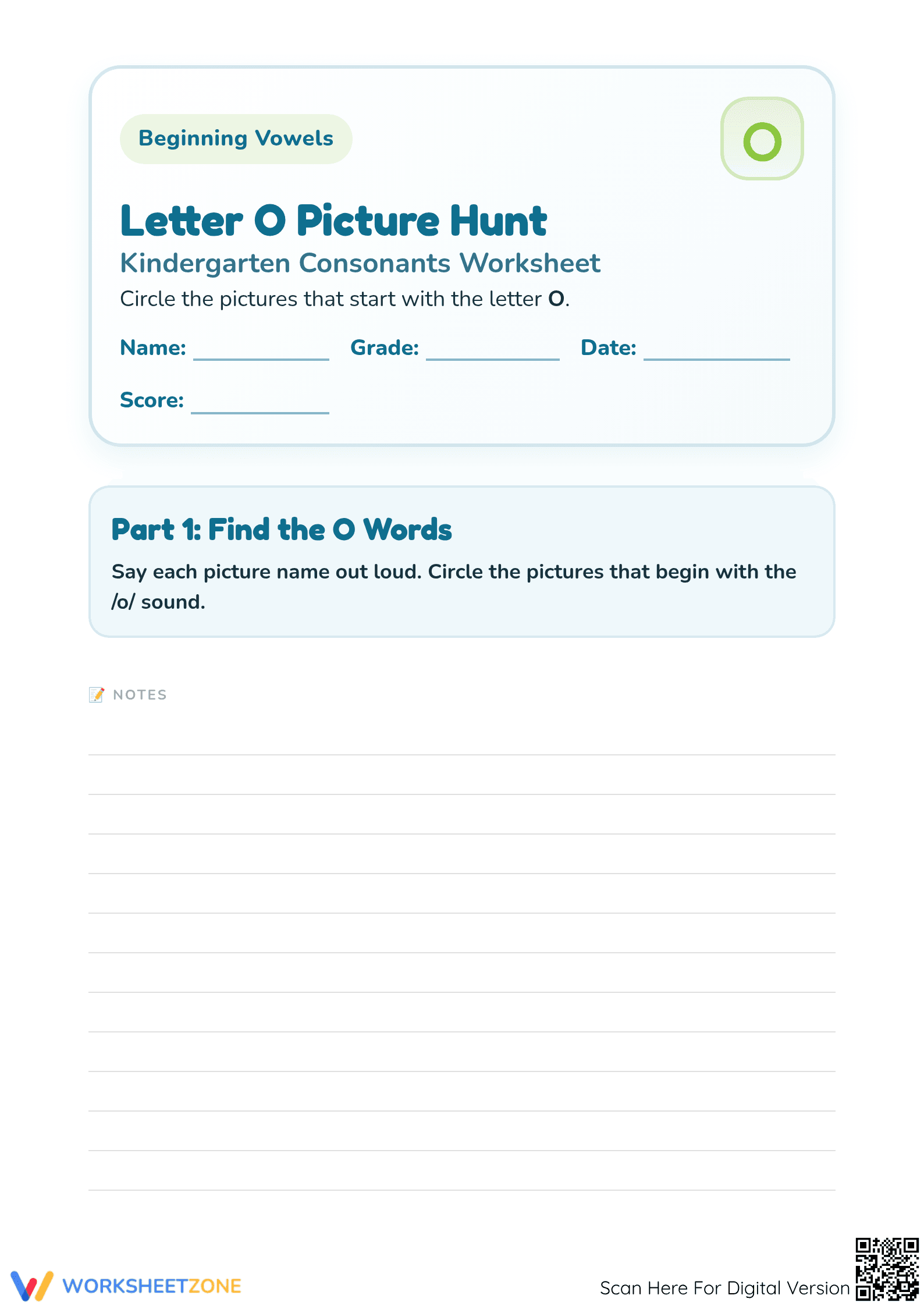
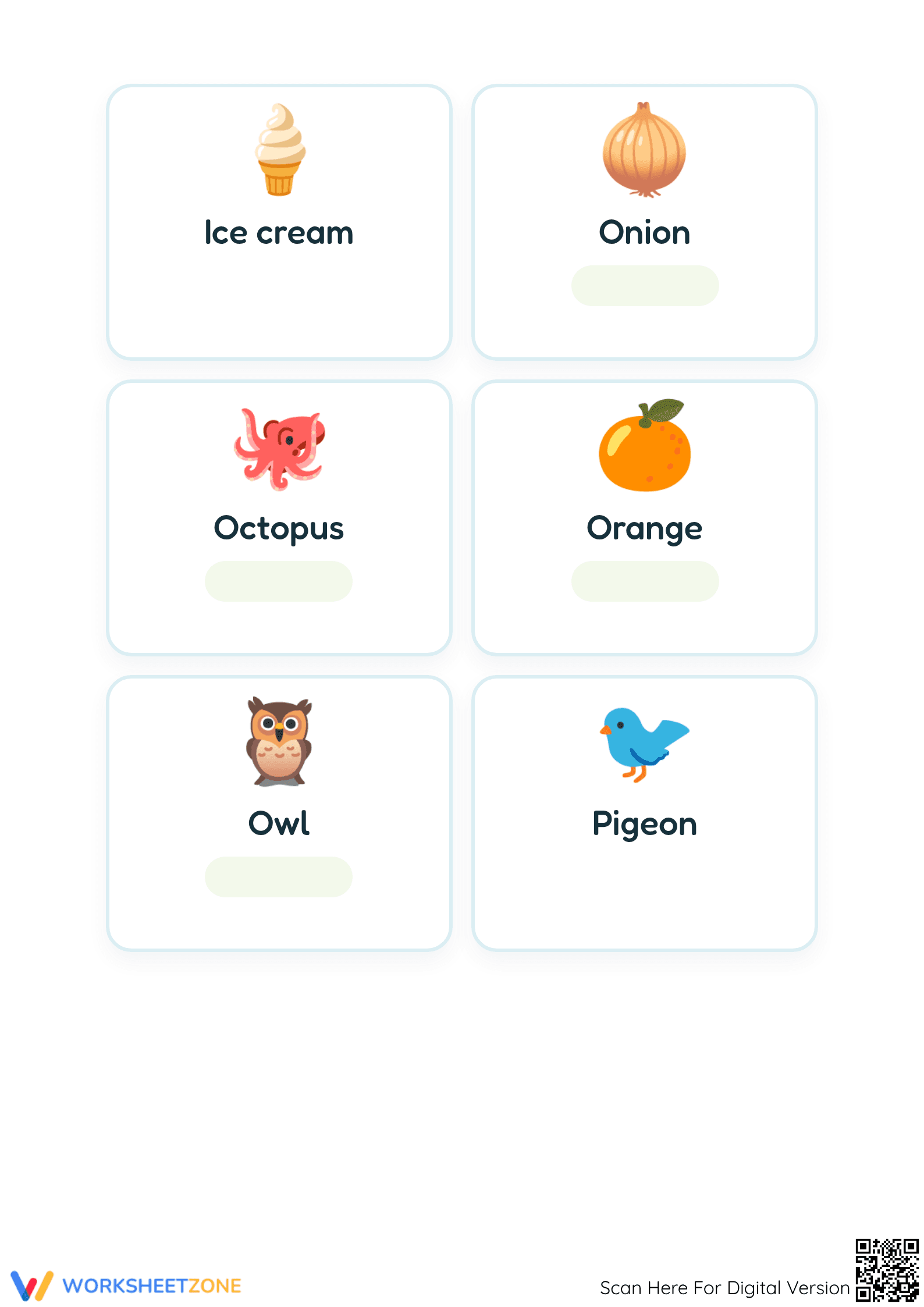
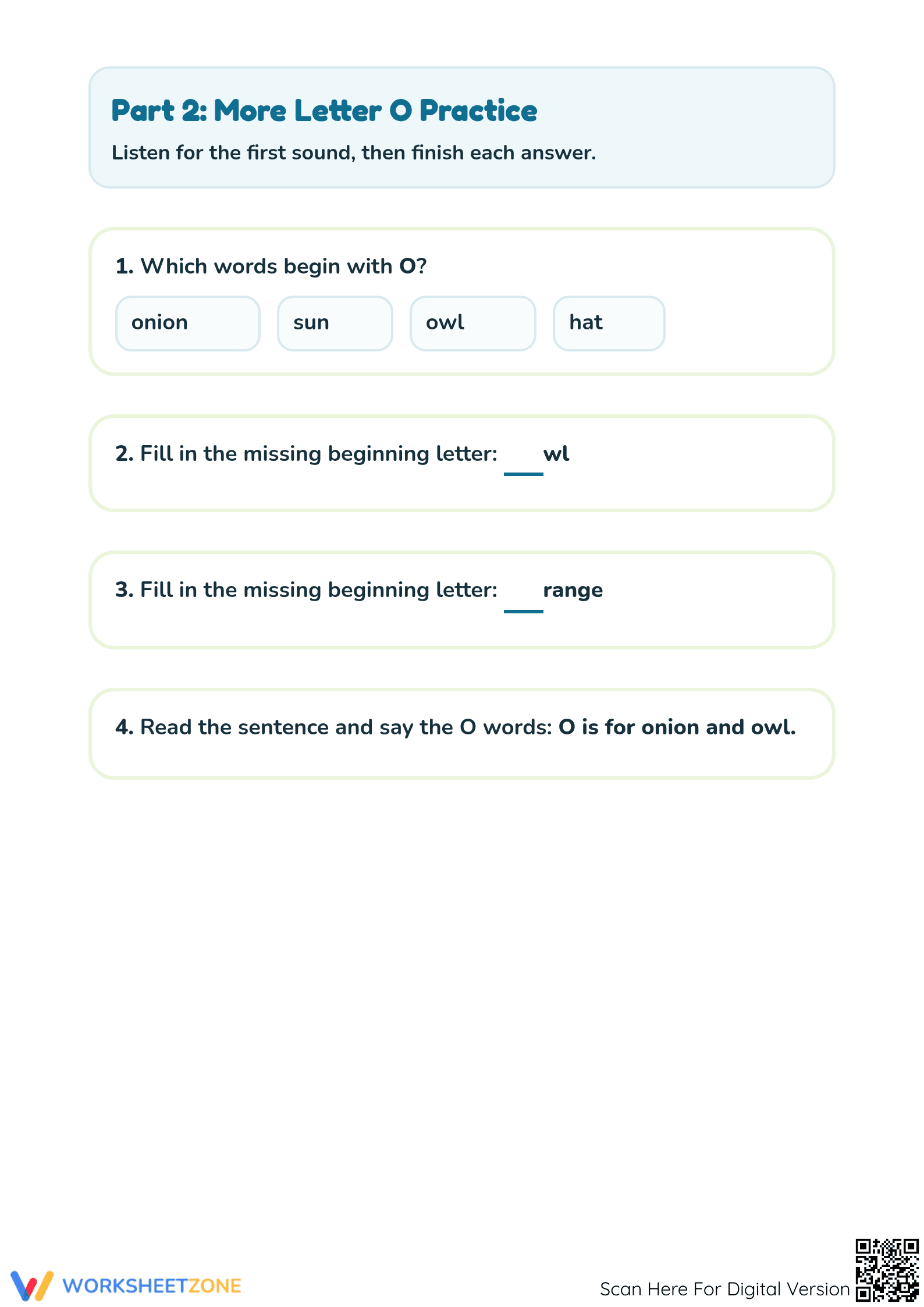
Inside this 3-page printable resource, you will find a structured progression of activities designed to reinforce letter-sound correspondence. The first page provides a dedicated notes area for teacher-guided observations. The second page features a "Picture Hunt" with six high-quality illustrations, such as an octopus and an orange, requiring students to orally identify and circle O-words. The final page offers word-sort tasks and fill-in-the-blank spelling practice to solidify mastery.
The learning sequence follows a clear gradual release model. First, students engage in guided practice by saying picture names aloud to identify the /o/ sound among distractors like "pigeon" or "ice cream." Next, supported practice introduces word-bank sorting where students choose between O-words and non-O-words. Finally, independent practice requires students to write the missing beginning letter in words like "owl" and "orange," ensuring they can apply their phonics knowledge without scaffolding.
Standards Alignment
This worksheet is strictly aligned to the Common Core State Standard `RF.K.3.B`, which requires students to associate the long and short sounds with the common spellings for the five major vowels. It also supports `RF.K.2.D` by having students isolate and pronounce the initial sounds in words. Both standard codes can be copied directly into lesson plans, IEP goals, or district curriculum mapping tools.
How to Use It
Use this resource during the "independent practice" phase of a direct instruction lesson on vowels. Teachers can monitor students as they complete the Picture Hunt to observe which learners struggle to distinguish the /o/ phoneme from other vowel sounds. For a collaborative twist, have students work in pairs to "read" the final sentence aloud, providing a formative assessment opportunity to check for proper pronunciation and fluently reading high-frequency words.
Who It's For
This resource is tailored for Preschool, Kindergarten, and Grade 1 students who are beginning their journey with phonological awareness. It is particularly effective for English Language Learners who need visual support to connect spoken words with their written representations. Pair this worksheet with a Letter O anchor chart or a short reading passage featuring the short "o" sound to create a cohesive learning experience.
Research from the RAND AIRS 2024 report emphasizes that systematic phonics instruction is a critical predictor of long-term literacy success in early childhood education. This worksheet applies those findings by providing repetitive, high-frequency engagement with a single grapheme-phoneme relationship. By focusing on the initial Letter O sound, the activities align with the Science of Reading principles that advocate for explicit, isolated practice of vowel sounds before moving to complex blending. The inclusion of an answer key allows for immediate feedback, which has been shown by Fisher & Frey (2014) to significantly increase the rate of student mastery during independent work phases. As a standards-aligned CCSS.ELA-LITERACY.RF.K.3.B resource, it ensures that students meet grade-level benchmarks for letter-sound correspondence while building the prerequisite skills needed for decoding more complex CVC words and multi-syllabic text structures in later grades.


