


























Views
Downloads
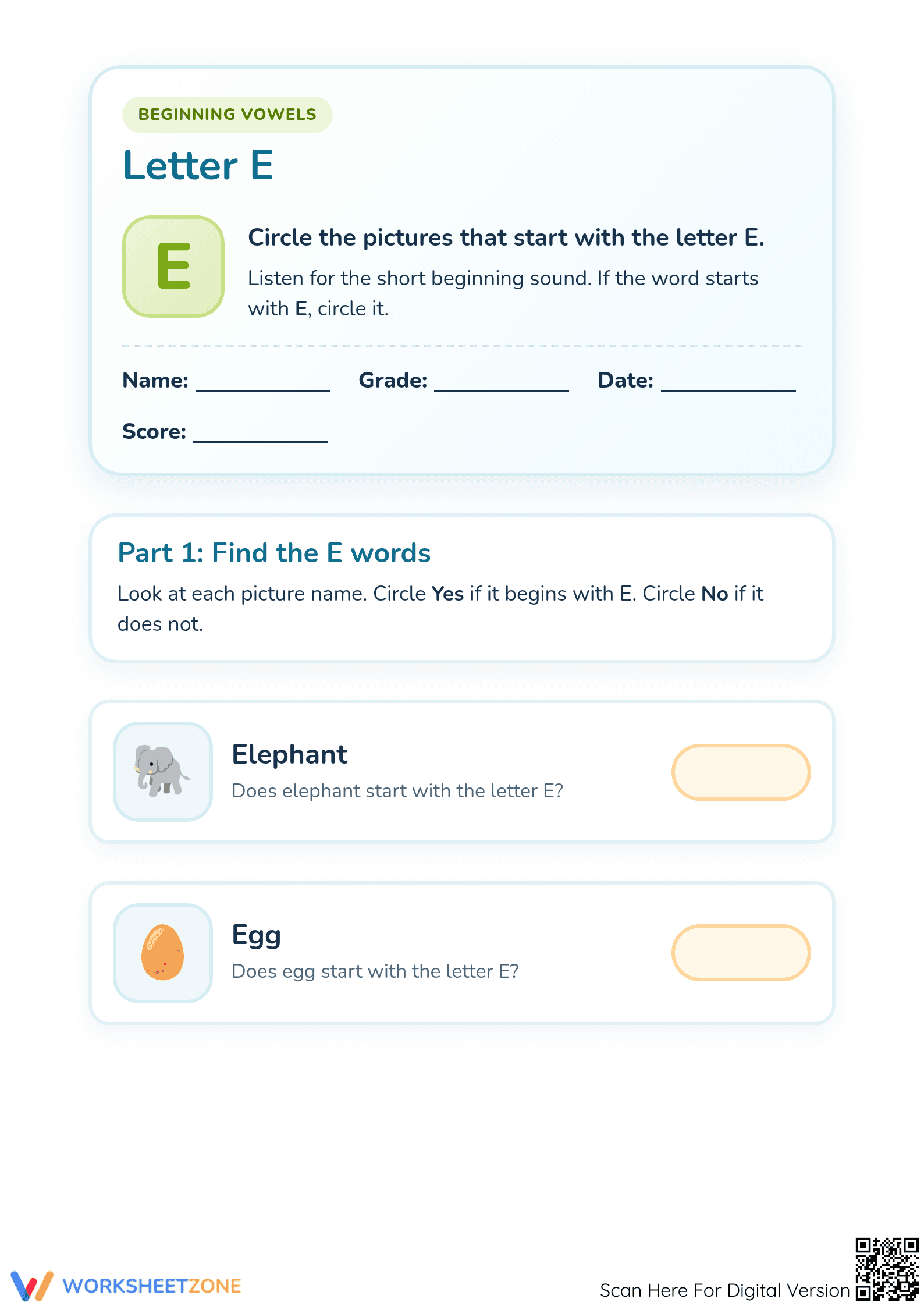
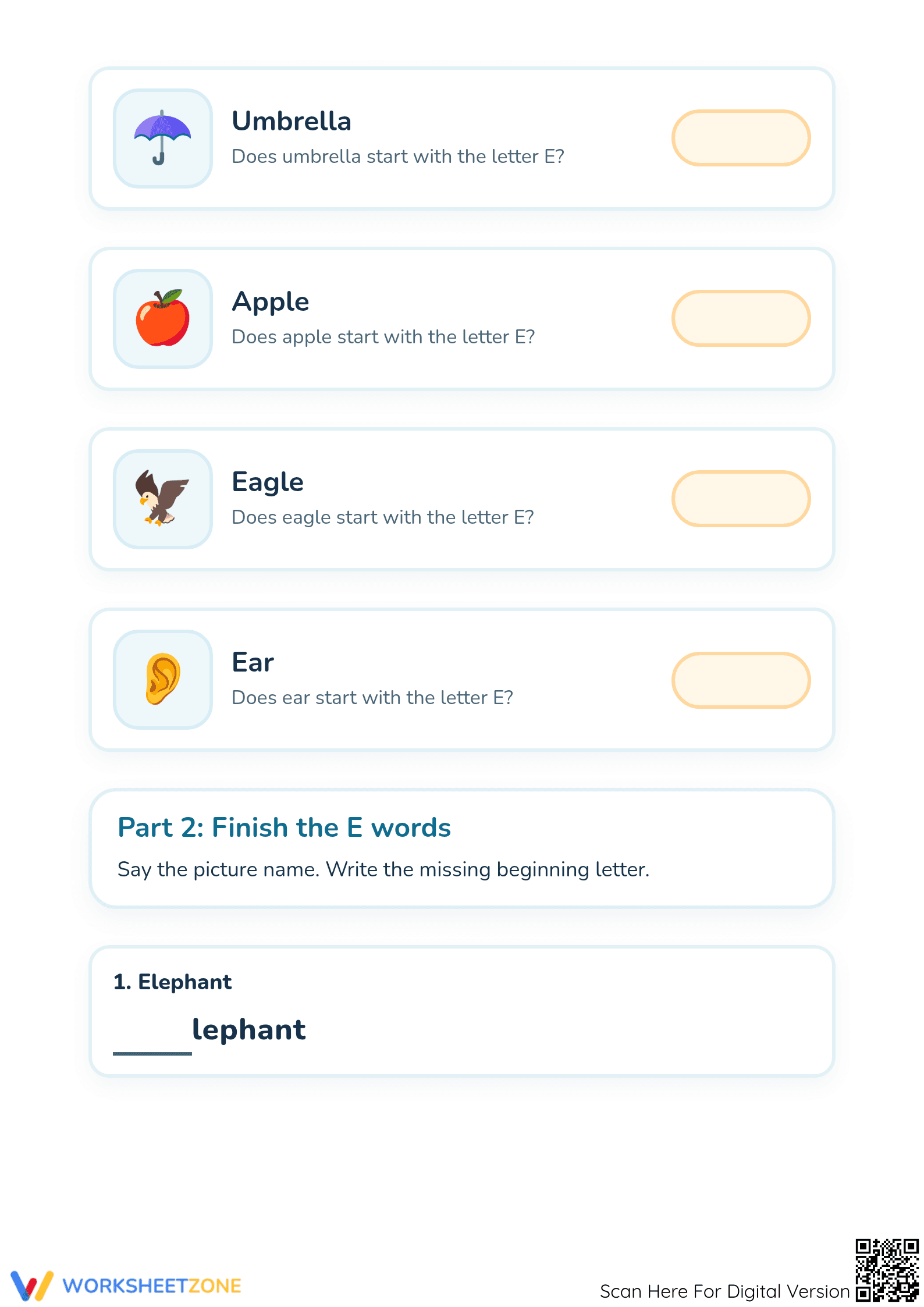

Essential Beginning Vowels Letter E Worksheet K-1 Phonics
Paste this activity's link or code into your existing LMS (Google Classroom, Canvas, Teams, Schoology, Moodle, etc.).
Students can open and work on the activity right away, with no student login required.
You'll still be able to track student progress and results from your teacher account.
This Grade K-1 phonics resource provides a structured way for students to isolate and identify the beginning sound of the letter E. By combining visual recognition with initial sound production, students build the foundational phonemic awareness required for early reading success. This activity ensures learners can distinguish between the 'e' sound and other common vowel starters.
At a Glance
- Grade: Kindergarten · Subject: ELA
- Standard:
RF.K.3.B— Associate long and short vowel sounds with their common letter spellings- Skill Focus: Initial Vowel Identification (Letter E)
- Format: 3 pages · 9 problems · Answer key included · PDF
- Best For: Independent phonics practice and morning work
- Time: 15–20 minutes
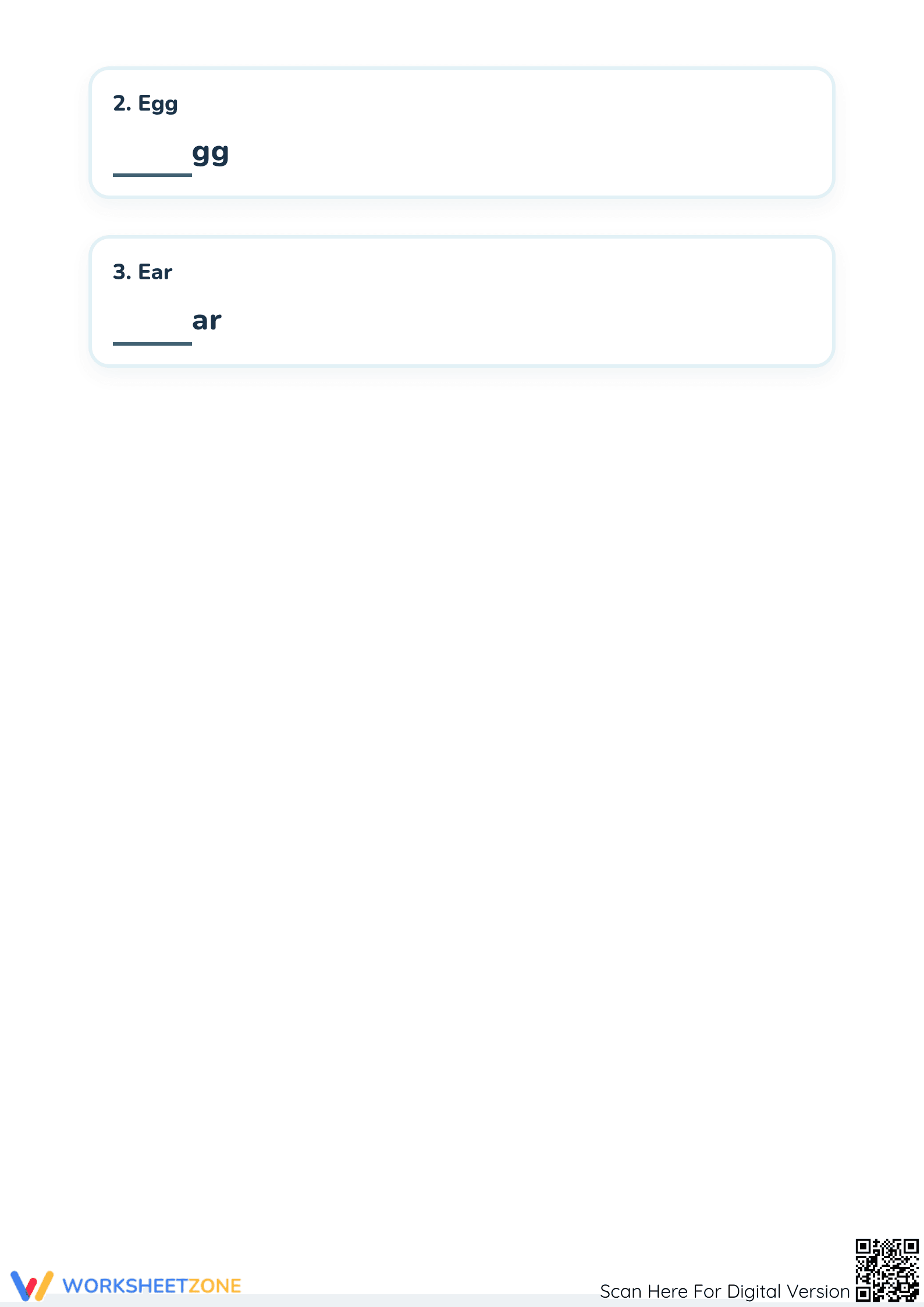
Inside this three-page packet, you will find a clear progression of tasks designed to cement letter-sound correspondence. Part one features six high-quality images where students must circle "Yes" or "No" to indicate if the object begins with the letter E, including distractors like 'apple' and 'umbrella'. Part two transitions to active production, requiring students to fill in the missing initial letter for three core vocabulary words: elephant, egg, and ear. A full answer key is provided to facilitate quick grading or student self-correction.
The zero-prep workflow is designed for busy classrooms. First, print the three-page PDF (approximately 30 seconds). Second, distribute the sheets to your phonics center or small group (under 1 minute). Finally, review the completed work using the included answer key to identify students who may need additional intervention with vowel isolation. The entire teacher preparation process takes less than two minutes, making it an ideal choice for sudden substitute plans or supplemental literacy blocks.
This worksheet is strictly aligned to CCSS.ELA-LITERACY.RF.K.3.B, which requires students to associate the long and short sounds with common spellings for the five major vowels. By providing examples of both short 'e' (egg) and long 'e' (eagle/ear), this resource helps students navigate the complexities of vowel graphemes. This standard code can be copied directly into lesson plans, IEP goals, or district curriculum mapping tools to ensure compliance with state and national requirements.
For best results, use this worksheet during the independent practice portion of a phonics lesson. After introducing the letter E sound through direct instruction, assign the identification tasks to gauge student understanding. A helpful formative assessment tip is to observe whether students say the names of the pictures aloud; vocalizing the word helps bridge the gap between auditory perception and visual identification. Expect most Kindergarten students to complete the packet within 15 to 20 minutes.
Phonemic awareness is a primary predictor of later reading proficiency, particularly the ability to isolate initial sounds in spoken words. According to research from Fisher & Frey (2014) on the gradual release of responsibility, structured practice that moves from recognition (circling) to production (writing) is essential for mastery of the `RF.K.3.B` standard. This worksheet utilizes 9 targeted tasks to reinforce the letter E's unique sounds, ensuring students develop the cognitive mapping required for decoding multi-syllabic words. By isolating the beginning vowel in familiar words like 'egg' and 'elephant,' learners build the phonetic stamina needed for fluent reading. This printable resource serves as a reliable tool for both formative assessment and skill reinforcement, providing the repetition necessary for long-term retention of letter-sound relationships.


