


























Views
Downloads
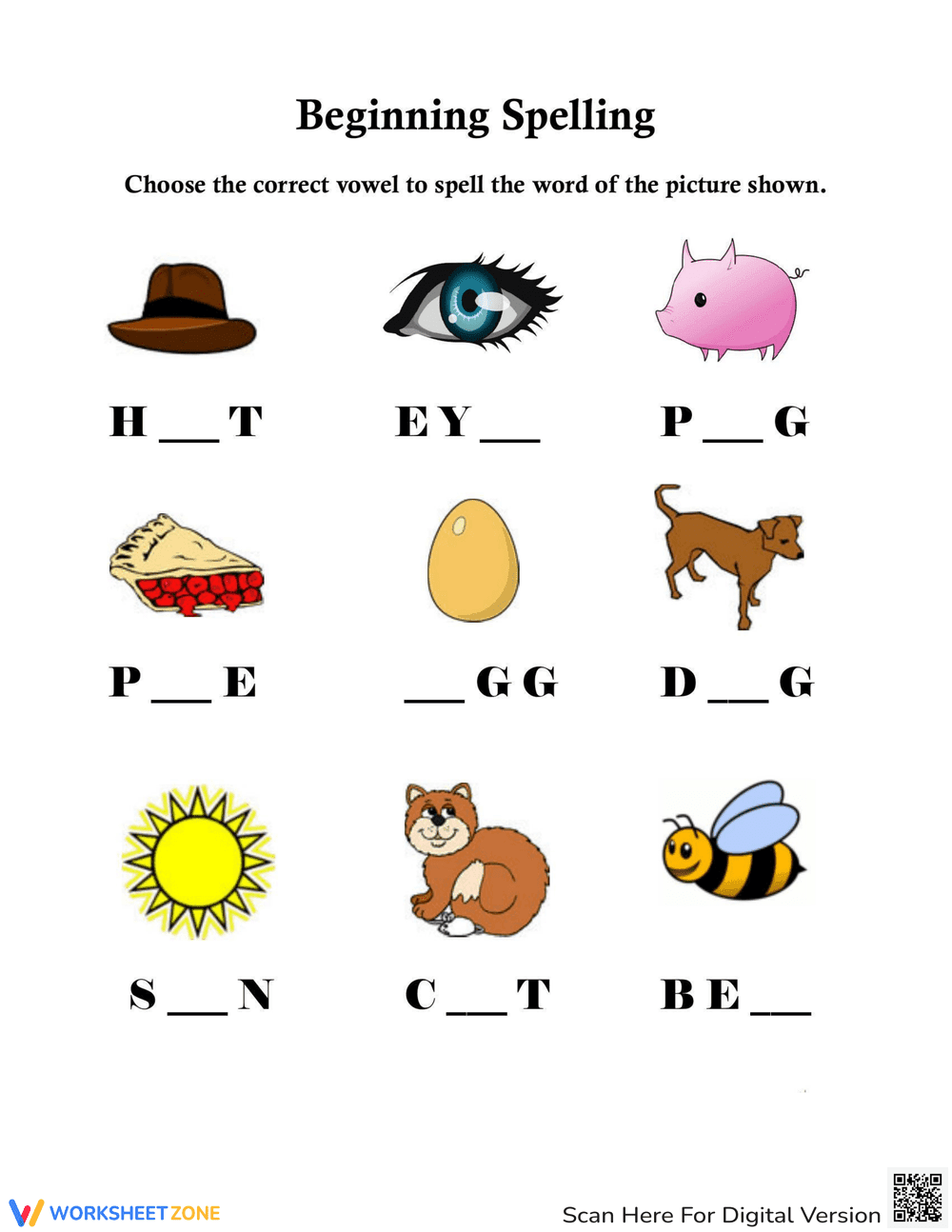

Kindergarten Spelling — Printable No-Prep Worksheet
Paste this activity's link or code into your existing LMS (Google Classroom, Canvas, Teams, Schoology, Moodle, etc.).
Students can open and work on the activity right away, with no student login required.
You'll still be able to track student progress and results from your teacher account.
This Kindergarten spelling worksheet helps early readers master vowel identification by completing simple words using visual cues. Students look at the pictures, identify the missing vowel, and write it to complete the word. This targeted practice builds phonics skills and strengthens the connection between letter sounds and written spelling.
At a Glance
- Grade: Kindergarten · Subject: ELA
- Standard:
CCSS.ELA-LITERACY.RF.K.3.B— Associate long and short sounds with common spellings for the five major vowels- Skill Focus: Vowel spelling and identification
- Format: 1 page · 9 problems · Answer key included · PDF
- Best For: Independent phonics practice and morning work
- Time: 10–15 minutes
The worksheet contains nine distinct spelling exercises featuring clear, colorful illustrations of familiar items like a hat, pig, dog, and sun. Each item has a partially spelled word underneath with a blank space indicating the missing vowel. This structured layout provides a helpful scaffold, allowing young learners to focus specifically on vowel sounds without being overwhelmed by spelling the entire word from scratch.
This resource features a zero-prep workflow designed to save teachers valuable time. First, print the single-page PDF in under one minute. Next, distribute the sheets to students, which takes less than a minute. Finally, review the completed worksheets using the included answer key in under two minutes. This efficient process makes the activity ideal for emergency sub plans, quick warm-ups, or independent center rotations.
This activity aligns directly with CCSS.ELA-LITERACY.RF.K.3.B, which requires students to associate long and short sounds with common spellings for the five major vowels. It also supports foundational reading skills by encouraging phoneme isolation and grapheme mapping. Both standard codes can be copied directly into lesson plans, IEP goals, or district curriculum mapping tools.
Use this worksheet during small-group instruction to reinforce vowel sounds after a direct lesson. As students work, observe whether they sound out the word aloud or rely solely on the picture cues to guess the missing letter. This formative assessment helps identify students who need extra support. The activity takes approximately 10 to 15 minutes to complete.
This resource is designed for kindergarten students learning basic phonics, but it also serves as an excellent intervention tool for first-grade students who need remedial spelling practice. Pair this worksheet with a short vowel anchor chart or a shared reading passage to reinforce the target sounds in a broader literacy context.
Phonics instruction in early childhood education is critical for developing reading fluency and spelling accuracy. According to the research findings in the ScienceDirect TpT Analysis, structured worksheets that isolate specific phonics elements, such as missing vowels in simple words, provide targeted practice that reinforces letter-sound correspondences. By focusing on one vowel sound per word, students build orthographic mapping skills, which are essential for automatic word recognition. This worksheet aligns with the standard CCSS.ELA-LITERACY.RF.K.3.B by helping students connect vocalized sounds to their corresponding written letters. Using visual prompts alongside text helps bridge the gap between concrete objects and abstract symbols, supporting cognitive development in young learners. Teachers can confidently integrate this resource into their daily literacy routines, knowing it aligns with evidence-based practices that support early decoding and encoding skills.


