


























Views
Downloads
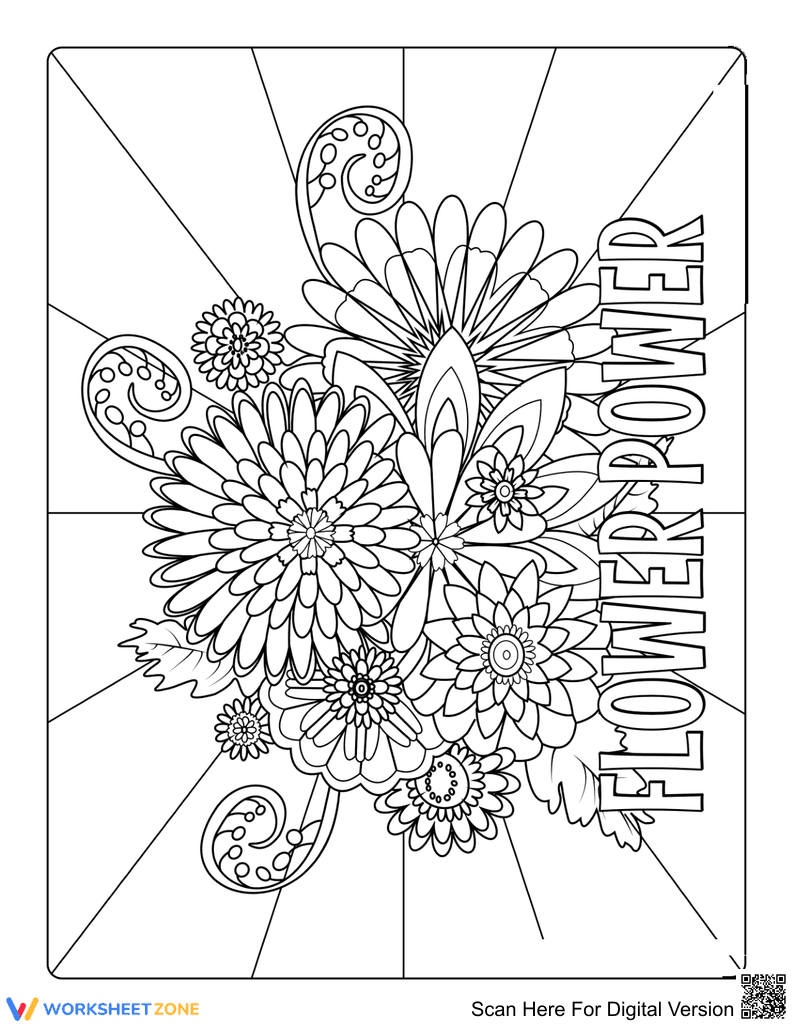

Printable Flower Coloring Page | Grade K Art
Paste this activity's link or code into your existing LMS (Google Classroom, Canvas, Teams, Schoology, Moodle, etc.).
Students can open and work on the activity right away, with no student login required.
You'll still be able to track student progress and results from your teacher account.
This printable flower coloring page provides students with an engaging creative outlet while developing essential fine motor control. By carefully selecting colors and staying within the intricate lines of the floral design, young learners strengthen their pencil grip and hand-eye coordination in a relaxing, focused environment.
At a Glance
- Grade: K · Subject: English
- Standard:
CCSS.ELA-LITERACY.W.K.2— Use drawing to compose and express ideas- Skill Focus: Fine Motor Skills
- Format: 1 page · 1 task · No answer key · PDF
- Best For: Morning work or early finishers
- Time: 15–20 minutes
Inside this single-page PDF, educators will find a detailed floral illustration ready for student creativity. The design features daisies, layered petals, and decorative vines offering varying coloring difficulty. No answer key is required, as this open-ended art activity encourages individual expression. The clean layout ensures students remain focused.
This resource is designed for immediate classroom implementation.
- Print (30 seconds): Download the PDF and print. The line art uses minimal ink.
- Distribute (1 minute): Hand out pages with crayons or markers. No complex instructions needed.
- Review (0 minutes): Open-ended creative tasks require no formal grading.
Total teacher preparation time is under two minutes, making this an excellent option for sub plans.
This coloring activity supports foundational skills aligned with CCSS.ELA-LITERACY.W.K.2, which encourages students to use a combination of drawing, dictating, and writing to compose informative or explanatory texts. While primarily an art and fine motor task, the physical act of coloring builds the hand strength and dexterity necessary for early handwriting mastery. Both standard codes can be copied directly into lesson plans, IEP goals, or district curriculum mapping tools.
Teachers can integrate this coloring page into their daily routines in multiple ways. It serves as an excellent morning work activity, allowing students to settle into the classroom calmly while practicing their pencil grip before formal instruction begins. Alternatively, it works perfectly as an early finisher station during literacy blocks. When observing students, teachers can use this time as a formative assessment of fine motor development, noting which children struggle with spatial boundaries or maintaining a consistent grip. Expected completion time ranges from 15 to 20 minutes.
This resource is primarily designed for Kindergarten and early elementary students who are actively developing their fine motor control and spatial awareness. It naturally accommodates diverse learners, as students can approach the intricate floral patterns at their own developmental level. For a complete cross-curricular experience, pair this coloring page with a read-aloud book about spring, plant life cycles, or nature, allowing students to connect their artistic expression to scientific concepts.
Developing fine motor skills through targeted activities like coloring is a critical precursor to handwriting and academic success. Aligned with CCSS.ELA-LITERACY.W.K.2, which emphasizes using drawing to compose and express ideas, this resource provides essential practice in hand-eye coordination and spatial boundary recognition. According to Fisher & Frey (2014), integrating low-stakes, high-engagement tasks into the daily classroom routine helps build student stamina and focus, particularly in early childhood settings. By engaging with complex visual patterns, young learners strengthen the small muscles in their hands required for sustained writing tasks later in their educational journey. This simple yet effective tool bridges the gap between creative expression and physical development, ensuring students build the foundational dexterity needed for future literacy tasks while maintaining a calm, focused learning environment.


