


























Views
Downloads
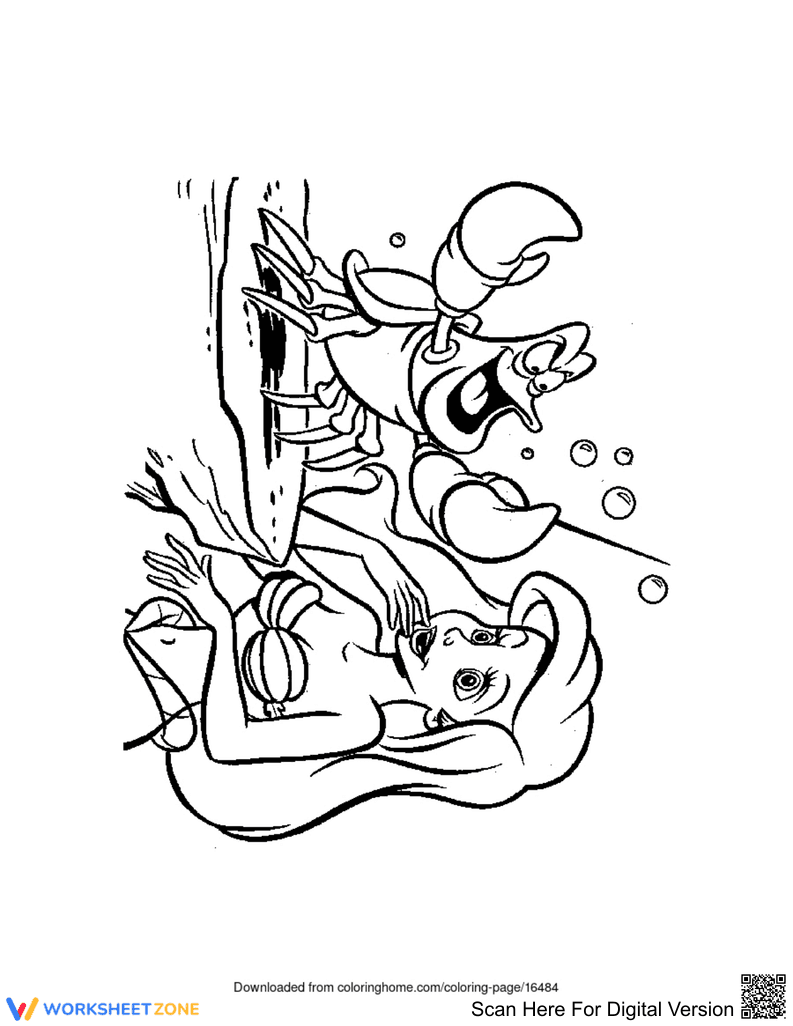

Ariel and Sebastian Coloring Page | Essential Printable
Paste this activity's link or code into your existing LMS (Google Classroom, Canvas, Teams, Schoology, Moodle, etc.).
Students can open and work on the activity right away, with no student login required.
You'll still be able to track student progress and results from your teacher account.
This Ariel and Sebastian coloring page provides elementary students with a creative outlet to practice fine motor control and visual storytelling. By engaging with familiar characters, children develop the hand-eye coordination necessary for writing while exploring artistic expression. It serves as a perfect supplemental activity for early finishers or as a thematic connection to ocean studies.
At a Glance
- Grade: K-5 · Subject: Arts & ELA
- Standard:
CCSS.ELA-LITERACY.SL.1.5— Add drawings or visual displays to clarify ideas, thoughts, and feelings- Skill Focus: Fine motor skills & creative expression
- Format: 1 page · 1 task · No answer key needed · PDF
- Best For: Early finishers and creative brain breaks
- Time: 15–30 minutes
Inside this resource, you will find a high-quality, single-page PDF featuring a detailed line-art illustration of Ariel and Sebastian from The Little Mermaid. The composition includes various textures—from Ariel's flowing hair to Sebastian's hard shell and underwater bubbles—offering different levels of complexity for coloring. There are no complex instructions, making it accessible for independent work.
The zero-prep workflow for this worksheet is designed for maximum efficiency in a busy classroom. First, print the single-page PDF (30 seconds). Second, distribute the sheets to students along with crayons, colored pencils, or markers (1 minute). Third, allow students to work independently while you conduct small-group interventions or manage administrative tasks. Total teacher preparation time is under 2 minutes, making it an ideal sub-plan filler.
This activity aligns with CCSS.ELA-LITERACY.SL.1.5, which encourages students to use visual displays to enhance their communication. While primarily an artistic task, it supports the foundational physical skills required for the Writing strands across primary grades. This standard code can be copied directly into lesson plans, IEP goals, or district curriculum mapping tools to justify the inclusion of creative arts in the literacy block.
Use this worksheet during a transition time between intensive core subjects like Math and ELA to help students reset their focus. Alternatively, use it as a formative assessment tool for fine motor development; observe how students grip their coloring utensils and their ability to stay within boundaries. Expected completion time ranges from 15 minutes for a quick sketch to 30 minutes for detailed work.
This resource is designed for students in Kindergarten through Grade 5, with particular utility for Occupational Therapy students working on grip strength. It pairs naturally with a reading of Hans Christian Andersen’s original fairy tale or a viewing of character-driven animated segments to compare and contrast different media versions of the story. It is a versatile tool for any elementary classroom.
Research by Fisher & Frey (2014) emphasizes the importance of visual representation in the gradual release of responsibility model, noting that artistic engagement can bridge the gap between conceptual understanding and formal expression. This Ariel and Sebastian coloring page supports CCSS.ELA-LITERACY.SL.1.5 by providing a structured canvas for students to practice the fine motor skills essential for later writing proficiency. According to the Fisher & Frey framework, integrating visual tasks into the school day reduces cognitive load and allows for productive struggle in a low-stakes environment. By focusing on character-based art, educators can leverage high student interest to maintain engagement during transition periods. This 1-page printable serves as a reliable tool for developing the hand-eye coordination and spatial awareness required by national standards, ensuring that creative time remains pedagogically sound and aligned with broader literacy objectives across the primary grade levels.


