




























Views
Plays

Argument Writing Quiz | Grade 6-8 Essential

Paste this activity's link or code into your existing LMS (Google Classroom, Canvas, Teams, Schoology, Moodle, etc.).
Students can open and work on the activity right away, with no student login required.
You'll still be able to track student progress and results from your teacher account.
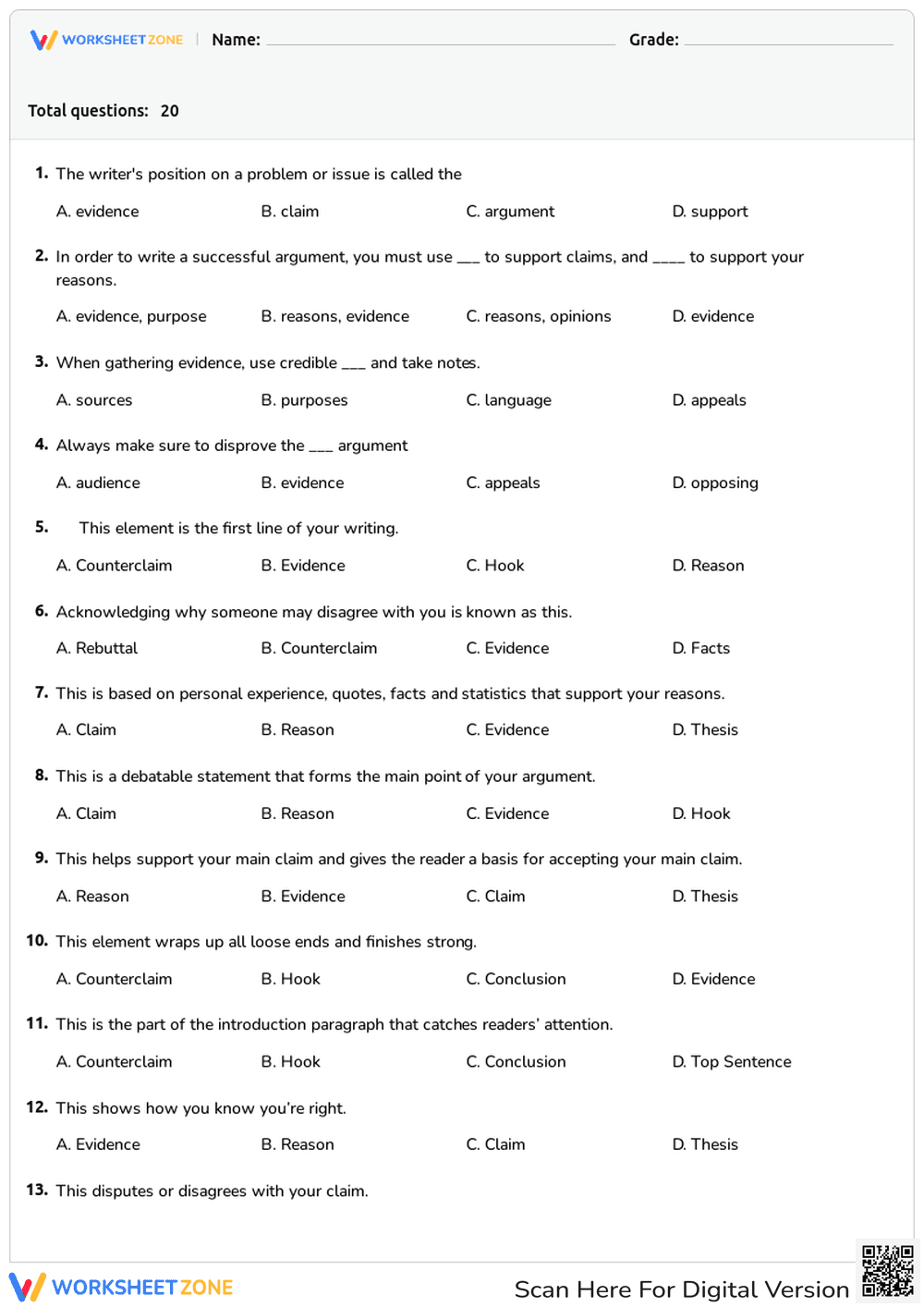
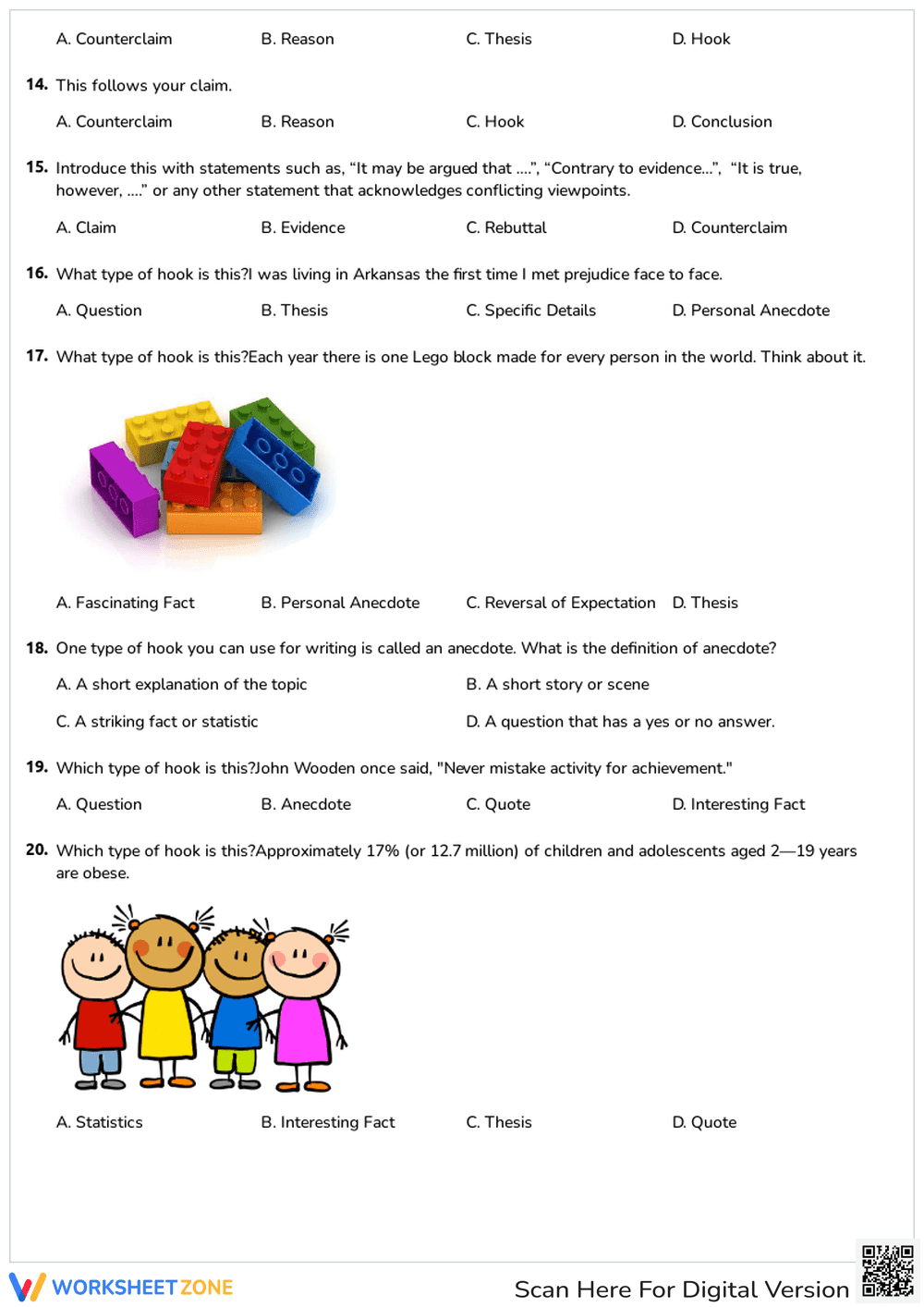
This Grade 6-8 argument writing worksheet provides a comprehensive assessment of essential persuasive terminology. Students demonstrate mastery by identifying claims, evidence, counterclaims, and various hook strategies. By isolating these structural components, learners build the foundational vocabulary necessary to construct high-quality argumentative essays and analyze complex nonfiction texts effectively.
At a Glance
- Grade: 6-8 · Subject: ELA Writing
- Standard:
CCSS.ELA-LITERACY.W.6.1— Write arguments to support claims with clear reasons and relevant evidence- Skill Focus: Argumentative Structure & Terminology
- Format: 2 pages · 20 problems · Answer key included · PDF
- Best For: Formative assessment or unit review
- Time: 15–20 minutes
What's Inside: This two-page PDF features 20 carefully crafted multiple-choice questions designed to test conceptual understanding. The first half focuses on defining core elements like the claim, reason, and evidence, while the second half challenges students to categorize specific examples of introductory hooks, including personal anecdotes, fascinating facts, and direct quotes. The layout is clean and distraction-free, ensuring students focus entirely on the content.
Zero-Prep Workflow
- Print: Select the "Fit to Page" setting and print the 2-page document in less than 30 seconds.
- Distribute: Hand out the sheets as a bell-ringer or exit ticket; the clear instructions require zero teacher explanation.
- Review: Use the included answer key to grade all 20 questions in under 1 minute per student.
Total teacher preparation time is less than 2 minutes, making this an ideal resource for sub plans or busy grading periods.
Standards Alignment: The primary focus is CCSS.ELA-LITERACY.W.6.1, which requires students to write arguments to support claims with clear reasons and relevant evidence. This worksheet specifically targets the prerequisite knowledge of identifying these components before the drafting phase. Both standard codes can be copied directly into lesson plans, IEP goals, or district curriculum mapping tools.
How to Use It: Assign this worksheet as a pre-assessment before starting a persuasive writing unit to gauge baseline vocabulary knowledge. Alternatively, use it as a summative quiz after teaching the parts of an essay. During the activity, observe if students struggle to distinguish between a reason and evidence, as this indicates a need for targeted small-group intervention. Completion typically takes 15 to 20 minutes.
Who It's For: This resource is optimized for middle school students in Grades 6, 7, and 8 who are developing their nonfiction writing skills. It is particularly helpful for English Language Learners who need explicit practice with academic vocabulary. Pair this quiz with a mentor text or an anchor chart detailing the PEEL paragraph structure.
According to research by Fisher & Frey (2014) on the gradual release of responsibility, students must possess a firm grasp of domain-specific vocabulary before they can successfully synthesize those concepts into original writing. This worksheet addresses that need by isolating 20 critical terms related to CCSS.ELA-LITERACY.W.6.1, such as claims, counterclaims, and evidence. By providing structured multiple-choice practice, the resource allows educators to identify specific gaps in student understanding regarding argumentative logic. Data from the NAEP suggests that middle schoolers often struggle with the structural requirements of persuasive prose; therefore, explicit assessment of these components is vital for long-term writing proficiency. This tool serves as a reliable diagnostic to ensure students are prepared for the cognitive demands of drafting full-length argumentative essays in secondary education settings.


