




























Views
Downloads
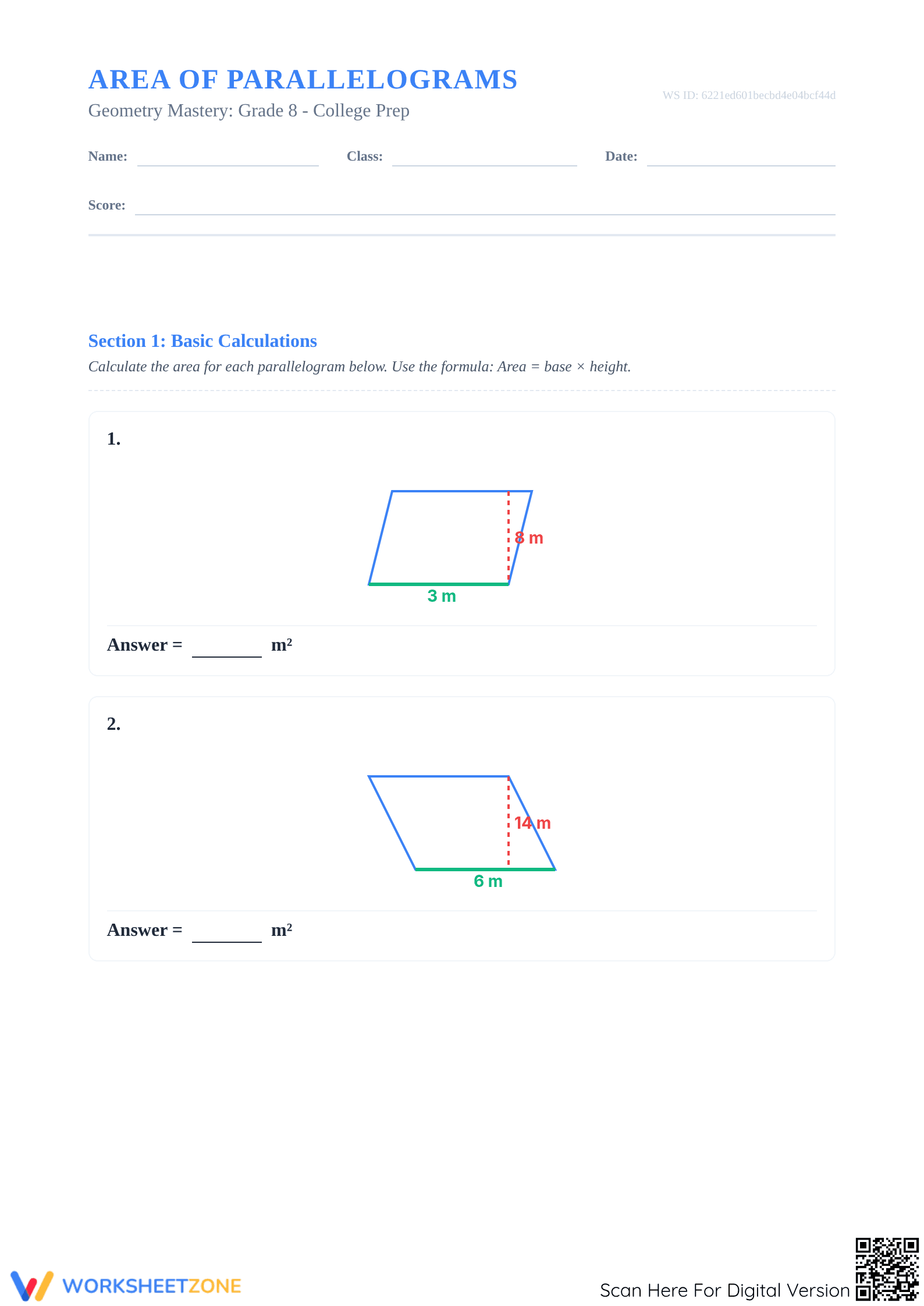
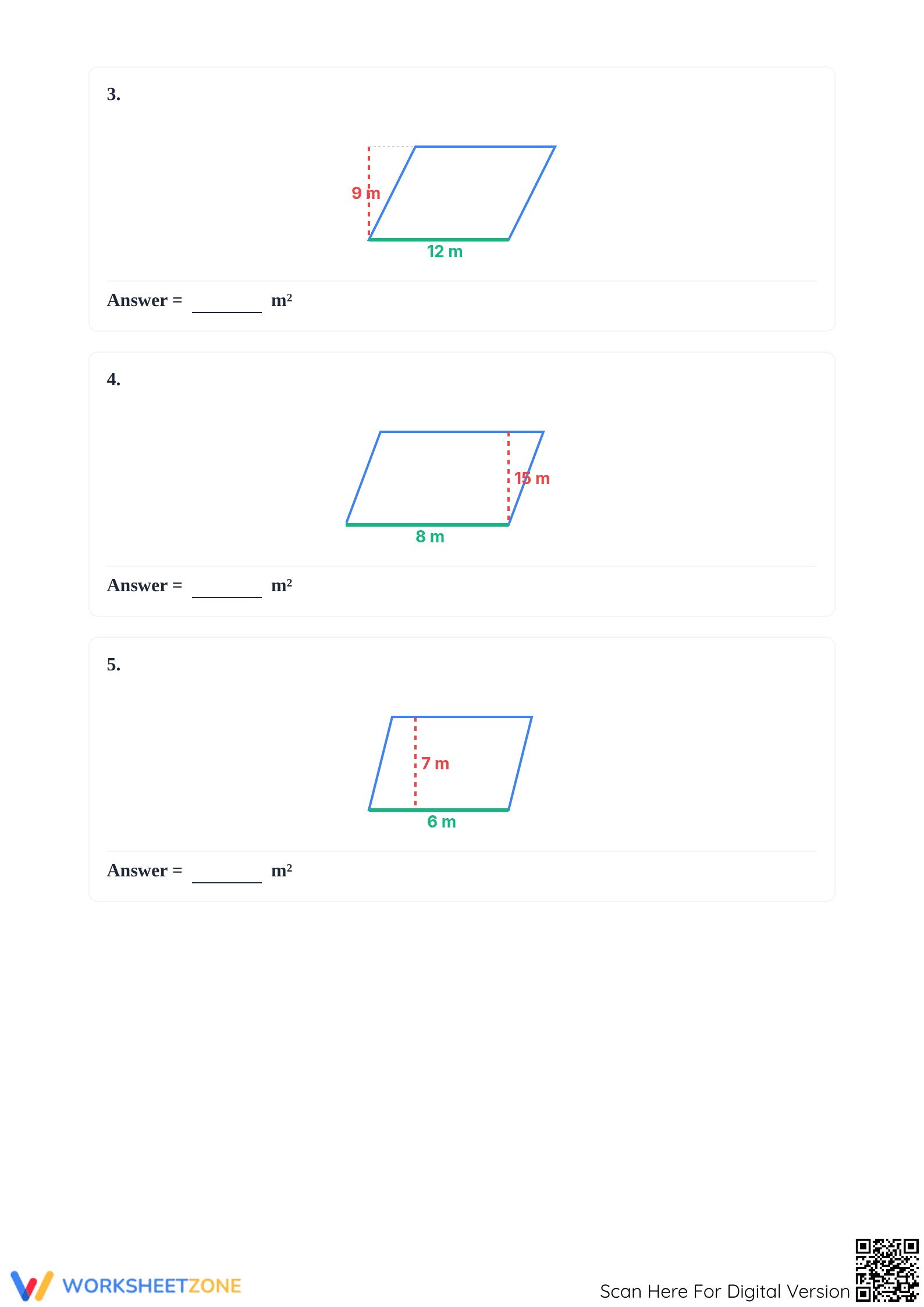
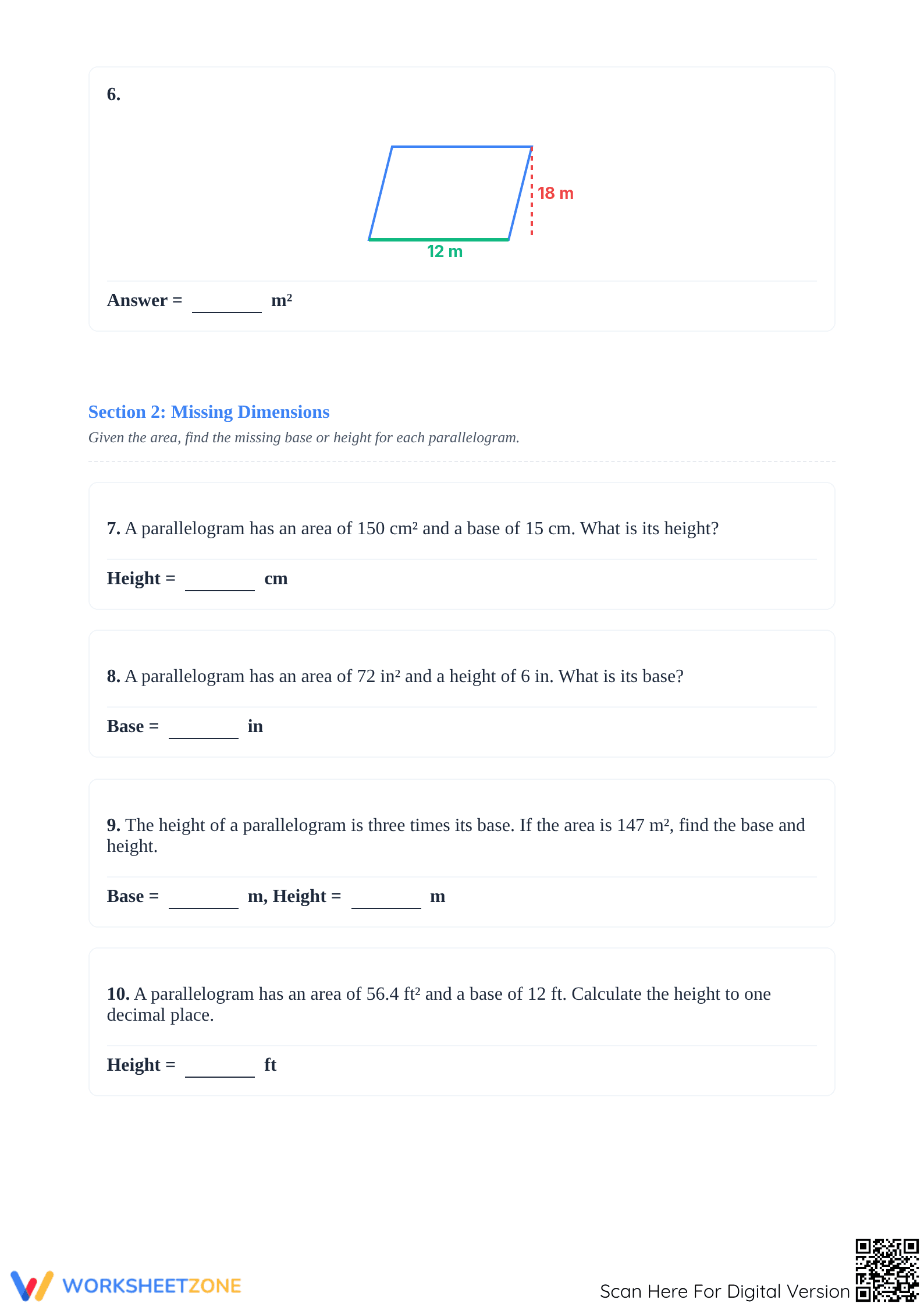
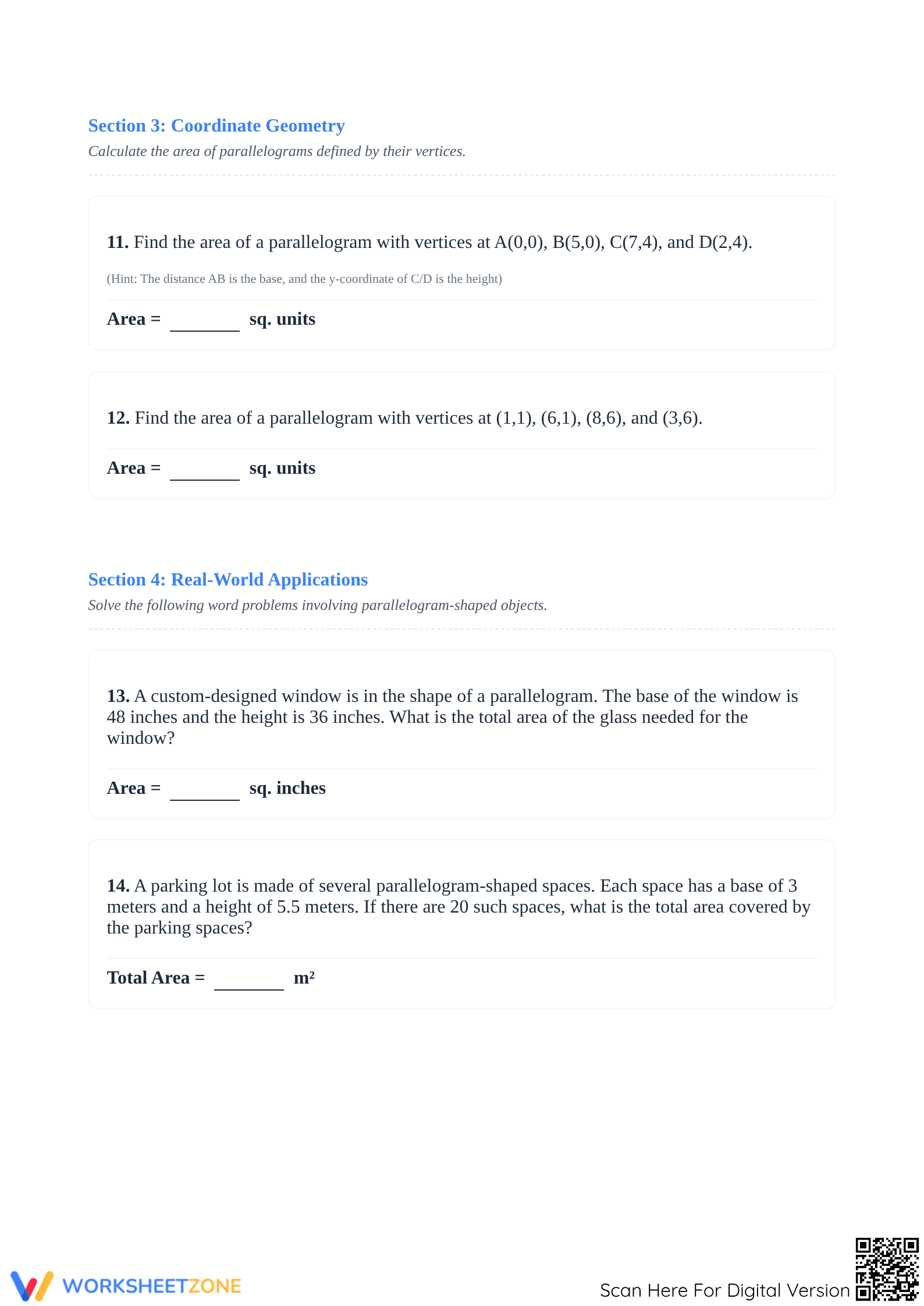

Grade 8+ Area of Parallelograms — Printable Worksheet

Paste this activity's link or code into your existing LMS (Google Classroom, Canvas, Teams, Schoology, Moodle, etc.).
Students can open and work on the activity right away, with no student login required.
You'll still be able to track student progress and results from your teacher account.
This comprehensive geometry packet provides rigorous practice for calculating the area of parallelograms, helping students transition from basic formula application to complex problem-solving. By engaging with 19 structured tasks, learners develop a deep understanding of geometric relationships, coordinate systems, and real-world applications. This resource is designed to ensure student mastery across multiple grade levels from middle school through college prep.
At a Glance
- Grade: 8-College · Subject: Math
- Standard:
6.G.A.1— Find the area of parallelograms by composing or decomposing into other shapes- Skill Focus: Parallelogram Area Formula Mastery
- Format: 5 pages · 19 problems · Answer key included · PDF
- Best For: Geometry unit review and mastery assessment
- Time: 45–60 minutes
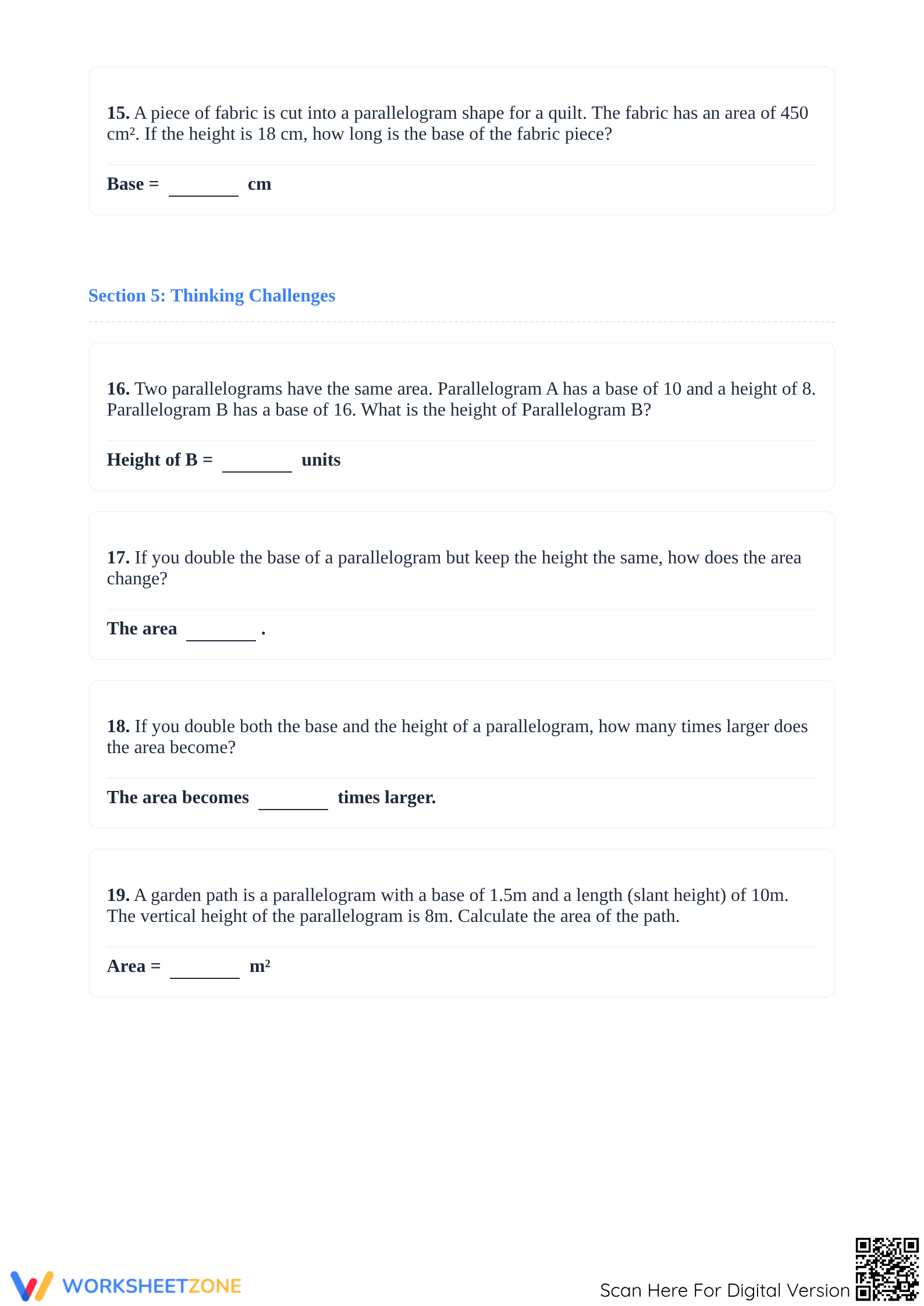
The five-page packet is divided into five logical sections: Basic Calculations, Missing Dimensions, Coordinate Geometry, Real-World Applications, and Thinking Challenges. It includes 19 unique problems that progress in difficulty, ensuring a thorough exploration of the topic. The layout provides ample workspace for student calculations and clear diagrams for every geometric figure. A full answer key is provided to facilitate quick grading and immediate student feedback.
The zero-prep workflow is designed for immediate classroom implementation with a total teacher prep time of under 2 minutes, making it an excellent option for sub plans:
- Print (30 seconds): Simply select the five pages and print the required number of copies for your entire class without any formatting adjustments.
- Distribute (1 minute): Hand out the comprehensive packet to students as they enter the room, providing them with a clear roadmap for the period.
- Review (5 minutes): Utilize the included answer key for rapid grading or a whole-class review session to address common misconceptions.
This resource is primarily aligned with standard 6.G.A.1, which requires students to find the area of parallelograms by applying appropriate formulas. Additionally, the coordinate geometry section supports higher-level standards involving distance on the coordinate plane. Both standard codes can be copied directly into lesson plans, IEP goals, or district curriculum mapping tools.
Use this packet as a summative assessment at the end of a geometry unit or as a structured review for standardized testing. For formative assessment, observe students during the Thinking Challenges section to identify those who understand the proportional relationship between base, height, and area. Most students will complete the full packet within 45 to 60 minutes, making it an ideal resource for a single block period.
This worksheet is ideal for students in Grade 8 through College Prep who need to solidify their understanding of area. It serves as an excellent resource for general education classrooms, tutoring sessions, and homeschool environments. The varied task types ensure engagement for students at different levels of mathematical maturity and readiness.
This instructional resource is meticulously designed to align with the 6.G.A.1 standard, focusing on the essential geometric skill of determining the area of parallelograms by applying algebraic formulas. By transitioning from basic numerical calculations to complex coordinate geometry and real-world word problems, the worksheet provides the scaffolding necessary for student mastery. According to the ScienceDirect TpT Analysis, structured geometry practice that incorporates multiple representation types—such as the coordinate planes and scaling challenges featured here—significantly improves long-term retention of spatial reasoning concepts. Students are required to not only calculate area but also isolate variables to find missing dimensions, a critical bridge between elementary measurement and high school algebra. This multi-layered approach ensures that learners develop a conceptual understanding of how base and height relate to total surface area. The inclusion of thinking challenges further extends the learning experience, making this a robust tool for diverse secondary classrooms.


