


























Views
Downloads
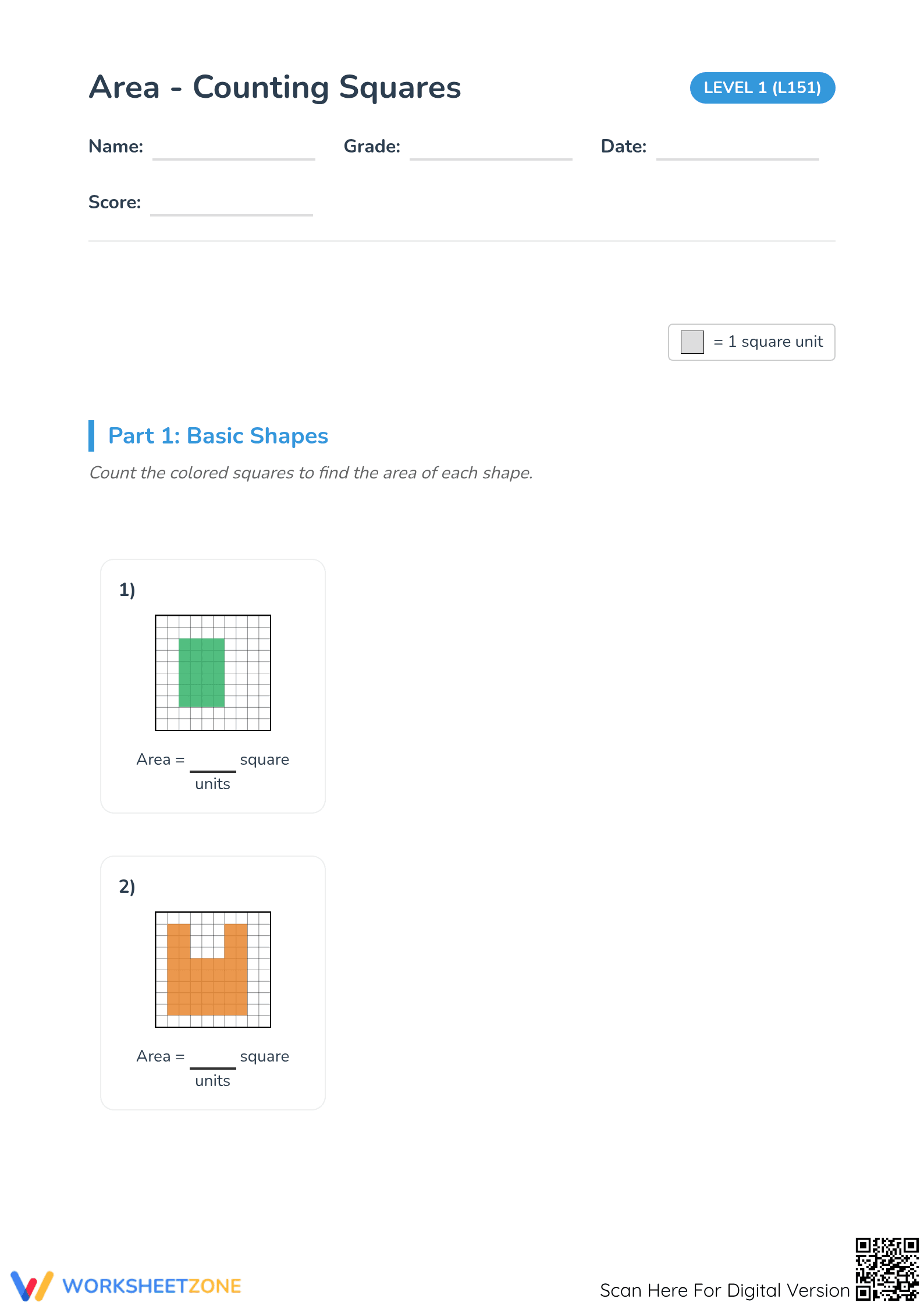
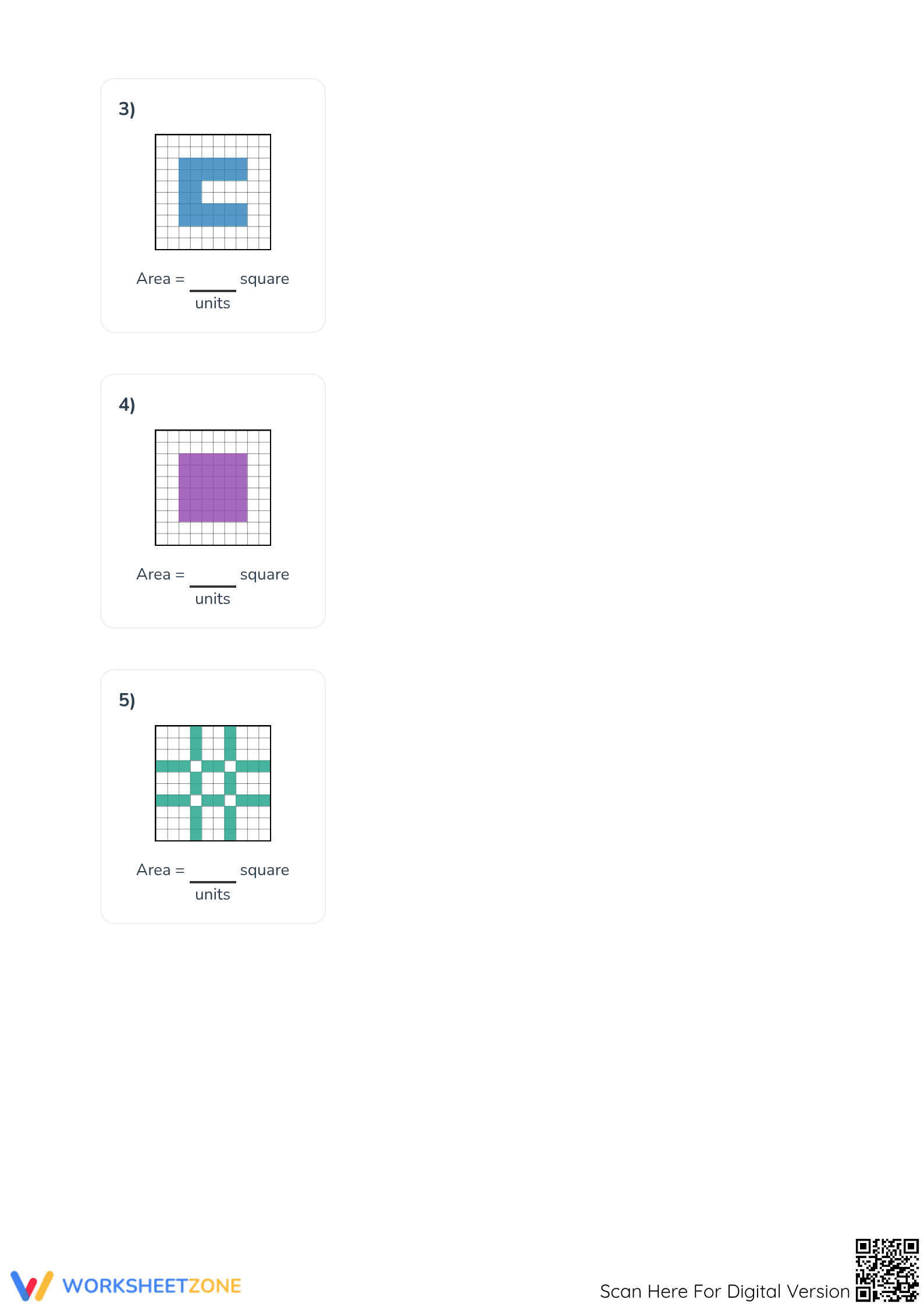
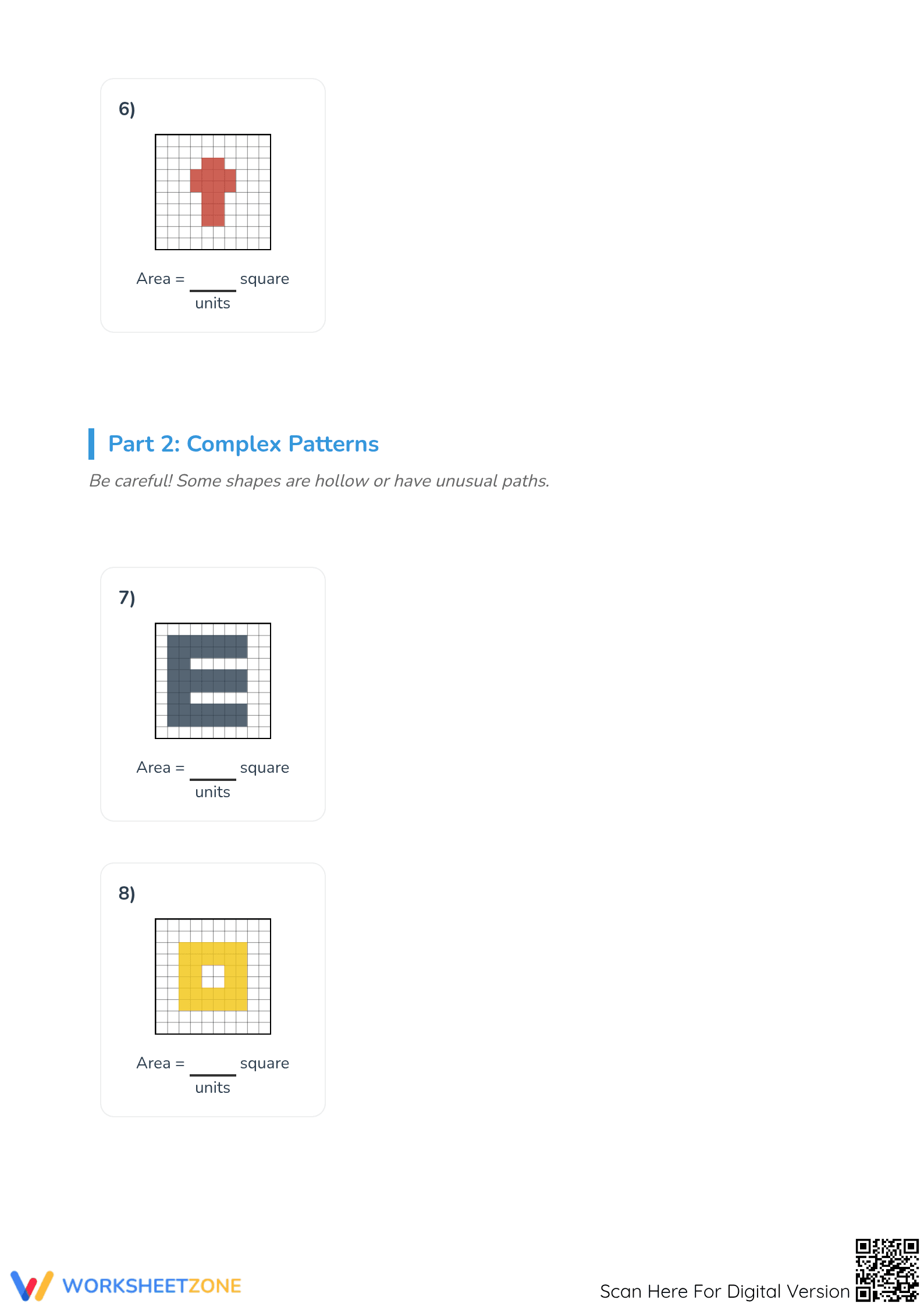
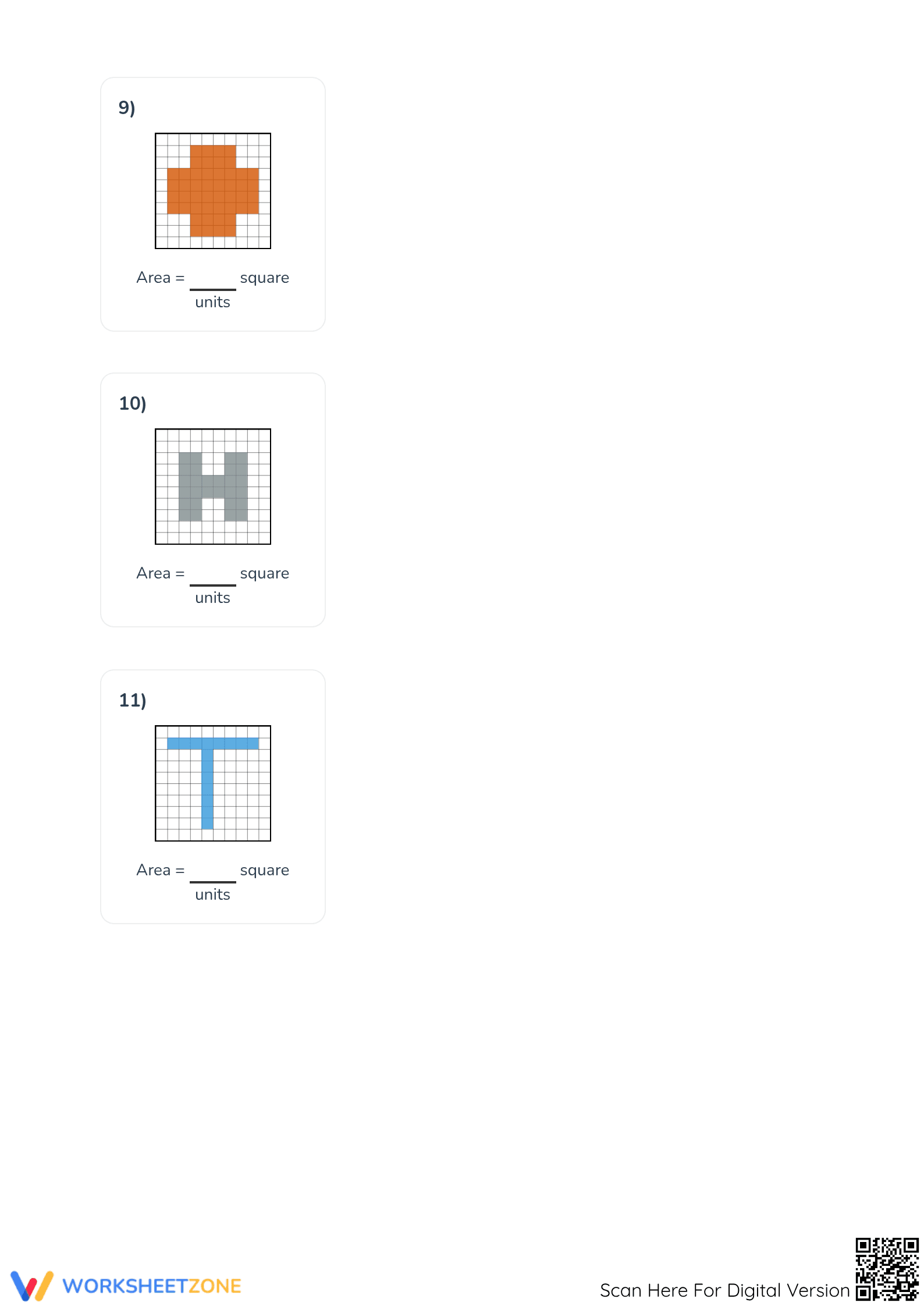

Essential Area Counting Squares Worksheet | Grade 3 Math
Paste this activity's link or code into your existing LMS (Google Classroom, Canvas, Teams, Schoology, Moodle, etc.).
Students can open and work on the activity right away, with no student login required.
You'll still be able to track student progress and results from your teacher account.
Students will master the concept of area by counting individual square units to determine the total space occupied by various shapes. This worksheet bridges the gap between basic counting and geometric measurement, ensuring students understand the fundamental definition of area before moving to complex multiplication formulas. By engaging with these visual grids, learners build strong spatial reasoning skills.
At a Glance
- Grade: 3 · Subject: Math
- Standard:
CCSS.MATH.CONTENT.3.MD.C.6— Measure area by counting unit squares using grids and colored shapes- Skill Focus: Counting square units
- Format: 5 pages · 14 problems · Answer key included · PDF
- Best For: Daily geometry practice and formative assessment
- Time: 15–25 minutes
What's Inside
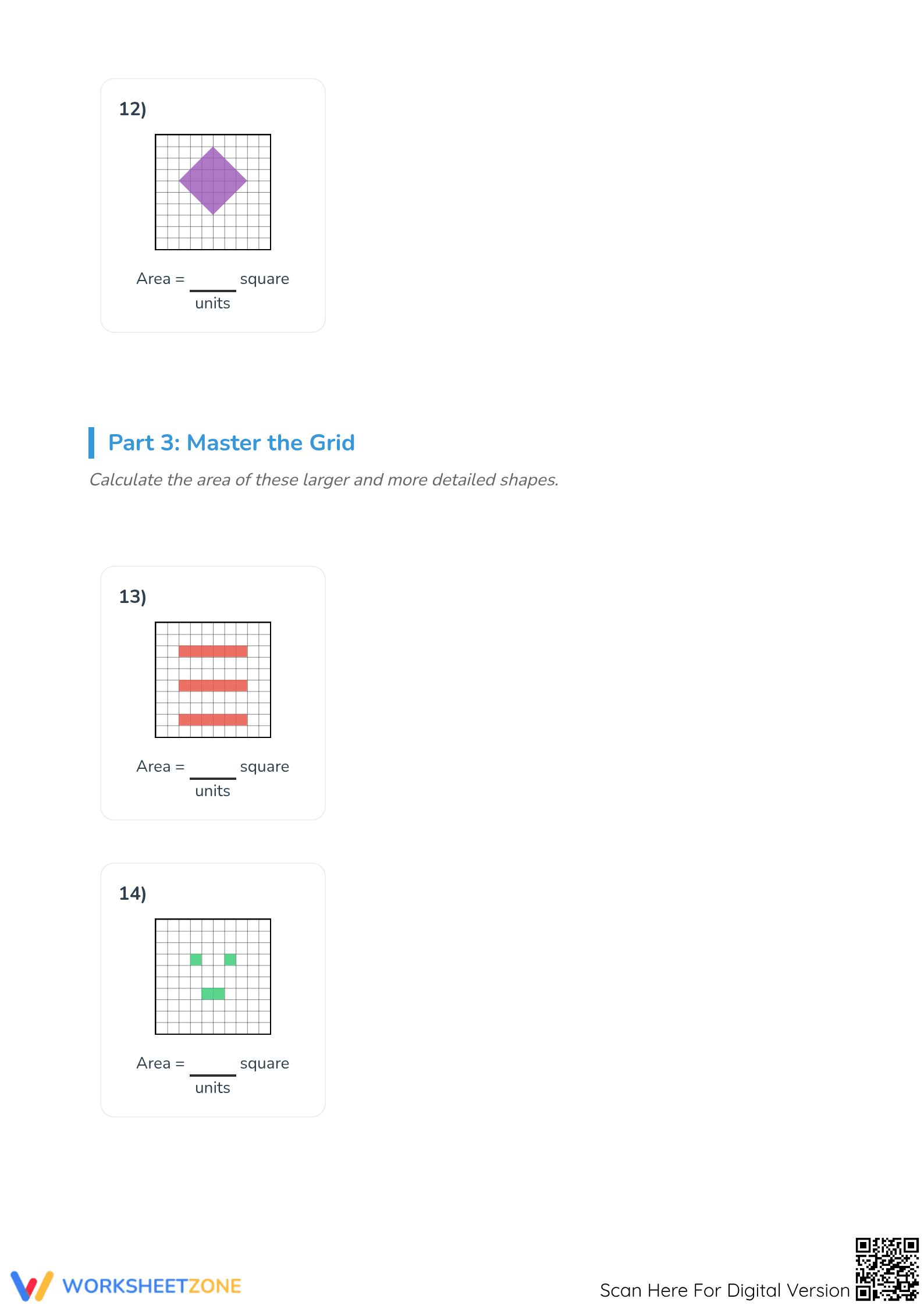
This comprehensive five-page resource features 14 distinct problems divided into three scaffolded sections. It includes a variety of task types ranging from simple rectangular blocks to complex, hollow, and L-shaped figures. Each page is designed with clear grid lines and high-contrast colored shapes to support visual learners. A complete answer key is provided to facilitate rapid grading and self-correction.
Zero-Prep Workflow
The zero-prep workflow is designed for immediate classroom integration. First, print the five-page PDF set in under thirty seconds. Second, distribute the materials to students as a morning warm-up or as part of a rotation station; no additional manipulatives are required as the grid is self-contained. Finally, review the student work using the included answer key in less than one minute. This resource is perfect for substitute plans.
Standards Alignment
This resource is directly aligned with CCSS.MATH.CONTENT.3.MD.C.6, which requires students to measure area by counting unit squares (square cm, square m, square in, square ft, and improvised units). It also supports foundational skills for later work with tiling and multiplication. Both standard codes can be copied directly into lesson plans, IEP goals, or district curriculum mapping tools.
How to Use It
Use this worksheet as a primary instructional tool during the guided practice phase of a geometry lesson or as a standalone formative assessment after introducing the concept of square units. Educators should observe if students are counting every square or identifying smaller rectangular arrays within larger shapes. The expected completion time for the full set is 15–25 minutes.
Who It's For
This activity is designed for Grade 3 students beginning their area units, but it serves as an excellent intervention for Grade 4 or Grade 5 learners who struggle with spatial concepts. It naturally pairs with physical base-ten blocks or translucent square tiles to provide a hands-on experience that mirrors the on-page grid exercises while building conceptual fluency.
According to Fisher & Frey (2014), the gradual release of responsibility is crucial for conceptual math mastery. This worksheet facilitates this shift by moving students from counting simple, colored square units in Part 1 to navigating hollow and unusual paths in Part 2. By the final section, Master the Grid, students apply higher-order spatial reasoning to calculate areas of complex composite shapes. The curriculum alignment with CCSS.MATH.CONTENT.3.MD.C.6 ensures that the activity isn't just a rote counting task but a foundational step toward understanding multiplication-based area formulas. Research indicates that visual-spatial scaffolding, such as the grid system used here, reduces cognitive load for learners transitioning into abstract geometry. This structured approach allows educators to monitor progress while providing students with the tactile-visual feedback necessary to internalize what a square unit represents in a physical or digital space.


