


























Views
Downloads
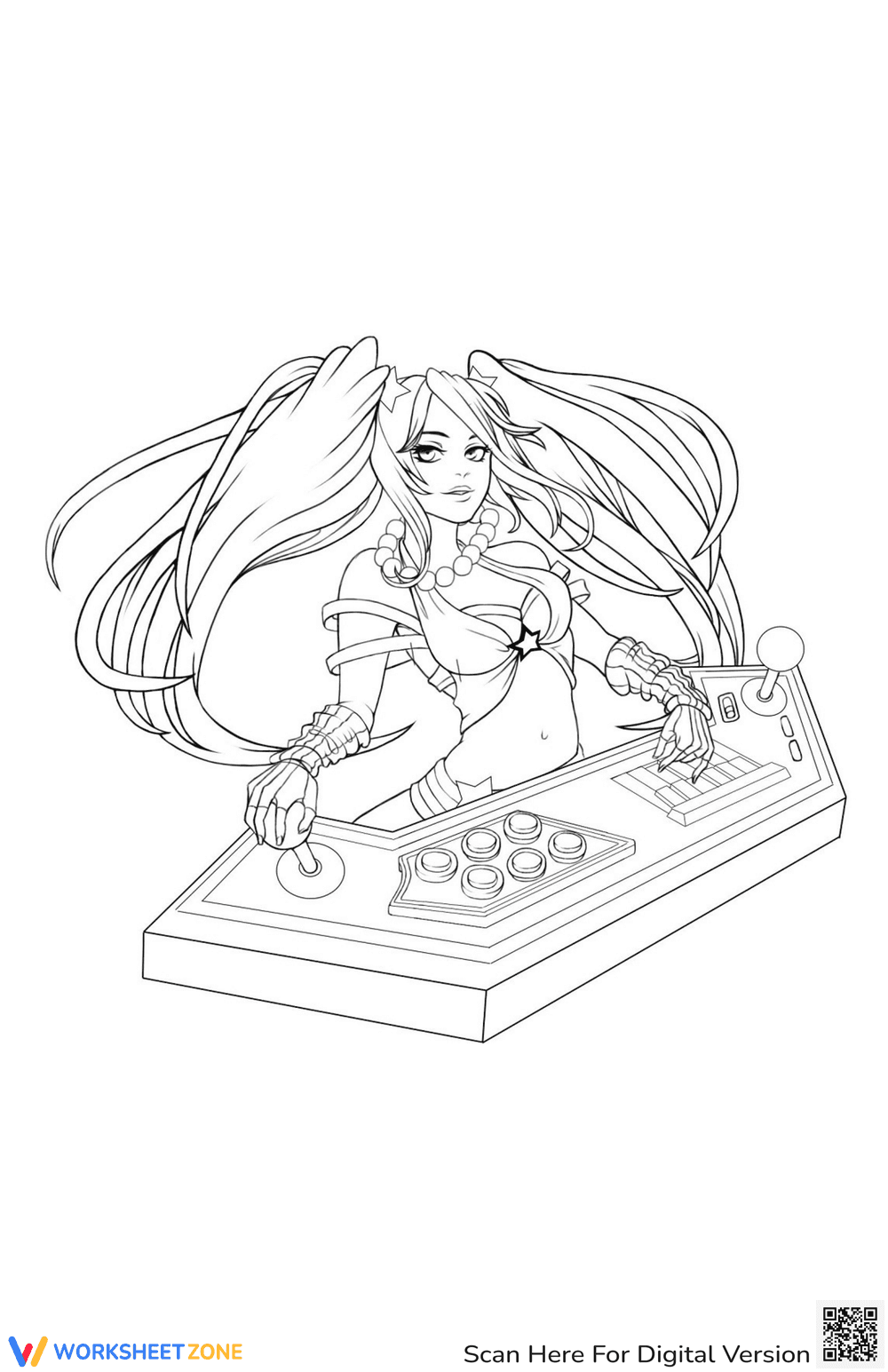

Arcade Sona Coloring Page | Printable Grade 3 Activity
Paste this activity's link or code into your existing LMS (Google Classroom, Canvas, Teams, Schoology, Moodle, etc.).
Students can open and work on the activity right away, with no student login required.
You'll still be able to track student progress and results from your teacher account.
This printable Arcade Sona coloring page provides Grade 3 through Grade 5 students with an engaging creative outlet that doubles as a visual prompt for narrative writing. Students practice fine motor control and color theory while preparing to draft an imaginative story based on the character's arcade setting.
At a Glance
- Grade: 3 · Subject: English
- Standard:
CCSS.ELA-LITERACY.W.3.3— Write narratives to develop imagined experiences- Skill Focus: Creativity and Narrative Writing
- Format: 1 page · 1 task · No answer key · PDF
- Best For: Early finishers and writing prompts
- Time: 15–30 minutes
Inside this single-page PDF, educators will find a highly detailed line-art illustration of the popular video game character Arcade Sona. The worksheet features clean, crisp outlines perfect for colored pencils, markers, or crayons. The character is depicted operating a retro arcade console, providing rich visual details that students can use as inspiration for character development and setting descriptions in their creative writing assignments.
This resource is designed for immediate classroom implementation with a streamlined zero-prep workflow:
- Print (1 minute): Simply download the PDF and print a class set. The high-contrast black-and-white lines ensure excellent print quality without draining school ink supplies.
- Distribute (1 minute): Hand out the coloring pages along with students' preferred art supplies and a blank sheet of lined paper for the writing extension.
- Review (0 minutes): Because this is an open-ended creative task, there is no grading or answer key required. Total teacher prep time is under two minutes, making it an ideal emergency sub plan.
This activity aligns with CCSS.ELA-LITERACY.W.3.3: Write narratives to develop real or imagined experiences or events using effective technique, descriptive details, and clear event sequences. By using the coloring page as a visual anchor, students can brainstorm sensory details and plot points before drafting their stories. Both standard codes can be copied directly into lesson plans, IEP goals, or district curriculum mapping tools.
This coloring page serves as an excellent early finisher activity during independent English language arts blocks. When students complete their primary assignments, they can transition to coloring and drafting a short story about the arcade scene. Alternatively, use it as a calming transition activity after recess. As a formative assessment tip, observe the descriptive vocabulary students use when discussing their color choices and the character's imagined backstory. Expect the coloring and writing process to take between 15 and 30 minutes.
This resource is primarily designed for Grade 3, Grade 4, and Grade 5 students who benefit from visual stimuli to spark their writing. It is highly effective for reluctant writers who need a low-stakes, creative entry point into narrative composition. Pair this worksheet with a graphic organizer or a lesson on using sensory adjectives to maximize its educational value.
Integrating visual arts into English language arts instruction provides a critical scaffold for narrative development. According to a 2024 report by EdReports, pairing visual prompts with writing tasks significantly increases student engagement and the production of descriptive vocabulary. When students interact with an illustration before writing, they build a stronger mental model of the setting and character. This resource supports CCSS.ELA-LITERACY.W.3.3 by helping students write narratives to develop imagined experiences. By coloring the Arcade Sona scene, learners actively make decisions about mood, tone, and character traits, which directly translates into richer narrative drafting. Utilizing such multimodal approaches ensures that diverse learners, particularly those who struggle with blank-page anxiety, have a structured and enjoyable pathway to meet grade-level writing expectations.


