


























Views
Plays

Grade 3 Plural vs. Possessive Apostrophe Printable Worksheet
Paste this activity's link or code into your existing LMS (Google Classroom, Canvas, Teams, Schoology, Moodle, etc.).
Students can open and work on the activity right away, with no student login required.
You'll still be able to track student progress and results from your teacher account.
This Grade 3 grammar worksheet helps students master the tricky distinction between plural nouns and possessive forms. By working through 20 targeted multiple-choice questions, learners identify correct apostrophe placement for singular and plural possessors. This resource ensures students can accurately demonstrate ownership in their writing while avoiding common punctuation errors.
At a Glance
- Grade: 3 · Subject: ELA Grammar
- Standard:
CCSS.ELA-LITERACY.L.3.2.D— Form and use possessives correctly in sentences- Skill Focus: Plural vs. Possessive Apostrophes
- Format: 4 pages · 20 problems · Answer key included · PDF
- Best For: Formative assessment or independent practice
- Time: 15–20 minutes
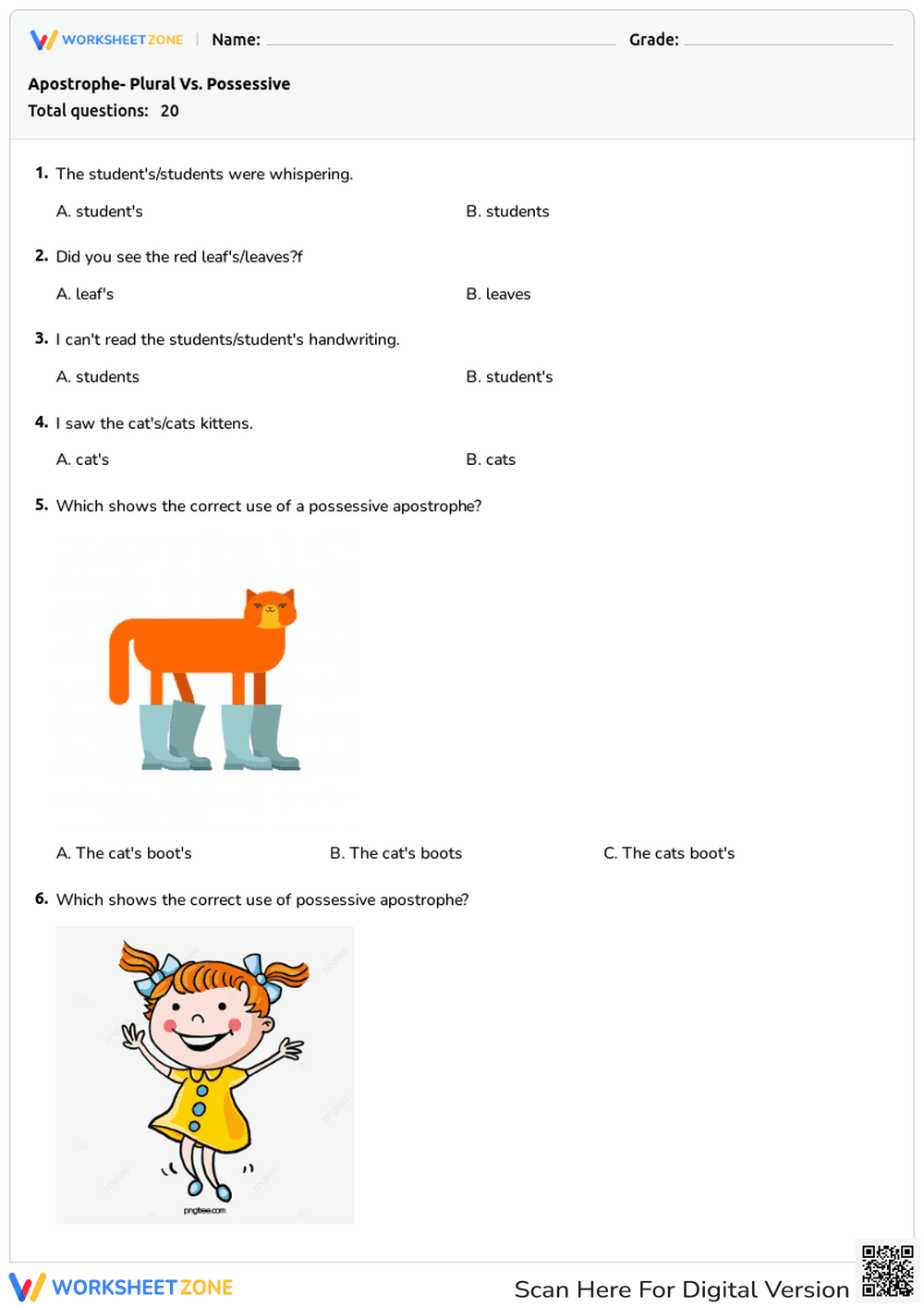
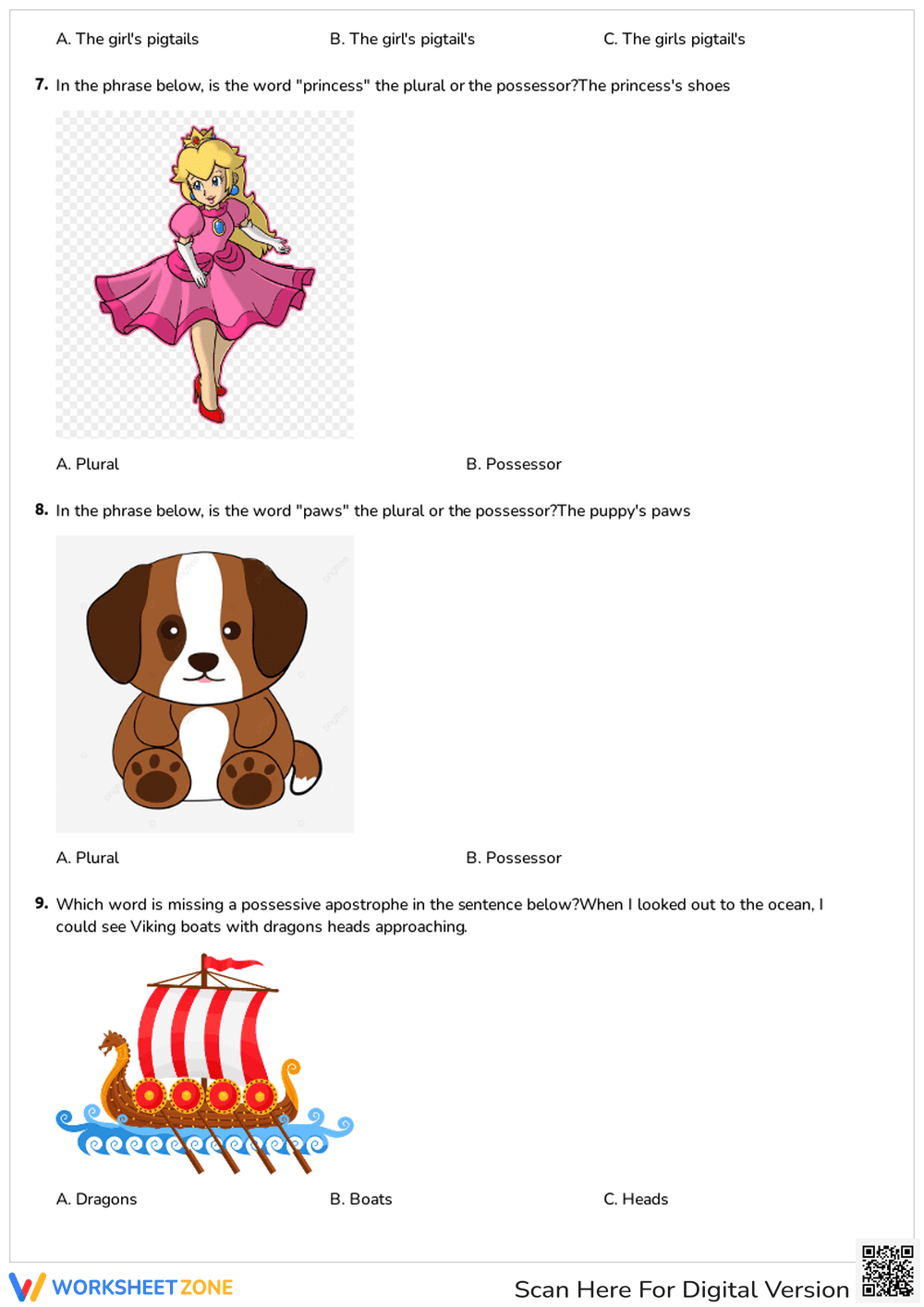
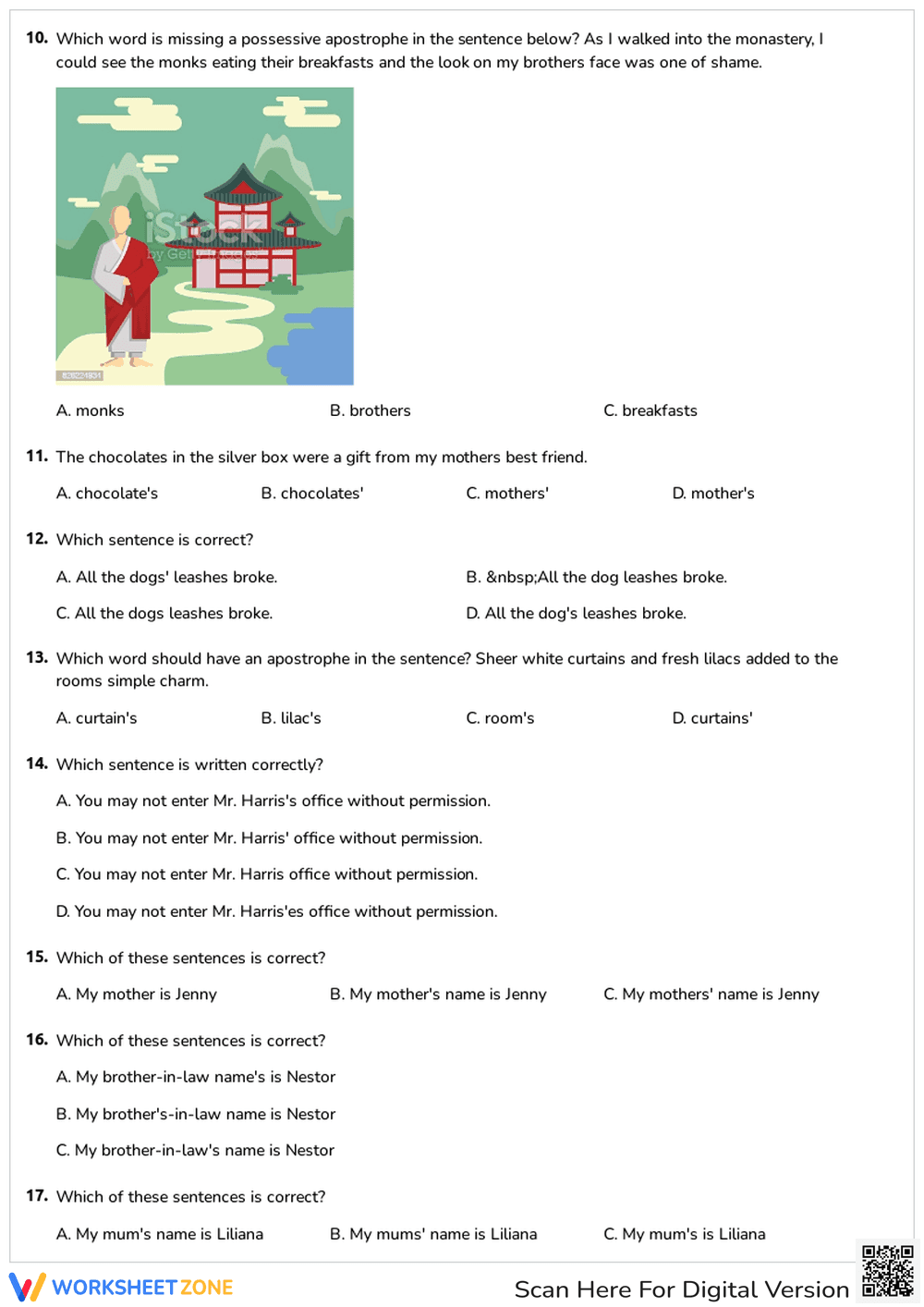
The packet contains four pages of high-quality multiple-choice questions. Each task presents a sentence requiring students to choose between a simple plural (no apostrophe) and a possessive form (with apostrophe). Visual cues and contextual sentences, such as "the puppy's paws" versus "the princess's shoes," provide concrete examples for abstract grammar rules. A full answer key is provided for rapid grading and immediate feedback.
Zero-Prep Workflow
- Print: Generate the four-page PDF in under one minute.
- Distribute: Hand out the structured quiz to your class for immediate engagement.
- Review: Use the included answer key for a lightning-fast review or self-grading session.
This streamlined workflow makes it an ideal choice for morning work, emergency sub plans, or a quick check for understanding after a punctuation lesson. Total teacher preparation time is targeted at under 2 minutes.
Standards Alignment
This resource aligns directly with `CCSS.ELA-LITERACY.L.3.2.D`, which requires students to form and use possessives. It also supports Grade 2 standards for frequently occurring possessives and general conventions of standard English. Both standard codes can be copied directly into lesson plans, IEP goals, or district curriculum mapping tools.
How to Use It
Use this worksheet as a summative quiz after teaching the mechanics of ownership. Alternatively, assign it as a collaborative center activity where students must justify their choice to a partner. Expect completion within 20 minutes. During the activity, observe if students struggle specifically with plural possessives (e.g., "dogs' leashes") to identify needs for small-group intervention or targeted re-teaching.
Who It's For
This is designed for Grade 2 and Grade 3 students mastering mechanics. It is particularly helpful for English Language Learners who may confuse pluralization with possession. Pair this with a possessive noun anchor chart or a direct instruction lesson on singular versus plural ownership to provide a complete instructional cycle.
According to the RAND AIRS 2024 report, structured grammar practice that requires students to discriminate between similar linguistic features—such as pluralization and possession—significantly improves long-term retention of punctuation rules. This worksheet addresses CCSS.ELA-LITERACY.L.3.2.D by providing 20 distinct opportunities for students to analyze context and apply the correct possessive form. By moving beyond simple identification to contextual application in sentences like "the room's simple charm," students build the cognitive flexibility needed for advanced composition. Research from Fisher & Frey (2014) emphasizes that such targeted, independent practice is a critical component of the gradual release of responsibility model. This resource provides the necessary "You Do" phase of instruction, ensuring that Grade 3 learners can independently navigate the complexities of apostrophe usage in varied sentence structures. The inclusion of clear distractors helps teachers identify specific misconceptions regarding plural endings versus possessive markers.


