


























Views
Downloads
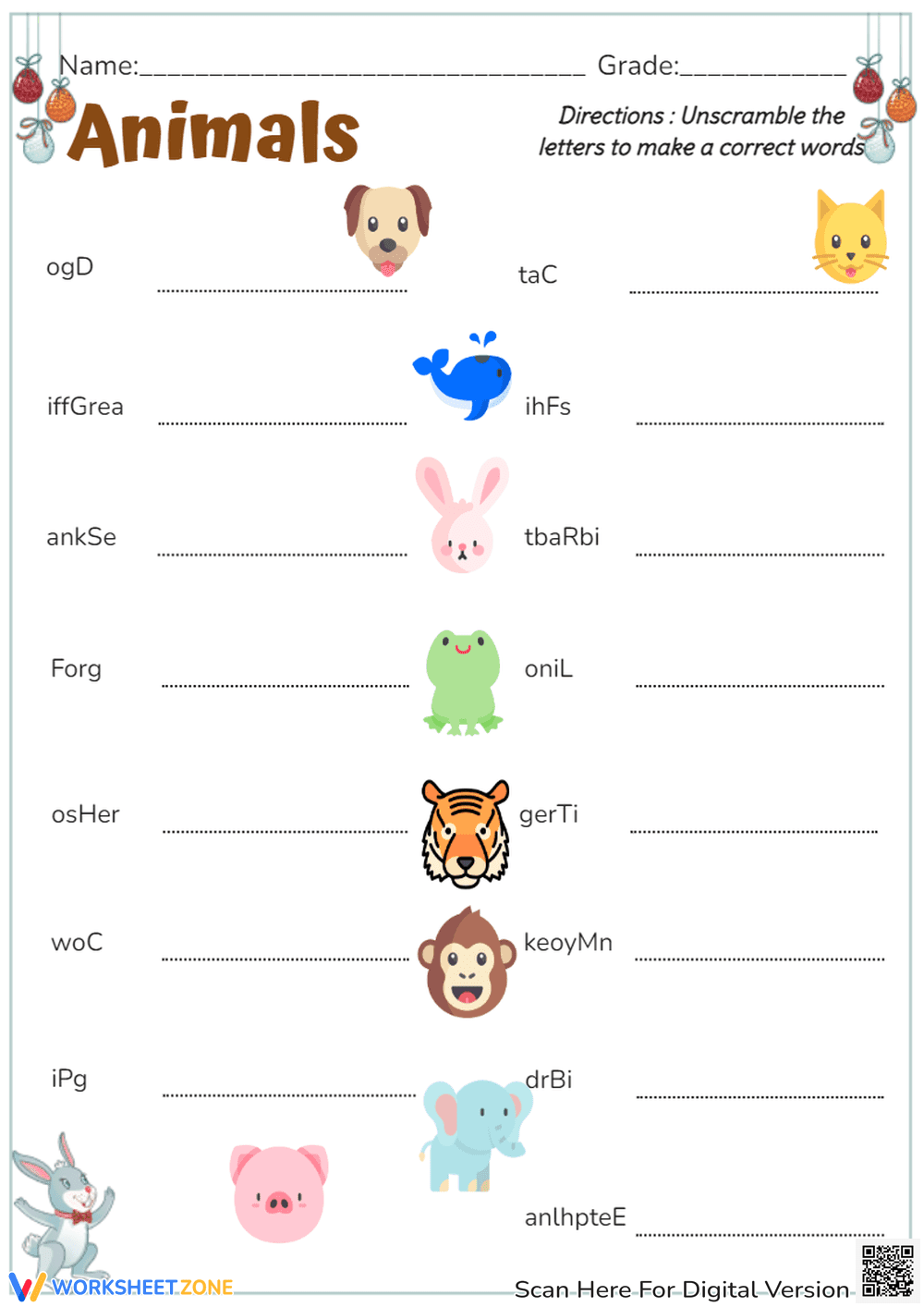

Animal Word Scramble Worksheet | Grade 1-3 Essential
Paste this activity's link or code into your existing LMS (Google Classroom, Canvas, Teams, Schoology, Moodle, etc.).
Students can open and work on the activity right away, with no student login required.
You'll still be able to track student progress and results from your teacher account.
This Grade 1-3 animal word scramble worksheet helps students master spelling and vocabulary through 15 engaging unscrambling tasks. By identifying visual cues and rearranging letters, learners strengthen their phonemic awareness and orthographic mapping. This resource provides a clear path to spelling proficiency while reinforcing common animal names in a fun, accessible format.
At a Glance
- Grade: 1-3 · Subject: ELA
- Standard:
CCSS.ELA-LITERACY.L.1.2— Demonstrate command of the conventions of standard English spelling- Skill Focus: Animal vocabulary and spelling
- Format: 1 page · 15 problems · Answer key included · PDF
- Best For: Independent literacy centers or morning work
- Time: 10–15 minutes
The worksheet features a clean, single-page layout containing 15 distinct word scramble challenges. Each task is paired with a colorful animal emoji to provide visual scaffolding, helping students connect the scrambled letters to the correct noun. The list includes a mix of short CVC words like "dog" and "cat" alongside more complex multi-syllabic words like "elephant" and "giraffe." A full answer key is provided to facilitate quick grading or student self-correction.
This resource is designed for a zero-prep classroom environment. First, print the single-page PDF (30 seconds). Second, distribute the sheets to students as they enter the room or transition to literacy blocks (1 minute). Third, review the answers as a whole group or use the included key for rapid individual feedback (2 minutes). The total teacher preparation time is under two minutes, making it an ideal choice for emergency sub plans or unexpected schedule shifts.
The primary focus is `CCSS.ELA-LITERACY.L.1.2`, which requires students to demonstrate command of the conventions of standard English spelling. By manipulating letters to form recognizable words, students practice common spelling patterns and letter-sound correspondences. This activity also supports supporting standards focusing on generalizing learned spelling patterns when writing words. Both standard codes can be copied directly into lesson plans, IEP goals, or district curriculum mapping tools.
Use this worksheet during the independent practice phase of a lesson on spelling patterns. It serves as an excellent formative assessment tool; observe which students struggle with the longer words like "giraffe" to identify those needing additional phonics support. The expected completion time is 10 to 15 minutes, making it a perfect "bell-ringer" activity to settle the class at the start of the day.
This activity is tailored for early elementary students in Grades 1 through 3, but it is also highly effective for English Language Learners (ELL) who benefit from the visual-to-word association. It pairs naturally with an animal-themed anchor chart or a direct instruction lesson on consonant blends and vowel teams to provide a comprehensive literacy experience.
Research by Fisher & Frey (2014) emphasizes the importance of word-solving strategies in developing fluent readers and writers. This animal word scramble worksheet aligns with these findings by requiring students to engage in active orthographic processing. By unscrambling letters to form words like "elephant" or "monkey," students are not merely memorizing strings of characters but are instead analyzing the structural components of the English language. This type of cognitive manipulation of letters is a proven method for reinforcing the CCSS.ELA-LITERACY.L.1.2 standard, which focuses on the conventions of standard English spelling. According to the Fisher & Frey framework, such tasks provide the necessary independent practice that bridges the gap between teacher-led instruction and student mastery. The inclusion of 15 varied tasks ensures that students encounter a range of phonetic complexities, supporting differentiated learning needs within a single classroom setting.


