


























Views
Downloads

Essential Grade 2 Animals and Food Printable Worksheet
Paste this activity's link or code into your existing LMS (Google Classroom, Canvas, Teams, Schoology, Moodle, etc.).
Students can open and work on the activity right away, with no student login required.
You'll still be able to track student progress and results from your teacher account.
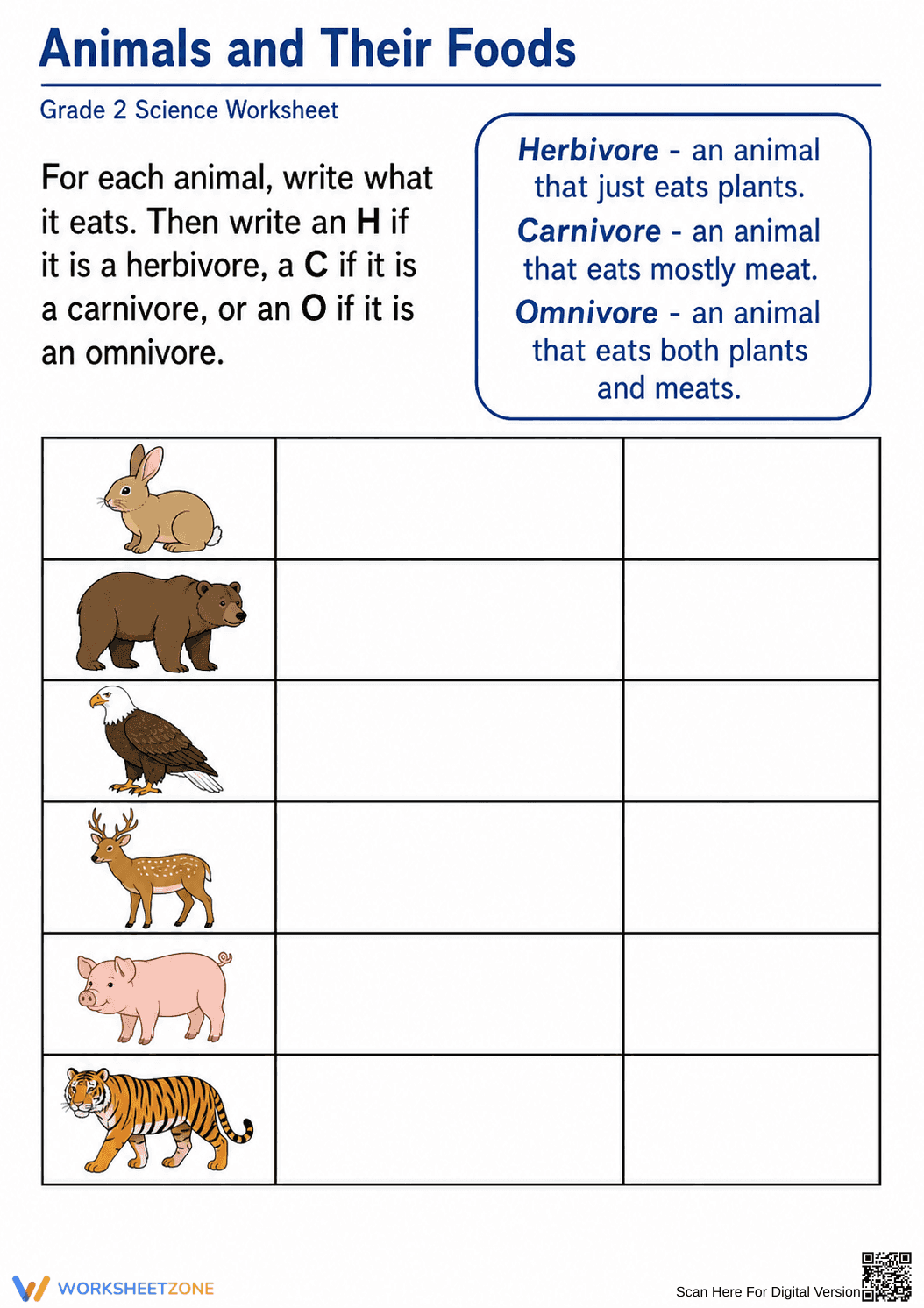
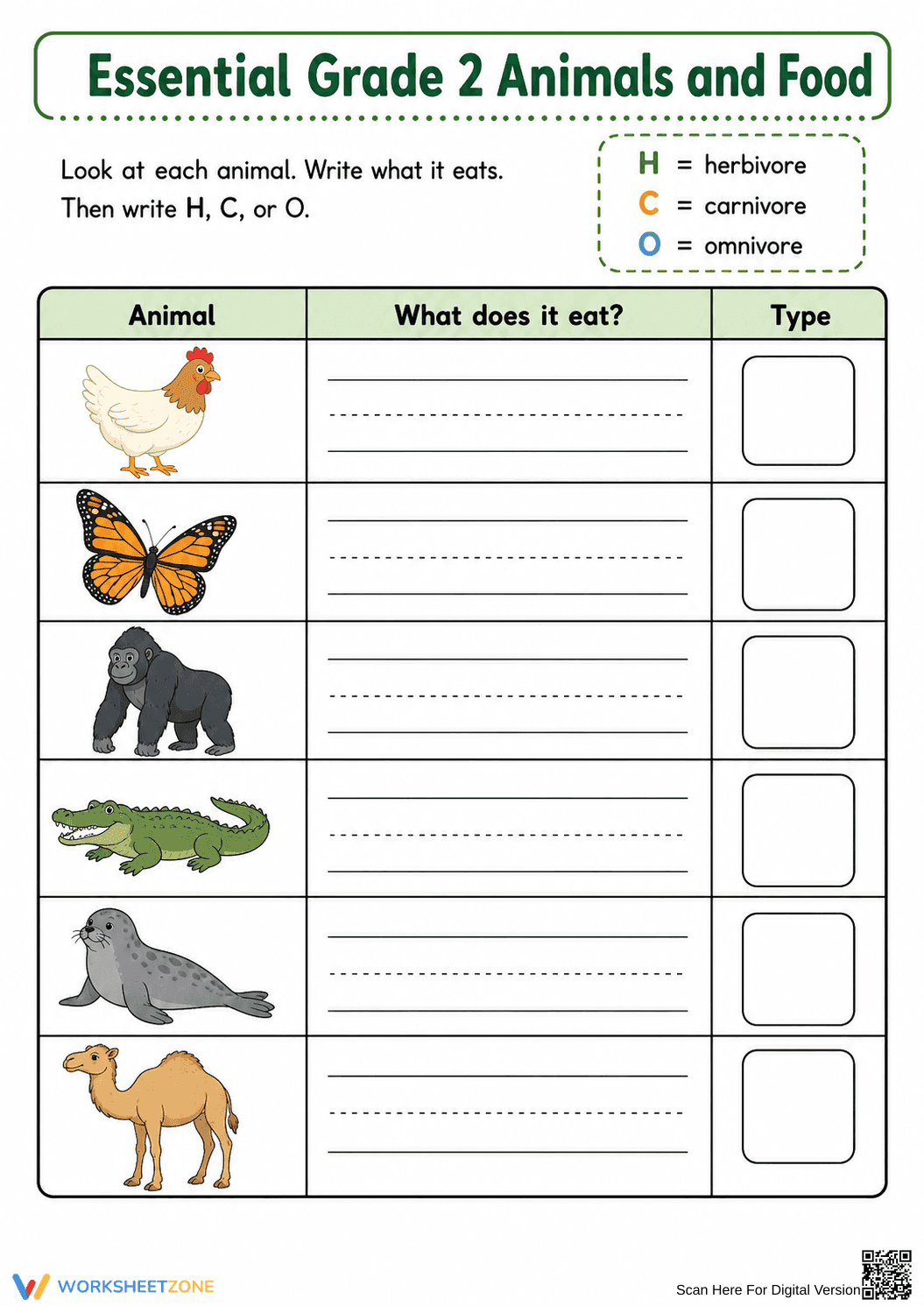
This Grade 2 science worksheet helps students master animal classification by diet. By observing diverse animals, learners identify specific foods and categorize species as herbivores, carnivores, or omnivores. This practice builds foundational biology vocabulary and critical thinking skills, ensuring students can differentiate between various living things based on their survival needs and environmental interactions.
At a Glance
- Grade: 2 · Subject: Living Things
- Standard:
2-LS4-1— Make observations of animals to compare the diversity of life- Skill Focus: Animal Diet Classification
- Format: 2 pages · 12 problems · Answer key included · PDF
- Best For: Independent practice or quick science assessment
- Time: 15–20 minutes
The PDF includes a structured worksheet featuring high-quality illustrations of twelve animals, including a chicken, gorilla, and alligator. Students are prompted to write what each animal eats and assign the correct letter code (H, C, or O) for their dietary group. A clear reference box defines the three key terms at the top, and a complete answer key is provided for immediate feedback.
This resource is designed for a fast classroom experience. First, print the two-page worksheet for your students, which takes less than 30 seconds. Next, distribute the sheets; the included vocabulary definitions mean no prior lecture is required. Finally, use the provided answer key to review results together in under two minutes, making this an ideal choice for emergency sub plans or bell-ringers.
This activity aligns with 2-LS4-1, which requires students to make observations of animals to compare the diversity of life in different habitats. By analyzing dietary habits, students observe how different species survive within their ecosystems. This standard code can be copied directly into lesson plans, IEP goals, or district curriculum mapping tools to ensure instructional compliance and tracking.
Introduce this worksheet during the "Explain" or "Elaborate" phase of a 5E lesson on living things. It works effectively as a formative assessment to check for understanding after a discussion about food chains. For an observation tip, watch if students can identify the gorilla as an omnivore, which often sparks deeper questions about primate diets and human-like biology.
This worksheet is perfect for second-grade students beginning their journey into life sciences. It provides enough visual support for English Language Learners through the animal icons while challenging all students to apply scientific vocabulary. Pair this resource with a short passage about habitats or a video clip of animals foraging to provide a rich learning experience.
According to research from Fisher & Frey (2014), categorical classification tasks in early science education significantly enhance a student's ability to organize complex biological information. This Grade 2 worksheet applies these principles by requiring learners to observe dietary patterns and map them to scientific terms. By engaging with 12 animal examples, students move beyond rote memorization toward a conceptual understanding of how living things interact with their environment. This alignment with 2-LS4-1 ensures that activities meet the rigor required by NGSS-based curricula. The inclusion of an answer key supports immediate feedback, a critical component in the gradual release of responsibility model. Educators can integrate this printable PDF into science rotations to provide evidence-based practice in animal biology. This resource ensures that students develop the necessary vocabulary and observational skills to succeed in higher-level life science studies.


