




























Views
Downloads

Essential Reptile Classification Worksheet | Grade 1 Ready

Paste this activity's link or code into your existing LMS (Google Classroom, Canvas, Teams, Schoology, Moodle, etc.).
Students can open and work on the activity right away, with no student login required.
You'll still be able to track student progress and results from your teacher account.
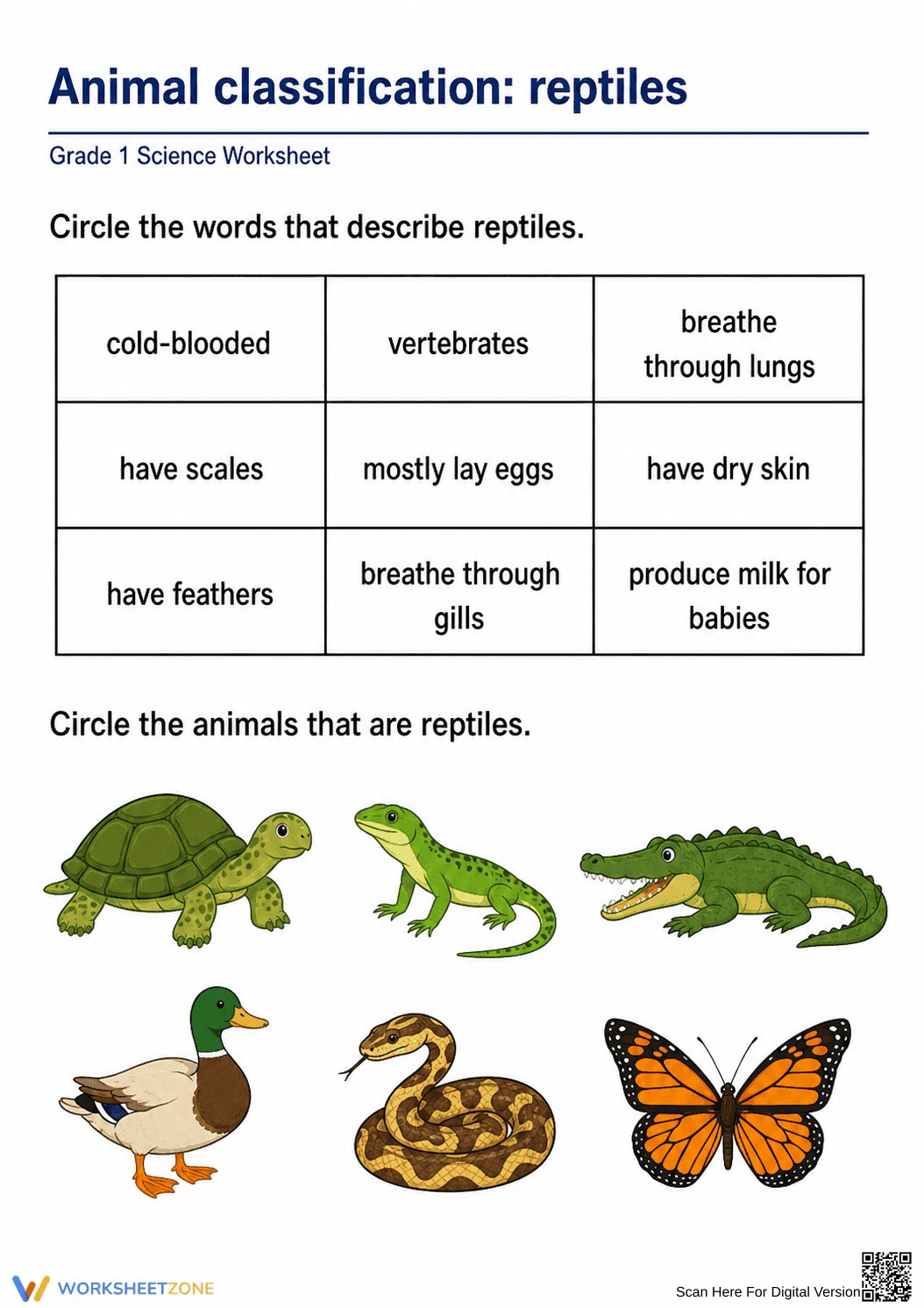
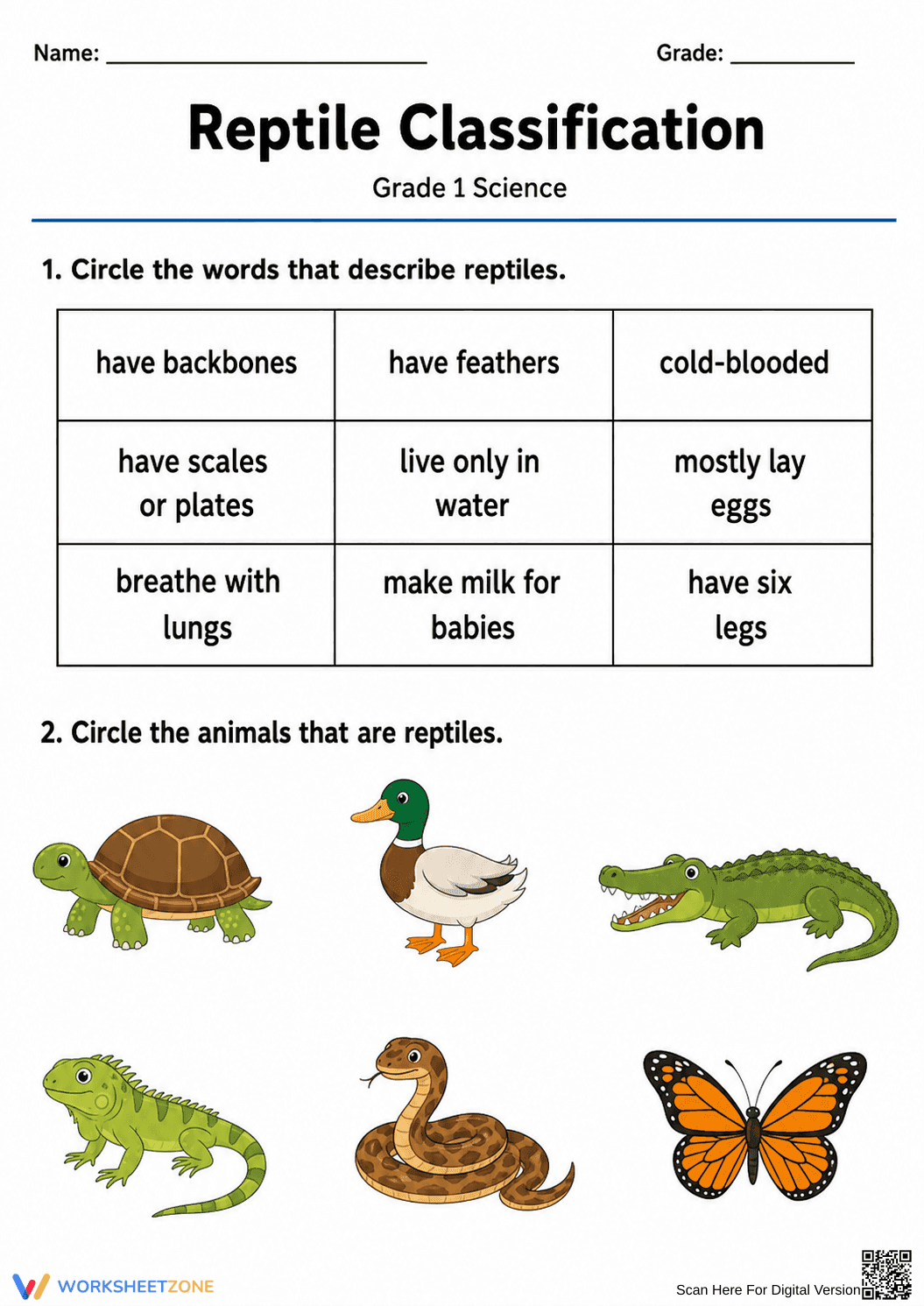
This Grade 1 science worksheet helps young learners identify and classify reptiles based on their unique biological characteristics. Students distinguish between various animal traits and visual representations to build a foundational understanding of life science. This resource ensures students can accurately group animals by observable structures and physiological functions.
At a Glance
- Grade: 1 · Subject: Science
- Standard:
1-LS1-1— Mimic animal structures like scales or lungs to meet survival needs.- Skill Focus: Reptile characteristics and classification
- Format: 1 page · 2 problems · Answer key included · PDF
- Best For: Independent practice or quick science formative assessment
- Time: 15–20 minutes
What's Inside
The worksheet features two distinct tasks designed for early elementary students. The first task presents a 3x3 grid of biological traits where students circle words like "vertebrates," "cold-blooded," and "scales." The second task provides six clear animal illustrations, requiring students to identify the turtle, crocodile, chameleon, and snake. A complete answer key is provided for immediate feedback.
Zero-Prep Workflow
This classroom-ready resource minimizes teacher workload with a three-step implementation strategy. First, print the single-page PDF in under ten seconds. Second, distribute copies and spend two minutes explaining the traits to the class. Finally, review student answers using the included key for a five-minute whole-group check. Total teacher preparation time remains under two minutes, making this ideal for sub plans or bell-ringers.
Standards Alignment
The primary alignment is to 1-LS1-1, focusing on how animals use their external parts, such as scales, to survive. This activity also supports CCSS.ELA-LITERACY.RI.1.1 by encouraging students to identify key details within a scientific text format. Both standard codes can be copied directly into lesson plans, IEP goals, or district curriculum mapping tools.
How to Use It
Incorporate this worksheet during the "Explain" or "Elaborate" phase of a 5E instructional model. For a formative assessment, observe students as they distinguish between reptiles and insects like the bee or birds like the chicken. This provides immediate insight into their grasp of classification criteria. Most students will complete the entire activity within fifteen to twenty minutes of focused work.
Who It's For
This resource is tailored for first-grade students but serves as an effective review for second-graders as well. It supports English Language Learners through visual cues and clear, bold terminology. The worksheet pairs naturally with a classroom anchor chart detailing the five vertebrate groups or a short informational text about desert-dwelling reptiles and their survival adaptations.
According to the RAND AIRS 2024 analysis of primary science curricula, structured classification tasks significantly improve a child's ability to recognize patterns in the natural world. This worksheet aligns with those findings by requiring students to synthesize multiple traits—such as being cold-blooded and having scales—to identify a specific biological group. By focusing on the 1-LS1-1 standard, the resource bridges the gap between simple animal identification and the understanding of structure and function. Fisher & Frey (2014) emphasize that such guided practice is essential for building academic vocabulary necessary for future success in life science. This resource provides the exact number of tasks needed to confirm student mastery without causing cognitive fatigue. Teachers can rely on this evidence-based design to support rigorous science instruction while maintaining student engagement through accessible visual sorting and trait selection.


