


























1 / 2
0
Views
0
Downloads


0.0
0
Save
0 Likes
Animal Adaptations Worksheet
0 Views
0 Downloads
Paste this activity's link or code into your existing LMS (Google Classroom, Canvas, Teams, Schoology, Moodle, etc.).
Students can open and work on the activity right away, with no student login required.
You'll still be able to track student progress and results from your teacher account.
Information
Description
What It Is:
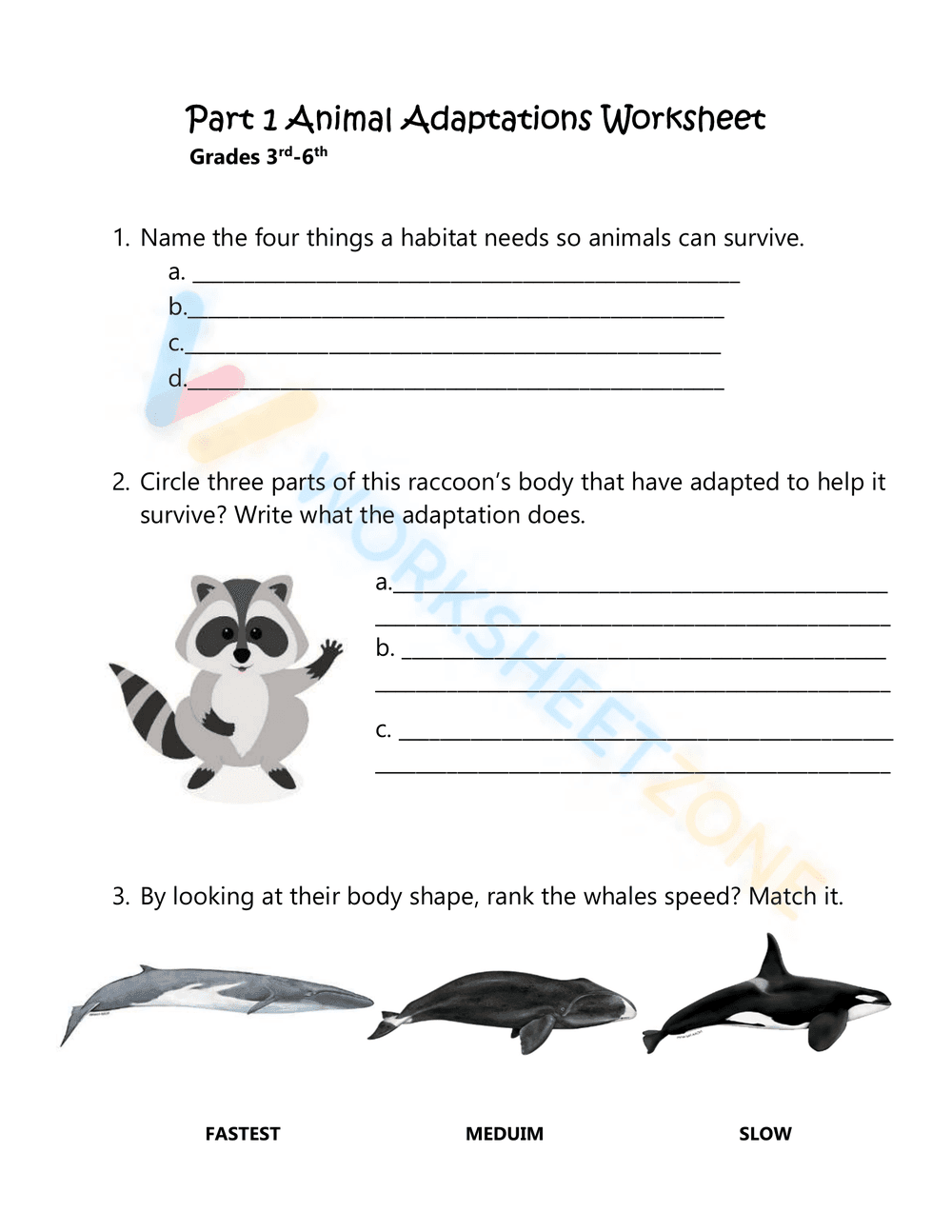
This worksheet introduces students to basic animal adaptations and survival needs. Learners identify habitat requirements, examine raccoon adaptations, and analyze whale body shapes to compare speed.
Why Use It:
It helps students understand how physical traits support survival, builds foundational life science knowledge, and encourages observation and critical thinking. The activities reinforce key concepts such as habitat needs, structural adaptations, and animal movement.
How to Use It:
• List the four essential components a habitat must have
• Observe the raccoon image and describe three helpful adaptations
• Compare whale shapes and match them to speed categories
Grade Suitability:
Best suited for students in Grades 3–6.
• Ideal for science units on animals, habitats, and adaptations
• Great for classroom lessons, homework, or review activities
Target Users:
Teachers, parents, and students exploring animal science and adaptation concepts.
This worksheet introduces students to basic animal adaptations and survival needs. Learners identify habitat requirements, examine raccoon adaptations, and analyze whale body shapes to compare speed.
Why Use It:
It helps students understand how physical traits support survival, builds foundational life science knowledge, and encourages observation and critical thinking. The activities reinforce key concepts such as habitat needs, structural adaptations, and animal movement.
How to Use It:
• List the four essential components a habitat must have
• Observe the raccoon image and describe three helpful adaptations
• Compare whale shapes and match them to speed categories
Grade Suitability:
Best suited for students in Grades 3–6.
• Ideal for science units on animals, habitats, and adaptations
• Great for classroom lessons, homework, or review activities
Target Users:
Teachers, parents, and students exploring animal science and adaptation concepts.


