




























Views
Downloads
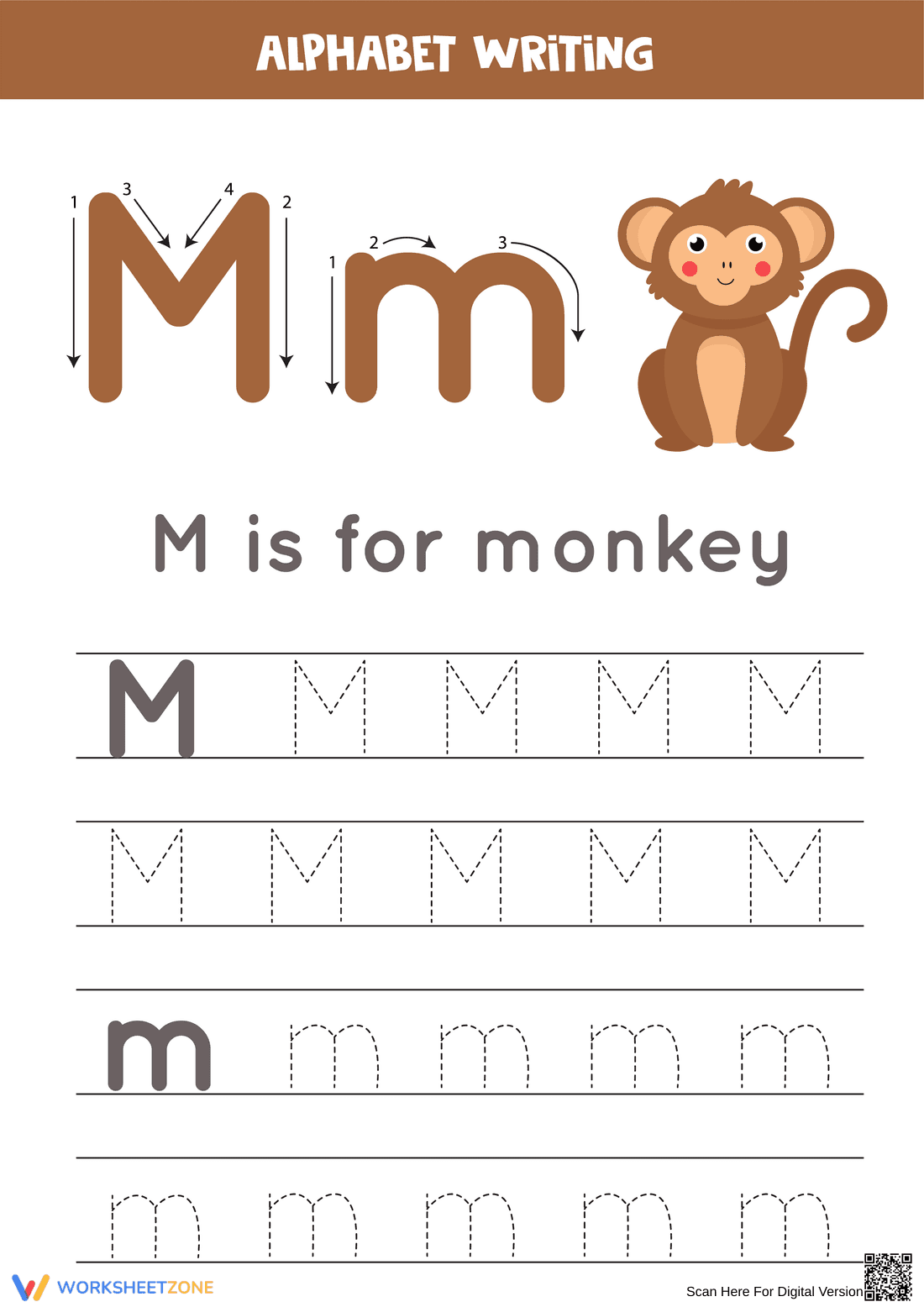

Letter M Tracing Printable | Grade K ELA Worksheet

Paste this activity's link or code into your existing LMS (Google Classroom, Canvas, Teams, Schoology, Moodle, etc.).
Students can open and work on the activity right away, with no student login required.
You'll still be able to track student progress and results from your teacher account.
This printable Letter M tracing worksheet provides early learners with targeted handwriting practice. Students develop fine motor control and letter recognition by tracing both uppercase and lowercase forms. Designed for immediate classroom use, this resource ensures foundational literacy skills are built through consistent, guided repetition.
At a Glance
- Grade: K · Subject: ELA
- Standard:
CCSS.ELA-LITERACY.L.K.1.A— Print many upper- and lowercase letters- Skill Focus: Letter M Tracing
- Format: 1 page · 20 problems · No answer key · PDF
- Best For: Independent practice
- Time: 10–15 minutes
This single-page resource features a clear, distraction-free layout focused entirely on the letter M. It includes a large, directional guide showing the exact stroke order for both uppercase and lowercase letters, accompanied by an engaging monkey illustration to reinforce phonetic connection. Below the guide, students will find four rows of dashed tracing lines, providing 20 distinct opportunities to practice proper letter formation.
Zero-Prep Workflow
This worksheet is designed for maximum efficiency in busy early childhood classrooms.
- Print (1 minute): Simply download the PDF and print the required number of copies. No special paper or color ink is necessary.
- Distribute (1 minute): Hand out the sheets along with pencils or crayons. The intuitive layout means students understand the task immediately.
- Review (1 minute): Quickly scan student work to ensure they are following the directional arrows and staying on the dashed lines.
Total teacher prep time is under two minutes, making this an excellent option for morning work, literacy centers, or emergency sub plans.
Standards Alignment
This resource is directly aligned to CCSS.ELA-LITERACY.L.K.1.A, which requires students to print many upper- and lowercase letters. By providing structured, repetitive practice with directional cues, the worksheet ensures students meet this foundational handwriting expectation. Both standard codes can be copied directly into lesson plans, IEP goals, or district curriculum mapping tools.
How to Use It
Deploy this worksheet during morning arrival to establish a calm, focused routine. It also serves perfectly as an independent station during literacy centers after direct instruction on the letter M. While students work, observe their pencil grip and stroke direction to provide immediate, formative feedback. Expected completion time is between 10 and 15 minutes.
Who It's For
This resource is ideal for preschool, kindergarten, and first-grade students who are mastering the alphabet and developing fine motor skills. The clear visual scaffolds make it highly accessible for students needing occupational therapy support or those in early intervention programs. Pair this worksheet with a read-aloud book featuring the letter M or a classroom anchor chart for maximum impact.
Mastering the physical act of writing is a critical precursor to broader literacy success. According to Fisher & Frey (2014), explicit instruction and guided repetition in letter formation significantly reduce the cognitive load required for early writing, allowing students to eventually focus on content rather than mechanics. This worksheet directly supports CCSS.ELA-LITERACY.L.K.1.A by helping students print many upper- and lowercase letters accurately. By providing directional arrows and dashed tracing lines, the resource bridges the gap between visual recognition and motor execution. Consistent practice with these specific stroke patterns builds the muscle memory necessary for fluent handwriting. Educators can rely on this targeted intervention to ensure early learners develop the foundational skills required for future academic achievement, making it a vital component of any comprehensive early literacy curriculum.


