


























Views
Downloads
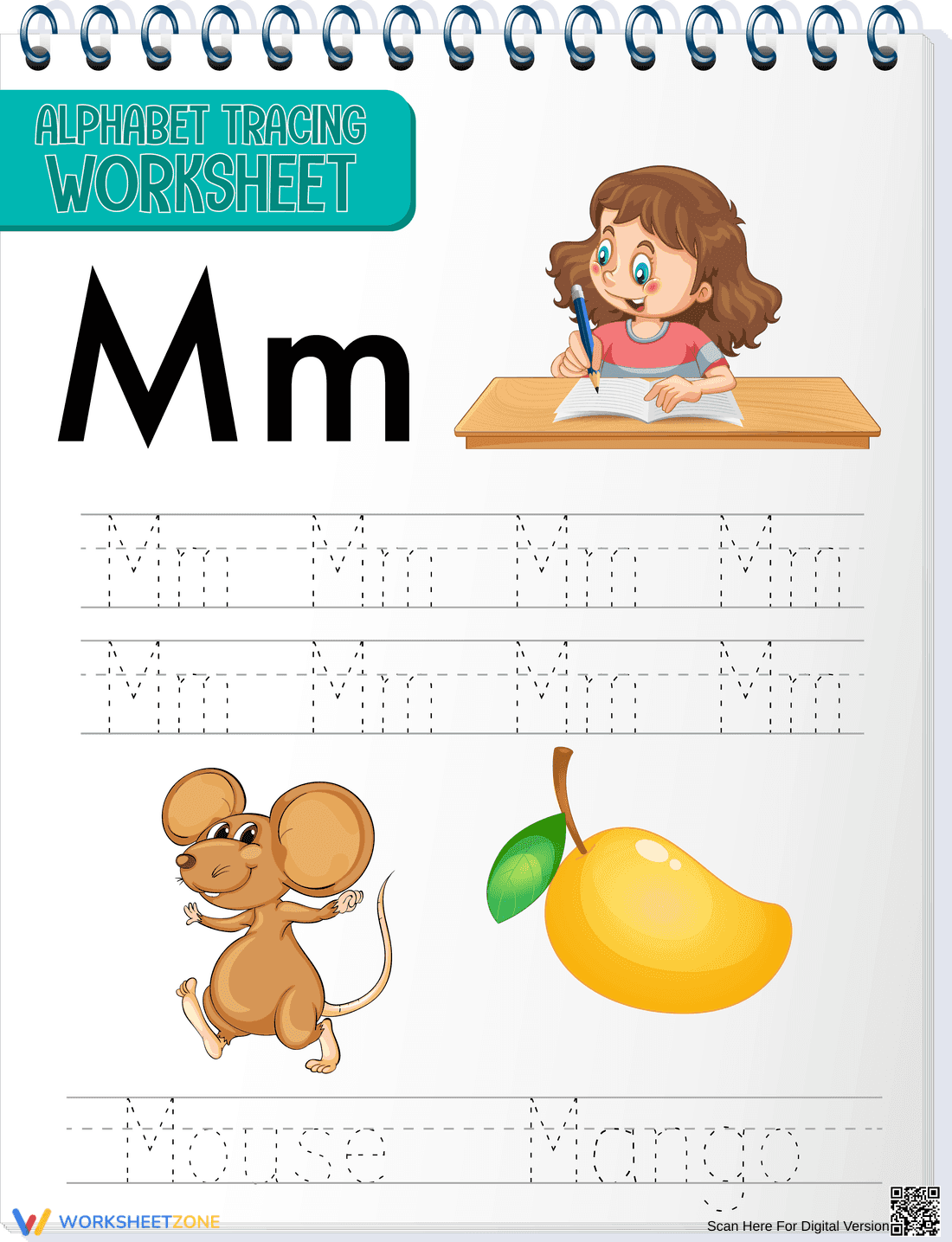

Letter M Alphabet Tracing Worksheet | Essential Grade K
Paste this activity's link or code into your existing LMS (Google Classroom, Canvas, Teams, Schoology, Moodle, etc.).
Students can open and work on the activity right away, with no student login required.
You'll still be able to track student progress and results from your teacher account.
This Letter M alphabet tracing worksheet provides early learners with structured practice to master uppercase and lowercase letter formation. By tracing the letter "M" and associated vocabulary words, students develop the fine motor control and phonemic awareness necessary for early literacy success. This resource simplifies the introduction of the letter M through clear visual cues and guided paths.
At a Glance
- Grade: Kindergarten · Subject: ELA
- Standard:
CCSS.ELA-LITERACY.L.K.1.A— Print many upper- and lowercase letters correctly- Skill Focus: Letter M formation
- Format: 1 page · 10 tasks · No answer key needed · PDF
- Best For: Morning work or literacy centers
- Time: 10–15 minutes
This single-page PDF features clear, guided tracing paths for both uppercase "M" and lowercase "m." The worksheet includes two rows of letter practice followed by a vocabulary section where students trace the words "Mouse" and "Mango." Visual cues like the mouse and mango illustrations help reinforce the initial "m" sound, connecting handwriting to phonics.
The zero-prep workflow is designed for busy classrooms. First, print the single-page PDF (30 seconds). Second, distribute to students with a pencil or crayon (1 minute). Third, review student letter strokes as they work to ensure correct top-to-bottom formation. Total teacher preparation time is under 2 minutes, making it an ideal choice for sub plans or unexpected schedule changes.
This resource is aligned with `CCSS.ELA-LITERACY.L.K.1.A`, which requires students to print many upper- and lowercase letters. It also supports `CCSS.ELA-LITERACY.RF.K.1.B` by recognizing that spoken words are represented in written language by specific sequences of letters. Both standard codes can be copied directly into lesson plans, IEP goals, or district curriculum mapping tools.
Use this worksheet during the "You Do" phase of a gradual release lesson on the letter M. It serves as an excellent formative assessment tool; observe if students start their strokes at the top line or the midline. It is also ideal for independent literacy centers or as a quick exit ticket for letter recognition. The 10-15 minute completion time fits easily into any block.
This worksheet is designed for Preschool, Kindergarten, and Grade 1 students who are developing handwriting fluency. It is particularly helpful for English Language Learners (ELLs) who benefit from the visual pairing of the letter with the "Mouse" and "Mango" images. Pair this with a tactile sand tray or an alphabet anchor chart for a multi-sensory experience.
According to the RAND AIRS 2024 report, consistent handwriting practice in early childhood is a significant predictor of later reading and writing fluency. This Letter M worksheet provides the repetitive, guided practice necessary to move from letter recognition to automaticity. By focusing on both the isolated letter and its application in words like "Mouse," students bridge the gap between phonics and orthography. Research from Fisher & Frey (2014) emphasizes that scaffolded tracing tasks allow students to internalize the motor patterns required for legible writing without the cognitive load of independent generation. This resource ensures that students meet the CCSS.ELA-LITERACY.L.K.1.A standard through a clear, distraction-free layout that prioritizes student focus. The inclusion of phonics-based imagery further reinforces the alphabetic principle, making it a comprehensive tool for early literacy development in any classroom setting.


