


























Views
Downloads
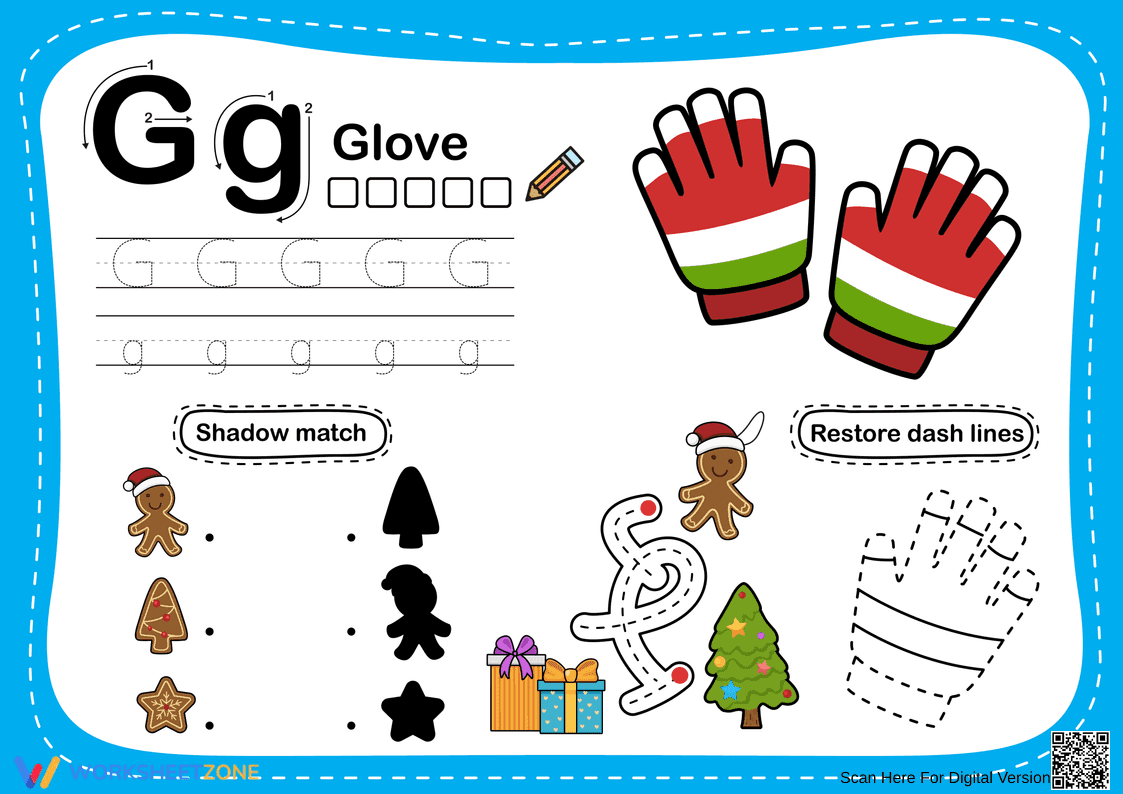

Letter G Alphabet Tracing | Essential Kindergarten Worksheet
Paste this activity's link or code into your existing LMS (Google Classroom, Canvas, Teams, Schoology, Moodle, etc.).
Students can open and work on the activity right away, with no student login required.
You'll still be able to track student progress and results from your teacher account.
This Letter G alphabet tracing worksheet provides a comprehensive approach to early literacy by combining letter formation with visual discrimination. Students practice writing both uppercase 'G' and lowercase 'g' while engaging in shadow matching and fine motor exercises. This multi-task layout ensures that young learners develop the muscle memory and recognition skills essential for reading readiness.
At a Glance
- Grade: Kindergarten · Subject: ELA
- Standard:
CCSS.ELA-LITERACY.RF.K.1.D— Recognize and name all upper- and lowercase letters of the alphabet- Skill Focus: Letter G formation and recognition
- Format: 1 page · 15 tasks · Answer key included · PDF
- Best For: Morning work and literacy centers
- Time: 10–15 minutes
The worksheet features a clear, 1-page layout designed for young learners. It includes large-format letters with numbered stroke guides to teach correct formation. Below the primary tracing lines, students find a shadow matching activity with three holiday-themed icons to build visual perception. The page also includes a "Restore dash lines" task featuring a glove, reinforcing the 'G' sound through illustration and additional fine motor practice.
Zero-Prep Workflow
Teachers can implement this resource with under 2 minutes of prep. First, print the single-page PDF for your entire class or small group. Second, distribute the sheets during your literacy block or as a transition activity; students will only need a pencil and perhaps crayons for the glove illustration. Finally, review the stroke order for the letter G as a group to ensure proper formation. This streamlined workflow makes the worksheet an ideal candidate for emergency sub plans.
Standards Alignment
This resource is specifically aligned to `CCSS.ELA-LITERACY.RF.K.1.D`, which requires students to recognize and name all upper- and lowercase letters of the alphabet. By providing distinct paths for 'G' and 'g', the worksheet helps students distinguish between cases. Both standard codes can be copied directly into lesson plans, IEP goals, or district curriculum mapping tools.
How to Use It
Use this worksheet during direct instruction as a guided practice tool after introducing the letter G. It also serves as an excellent formative assessment during literacy centers; observe if students follow the numbered arrows for stroke order or if they struggle with the lowercase 'g' tail. Completion takes 10 to 15 minutes, making it a perfect quiet-time activity.
Who It's For
This printable is designed for Preschool, Kindergarten, and Grade 1 students who are beginning their journey into letter recognition. It is particularly helpful for students requiring extra fine motor support or those who benefit from visual cues like shadow matching. Pair this resource with a Letter G anchor chart or a read-aloud book focusing on the "g" sound.
Research from RAND AIRS 2024 indicates that multi-sensory alphabet instruction, combining visual tracing with tactile motor movements, significantly accelerates letter-sound correspondence in early learners. This worksheet targets CCSS.ELA-LITERACY.RF.K.1.D by requiring students to identify and form both uppercase and lowercase 'G'. By integrating shadow matching and object-to-letter association (G is for Glove), the resource reinforces phonemic awareness alongside orthographic development. Consistent practice with stroke order prevents the formation of persistent handwriting habits that can hinder writing fluency in later grades. This printable provides the structured repetition necessary for mastery while maintaining engagement through varied task types. Educators can utilize this tool to bridge the gap between simple recognition and active production of the alphabet, ensuring a solid foundation for future reading success and literacy development. Furthermore, the inclusion of visual discrimination tasks like shadow matching supports the cognitive processing required for identifying subtle differences in letter shapes, a key predictor of early reading proficiency.


