


























Views
Downloads

Letter F Alphabet Tracing | Essential Kindergarten Worksheet
Paste this activity's link or code into your existing LMS (Google Classroom, Canvas, Teams, Schoology, Moodle, etc.).
Students can open and work on the activity right away, with no student login required.
You'll still be able to track student progress and results from your teacher account.
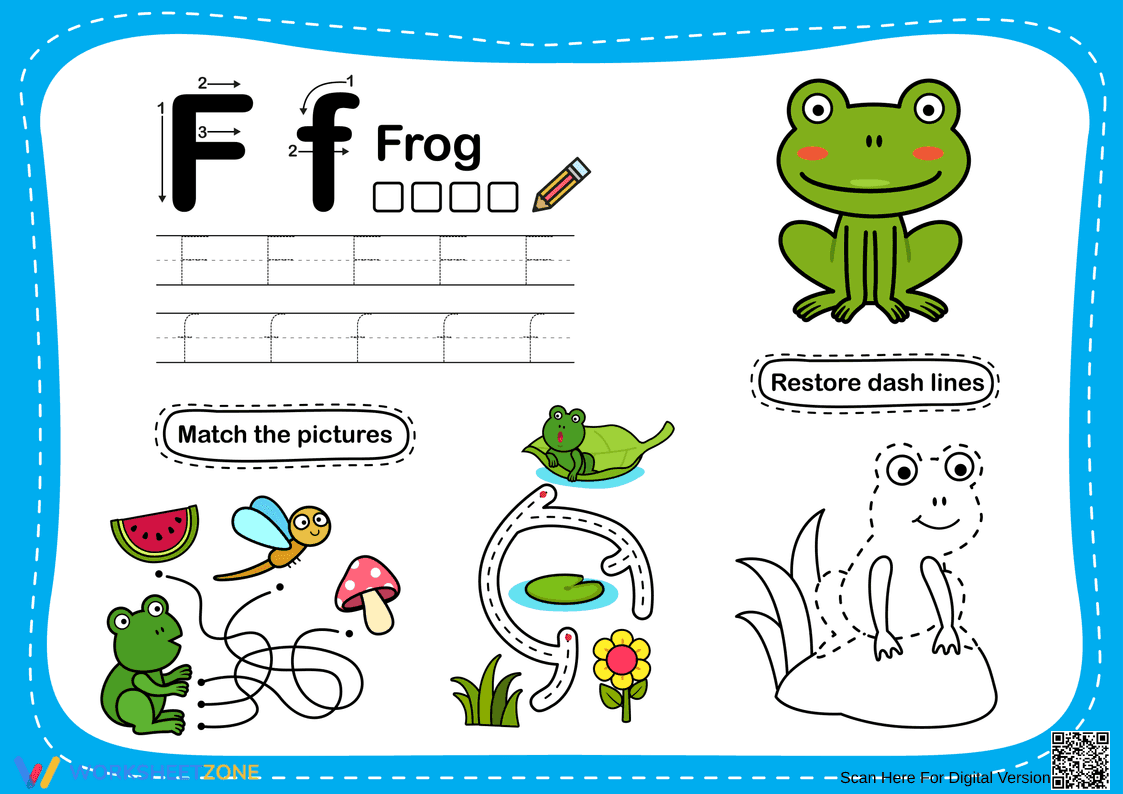
This Letter F alphabet tracing worksheet helps early learners master letter formation and recognition through engaging visual tasks. Students practice writing uppercase and lowercase F while connecting the letter to familiar objects like frogs. This resource ensures students build foundational muscle memory required for handwriting and early literacy success.
At a Glance
At a Glance
- Grade: Kindergarten · Subject: ELA
- Standard:
CCSS.ELA-LITERACY.RF.K.1.D— Recognize and name all upper- and lowercase letters of the alphabet- Skill Focus: Letter F formation and recognition
- Format: 1 page · 4 tasks · Answer key included · PDF
- Best For: Morning work or literacy centers
- Time: 10–15 minutes
What's Inside
This single-page PDF features a structured layout for independent work. It includes guided tracing for uppercase F and lowercase f with directional arrows, a matching puzzle to develop visual discrimination, and a tracing activity that integrates fine motor art practice with a frog illustration. Visual cues support non-readers.
Zero-Prep Workflow
Teachers can implement this resource in three steps. First, print the PDF (30 seconds). Second, distribute sheets during morning arrival (1 minute). Third, review completed tracing to check for proper grip and stroke order (30 seconds). Total teacher preparation time is under 2 minutes, making it an ideal sub-plan.
Standards Alignment
The primary focus is CCSS.ELA-LITERACY.RF.K.1.D, which requires students to recognize and name all upper- and lowercase letters of the alphabet. By isolating the letter F, students can focus on the specific vertical and horizontal strokes that differentiate it from similar letters like E or L. This standard code can be copied directly into lesson plans, IEP goals, or district curriculum mapping tools.
How to Use It
Use this worksheet during the independent practice phase of a lesson on the letter F. It serves as a formative assessment tool; observe students as they trace to ensure they follow stroke guides. Alternatively, use a dry-erase sleeve for a reusable center activity. Expected completion time is 10 to 15 minutes.
Who It's For
This resource is for preschool, kindergarten, and first-grade students developing letter-sound correspondence. It is effective for English Language Learners (ELLs) who benefit from visual pairing with the frog illustration. Pair this with a tactile sand tray or an alphabet anchor chart for a multi-sensory experience.
This Letter F alphabet tracing worksheet is specifically designed to meet the requirements of CCSS.ELA-LITERACY.RF.K.1.D, focusing on the plain-English skill of recognizing and naming upper- and lowercase letters. Research from Fisher & Frey (2014) emphasizes the importance of guided practice and visual scaffolds in early literacy development, noting that repetitive tracing combined with object association accelerates letter-sound mastery. By providing 4 distinct tasks that move from isolated tracing to contextual matching, this resource supports the cognitive load of early writers. The inclusion of directional arrows aligns with best practices for handwriting instruction, ensuring that students develop efficient stroke patterns early. This structured approach is essential for preventing the formation of incorrect habits that can hinder writing speed in later grades. Educators can confidently integrate this tool into a comprehensive phonics curriculum to provide the necessary repetition for long-term retention.


