


























Views
Downloads
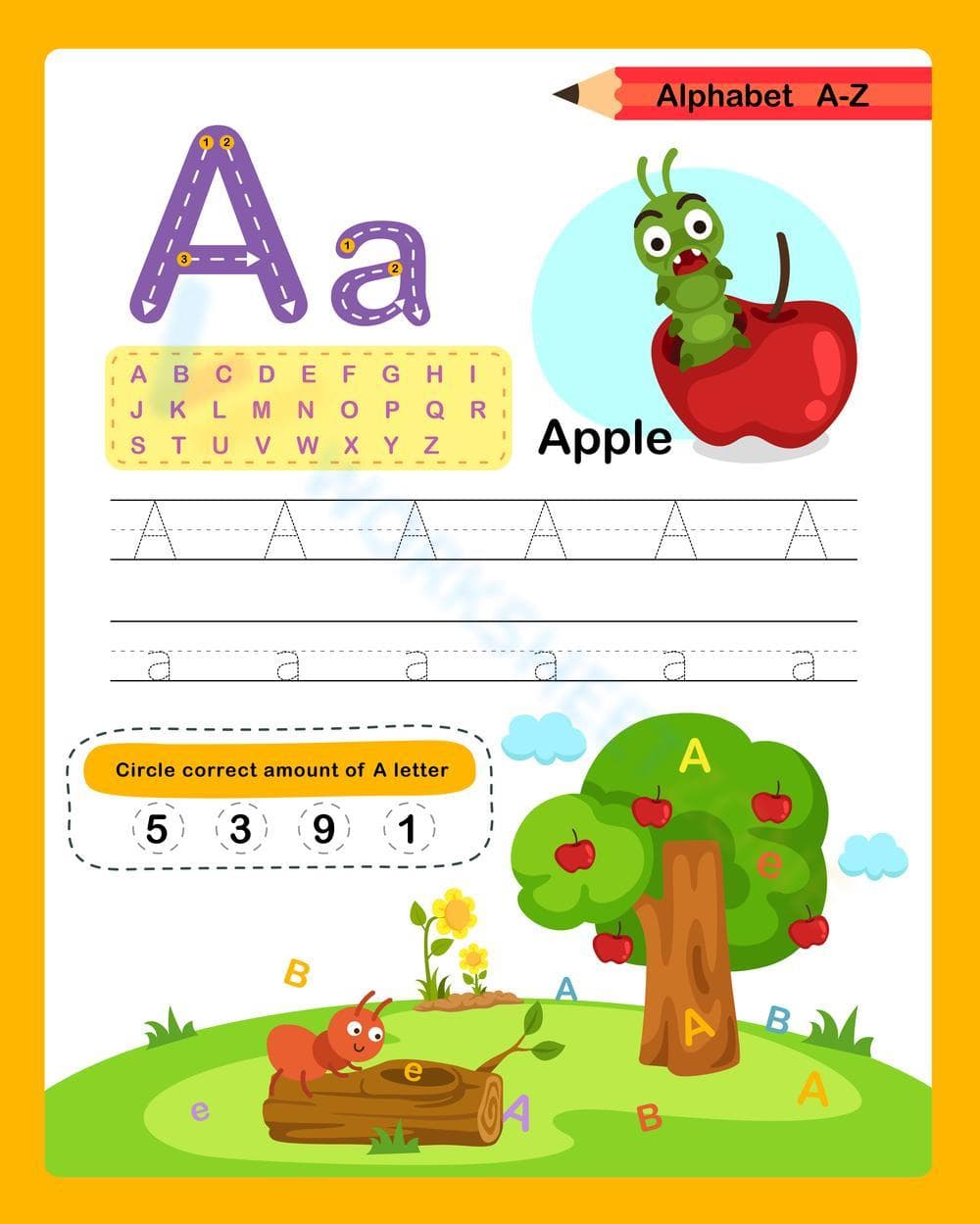

Printable Letter A Worksheet | Grade K ELA
Paste this activity's link or code into your existing LMS (Google Classroom, Canvas, Teams, Schoology, Moodle, etc.).
Students can open and work on the activity right away, with no student login required.
You'll still be able to track student progress and results from your teacher account.
This foundational alphabet worksheet helps early learners master the letter A through targeted tracing and visual recognition activities. Students will practice proper stroke order for both uppercase and lowercase forms before applying their skills to identify the letter within a fun, illustrated scene, building essential pre-reading confidence.
At a Glance
- Grade: K · Subject: ELA
- Standard:
CCSS.ELA-LITERACY.RF.K.1.D— Recognize and name upper- and lowercase letters- Skill Focus: Letter A tracing and identification
- Format: 1 page · 3 tasks · No answer key · PDF
- Best For: Morning work or literacy centers
- Time: 10–15 minutes
Inside this single-page resource, educators will find three distinct activity zones designed for early childhood development. The top section provides guided stroke arrows for the uppercase and lowercase letter A, alongside a visual anchor word. The middle section offers two lines of dotted tracing practice to build fine motor control. Finally, the bottom section features an engaging visual search where students must locate and count the letter A hidden around a tree and an ant, reinforcing letter discrimination.
This resource offers a zero-prep workflow, ideal for busy mornings or unexpected schedule changes.
- Print (1 minute): Download the PDF and print the exact number of copies needed.
- Distribute (1 minute): Hand out the pages along with pencils and crayons. The intuitive layout means students can begin immediately.
- Review (1 minute): A quick visual scan of the tracing lines and the circled number at the bottom is all it takes to check for understanding.
Total teacher preparation time is under two minutes, making this an excellent addition to any emergency sub plan folder.
This activity is directly aligned with CCSS.ELA-LITERACY.RF.K.1.D: Recognize and name all upper- and lowercase letters of the alphabet. It also supports early writing standards by having students practice basic print formation. Both standard codes can be copied directly into lesson plans, IEP goals, or district curriculum mapping tools.
This worksheet functions perfectly as a morning bell-ringer activity as students settle into the classroom. It can also be utilized during small-group literacy centers after direct instruction on the letter A. While students are working on the tracing portion, teachers can conduct a quick formative assessment by observing pencil grip and stroke direction. Expect most kindergarten students to complete the entire page within 10 to 15 minutes.
This material is primarily designed for preschool and kindergarten students who are just beginning their phonics and handwriting journeys. It serves as an excellent intervention tool for first graders who need extra fine motor practice or letter reversal correction. For a complete lesson, pair this worksheet with a read-aloud book that heavily features the short A sound, or an interactive classroom anchor chart.
Early alphabet knowledge is a critical predictor of later reading success. By focusing on the specific skill to recognize and name upper- and lowercase letters, educators lay the groundwork for phonemic awareness and decoding. According to Fisher & Frey (2014), providing students with structured, repetitive practice in letter formation significantly improves both their handwriting fluency and their ability to quickly recall letter-sound correspondences during reading tasks. This targeted practice ensures that cognitive resources are freed up for higher-level comprehension later on. The integration of visual search tasks alongside physical tracing, as seen in this resource, supports multiple learning modalities. Aligned with CCSS.ELA-LITERACY.RF.K.1.D, this approach ensures that foundational literacy skills are developed systematically, giving young learners the robust start they need for long-term academic achievement.


